

Dear friends,
Letters from Leo is not a politics-first newsletter. We ground everything we do here in the faith of the apostles and in the source and summit of that faith, the Sunday Eucharist and its Liturgy of the Word.
In today’s reflection, we explore how Jesus calls his disciples to embrace the surprise and the scandal of the cross. We learn that being a Christian today requires the instincts of a shortstop — ready to move at the sign of God’s action, at the crack of the bat, what the Second Vatican Council calls reading the signs of the times.
These Scripture reflections are available exclusively to paid subscribers. If my work means something to you, I’m asking for your help.
If you’d like to invest in our mission during this critical time, here are three ways you can help:
Subscribe as a paid member to receive exclusive posts about the life and formation of Pope Leo and help sustain this newsletter.
Donate with a one-time gift to fuel this project’s mission.
Share this post (and Letters from Leo) with a friend who might enjoy it.
Whether you give $0, $1, $100, $500, $1,000, or more, your presence here matters — no matter your faith or your politics.
Thank you for reading. I’ll see you on the road.

“You duped me, O LORD, and I let myself be duped; you were too strong for me, and you triumphed.” — Jeremiah 20:7
There is a scene in Matthew 16 that the Church read to us last Sunday. At Caesarea Philippi, up near the springs of the Jordan, Jesus renamed a fisherman. Simon became Peter, the rock on which the whole Church would stand, and Jesus handed him the keys of the kingdom. We sat with that scene last week. Today the lectionary picks up at the very next verse, and in it Jesus calls the same man Satan.
Five verses. That is the distance in Matthew 16 between “blessed are you, Simon” and “get behind me, Satan.” Nobody else in the Gospels carries both titles, and Peter collects them in one conversation.
What changed? Jesus had begun to explain what kind of Messiah he actually is: one who must go to Jerusalem, suffer at the hands of the elders and the chief priests, and be killed. Peter pulled him aside (you can almost see the hand on the sleeve) and told him to stop talking that way. “God forbid, Lord! No such thing shall ever happen to you.” Peter had signed up for glory — a Messiah with momentum, a throne in the capital. The cross scandalized him. Jesus answered with words we still flinch at: “Get behind me, Satan! You are an obstacle to me.”
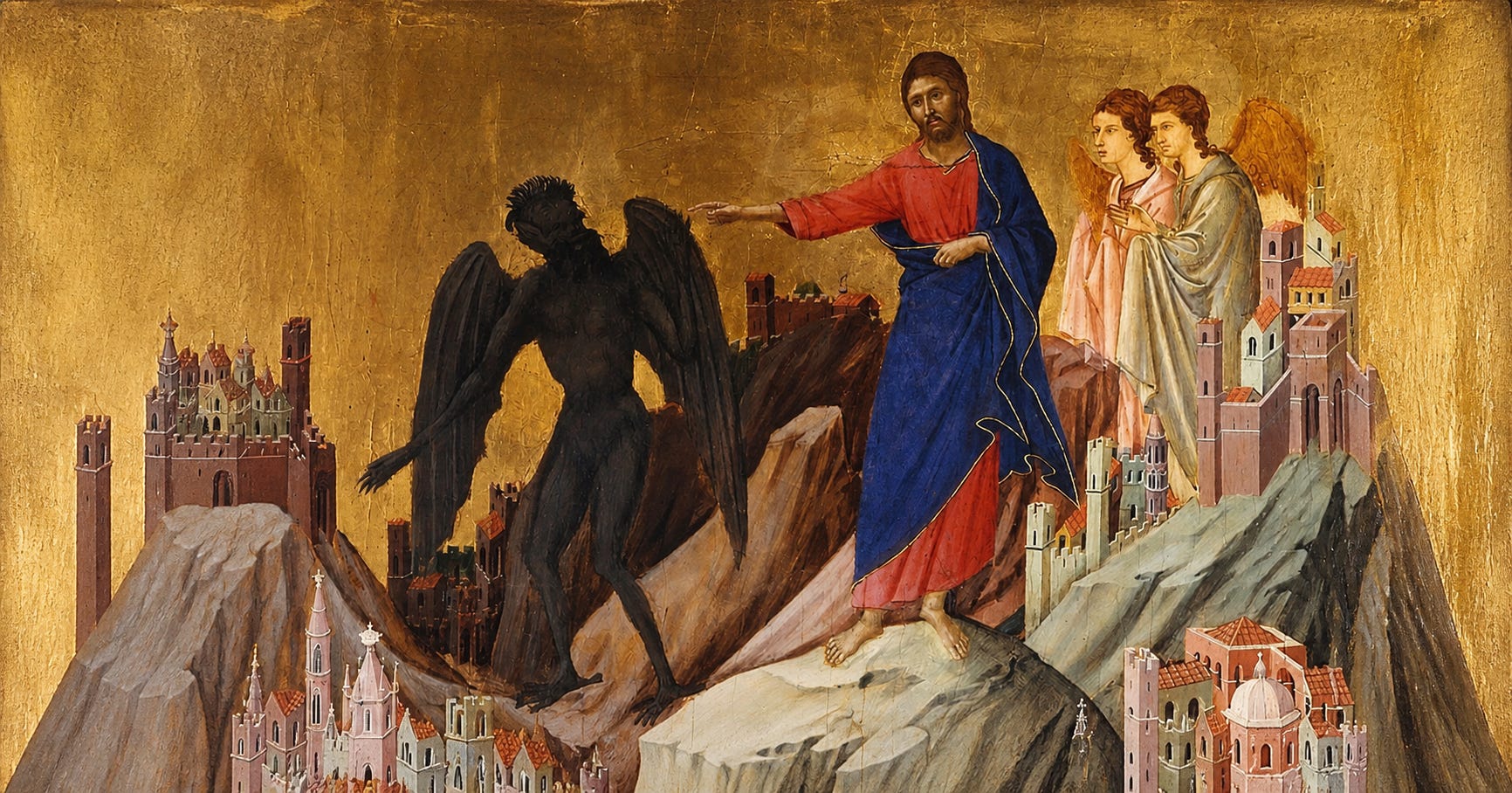
Jesus had said almost the same words once before, on another mountain. Duccio painted that first scene in a small panel for his Maestà altarpiece, finished for the cathedral of Siena in 1311. It hangs today in the Frick Collection in New York.
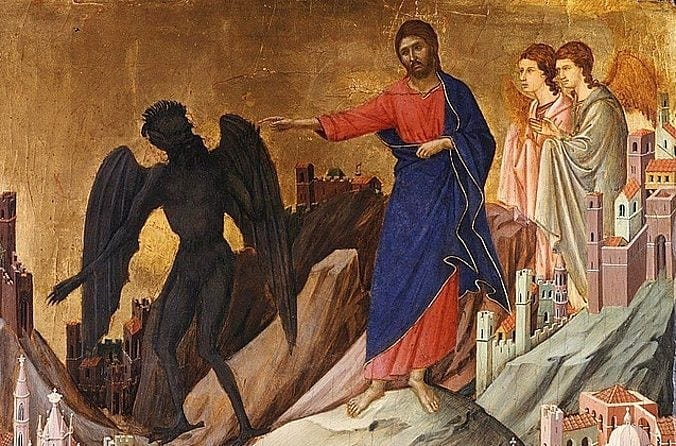
The panel shows the third temptation in the wilderness. The devil is a black, bat-winged silhouette, and the kingdoms of the world sit at Jesus’s feet like toy cities under a gold sky. Jesus’s arm is out straight in dismissal: “Get away, Satan!” Matthew then hands the same rebuke to the first pope, because Peter, God help him, was renewing the devil’s offer. Every rooftop in that painting is the offer Peter repeats at Caesarea Philippi, without knowing whose script he is reading.
I find the shortness of Peter’s fall both consoling and terrifying, and I suspect Matthew set the two scenes side by side on purpose. The Church built a basilica over Peter’s bones and carved his confession in letters six feet tall around the dome. The lectionary, though, refuses to hand us the flattering half of his story without the humiliating half. If the rock can become a stumbling block in the space of a breath, then no confession of faith, however sincere, settles the matter for good.
Late August is pennant-race season, so permit me a baseball image. A good Christian is like a good shortstop.
Think of Ozzie Smith, the Cardinals’ wizard of a shortstop, who won thirteen straight Gold Gloves. He never knew, as the pitch left the hand, where the ball would go. He set his feet and dropped his weight. The instant the ball came off the bat, he broke left or right, wherever the play sent him.
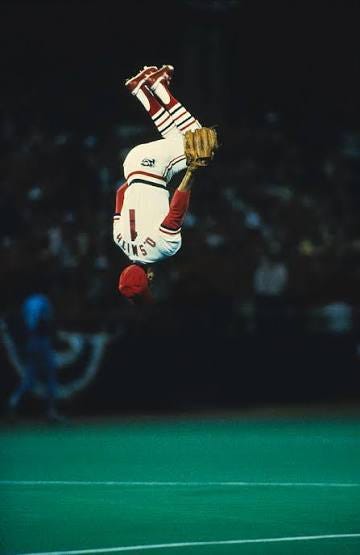
The whole craft is readiness.
Ignatius of Loyola asked the same posture of his Jesuits, telling them to live “always with one foot raised,” prepared to hasten wherever God might send them next. The old spiritual masters called this docility, from the Latin docilis, teachable.
The Second Vatican Council gave this readiness a name. In Gaudium et Spes, the council fathers wrote that the Church has a duty to scrutinize “the signs of the times” and to interpret them in the light of the Gospel.
That is shortstop language. God is always hitting the ball somewhere, in the events of the day and in the person standing in front of us, and the work of a disciple is to watch for the contact and break toward it.
Peter’s failure at Caesarea Philippi was a failure of footing. He had already decided where the ball was going, and when God hit it the other way, he refused to move.
Today’s first reading shows us what it costs to move.
