


Thank you for reading! Letters from Leo is a reader-supported publication and the fastest-growing Catholic community in the country. To receive new posts and support this movement, consider becoming a free or paid subscriber.
A reminder: to receive a free copy of American Pope, the new book by NPR’s Daniel Burke and Scott Detrow, you must buy a yearly subscription or donate $80 or more through my review itself by Thursday, Oct. 8.
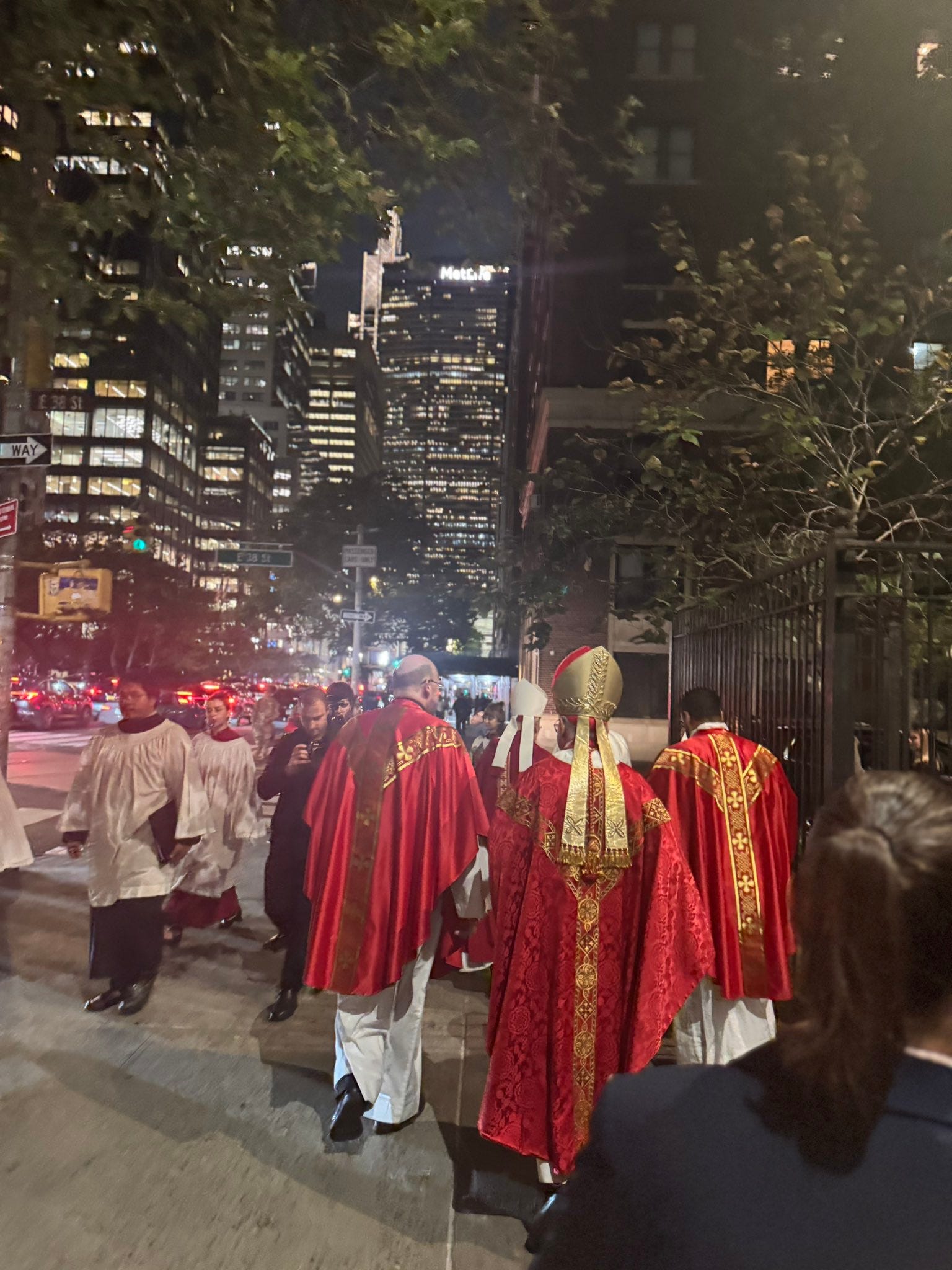
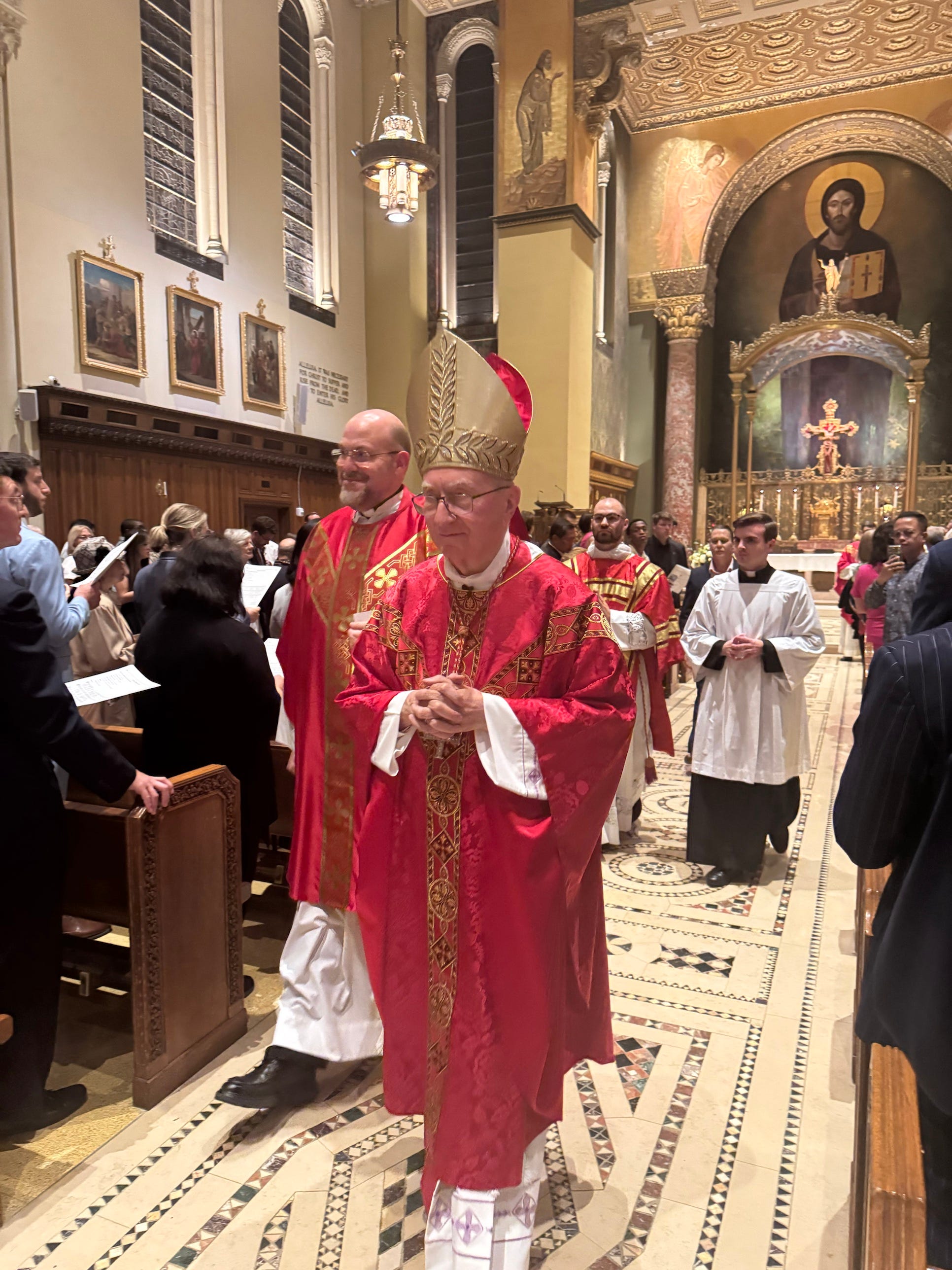
Cardinal Pietro Parolin walked through Manhattan’s Murray Hill on the evening of Monday, Sept. 21, in red vestments, ringed by clergy, for the Mass that opens the Holy See’s work at each new session of the United Nations General Assembly. I followed with my camera.
It was the Feast of St. Matthew, so the Vatican’s secretary of state preached at the Church of Our Saviour on the tax collector who walked away from his table. Borrowing from Aristotle, he told a church full of diplomats that every calling has its own virtue, and he made the point with a kitchen tool: “a knife that does not cut well or cannot cut at all is not a knife.”
The virtue of diplomacy, Parolin said, is to bring diplomatic solutions. He also knew his audience. “Sometimes, we may even feel that, instead of improving, many things tend to take a turn for the worse,” he told them. “Yet, we should not give up.”
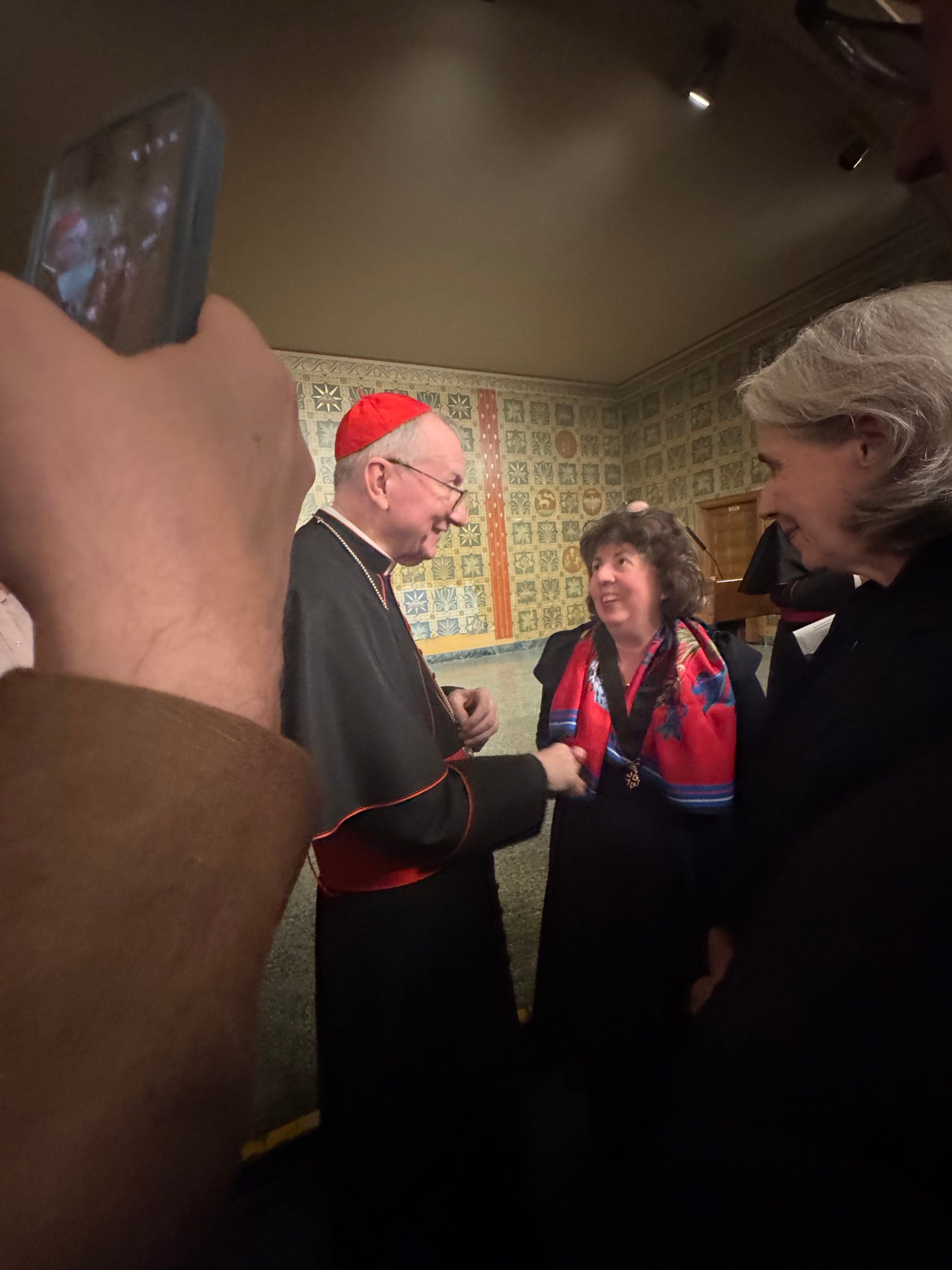
At the Holy See Mission’s reception afterward, the cardinal laid out the argument he had carried across the Atlantic. “The Holy See regards multilateral diplomacy not as an option, but as an indispensable instrument for addressing the complex transnational challenges of our time,” Parolin said.
In a world “tempted by fragmentation and unilateralism,” he added, patient dialogue is “a duty we cannot neglect.”
Five days later, on Saturday, Sept. 26, Parolin carried the same case to the rostrum of the General Assembly.
What he told the world
His message to Americans came in his closing lines. “It is imperative to disarm not only weapons, but the logic of domination,” he said, so that nations can “rebuild through dialogue and solidarity a multilateral order that truly delivers for all.”
On nationalism, the text released by the Holy See Press Office is blunt. “Multilateralism is in crisis,” it reads, and recovering it takes “the humility to recognize that no nation, however powerful, can face alone” the threats of hunger, migration, climate change and autonomous weapons. Trust, the text says, depends on confidence “that the common good will take precedence over the pursuit of unilateral advantage.”
On democracy, the Holy See spoke through a single passage on Venezuela, backing “the full restoration of democratic order through peaceful, inclusive means” with “full respect for human rights and civil liberties.” American integralists who dream of a state subordinate to the Church will find no friend in that sentence.
Why should a secular forum listen to a church? Parolin’s reply was to carry Leo’s first encyclical, Magnifica Humanitas, onto the floor. Quoting the pope, he said the decision to use lethal force “cannot be delegated to opaque or automated processes, but must remain under effective, self-aware and responsible human control.”
A reality check from Paris
Rome isn’t cheering for the UN blindly, and Leo made that clear himself. Speaking at UNESCO’s headquarters in Paris on Sept. 25, the pope said international institutions are “experiencing a crisis of effectiveness,” especially where dialogue comes to look like “a charade rather than an opportunity to seek the common good together.”
That was a reality check for the very institutions he came to defend, and Parolin echoed it in New York. “Authentic multilateralism requires agreement on the meaning of words,” his prepared text reads. From the rostrum, he warned that the world’s transformation “will not wait for the activity or inactivity of the United Nations.”
Read together, the two speeches show Rome pressing its bet on these institutions while the United States walks out of them. The Trump administration completed its withdrawal from the World Health Organization on Jan. 22, a few weeks after ordering the U.S. out of 66 other international bodies. Its exit from UNESCO takes effect at the end of this year.
The cost of that empty chair showed this week. A 28-year-old worker at a Siberian anti-plague institute died days after being hospitalized on Sept. 29, and the WHO contacted Moscow on Oct. 3 as early reports raised the possibility of pneumonic plague. Nothing has been confirmed. “Maybe there’s nothing there. Maybe it’s bigger than we thought. We don’t know,” Secretary of State Marco Rubio said.
Parolin saw this coming. At the UN’s Sept. 25 meeting on pandemic preparedness, he called universal health care a moral imperative and warned that “failing to confront this gap will make it harder to prevent and respond to pandemics effectively in the future.” Prevention, he said, has to start with the conditions that turn an outbreak deadly: “poverty, poor living conditions, and lack of healthcare.” The United States was among the nations that opposed the meeting’s nonbinding political declaration.
Nothing has been confirmed.
“Maybe there’s nothing there. Maybe it’s bigger than we thought. We don’t know,” Secretary of State Marco Rubio said. Parolin had told a UN pandemic meeting in New York that universal health care is “a moral imperative.”
The same week, a few blocks away
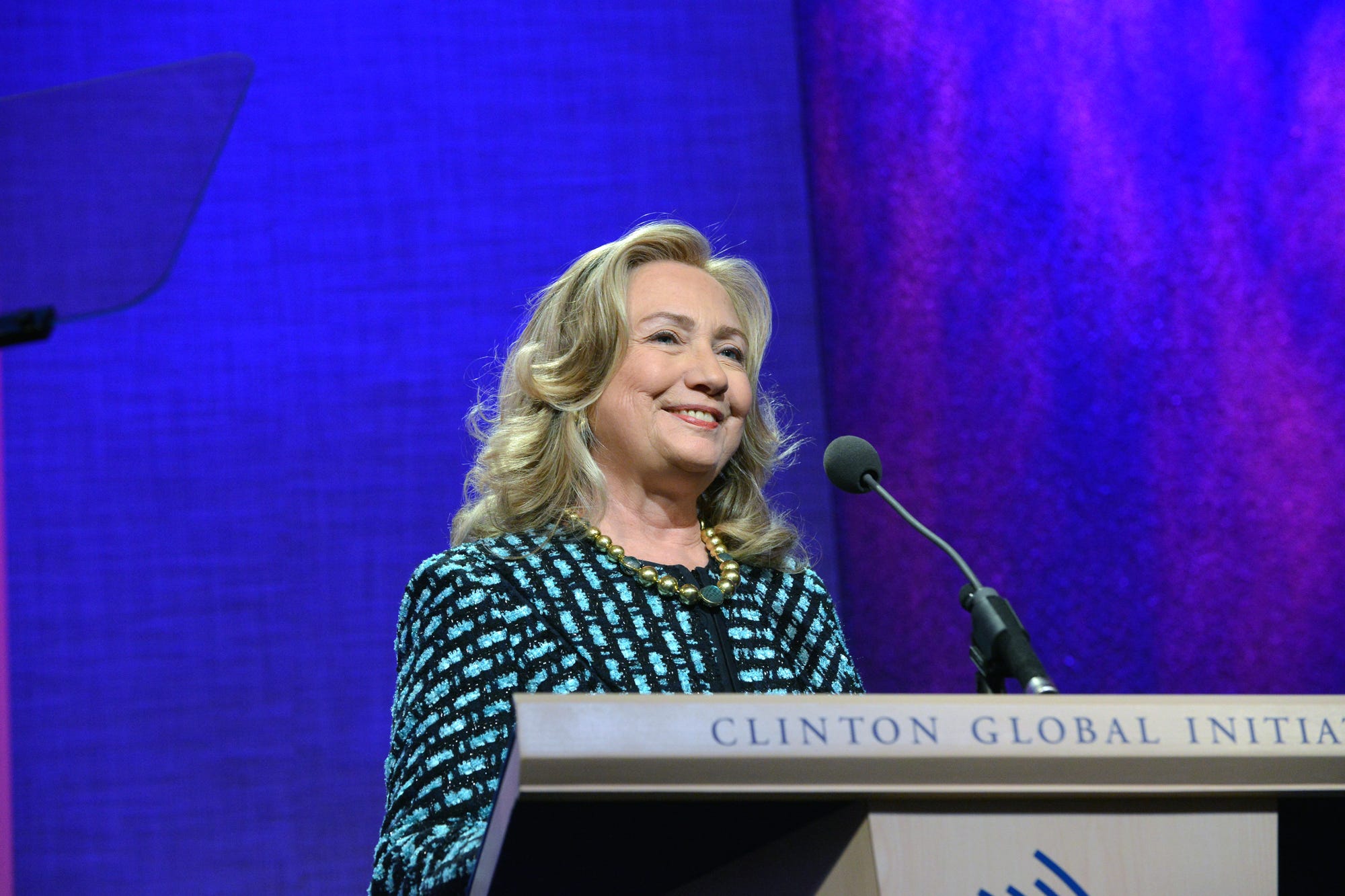
I was invited to the Clinton Global Initiative that week, where the mood matched the Vatican’s. Bill Clinton urged the room to “step into the void created by retreating governments.”
On the closing day, former USAID administrator Samantha Power called the gutting of her old agency “one of the dumbest, cruelest actions in American foreign policy history,” carried out “by people who could not name a single USAID program.”
Her coalition against childhood lead poisoning, launched with USAID two years ago, survived anyway. “Philanthropies took risks. Governments took ownership. Multilateral institutions invested and the coalition kept moving,” she said.
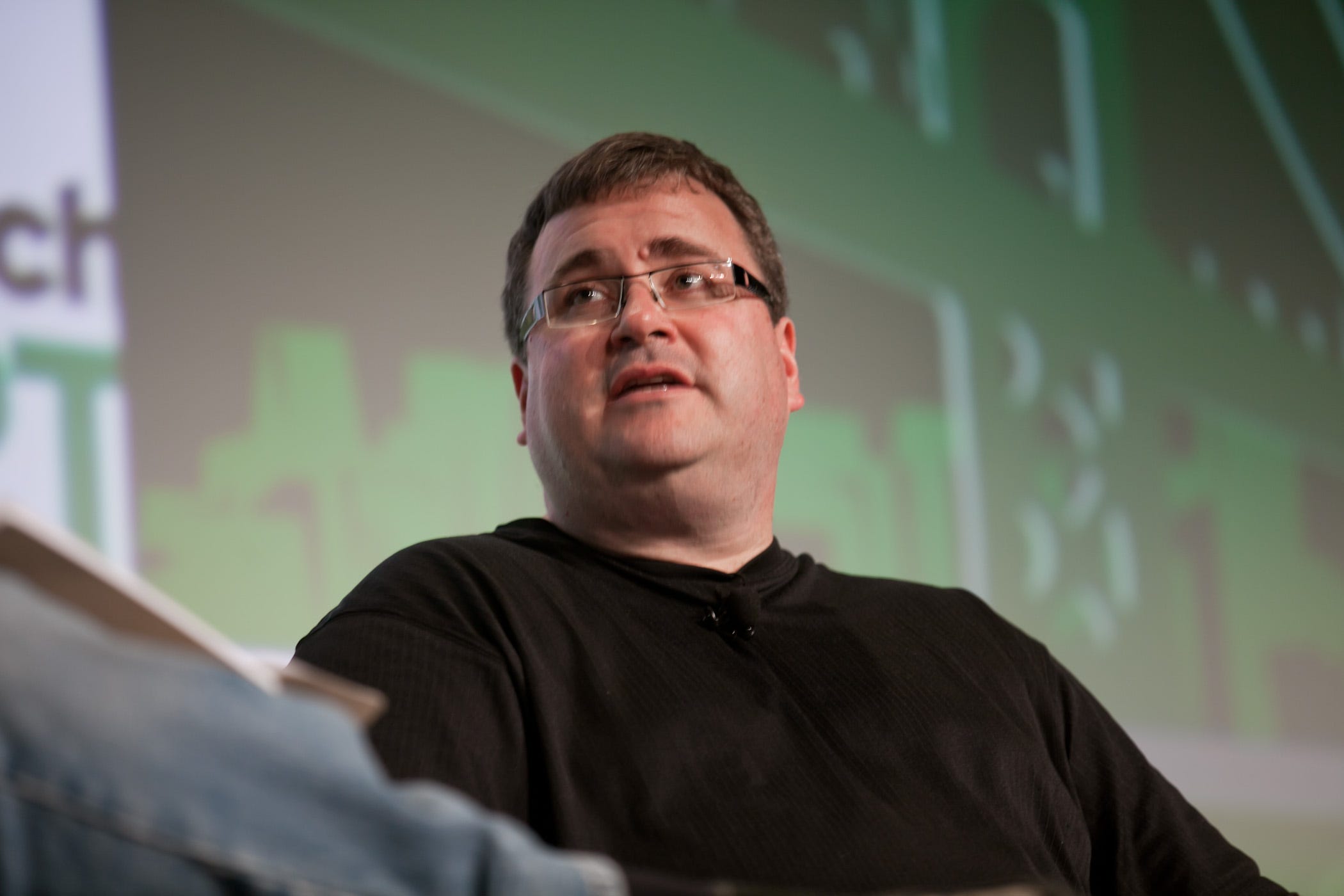
Hillary Clinton shared a stage there with LinkedIn co-founder Reid Hoffman, the rare tech billionaire who has defended Pope Leo’s call for moral discernment on AI while Peter Thiel calls the pope a “useful idiot.”
In his own newsletter, Hoffman put it simply: “Pope Leo is asking the right questions about AI.”
Across town at Foreign Policy’s Tech & AI Forum on Tuesday, America Media’s Father Sam Sawyer, S.J., made Leo’s case in plain English. AI “is likely to change the meaning of work, but probably shouldn’t,” Sawyer said. The Church, he argued, wants the world to remember that “the economy is meant to serve human dignity.”
Leo, in his own language
The Holy See has made itself one of the most serious delegations in New York. Leo sent a Maronite archbishop from Beirut to lead its mission this summer, and his secretary of state has repeatedly challenged Washington by name this year.
Through my own reporting, I saw early drafts for a possible 2026 papal visit to the United States that included an address to the UN General Assembly. That trip never came to fruition, and the Vatican said in February that no U.S. trip is planned for 2026. I hope the address survives into whatever visit comes next.
Four popes have spoken from that rostrum. Paul VI addressed the Assembly in French in 1965, and fifty years later Francis chose Spanish; John Paul II and Benedict XVI delivered much of theirs in English, a second or third language for both men. Leo would be the first native English speaker to address the nations from that rostrum, speaking the language of the very country now leading the retreat.
At Letters from Leo, we stand with Pope Leo XIV, Cardinal Parolin and every Catholic and person of goodwill who believes the human family is still a family, and that no nation, however powerful, gets to walk away from its neighbors when a plague, a famine or a war comes knocking.
The Gospel never asked us to choose between loving our country and loving the world. Solidarity is the old Catholic word for refusing that false choice, and last month the Church spoke it in the halls where nations decide whether to keep showing up for one another.
This is the fastest-growing Catholic community in the country because people are hungry for a faith that sees the whole human family and refuses to shrink it to fit a slogan.
If you believe this movement matters — Catholics and people of goodwill standing for the common good against a politics of retreat — I am asking you to join us.
If you’d like to invest in our mission, here are three ways you can help:
Subscribe as a paid member to receive exclusive posts about the life and formation of Pope Leo and help sustain this newsletter.
Donate with a one-time gift to fuel this project’s mission.
Share this post (and Letters from Leo) with a friend who might enjoy it.
Paid subscribers get our series on Pope Leo’s life and formation, our ongoing coverage of Pope Leo’s fight over AI, and the Sunday Scripture Reflection Series.
Whether you give $0, $5, $50, $500, $1,000, or more, your presence here matters — no matter your faith or your politics.
Thank you for reading. I’ll see you on the road.

I admire what the cardinal is doing and will pray for success about this matter and pray for Pope Leo. I will be praying for our nation as well.
I think I understand what's keeping Pope Leo from even coming to address the United Nations. Smart man.