
After Defying Pope Leo XIV, Vatican Excommunicates Right-Wing Dissident SSPX Bishops
The decree from the Doctrine of the Faith reaches past SSPX clergy to the lay faithful who formally adhere. Bernard Fellay, absolved by Benedict XVI in 2009, now stands excommunicated a second time.
There is a famous Latin phrase to describe the authority of the pope: Roma locuta est, causa finita est — Rome has spoken, the case is closed. Or perhaps, in a parlance more familiar to the American pope who loves tennis: game, set, match.
For the right-wing dissidents of the Society of St. Pius X, the old maxim came true on Thursday morning, when Rome formally declared their excommunication.
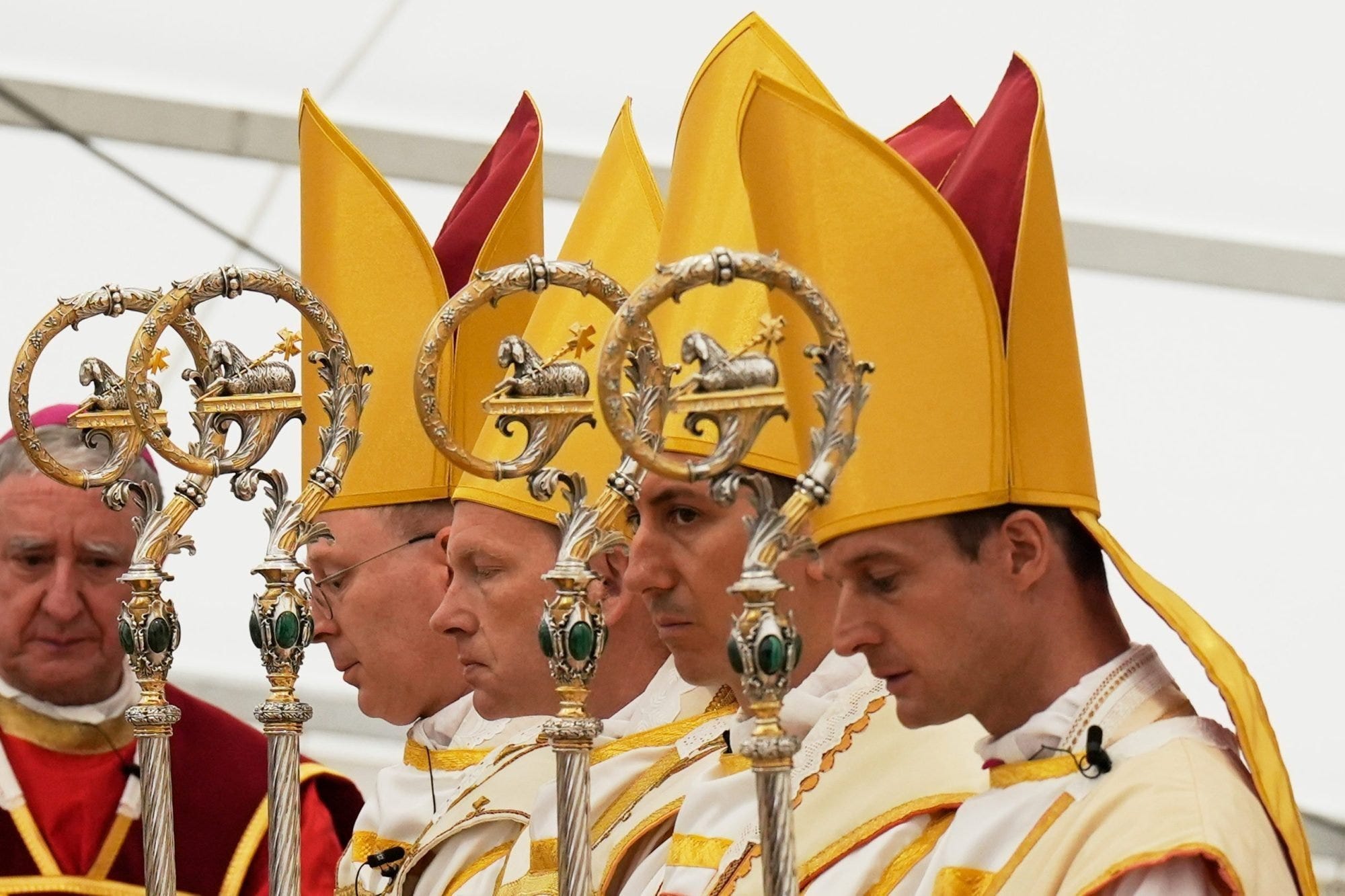
The Dicastery for the Doctrine of the Faith published a decree declaring that all six bishops involved in Wednesday’s illicit consecrations at the society’s seminary in Switzerland have incurred excommunication latae sententiae — automatic, triggered by the act itself.
The decree names the two consecrating bishops, Bernard Fellay and Alfonso de Galarreta, along with the four men they raised to the episcopate: Pascal Schreiber, Michael Goldade, Michel Poinsinet de Sivry, and Marc Hanappier. Under canon law, only the pope can lift these excommunications.
Then comes the warning that gives the decree its reach: Catholic clergy and lay faithful who adhere to the society’s schism incur the same automatic penalty. Rome has never cast this net so widely over Écône. In 1988 the named penalties stopped with the bishops; this decree runs through the society’s priests and into the pews.
Canonists advising the Holy See have drawn the line carefully. A Catholic who occasionally attends Mass at an SSPX chapel has not severed communion with the Church. The penalty falls on those who consciously and formally adhere — in faith and in worship — to a schismatic authority, a stable decision to stand with Écône against Rome. That word “formally” now carries the weight of souls.
The distinction matters in this country more than most. The society operates chapels across the United States, and its American following has grown in recent years, fed by a media ecosystem that treats defiance of Rome as fidelity to it. Families who found their way to an SSPX chapel seeking reverent liturgy now face a question none of them sought: whether staying means leaving the Catholic Church.
Readers of Letters from Leo have watched this collision build for months. The Vatican stated plainly in May that consecrating bishops without a papal mandate would be a schismatic act carrying automatic excommunication. When the society tried to take its case to the College of Cardinals in June, Pope Leo XIV had already given his answer.
From his first days, Leo has treated the healing of the Church’s divisions as the central work of his pontificate. What the society rejects, he told journalists on June 16, are “fundamental elements” of the Church itself, beginning with parts of the Second Vatican Council. “If they make that choice, I am sorry, but we must move forward,” he said.
Two days before the ceremony, the pope made one final appeal, in a letter that read less like a canonical warning than a father’s plea. “Please turn back,” he wrote. To tear the seamless garment of Christ, he told the society, is “a sin of extreme gravity.”
They did not turn back.
On Wednesday morning, some 17,000 people from 70 countries gathered on a hillside in Écône for a consecration Mass that ran six hours and twenty minutes — longer than any known papal coronation in the two-millennia history of the Catholic Church, surpassing the longest on record, the six-hour crowning of Pius XII in 1939. The society now claims six bishops. The Catholic Church says every one of them stands outside her communion.
I watched some of the ceremony, and one moment has stayed with me since.
The traditional rite of episcopal consecration begins with a demand for proof. Before hands are laid on anyone, the consecrator is asked whether an apostolic mandate has been given — the pope’s written command authorizing the Church to receive a new bishop. The honest answer at Écône on Wednesday was no.
Instead of admitting that, the society had a notary read a substitute text, prepared on ecclesial parchment:
“It is the Catholic and Roman church, always faithful to the traditions received from the apostles, who in entirely exceptional circumstances demands that we provide for the upholding of these traditions, that is the deposit of faith, and that we take the means necessary to transmit them faithfully to all men for the salvation of their souls. Since the Second Vatican Council up to the present day the authorities in the church have been animated by a spirit that is contrary to the faith and have been acting against holy tradition. They will no longer endure sound doctrine.”
The formula echoes the one Archbishop Marcel Lefebvre used on the same hillside in 1988. Its closing line is lifted from St. Paul, who warned Timothy that a time would come when people “will not endure sound doctrine” but would gather teachers to suit their itching ears.
The men who drafted this parchment took the apostle’s warning about flattery and aimed it at the successor of Peter and an ecumenical council. A liturgy asked them a direct question, and they answered with an indictment of every pope since 1965.
It was arrogant and wrong.
The arrogance did not end when the parchment was rolled up. At Vespers, the newly consecrated Michael Goldade — an American, hours into an episcopacy the Church never asked for — preached this about the Church that baptized him:
“If the Catholic Church in her Tradition brings forth life, the modernist church is a desert that kills everything that it touches. It kills the supernatural life, the sources of grace, and has placed man in the place of God.”
Nothing in that sentence survives contact with the living Church.
Seventeen missionaries and pastoral workers were killed for the Gospel in 2025, ten of them in Africa — priests, seminarians, catechists, and religious sisters who poured out their lives in the rites and parishes Goldade calls a desert. Millions more feed the hungry, shelter migrants, and sit with the dying every day, sustained by the sacraments of the Church he says has been emptied of grace.
Mother Teresa built the Missionaries of Charity into a worldwide work of mercy in the decades after the council, drawing her strength from daily Mass and Eucharistic adoration in the reformed rite. Carlo Acutis — the first millennial saint, canonized by Pope Leo XIV last September — was formed entirely within the post-conciliar Church, a teenager whose love of the Eucharist grew in the ordinary parishes the society holds in contempt. A desert does not produce saints.
The Church has been here before, and the memory hangs over everything. Lefebvre consecrated four bishops at Écône on June 30, 1988, and John Paul II confirmed the excommunications within days. Benedict XVI lifted those penalties in 2009 as an act of mercy meant to heal the wound. Bernard Fellay was among the men Benedict absolved — and on Wednesday, with his eyes open, he walked back into the penalty a second time.
The new decree’s explanatory note reads like grief set in legal prose, lamenting that doctrinal talks stretching back to St. Paul VI never brought the society home. Cardinal Pietro Parolin, the Vatican’s secretary of state, offered reporters only “deep sorrow” this week, because an act of this kind wounds the unity of the Church.
Sorrow is the right register. Excommunication in Catholic teaching is a medicinal penalty rather than a curse — the Church’s starkest way of telling the wanderer how far he has walked, and pointing the way home.
The Mass at Écône began in sunlight. As the ceremony reached its center, the screens above the crowd flashed a warning of an imminent thunderstorm, and at the consecration a torrential rain broke over the hillside while thunder rolled through the valley. I make no claim to read providence in a weather front. The rain passed in twenty minutes; what it fell upon will take far longer to wash away.
Days before the consecrations, Pope Leo stood in St. Peter’s Basilica and told 35 new archbishops that “communion is not built by clinging rigidly” — that the Church’s unity is spacious enough for legitimate difference, including the many Catholics who love the old rite and remain in full communion with Rome. The men at Écône wagered instead that tradition could be saved by tearing the Church that carries it. Rome’s answer came the next morning, and it names them all, along with anyone who formally follows them out the door.
The last word the pope sent to Écône was “please.” The door in Rome is still open, but as Pope Leo XIV said earlier this month, “we must move forward.”
At Letters from Leo, we stand with Pope Leo XIV and the millions of Catholics — and countless others of goodwill — who believe the unity of the Church is worth more than the pride of any faction, and that a faith which walls itself off from the world has forgotten the one who was sent to save it.
This community exists because people are hungry for something deeper than rage and nostalgia — a Catholicism that produces martyrs in Nigeria and saints in ordinary parishes, that feeds the poor and welcomes the stranger, that holds the Latin Mass and the village parish inside one communion without tearing either away.
If you believe this movement matters — Catholics and people of goodwill standing for the unity of the Church and the dignity of every human person — I am asking you to join us.
If you’d like to invest in our mission, here are three ways you can help during this critical time:
Subscribe as a paid member to receive exclusive posts about the life and formation of Pope Leo and help sustain this newsletter.
Donate with a one-time gift to fuel this project’s mission.
Share this post (and Letters from Leo) with a friend who might enjoy it.
Paid subscribers receive our exclusive series on the life and formation of Pope Leo, Pope Leo XIV takes on Silicon Valley, the investigations you won’t find anywhere else, and the Sunday scripture reflections that carry this community through the liturgical year.
Whether you give $0, $5, $50, $500, $1,000, or more, your presence here matters — no matter your faith or your politics.
Thank you for reading. I’ll see you on the road.


Hopefully Opus Dei is next
Thank you for educating me on all of this…wondering how pervasive this movement is within US churches? Sorrow seems exactly the right word for this moment…