


Thank you for reading! Letters from Leo is a reader-supported publication. To receive new posts and support my work, consider becoming a free or paid subscriber.
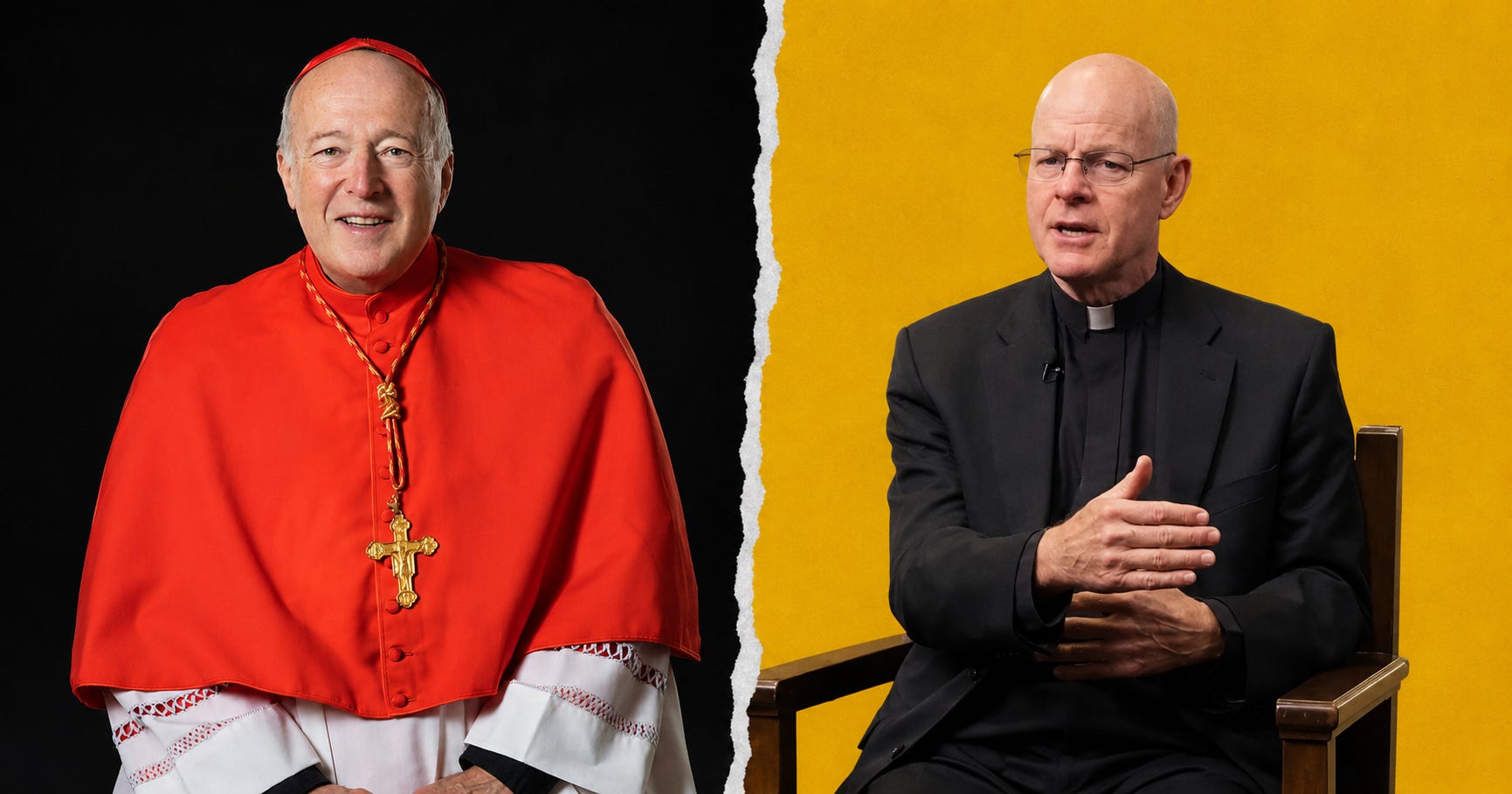
Cardinal Robert McElroy removed Monsignor Stephen Rossetti as an exorcist of the Archdiocese of Washington on Wednesday and ended all affiliation between the archdiocese and the Saint Michael Center for Spiritual Renewal, the Washington-based nonprofit Rossetti leads.
In a statement released June 3, the cardinal said that “statements made by Monsignor Rossetti linking UFOs to demonic presence and the Center’s recent use of social media gravely undermine the Church’s very precise teaching on the devil, demons and exorcism.”
The breaking point came on May 29, when Rossetti posted a YouTube video sharing his personal belief that “many, if not most, [UFO] sightings are, in fact, demons.” Such entities, he said in the video, “can do things that we can’t do, such [as] the speed and all sorts of things that human beings can’t do.”
According to the National Catholic Register, the video had been marked private by the time the news broke on Wednesday.
Through my own digging, I can tell you the story runs deeper than the press release.
Two independent sources tell me the concerns inside the Archdiocese of Washington go beyond the UFO commentary the cardinal cited publicly. McElroy’s statement gestures in this direction without elaborating — it names the Center’s “recent use of social media” as a problem in its own right, alongside the video.
Separate from those two sources, Father Phillip Brown — the Sulpician president-rector of St. Mary’s Seminary and University in Baltimore, the oldest Catholic seminary in the United States — provided Letters from Leo a statement about what is at stake when exorcists go public.
“I do think it’s problematical for a priest, but especially a priest who has been given the faculty of performing exorcisms, to speak out publicly about it and enter into these public discussions of exorcism, or to reveal specifics about exorcisms that they have participated in.”
Brown said exorcists who publicize their experiences “can contribute to a kind of public or individual hysteria which actually undermines the Church’s efforts to combat Satan, demons, and demonic forces.” He connected the concern to the pope’s own warnings about clerical fame:
“What is also of concern, as Pope Leo has pointed out, is clerics seeking celebrity and building a public image around the celebrity status they attain.
“I have long had concerns about exorcists who draw so much attention to the subject of evil and the demonic, and in doing so draw attention to themselves — it seems sometimes to be a lot more about the celebrity they are seeking than any real concern or contribution to calming peoples’ fears about evil and demonic forces and helping them to overcome those forces.
“There is a natural fascination with evil that can easily become prurient and voyeuristic.”
Rossetti is no fringe figure. A priest of the Diocese of Syracuse and a licensed psychologist with a doctorate from Boston College, he led the St. Luke Institute, a psychological treatment center for Catholic clergy, from 1996 to 2009, and he has taught pastoral studies at the Catholic University of America.
He served as Washington’s exorcist for 19 years. His 2021 book “Diary of an American Exorcist” and his steady stream of dispatches from the world of deliverance ministry made him one of the best-known exorcists in the country.
Rossetti responded within hours. Here’s what he said, as reported by the Register:
“I ask forgiveness for any ways that I have not been faithful to the teachings of the Church’s Magisterium, particularly in the cited video on ‘aliens and the demonic.’ I believe it is of the utmost importance to be obedient to the Church and I will continue to endeavor to subject all that I do and the Center to be thus obedient.”
He thanked the archdiocese for 19 years of support and promised that the Saint Michael Center, which plans to continue its ministry elsewhere, would keep the cardinal in its prayers.
That response is a healthy sign. Anyone who has followed the recent history of celebrity priests in America knows that humility has rarely been the reflex when a bishop steps in.
McElroy, for his part, has spent his Washington tenure governing with this kind of directness. He led the Church’s outcry after the Trump-Vance administration’s ICE killings in January, and he has emerged as one of Pope Leo XIV’s closest American allies.
The deeper story is the rise of the celebrity exorcist — the priest whose ministry of deliverance becomes a media brand, complete with podcasts, conferences, book deals, and donor lists.
Catholic teaching on the demonic is precise, and the Church practices that ministry quietly: exorcism is surrounded by discretion, psychological screening, and the direct oversight of the local bishop. The celebrity version trades discretion for content.
Mike Lewis, the founding managing editor of Where Peter Is, has spent years documenting what happens when that trade gets made.
His September 2024 investigation of Father Chad Ripperger — “perhaps the world’s most famous living exorcist following the 2016 death of Father Gabriel Amorth,” as Lewis describes him — remains the definitive portrait of the genre.
Lewis documented how Ripperger’s traditionalist society offers a five-day workshop that trains priests to become exorcists for a $4,750 fee, and how Ripperger has claimed that bipolar disorder is really “demonic obsession” — a claim Lewis warned “could lead to dangerous outcomes, such as patients discontinuing their medication without medical supervision.”
His portrait of the celebrity exorcist’s media routine is worth quoting at length:
“He assures his audience that demons are boring, and what really interests him is the spiritual conversion of his subject or the intercession of Our Lady. He will then spend the rest of the interview talking all about what the demons do and what they tell him.”
Lewis closes that investigation by asking why a priest with “an international platform to spread his dangerous views” is allowed to operate with no meaningful oversight at all.
The pattern runs past Ripperger. Here’s some background.
