
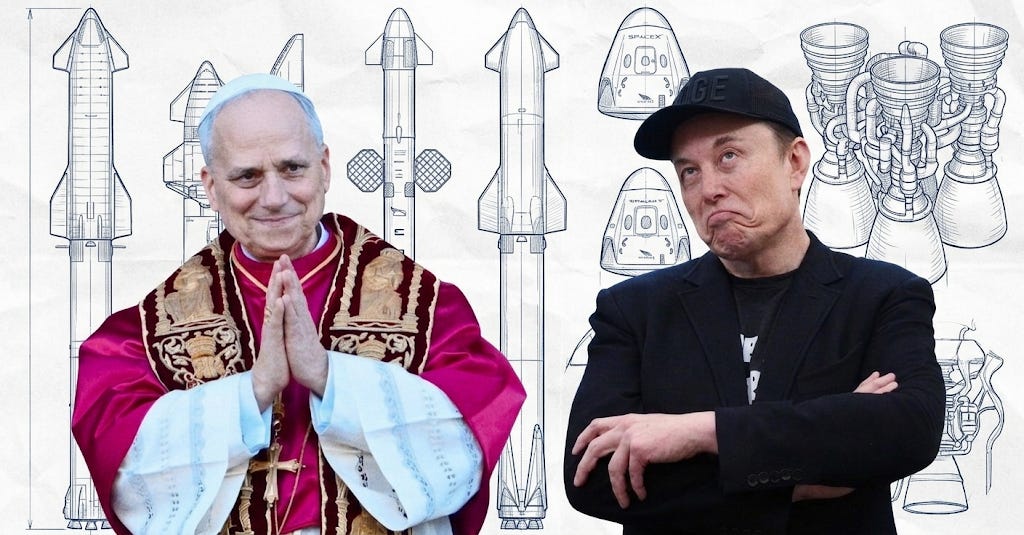
Elon Musk is A Trillionaire. Pope Leo XIV Isn’t Happy About it.
The SpaceX IPO pushed Musk’s fortune past $1 trillion on Friday — three days after the pope stood in a Barcelona stadium and named the idolatry of profit. He has spent nine months building the case against this moment.
Thank you for reading! Letters from Leo is a reader-supported movement of Catholics and people of goodwill standing for human dignity. To invest in this mission, please consider becoming a free or paid subscriber.
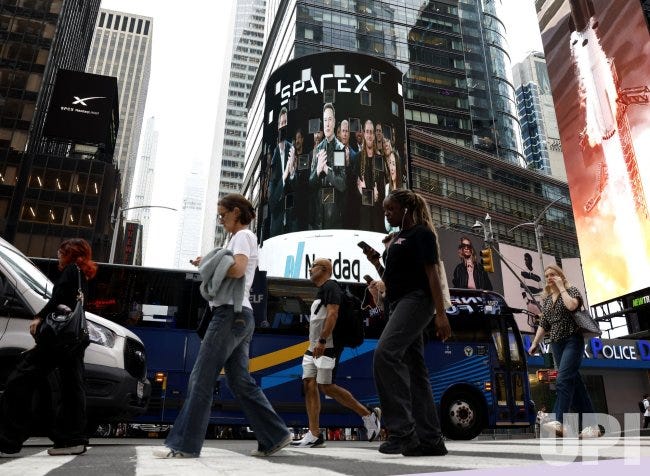
Elon Musk became the first trillionaire in recorded history on Friday morning, when SpaceX began trading on the Nasdaq under the ticker SPCX and its shares jumped from a $135 listing price to $150 at the opening bell.
The rocket company’s initial public offering raised a record $75 billion and valued SpaceX at roughly $1.77 trillion. Musk’s stake is now worth an estimated $690 billion, and combined with his Tesla holdings, his total fortune crossed $1 trillion, touching $1.18 trillion as the shares climbed through the morning.
Nearly all of it exists on paper, in the equity of companies he controls, and it stands at more than double the wealth of the next-richest person on earth.
Sixteen months before the opening bell, Musk was boasting about a different line of work. “We spent the weekend feeding USAID into the wood chipper,” he posted on X in February 2025, days into his blitz through the federal bureaucracy at the head of the Department of Government Efficiency.
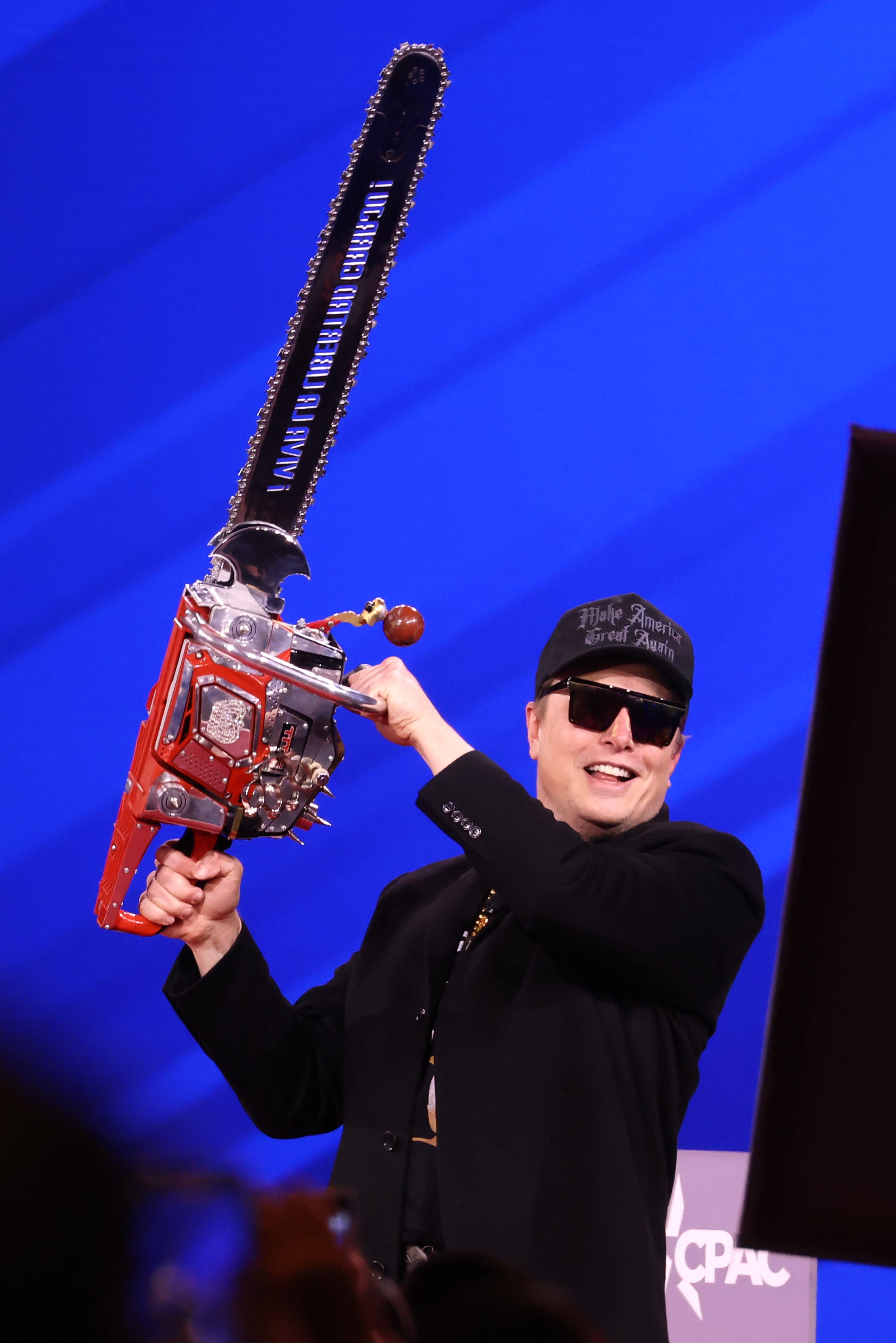
The agency he was describing ran the largest humanitarian operation on earth. At CPAC three weeks later, Argentine President Javier Milei handed him a red chainsaw engraved “Viva la libertad, carajo,” and Musk hoisted it over his head: “This is the chainsaw for bureaucracy.”
Atul Gawande, the surgeon who led global health at USAID under President Biden, has chronicled what happened next. Stop-work orders landed overnight, with no warning to the governments that depended on American medicine and food. Supplies already sitting in warehouses could not legally reach the people they had been purchased for.
Within weeks, Musk and Secretary of State Marco Rubio had gutted the agency’s staff and killed more than four-fifths of its contracts — and neither Congress nor the Supreme Court stopped them.
Last November, in The New Yorker, Gawande published the arithmetic of the aftermath: the dismantling of USAID had already killed an estimated 600,000 people, two-thirds of them children.
The figure comes from a model built by Boston University epidemiologist Brooke Nichols — a deliberately conservative one, which assumes the programs that survived will be fully sustained. Her team has since closed out the count at the one-year horizon: more than 762,000 dead, over 500,000 of them children, lost to pneumonia, diarrhea, malaria, AIDS, and hunger.
Pope Leo XIV asked the question that hangs over this milestone nine months before it arrived.
“What does that mean and what’s that about?” the pope said of Musk’s projected trillion in his first formal interview, published by Crux last September. “If that is the only thing that has value anymore, then we’re in big trouble.”
He attached a statistic to the warning: chief executives who earned four to six times a worker’s wage sixty years ago now collect 600 times as much.
The remark traveled the world for a news cycle and then receded from the headlines. Leo kept building.
Twenty-five days later he released Dilexi Te, the first apostolic exhortation of his papacy. “In a world where the poor are increasingly numerous,” he wrote, “we paradoxically see the growth of a wealthy elite, living in a bubble of comfort and luxury, almost in another world compared to ordinary people.”
The document teaches that “inequality is the root of social ills,” describes the structures that produce it as social sin, and condemns what it calls the “empire of money.” Welfare programs, it adds, can only ever be “merely provisional responses” while those structures stand.
A week after the exhortation appeared, Leo drove across Rome to address the United Nations Food and Agriculture Organization on World Food Day. He gave the assembled heads of state the numbers: 673 million people go to bed hungry every night, and 2.3 billion cannot afford a healthy diet.

“Allowing millions of human beings to live — and die — as victims of hunger is a collective failure, an ethical aberration, a historical fault,” he told them. Hunger persists, he said, as “the clear sign of a prevailing insensitivity, of a soulless economy, of a questionable model of development, and of an unjust and unsustainable system of resource distribution.”
“Slogans do not lift people from misery,” he said in the same address. “We must place the human person above profit and guarantee food security, access to resources, and sustainable rural development.” Food security, he insisted, must be reaffirmed “as a right, not a privilege.”
He warned the comfortable nations against “the apathy that justifies hunger as if it were background music we have grown accustomed to.”
Three weeks after that speech, Tesla shareholders overwhelmingly approved a pay package that could award Musk up to $1 trillion in stock over the next decade.
In May, Leo gave the argument its most authoritative form. He signed Magnifica Humanitas on May 15, the 135th anniversary of Rerum Novarum, the document with which his namesake, Leo XIII, confronted the concentrated wealth of the industrial age. The new encyclical carries that confrontation into the age of algorithms.
Measures to ensure equity, Leo writes — taxation, social protection, industrial policy — “must correct the imbalances created by the concentration of wealth and power.” The encyclical adds that “these criteria do not constitute a curb on innovation; instead they make it civilized and humane.” Prosperity contributes to peace, the encyclical adds, “only if it is widespread, inclusive, and sustainable.”
The encyclical also asks the world to retire gross domestic product as the measure of a nation’s development, proposing in its place the dignity of work, shared prosperity, the reduction of inequalities, and the protection of creation. Finance, Leo writes, exists to serve the development of work — a sentence that lands differently on the day the markets crowned their first trillionaire.
Then came Barcelona. Three days before the Nasdaq bell, the pope stood before more than 40,000 young people in the Lluís Companys Olympic Stadium and named “the idolatry of profit and performance” and “the cult of self-image” as “anesthetics designed to numb our conscience.”

One needn’t be religious to see the moral catastrophe at play. A single man now commands a paper fortune of eleven hundred billion dollars. Last night, 673 million human beings went to bed without enough to eat. And more than 762,000 people who depended on the agency Musk fed into the wood chipper are dead, most of them children. The pope’s word for that arrangement, delivered at the FAO in October, was “a historical fault.”
Leo aims his critique at systems rather than souls. Even in the Crux interview, Musk entered the conversation as an illustration of a phenomenon, and Catholic teaching does not treat wealth itself as evil. What alarmed the pope in September was the conditional clause he attached to the trillion: a world where the number becomes the only measure of value left standing.
The tradition he inherits has insisted since 1891 that property carries social obligations and that every economy will finally be judged by what it does to the human person.
The market gave its answer to Leo’s question on Friday, in the form of a ticker symbol and an opening price. The question itself now passes to the rest of us.
The American pope has assembled the moral vocabulary for this exact moment — in an exhortation, at a hunger summit, in an encyclical, in a stadium full of restless young people — and when the first trillion finally arrived, his words were already waiting for it.
At Letters from Leo, we stand with the 673 million people who went to bed hungry last night, and with everyone who believes that a civilization reveals its soul by what it chooses to measure. Pope Leo XIV has spent his papacy insisting that the human person, and never the portfolio, sits at the center of the world’s story — and we are building a community around that conviction.
This is the fastest-growing Catholic community in the country because people are hungry for something deeper than rage and propaganda.
They are looking for courage, for truth, for love made visible in action — and at a moment when a single fortune can cross $1 trillion while millions go without bread, that hunger has never been more urgent.
If you believe this movement matters — Catholics and people of goodwill standing for human dignity against the empire of money — I am asking you to join us.
If you’d like to invest in our mission, here are three ways you can help during this critical time:
Subscribe as a paid member to receive exclusive posts about the life and formation of Pope Leo and help sustain this movement.
Donate with a one-time gift to fuel this project’s mission.
Share this post (and Letters from Leo) with a friend who might need it.
Paid subscribers make this work possible, and they receive the full archive: the biographical series on Pope Leo’s Life & Formation, the exclusive investigations, his ongoing confrontation with the tech titans in Pope Leo Takes On AI, and the Sunday Scripture Reflection Series.
Whether you give $0, $5, $50, $500, $1,000, or more, your presence here matters — no matter your faith or your politics.
Thank you for reading. I’ll see you on the road.


Elon has nothing to be proud of in this. What would be amazing is if he actually used these resources to feed the hungry.
I am not happy about it especially since people with retirement accounts were forced into buying shares. Plus.... well Musk ... the human Ponzi scheme.