


Thank you for reading! Letters from Leo is a reader-supported publication and the fastest-growing Catholic community in the country. To receive new posts and support this movement, consider becoming a free or paid subscriber.
Dear friends,
Happy Feast of St. Ignatius of Loyola.
A year ago today, I published an essay about missing Pope Francis, and readers still write to me about it. The ache has softened into gratitude — and into a conviction that you cannot understand the Church of the last thirteen years without understanding the spiritual tradition that formed Jorge Mario Bergoglio.
On May 20, 1521, a French cannonball ricocheted off the fortress wall at Pamplona and shattered the right leg of a vain Basque courtier named Íñigo López de Loyola. Bedridden at his family’s castle, he asked for chivalric romances. The house had two books — a life of Christ and a collection of saints’ lives.
The daydreams those pages set loose in him became the Spiritual Exercises, then the Society of Jesus. Ignatius died on this date in 1556.
Francis was the first Jesuit ever elected pope. Below we’ll explore five values Ignatius left his order, and the moments when Francis lived each one.
But those five values are only half the story. Before we finish, we’ll look at how the Jesuits and the Augustinians — the order that formed Pope Leo XIV — align on what matters most, and at the medieval friendship between St. Francis of Assisi and a friar named Brother Leo that finds its echo today in the last two men to hold the office of Peter.
1. Discernment
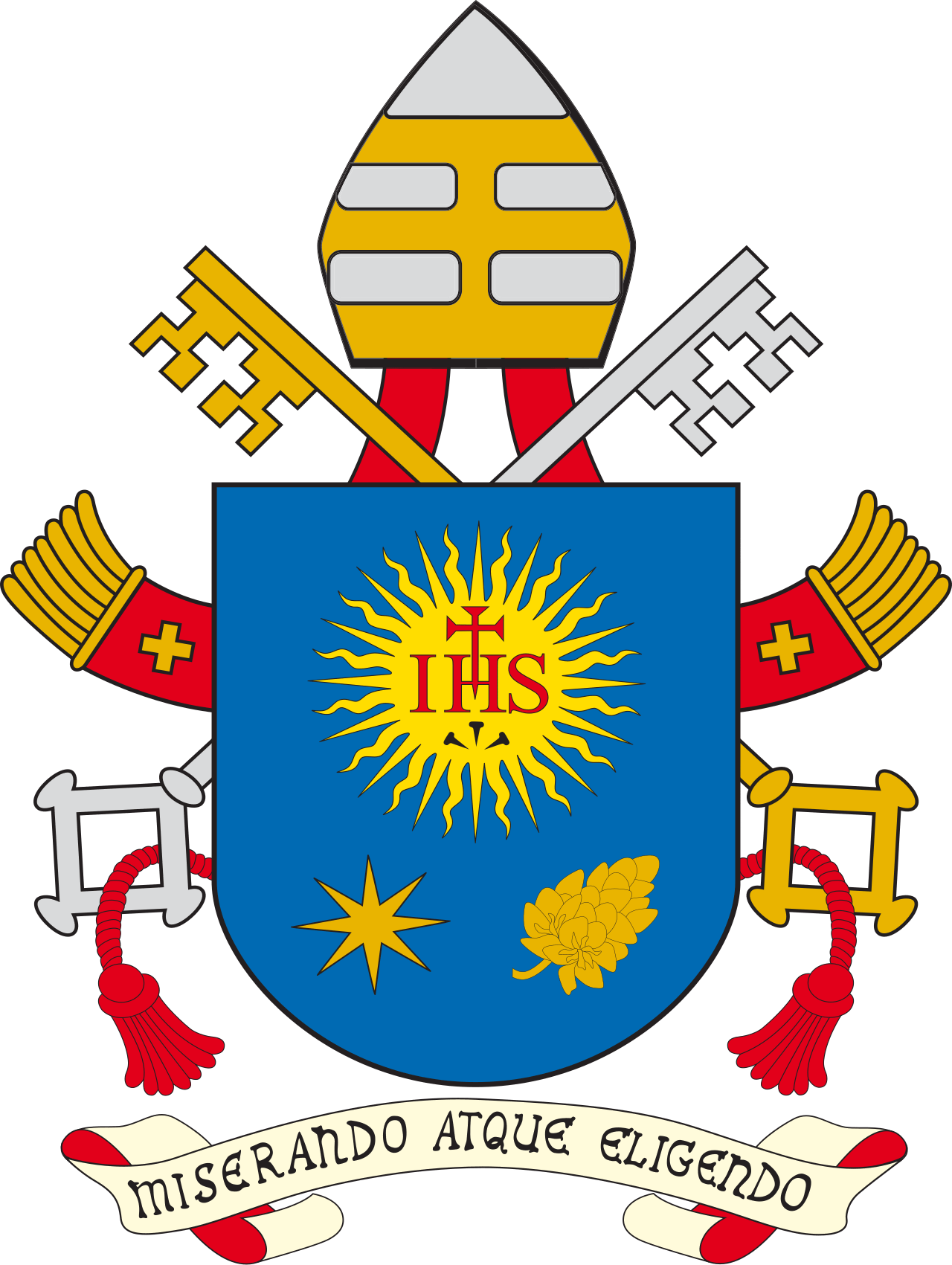
On September 21, 1953 — Student Day in Argentina — a sixteen-year-old named Jorge Bergoglio was on his way to meet his friends when he stepped into the basilica of San José de Flores and found a priest he had never seen before, Father Carlos Duarte Ibarra. The confession he made that afternoon changed the direction of his life. “I felt like someone was waiting for me,” he remembered decades later.
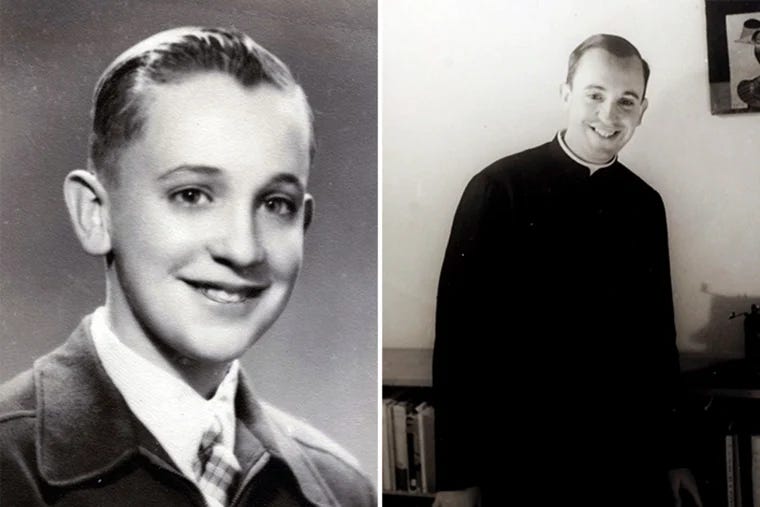
His papal motto, miserando atque eligendo, comes from a homily the Venerable Bede preached on the call of Matthew the tax collector.
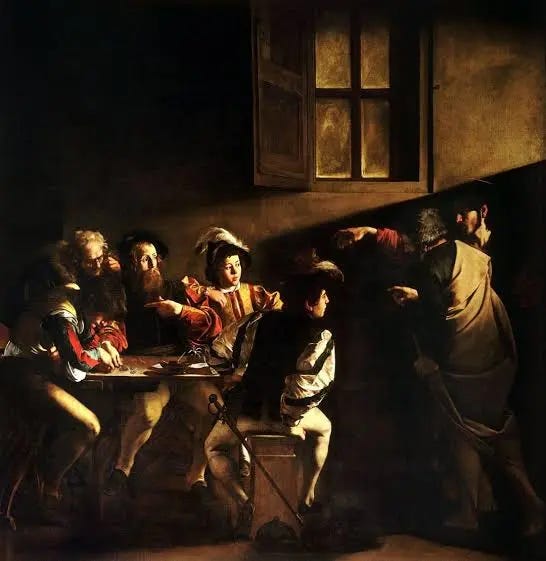
Whenever he visited Rome as a cardinal, Bergoglio would go sit before Caravaggio’s Calling of St. Matthew in the Church of San Luigi dei Francesi. “That finger of Jesus, pointing at Matthew. That’s me,” he told Father Antonio Spadaro in 2013.
The same discerning heart shows in a letter he answered in 2016, when the Jesuits’ own Loyola Press published Dear Pope Francis, a book of children’s questions. A seven-year-old named William asked what one miracle he would perform if he could. “I would heal children. I’ve never been able to understand why children suffer,” Francis answered. “My answer to the pain of children is silence, or perhaps a word that rises from my tears. I’m not afraid to cry. You shouldn’t be either.”
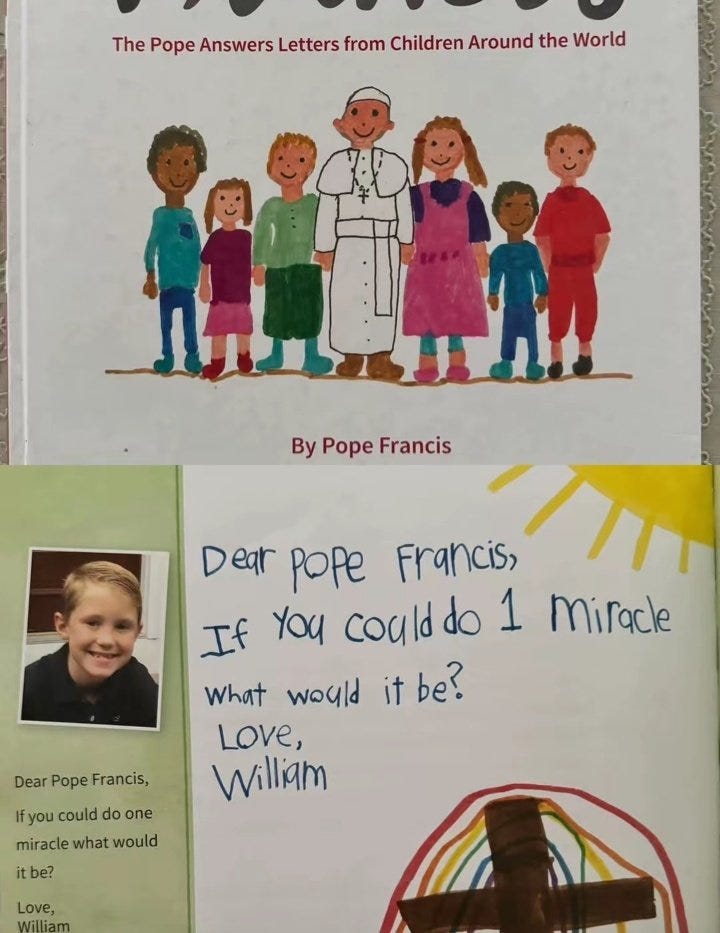
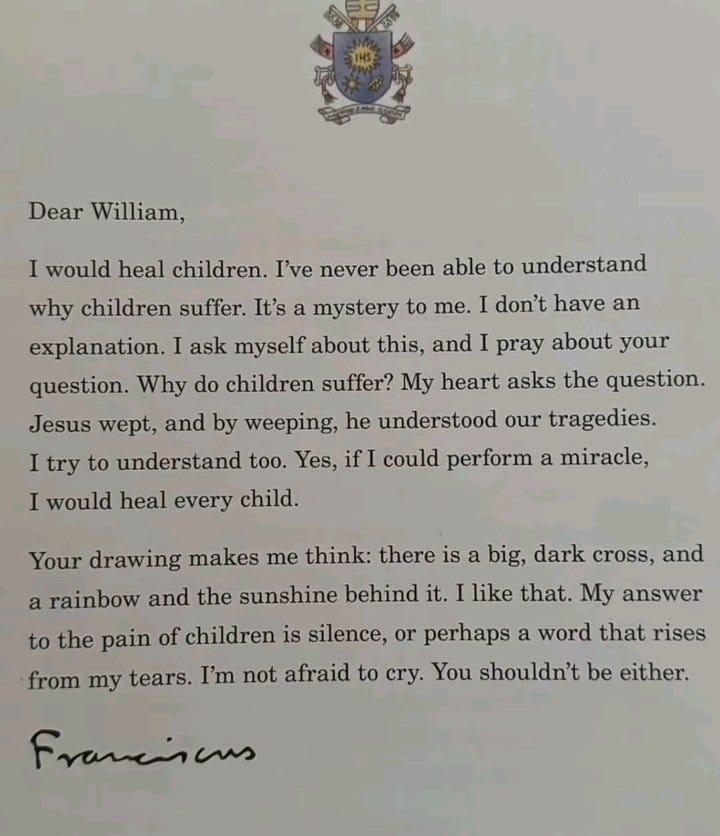
Discernment came first in everything Ignatius taught, and Francis spent sixty years practicing it on his own soul. When Spadaro asked him point-blank who Jorge Mario Bergoglio was, the pope answered, “I am a sinner whom the Lord has looked upon.”
2. Finding God in all things
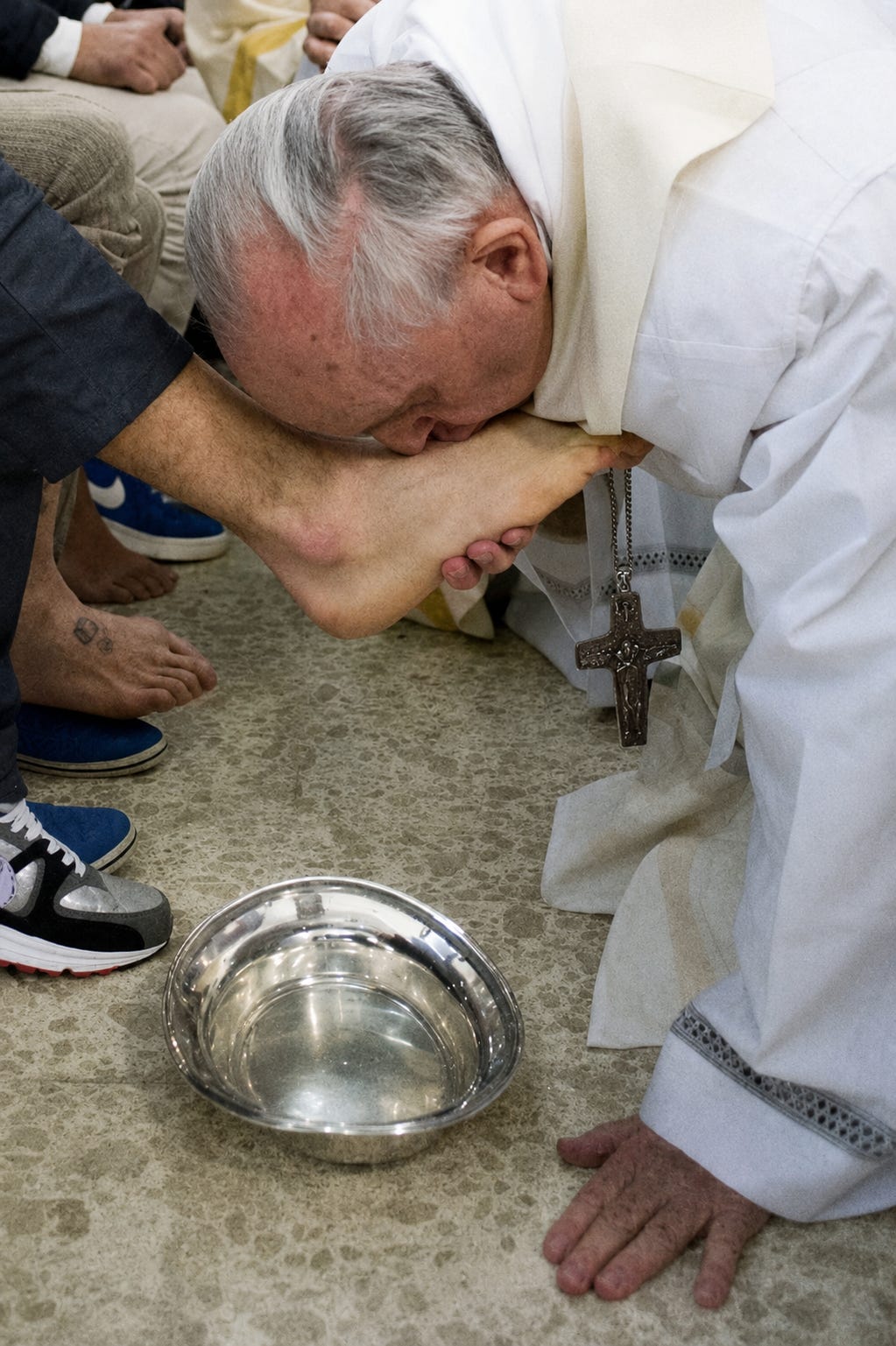
On Holy Thursday of 2013, two weeks into his papacy, Francis drove to Casal del Marmo, a juvenile detention center on Rome’s edge, and washed and kissed the feet of twelve young inmates. Two were women, one of them a Serbian Muslim. No pope had included women in the rite before.
Nine years later, on his penitential pilgrimage to Canada, Francis stopped before a baby named Everly Tshakapesh at the Basilica of Sainte-Anne-de-Beaupré. Everly was born with 3M syndrome, a rare genetic disorder that causes skeletal abnormalities and dwarfism. The pope paused, bent toward her, and kissed her. Those who watched called it “a moment of grace.” Everly died six months later.
Ignatius told his men to find God in all things. Francis went looking in a children’s prison and in the face of a dying little girl.
3. Men and women for others
Pedro Arrupe survived the atomic bombing of Hiroshima. He was master of novices four kilometers from the blast, and he had trained in medicine before entering the Society; the novitiate became a refuge for the wounded and dying.
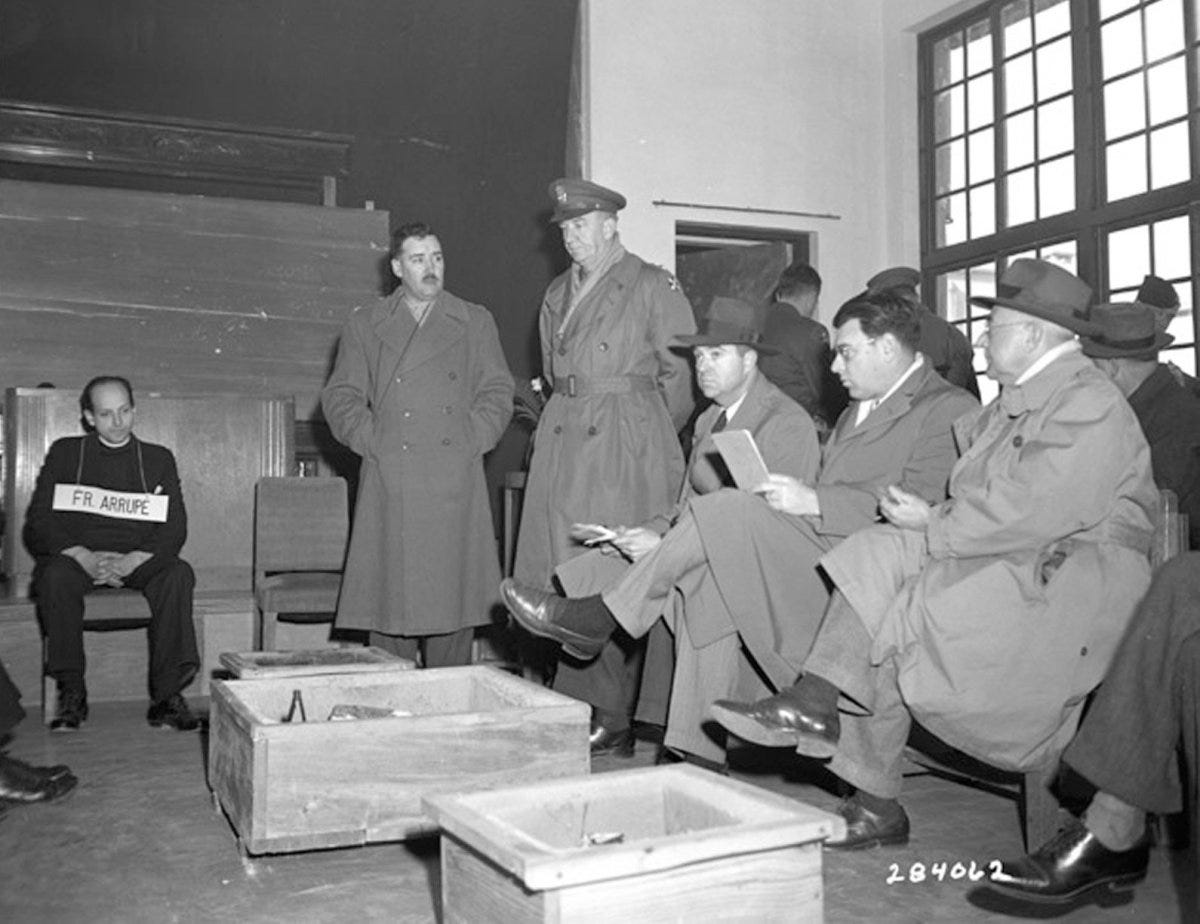
Twenty-eight years later, on this very feast in 1973, Arrupe stood before a congress of Jesuit alumni in Valencia as superior general and told them their prestigious schools had failed if they had not produced “men for others.” The phrase hangs in Jesuit school hallways everywhere, amended over the years to “men and women for others.”
After his death, a previously undisclosed video that Francis recorded on January 8, 2025, for young people circulated around the world.
