


Thank you for reading! Letters from Leo is a reader-supported publication and the fastest-growing Catholic community in the country. To receive new posts and support this movement, consider becoming a free or paid subscriber.
A reminder: to receive a free copy of American Pope, the new book by NPR’s Daniel Burke and Scott Detrow, you must buy a yearly subscription or donate $80 or more through my review itself by Thursday, Oct. 8.
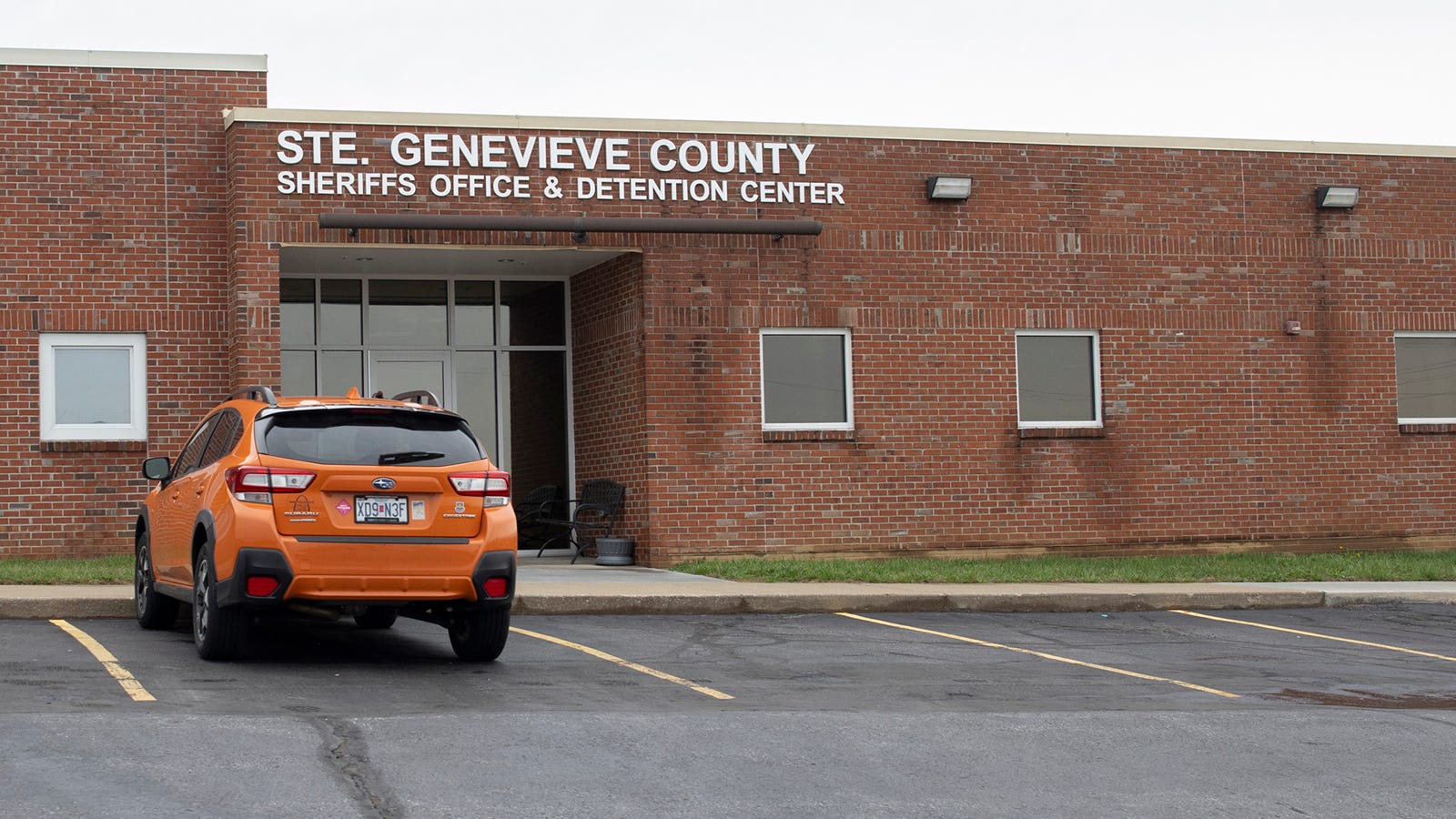
The Archdiocese of St. Louis sued the Trump administration on Monday, asking a federal judge in Missouri to let its priests hear confessions and bring Communion to the roughly 150 immigration detainees held at the Ste. Genevieve County Detention Center.
Archbishop Mitchell Rozanski filed the complaint alongside Father Chris Schroeder, one of the 10 to 15 priests who take turns visiting the jail each week. It names Homeland Security Secretary Markwayne Mullin and the acting director of ICE, along with Sheriff Gary Stolzer, whose jail collects $103 a day from ICE for every person it holds.
The suit invokes the First Amendment and the Religious Freedom Restoration Act — the 1993 law that carried Hobby Lobby to victory at the Supreme Court.
The jail’s rules are inanely strict.
Clergy may come on Mondays between noon and 4 p.m., and a priest speaks to each detainee by telephone through a glass partition, on a line the complaint says the jail can monitor. Lawyers, meanwhile, meet their clients during business hours in conference rooms with no divider; consular officials are exempt from the no-contact rule altogether.
Of course the Sacrament of Reconciliation over a monitored phone line is no sacrament at all, and the glass rules out the distribution of the Eucharist entirely.
The jail’s chief deputy, Maj. Jason Schott, offered a workaround: a priest could hand an individually packed host to a guard, who would deliver it to the detainee. Rozanski called the proposal “sacrilegious.”
“They cannot hear confessions, they cannot celebrate Mass, they cannot give the anointing of the sick to any of the detainees,” the archbishop said of his priests.
The archdiocese waited nearly a year before suing. A vicar phoned the jail in late 2025 and was refused. Rozanski wrote in May with three requests, among them face-to-face confession and permission to celebrate a single Mass; no reply came. A second phone call in August met another refusal.
About 3,000 people have passed through the jail since mid-2025, and most of those inside today are Hispanic Catholics.
Monday’s filing arrived eight days after Cardinal Robert McElroy’s immigration homily in Washington and two days after Cardinal Blase Cupich’s in Chicago.
At the Cathedral of St. Matthew on Sept. 27, the World Day of Migrants and Refugees, McElroy preached on the Good Samaritan and cast the American public as the priest and the Levite who crossed the road. “For us as a nation we can pass by no more,” he said. “We must stop, recognize the evil that is being carried out in our name, and fight every dimension of it.”
Cupich followed on Saturday at Old St. Patrick’s Church, where his homily listed what the Church in Chicago intends to press for. One item was “insisting on having access to people in detainment centers.”
Cupich also tied the matter to the altar. “To bow before the consecrated Host while being indifferent to the stranger,” he said, “is a fundamental breakdown of Eucharistic logic.”
Two days later, a Missouri archbishop went to federal court alleging this profound abuse of religious liberty
These bishops aren’t alone.
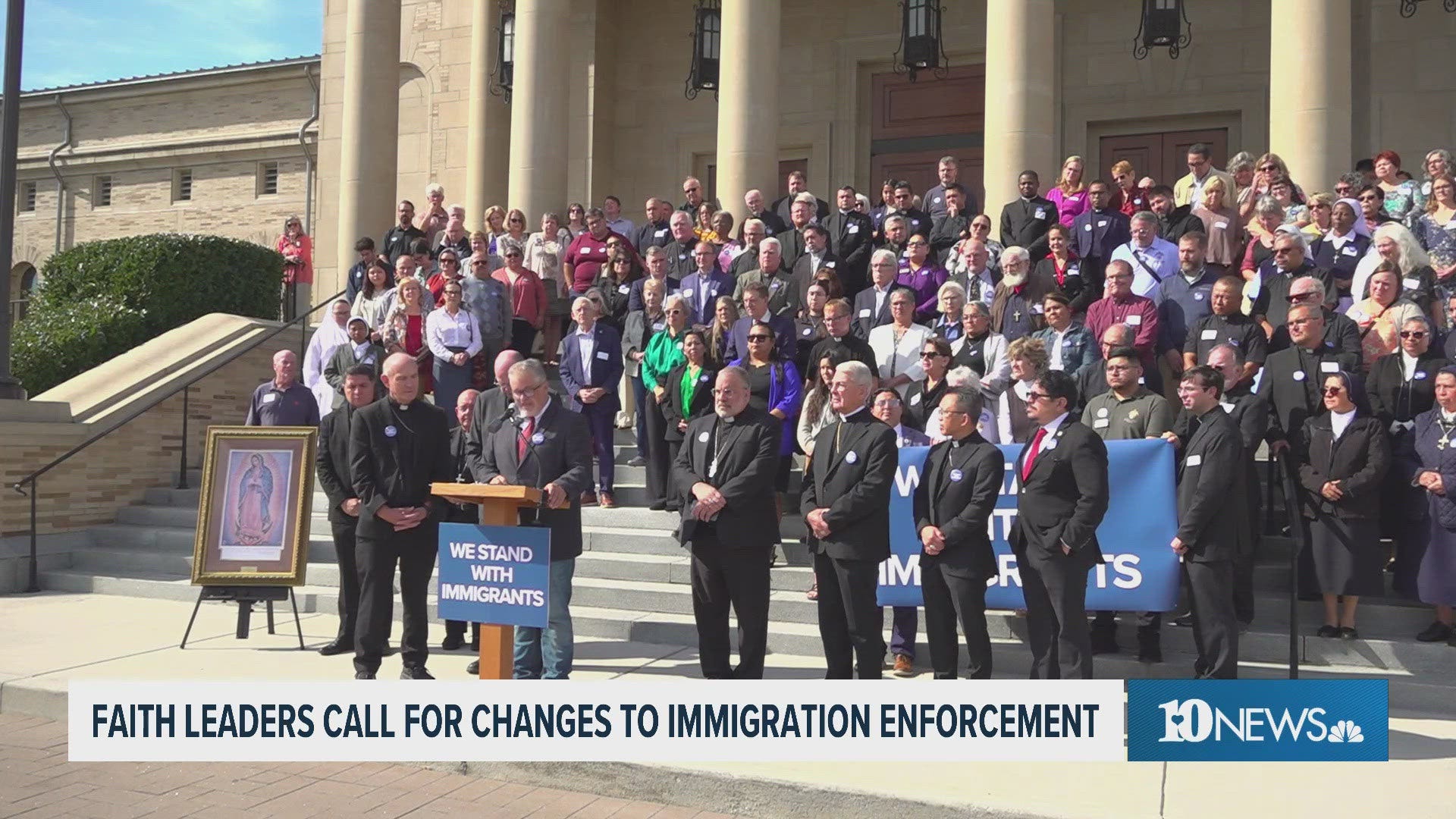
Bishop Mark Beckman of Knoxville and Bishop David Talley of Memphis stood on the steps of Knoxville’s Cathedral of the Most Sacred Heart of Jesus with faith leaders from six states. (Tennessee is my home state, and its bishops first rebuked the raids in June 2025.)
“We have a responsibility to care for the dignity of each and every human person,” Beckman said, “and to respect the rights and due process that are due to citizens and anyone who lives on U.S. soil.”
They are all working from words Pope Leo XIV spoke eleven months ago.
On Nov. 4, 2025, three days after ICE turned away Chicago Auxiliary Bishop José García-Maldonado as he carried the Eucharist toward the Broadview facility, Leo stopped for reporters outside Castel Gandolfo.
“The spiritual rights of people who have been detained should also be considered,” he said, “and I would certainly invite the authorities to allow pastoral workers to attend to the needs of those people.”
The archdiocese filed an OSV News account of those remarks as an exhibit to Monday’s complaint.
Four weeks earlier, Leo had told Bishop Mark Seitz of El Paso, then the bishops’ migration chairman, that “the Church cannot remain silent” and that he wanted the American bishops to speak together. Seitz relayed one more line from that audience: “You stand with me, and I stand with you.”
Leo has not let the subject rest since. He spent America’s 250th birthday with the migrants of Lampedusa, and his message for this year’s World Day of Migrants, titled “Even Just One of These Children,” told Catholics, “We cannot remain indifferent, nor can we become accustomed to such suffering.”
The Trump administration has put its own commitment to religious liberty in writing. The executive order creating the president’s Religious Liberty Commission, signed May 1, 2025, declares it “the policy of the executive branch to vigorously enforce the historic and robust protections for religious liberty enshrined in Federal law.”
ICE’s website says clergy may visit detainees at any time, provided they notify the sheriff. And when Leo raised Broadview, Tricia McLaughlin, then Homeland Security’s chief spokeswoman, answered on X that “religious organizations have ALWAYS been welcome to provide services to detainees in ICE detention facilities.” (The capitals are hers.)


Federal judges have twice found otherwise this year. Judge Jerry Blackwell ordered clergy admitted to the Whipple Federal Building in Minneapolis on March 20; in Chicago eleven days later, Judge Robert Gettleman found that “the government has substantially burdened plaintiffs’ exercise of religion.”
Rozanski is asking a third court to say the same thing, and he framed the stakes in language the administration’s own allies will recognize.
“This is an issue that impacts all of us,” he said, “because this concerns religious freedom in our country, the freedom in which we are able to minister to everyone in every area, in every place, including our prisons.”
Catholics believe the host that Maj. Schott wanted sealed in a package is the body of Christ.
Jesus counted the prisoner alongside the stranger among those in whom he would be met (“in prison and you visited me,” Matthew 25 has him say), and Leo invoked that same chapter at Castel Gandolfo.
A government that pays a county jail $103 a day to hold a Catholic, then bars that Catholic from confession, has made a claim that human dignity only belongs to some people of some religions in some cases.
After a year of homilies and joint statements contesting that claim, Rozanski has put it before a judge.
“We are not giving up,” he said. “We know that we are mandated to bring the presence of Christ to everyone, and especially to those in prison. Jesus gave us that mandate, and we seek and will fulfill it.”
At Letters from Leo, we stand with Archbishop Rozanski and his priests, and with the millions of American Catholics (and countless others of goodwill) who believe that no detention contract can cancel a person’s right to confess his sins and receive the body of Christ.
The detainees in Ste. Genevieve asked for a priest. Jesus told his followers they would be judged on whether they visited him in prison, and Pope Leo XIV has spent his pontificate reminding American Catholics that the command carries no exemption for immigration status.
This is the fastest-growing Catholic community in the country because people are hungry for a faith that shows up at the jailhouse door — and keeps knocking after the guard says no.
If you believe this movement matters (Catholics and people of goodwill defending the dignity of the detained against a government that rations the sacraments), I am asking you to join us.
If you’d like to invest in our mission, here are three ways you can help:
Subscribe as a paid member to receive exclusive posts about the life and formation of Pope Leo and help sustain this newsletter.
Donate with a one-time gift to fuel this project’s mission.
Share this post (and Letters from Leo) with a friend who might enjoy it.
Paid subscribers receive exclusive reporting, including our biographical series on Pope Leo’s Life & Formation, along with the weekly Sunday Scripture Reflection Series.
Whether you give $0, $5, $50, $500, $1,000, or more, your presence here matters — no matter your faith or your politics.
Thank you for reading. I’ll see you on the road.

Catholics believe that the Eucharist and the Sacrament of Reconciliation are essential to their salvation. Whether the government believes this or not is irrelevant, and it is blatant hypocrisy for it to proclaim Religious freedom and deny it to any group.
Surely this is an issue that must unite people of every religion. The Trump government never cases to proclaim itself as brought about by God, but continuously prevents its population from carrying out the essential message of Jesus and every other faith based on love of and service to others.
Catholics believe that the Eucharist and the Sacrament of Reconciliatin