


Dear friends,
Letters from Leo’s Sunday Reflection Series are essays grounded in the Mass readings — offering a clear-eyed way to follow Jesus amid today’s political realities, not by retreating from public life or baptizing any ideology, but by letting the Gospel shape our conscience, courage, and compassion.
These reflections will be available to all paid subscribers, as a small but sincere way of saying thank you for making Letters from Leo possible.
Letters from Leo is open to anyone who wants to be informed and inspired by our pope — and to turn that inspiration into action that leaves America and the world more just, less cold, and more alive with hope.
If you’d like to invest in our mission during this critical time, here are three ways you can help:
Subscribe as a paid member to receive exclusive posts about the life and formation of Pope Leo and help sustain this newsletter.
Donate with a one-time gift to fuel this project’s mission.
Share this post (and Letters from Leo) with a friend who might enjoy it.
Whether you give $0, $1, $100, $500, $1,000, or more, your presence here matters — no matter your faith or your politics.
Thank you for reading. I’ll see you on the road.

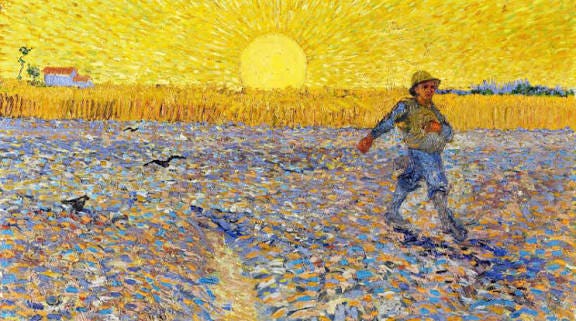
“A sower went out to sow. And as he sowed, some seed fell on the path, and birds came and ate it up.” — Matthew 13:3-4
There is a farmer in today’s Gospel who throws seed onto a footpath. Watch him work for a moment. He flings grain across packed dirt where travelers walk, onto shelves of rock, into standing thornbushes, and he keeps his rhythm the whole time, as if the waste never crosses his mind.
Any farmer in Galilee would have winced at the sight. Seed was capital. A careful man measured his grain and buried it only where the ground gave him decent odds.
Most of us have heard this parable turned into an examination of conscience.
What kind of soil am I? Is my heart the path, the rocks, the thorns, or the good earth? Preachers reach for that reading almost by instinct, and Jesus himself walks the disciples through the four soils, so the question is legitimate.
But Jesus named this story for the sower, and the sower deserves far more of our attention than we usually give him.
Look at what the farmer’s behavior tells us about God. He sows without circumspection. He never tests the soil or weighs the odds. The same handful of seed falls on the pavement and the good field alike, which means the gift is open to every heart in every condition — distracted, shallow, choked with worry, or ready. Nobody gets skipped.
Then come the results.
Historians of ancient agriculture estimate that a good harvest in first-century Galilee returned roughly sevenfold on the seed a farmer buried. Scripture treats anything beyond that as a wonder: when Isaac reaped a hundredfold, Genesis explains the marvel in four words — “the Lord blessed him.”
Jesus closes his story with thirty, sixty, and a hundredfold as the ordinary output of God’s word in a willing heart. We are dealing with a lavish giver whose returns no field on earth can match.
What does that mean for us?
