


Thank you for reading! Letters from Leo is a reader-supported publication. If you find value in my work, please consider becoming a paid subscriber or making a one-time donation.
One recent Sunday at St. Gabriel the Archangel Catholic Church in Hopkins, Minnesota, ushers counted barely half the usual congregation. Whole families were absent.
The reason wasn’t bad weather or illness — it was fear.
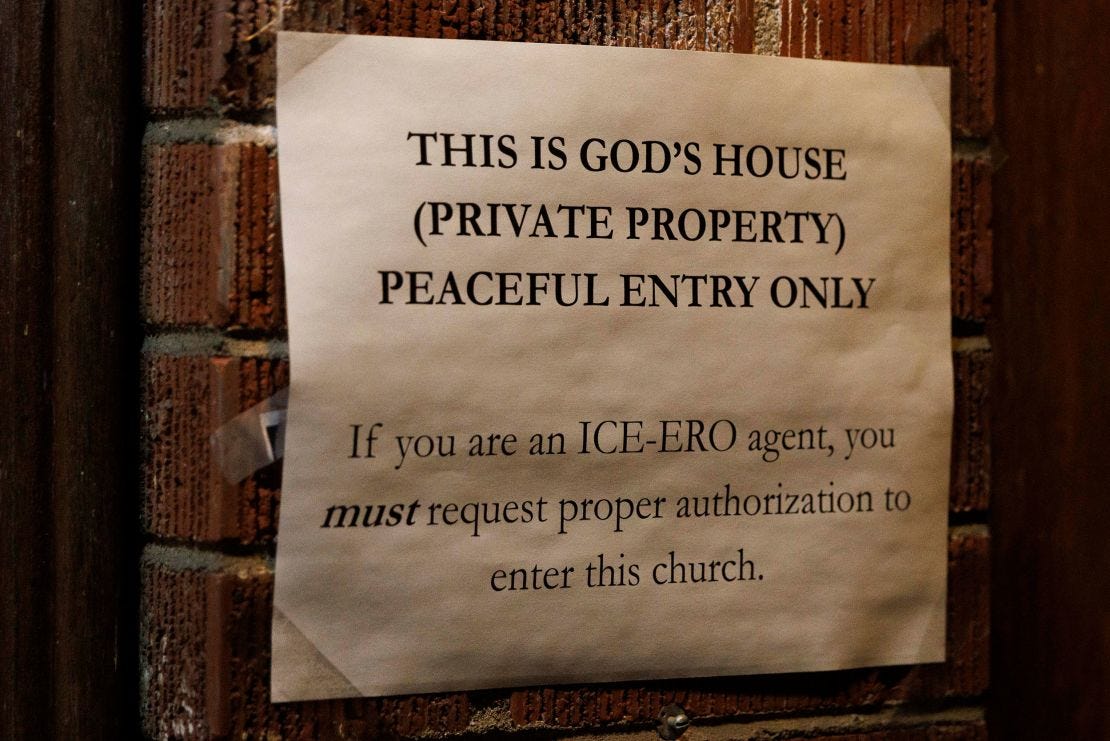
Only weeks earlier, U.S. Immigration and Customs Enforcement agents had descended on the parish parking lot and arrested St. Gabriel’s longtime maintenance worker, 46-year-old Francisco Paredes, as he arrived for work.
Paredes, a parishioner who had lived in the U.S. for 25 years, was deported to Mexico five days before Christmas, leaving the community stunned. That trauma deepened on Epiphany Sunday, when parishioners spotted men in ski masks sitting in an unmarked car outside the church during Mass.
I Love This Church. I Love This Country. And I Refuse to Give Up on Either.

At the beginning of the year, I’m asking you to help build something sturdy enough to stand against cynicism, authoritarianism, and despair.
“They came to our church, and even though they didn’t enter, they were apparently surveilling us,” Fr. Paul Haverstock said, calling the agents’ presence a shocking breach.
It “felt like we were not living in the United States, but in some violent place — a war zone,” Haverstock told Catholic News Agency in a thoroughly reported article. After the priest’s intervention, ICE ultimately did not interrupt the service, but just seeing armed officers idling outside left worshipers shaken.
“Who wouldn’t feel intimidated by that?” the priest asked.
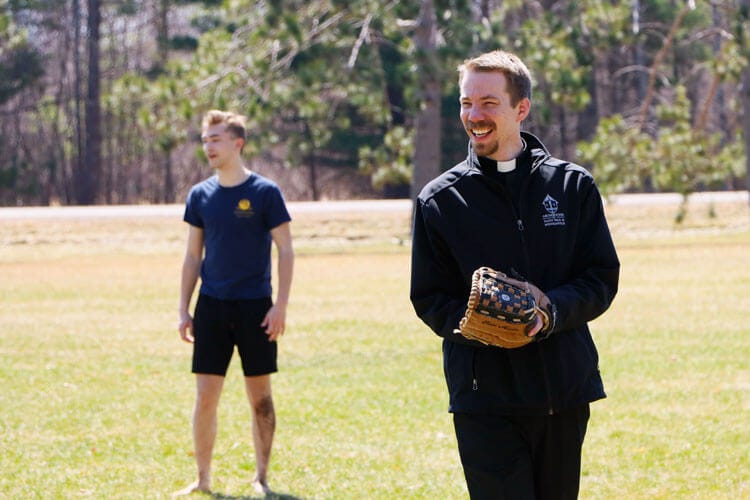
Attendance at St. Gabriel’s Spanish Mass has since plummeted by roughly 50%.
The diocese is considering offering his flock a dispensation from the Sunday Mass obligation, fearing that “hardly any of them will be here anyway because of the fear” if ICE continues lurking outside.
A Department of Homeland Security spokesman, however, rejects the notion that ICE targets churches. “ICE does not raid churches,” the agency told CNA, dismissing such claims as “smears.”.
Officials insist that criminals can no longer “hide in places of worship” under President Trump’s directives, and that if a “dangerous felon” or “child sex offender” were present at a church, agents might have to make an arrest “to protect public safety.”
In Paredes’s case, though, the “felon” label hardly fits.
The deported church employee’s only brush with the law was a years-old misdemeanor DUI.
“All the people I met in [ICE] prison are hardworking people,” Paredes later said, refuting the idea that mass deportation is snaring only violent criminals.
He described his month in detention as degrading and inhumane: “They treat you like an animal. We sleep on the floor. No blanket,” Paredes recounted after spending Christmas in ICE custody without access to any religious services.
My Interview with Crux: Restoring the Catholic Left in American Politics

We can’t beat MAGA with theology debates, ivory tower panels, and essays no one reads. It’s time to try something new.
Haverstock says ICE’s tactics have “terrorized” his community. Parishioners — even those with legal status — now fear that going to Mass could lead to detention or family separation.
“It’s frightening. I was especially frightened for my [immigrant parishioners],” the pastor said.
He has been “blessed” to see his mostly bilingual parish unite in support of their “immigrant brothers and sisters,” but the atmosphere is undeniably tense. “Families should not be separated except for extremely grave reasons,” Haverstock insists, and simply lacking legal papers isn’t one of those reasons.
A Bishop’s Unprecedented Dispensation
What happened in Minnesota is not an isolated incident. Across the country, Catholic clergy are sounding alarms as ICE expands enforcement into sacred spaces.
Here’s a rundown.
