


Dear friends,
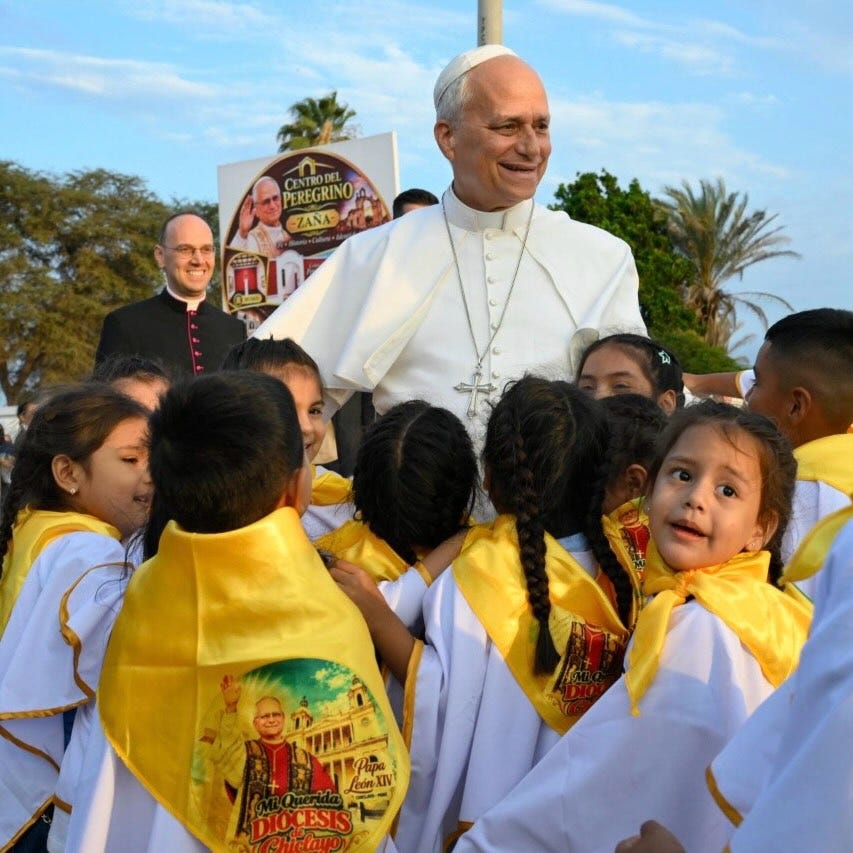
Today is the Thirty-Third Sunday in Ordinary Time and the tenth World Day of the Poor. Pope Leo XIV prayed the Angelus today in Cusco, high in the Peruvian Andes, two days before the end of his trip home.
This week’s reflection is about the servant who buried his talent, the bankers Pope Francis found for him six years ago today, and the open hands Leo is asking of the Church.
These Scripture reflections are available exclusively to paid subscribers. If my work means something to you, I’m asking for your help.
If you’d like to invest in our mission during this critical time, here are three ways you can help:
Subscribe as a paid member to receive exclusive posts about the life and formation of Pope Leo and help sustain this newsletter.
Donate with a one-time gift to fuel this project’s mission.
Share this post (and Letters from Leo) with a friend who might enjoy it.
Whether you give $0, $5, $50, $500, $1,000, or more, your presence here matters — no matter your faith or your politics.
Thank you for reading. I’ll see you on the road.

“Out of fear I went off and buried your talent in the ground. Here it is back.” — Matthew 25:25
When Jesus told this story, a talent had nothing to do with singing or the ability to play shortstop for the New York Yankees.
It was a weight of silver, and Pope Francis once noted that a single one was worth about twenty years of a laborer’s wages, which means the third servant in today’s Gospel walked out of his master’s house carrying something close to a lifetime of income and went straight to find a place to dig.
He is honest about why when the master gets home. “Out of fear I went off and buried your talent in the ground,” he says. “Here it is back.”
I can picture him brushing the dirt off the coin before he hands it over.
Pope Leo XIV preached on this parable today in Cusco, about 11,000 feet up in the Andes, in the plaza of the Cathedral Basilica of the Assumption.
Beside him stood the Taytacha, the dark crucifix Cusqueños call the Lord of the Earthquakes; when the ground shook in 1650, and the people carried it through the streets, the story goes, the aftershocks stopped. Leo brought a new shroud to lay over it.
The coins in the parable, he told the crowd, stand for everything God gives us for free, our life and our faith and our vocation, and if you had to boil them down to a single word that word would be love. Near the end, he asked Mary to teach us “not to bury the grace we have received.”
It is also the tenth World Day of the Poor, a Sunday Francis set aside as the Jubilee of Mercy closed in November 2016. Leo signed this year’s message back in June, on the feast of St. Anthony of Padua, under a line from Psalm 14: “The Lord is the refuge of the poor.”
Six years ago today, the lectionary landed on the very same Sunday, and Francis preached these readings in a St. Peter’s Basilica the pandemic had mostly emptied. He caught something most of us read past. The master trusts the third servant, too; he gives him the talent anyway, Francis said, “hoping that despite his fears, he too will put to good use what he received.”
What sent the man out with a shovel was the God he had in his head, a hard master who harvests where he did not plant.
The master calls him wicked, and Francis seemed almost surprised by that. “And yet he did nothing wrong! But he did nothing good either.” The man “preferred to sin by omission rather than to risk making a mistake.”
Most of us know that sin better than we would like.
