


Dear friends —
Before you read today’s essay, one important note:
Anyone who purchases a yearly subscription to Letters from Leo or donates $80 or more from this post will receive a brand-new copy of Daniel Burke and Scott Detrow’s American Pope: Leo XIV’s Road from the South Side of Chicago to Vatican City.
This offer is available through Thursday, October 8, at 11:59 PM PT.
If you’ve been considering joining our community, this is the moment — and this is the book. I’ll explain why below.
On May 8, 2025, NPR’s Scott Detrow was broadcasting from the edge of St. Peter’s Square when the new pope’s name rang out over the crowd.
Days earlier, after a source mentioned a quiet American who had spent decades in Peru, Detrow had circled that name in his notebook: “Prevost?”
That notebook entry captures why Detrow and his NPR colleague Daniel Burke were the right pair to write this book. The question behind it (who, exactly, was Robert Prevost?) drove a yearlong reporting effort that took them from Chicago to Chiclayo and many places in between.
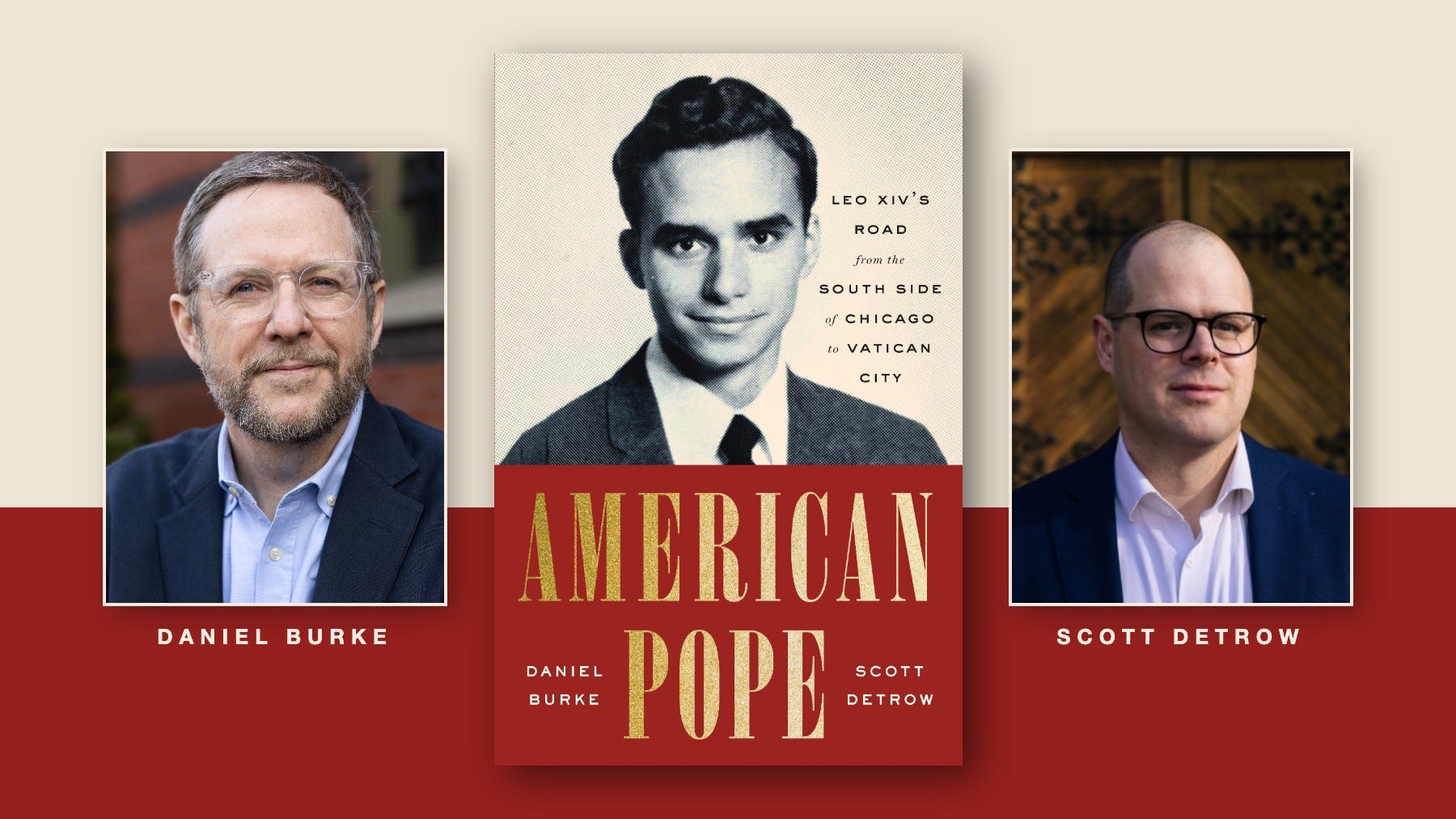
American Pope: Leo XIV’s Road from the South Side of Chicago to Vatican City, published today by Flatiron Books, is the result.
Burke is NPR’s senior editor of religion and spirituality, and Detrow co-hosts All Things Considered, which he anchored from St. Peter’s Square during the conclave.
They interviewed more than a hundred people on six continents and dug through archives no journalist had seen.
I have read both men for years, and I trust their work. Here is what I learned from their book that I hadn’t read anywhere else.
Francis wanted Prevost from the start
In the autumn of 2014, Robert Prevost was driving home to Chicago’s South Side from a fundraising trip to Madison, Wisconsin, when his cell phone rang. Archbishop James Green, the Vatican’s ambassador to Peru, was on the line.
“Are you sitting down?” Green asked.
“Well, yes,” Prevost said. “I’m driving.”
“Pull over,” Green told him.
Pope Francis needed a bishop for Chiclayo. When a Vatican official handed him the list of candidates, Francis didn’t look at the names. He asked one question first: “Is Robert Prevost one of them?”
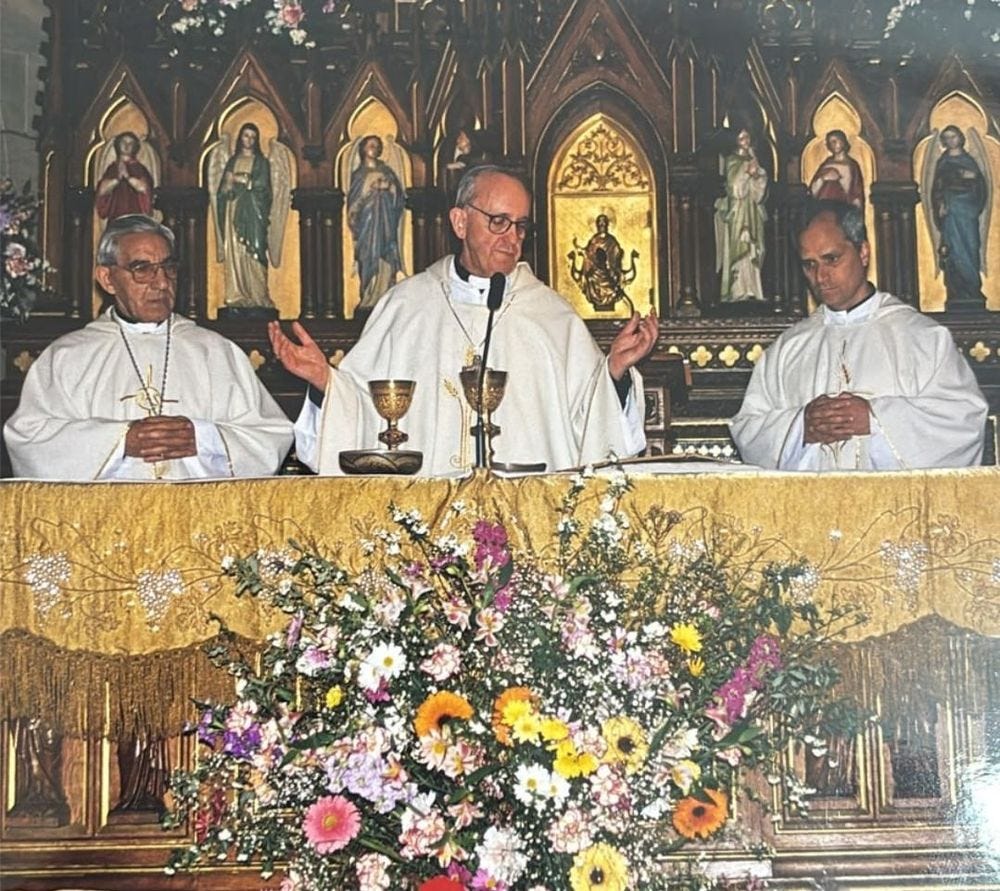
The call surprised Prevost, because the two men had history. In August 2004, as head of the Augustinians, he celebrated Mass with Cardinal Jorge Mario Bergoglio at the Augustinian parish in Buenos Aires.
Not every meeting went so well. When Bergoglio wanted a particular Augustinian friar for a job, Prevost moved the man to another assignment instead. “I was told he wasn’t happy about this,” Prevost said. After the Argentine became pope, Prevost told friends he would likely never be made a bishop.
Francis had other ideas.
In 2013, Prevost invited the new pope to celebrate the opening Mass of the Augustinians’ General Chapter, something no pope had done, and Francis accepted. Greeting the friars afterward, he joked that religious superiors are elected for a term, “but the bishops are appointed for life.”
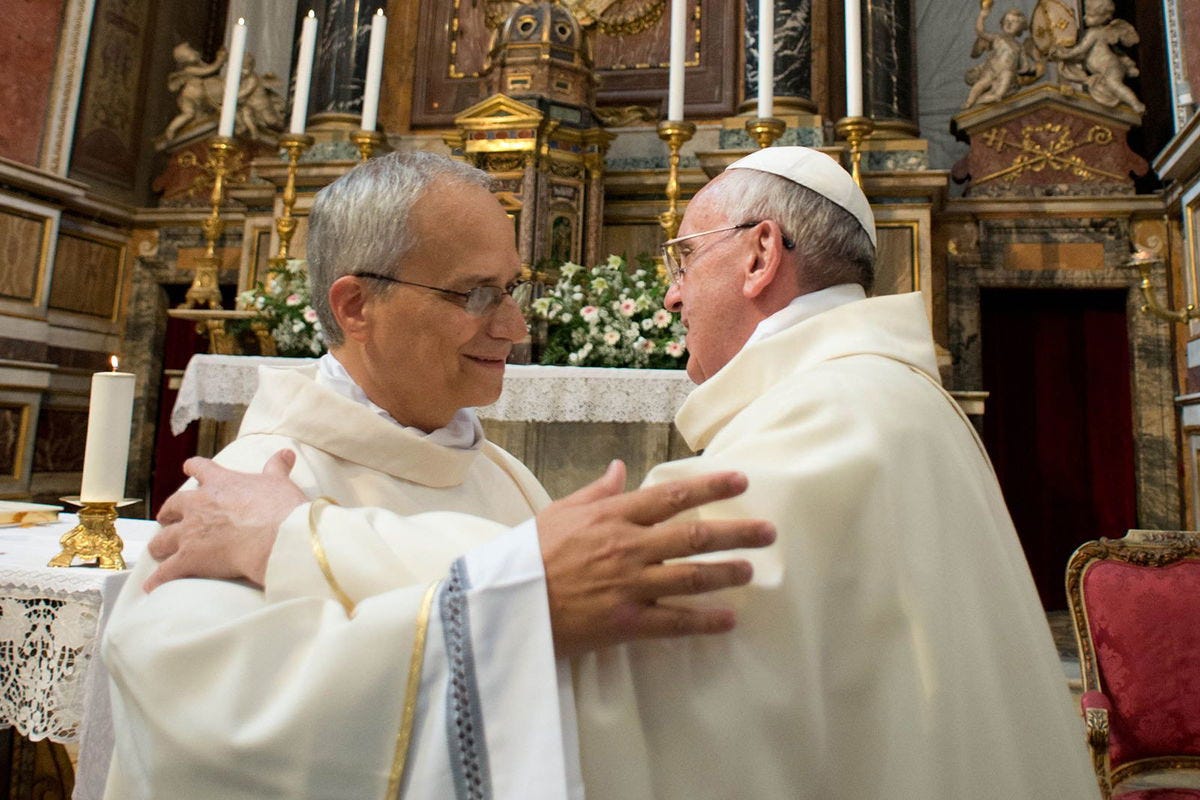
The authors read it as a hint, and a year later Green’s phone call made it plain.
The pope, Trump, and JD Vance
In February 2025, Pope Francis wrote to the American bishops rejecting Vice President JD Vance’s claim that Christian love runs in a hierarchy that stops at the border. Cardinal Prevost’s X account shared criticism of Vance that same month.
Burke and Detrow confirm what I reported in Newsweek and here at Letters from Leo last year, and what Christopher Lamb confirmed in American Hope this spring. “Prevost was one of several cardinals who helped Francis draft it,” they write. The future pope had a hand in the papal rebuke itself.
Reporters spent weeks after the conclave parsing his voting record, which included a ballot in the 2016 Illinois Republican primary.
The book goes further: in private, he made it clear “to several close friends over the years that he did not like the president’s politics or policies.”
A gringo in the Shining Path years
The Peru chapters carry the book.
After the Shining Path began murdering priests in 1991, Prevost was offered a bodyguard in Trujillo because of his post as the diocese’s judicial vicar. He said no. “I don’t look like your typical gringo,” he explained. “My complexion is a little darker, and if I didn’t speak, they wouldn’t necessarily know who I was.”
In those same years, Prevost vouched for a young man who wanted to join the friars in Chulucanas.
Father Dan Turley (later a bishop) gave the recruit a chance on Prevost’s word, then learned he had been a member of the Shining Path and was serving time for terrorism. Turley came to suspect the recruit had tried to infiltrate the order. He never told Prevost.
The honest parts
None of this is hagiography, and the book is better for it.
Father Donald Reilly, a former East Coast provincial, phoned Prevost in Rome about a priest he wanted out of the order after an arrest on charges of sexually assaulting a fourteen-year-old. Prevost asked if he could call back. “The devil is at the door!” Reilly remembers thinking.
Reilly is fair about it, though. “He didn’t stonewall me at all,” he told the authors. “He just wasn’t running as fast on this issue as we were.”
The priest was laicized in 2010.
Planter’s Punch at Villanova
Some of my favorite pages are the lightest. At Villanova, Prevost never dated and once came to a Halloween party as Groucho Marx, cigar included.
The gatherings in the old Main Line mansions were, the authors write, “like a mild frat party, with the Planter’s Punch carefully mixed to avoid drunkenness and debauchery.” He’d have a beer or two, seldom more.


I shared that snapshot on X in June, and it came to light through the work behind this book. Young Bob Prevost looks nothing like a man headed for the loggia, which is exactly why I love it.
A hard candy in the Sistine Chapel
The book saves its best scenes for the conclave. After Francis died, Cardinal Blase Cupich told the Chicago Sun-Times that electing an American would be “a stretch.”
Prevost told a friend, “I’m sleeping well at night.” When the line reached Sister Thérèse DelGenio, his old mentor, she had a reply: “Oops. He forgot about the Holy Spirit.”
He was also one of the few cardinals who admitted to watching Conclave, the Ralph Fiennes thriller about a papal election. He and his brothers and high school friends joked about matching each character to a real cardinal, but Prevost insisted he wasn’t any of them. Robert Harris, he pointed out, wrote the novel in 2016, before Prevost was a cardinal.
On the morning of May 8, 2025, Prevost sat in the Pauline Chapel weighing a name. Augustine was the obvious choice for a lifelong Augustinian, but it didn’t feel right. Then he saw the coat of arms of Leo XIII inlaid in the floor before the altar, and he made up his mind.
That afternoon, as the fourth-ballot count climbed, Cardinal Luis Antonio Tagle heard the man beside him breathing deeply and leaned over.
“Do you want a candy?” he asked. Prevost took one. Minutes later, when Cardinal Pietro Parolin asked by what name he wished to be called, he paused before answering in Italian: “Leone.”
Months into the papacy, two grade-school classmates got stuck in a security line and missed the audience where he had planned to greet them. Leo phoned and had them brought through a side gate. “Who would have ever thought,” he asked, beaming, “a kid from Dolton would be the pope?”
On PBS News Hour this week, the two authors walked through Detrow’s notebook in Rome and the long Saturday meetings he describes as Francis taking Prevost to “pope school.”
Burke and Detrow did the work to explain how a kid from Dolton got there. Along with Christopher Lamb’s American Hope, Elise Ann Allen’s biography, Gerard O’Connell and Elisabetta Piqué’s The Election of Pope Leo XIV, and Pope Leo XIV’s own Freedom Under Grace, American Pope belongs on the shelf of anyone who wants to know who Robert Prevost was before the white cassock.
Buy it, and if you want it free, become a yearly subscriber from this post by Thursday night.
At Letters from Leo, we stand with the reporters who do the slow, patient work of telling the truth about this pope, and with a shepherd who learned his trade on the dirt roads of northern Peru.
The man in these pages turned down a bodyguard so he could stay unnoticed among his people in Peru, and decades later he sat in the Sistine Chapel with his head in his hands, in prayer during the morning ballots. We want that kind of Church here at home, one where the dignity of the poor comes before the comfort of the powerful.
This is the fastest-growing Catholic community in the country because people are hungry for the truth about Leo, told with care and without spin.
If you believe this movement matters, Catholics and people of goodwill standing for human dignity in a season of cruelty, I am asking you to join us.
If you’d like to invest in our mission, here are three ways you can help:
Subscribe as a paid member to receive exclusive posts about the life and formation of Pope Leo and help sustain this newsletter. Go yearly by Thursday and American Pope is yours free.
Donate with a one-time gift to fuel this project’s mission.
Share this post (and Letters from Leo) with a friend who might enjoy it.
Paid subscribers get our full series on Pope Leo’s Life & Formation, from his hidden years in Trujillo to the secrets of his election, along with our weekly Sunday Scripture Reflection Series.
Whether you give $0, $5, $50, $500, $1,000, or more, your presence here matters — no matter your faith or your politics.
Thank you for reading. I’ll see you on the road.

Hardly surprising.
For the past nine years, America's Catholic bishops have declared all-out war against two Trump Administrations for cutting off their multi-million dollar payoffs at the Federal Taxpayer Cash Trough.
Since the USCCB's abuse-and-coverup scandals erupted a quarter-century ago, its secular NGO's have waved the "Catholic" brand to get billions from Obama and Biden, even though Federal law requires that their programs contain no religious content.
Unfortunately, our bishops have been a subsidiary of the Democrat Party since Cardinal Gibbons supported Woodrow Wilson in 1916, and then opted to advocate the welfare state in 1919.
Our bishops scandals have driven some 50 million from the pews since the 60's, and our shepherds now rely on mandatory taxpayer cash instead of our voluntary donations, which, they lament, have dried up.
The bishops' anti-Trump campaign will ramp up for the next month. They need the money, and they don't care about alienating an already scandalized faithful. After all, they don't have to run for reelection.
Consider: ever wonder why they never ran this kind of campaign against that "very devout Catholic" but very pro-abortion Joe Biden?
Now you know. It's all about the Benjamins. Big Bucks - and it comes from the Big Blues.
Pray for our shepherds. They're the only bishops we've got.