
One Year Later, We Are Still Pope Francis’s Legacy
Pope Francis died one year ago on April 21, 2025. I’m republishing my Newsweek essay from the morning of his death — with a prayer that we, and Pope Leo XIV, still carry his mission forward.
Thank you for reading! Letters from Leo is a reader-supported publication dedicated to covering Pope Leo XIV, the Catholic Church, and American politics. To receive new posts and support my work, consider becoming a paid subscriber.
Editor’s note: One year ago today, Pope Francis died at the Casa Santa Marta in Rome. I wrote the essay below for Newsweek in the hours after his passing. I’m republishing it here on the anniversary of his death because the call he issued has not quieted in the twelve months since. Pope Leo XIV now carries Peter’s ring. The mission he inherited from Francis is the same one Francis entrusted to every one of us.
Pope Francis, who passed away on Monday, never led from above. He stood among us.
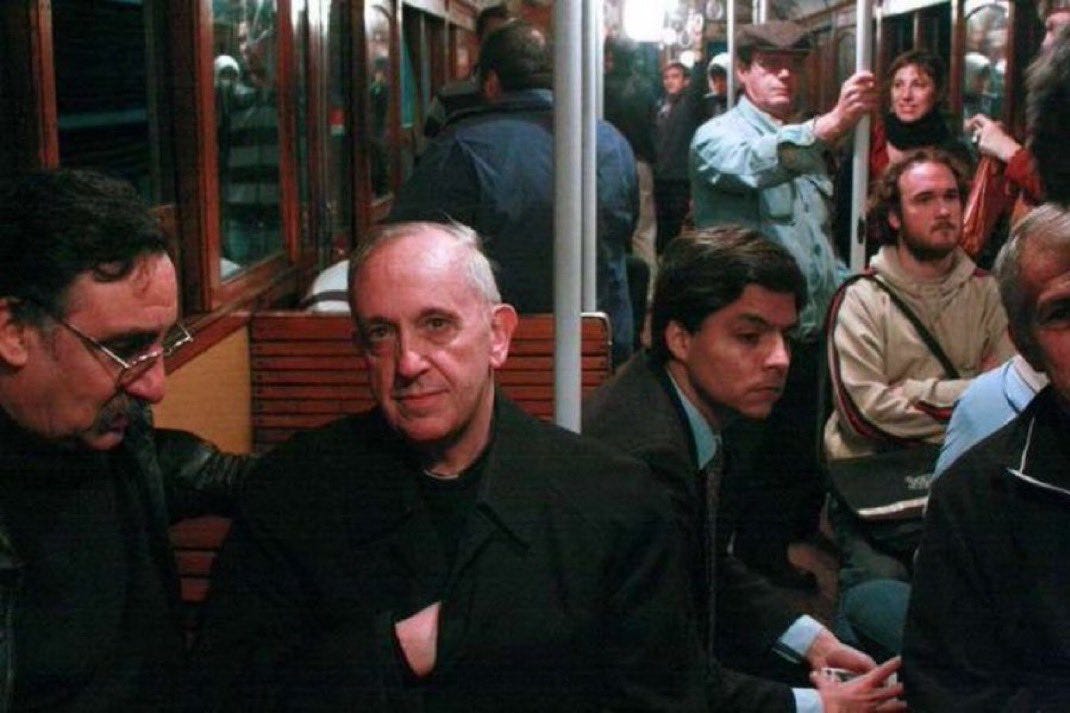
In Buenos Aires, he gave up the chauffeured limousine customarily used by the city’s archbishop — and rode public transportation every day for 40 years. In Rome, he gave up grandeur for humility. To the very end, he was a shepherd who, as he often put it, smelled like his sheep.
Catholics believe the pope is the Vicar of Christ — the visible sign of Jesus on Earth. More than anyone I’ve ever known, Pope Francis reminded me of Jesus.
Then again, I guess that’s the point.
Jesus called him, like every pope before him, to be Peter — the rock of the Church. We called him our father, our brother, and our friend.
But Francis didn’t just lead the Catholic Church. He invited the world to follow a different kind of leadership, one built on humility, not hubris.
Now, as the world grieves, the urgent question is not how we will remember Pope Francis, but how we will live because of him.
From the first hours of his papacy, Pope Francis signaled a change. He declined the Apostolic Apartment in favor of a modest guesthouse. He swapped the papal limousine for a Ford Focus. He paid his own hotel bill the night he became pope. And when he visited Washington, D.C., he skipped a power lunch with lawmakers to share a meal with the homeless.
These were not gestures of political theater. They were acts of conscience.
Francis believed that credibility doesn’t come from prestige — it comes from proximity to suffering. He called priests to carry “the smell of the sheep.” He lived what he preached.
He didn’t seek to be a celebrity pope. In a cynical age starving for integrity, the authenticity of his life spoke louder than any sermon.
Early in his papacy, Francis was asked about gay priests. His response — “Who am I to judge?” — reverberated across the globe. It marked a dramatic shift in tone and posture. He wasn’t rewriting doctrine, but he was rewriting the conversation: less fear, more welcome. Less condemnation, more encounter.
Over and over again, Francis extended this logic of mercy. He insisted the Church should be a “field hospital,” where wounds are tended before rules are recited. He declared that “the Eucharist is not a prize for the perfect, but a powerful medicine for the weak.”
And when asked who belongs in the Church, he answered in Spanish, simply: “Todos, todos, todos” — everyone, everyone, everyone.
But, of course, Pope Francis didn’t just pastor the faithful — he challenged the powerful.
He called on leaders to take responsibility for reversing the pollution that made our planet look like a “pile of filth.” He declared justice for the poor to be not a suggestion, but a moral imperative. He reminded the world that economic systems without mercy would ultimately devour themselves. He denounced a “throwaway culture” that discarded the poor, the unborn, the elderly — anyone who couldn’t produce or consume.
At every turn, Francis chose radical inclusion over rigid control, and conscience over comfort.
He visited refugee camps, kissed the faces of the sick, and washed the feet of prisoners, Muslims, women — the people our society often ignores. He condemned what he called a “globalization of indifference” and called the Church to become a community of mercy, not a museum of moralism.
And still, through all this, he remained rooted in the gospel basics: humility, tenderness, truth. He reminded the world that the Christian faith — practiced correctly — always sides with the vulnerable.
One of the most poignant moments of Pope Francis’ final years came during an interview with Norah O’Donnell last May. When O’Donnell asked the pope what he hoped his legacy would be, he didn’t mention reforms or speeches or titles. He replied: “The Church is the legacy. The Church — not only through the pope, but through you, through every Christian, through everyone.”
That answer says it all. Pope Francis never wanted a monument. He wanted a movement. He wasn’t asking to be remembered — he was asking us to continue. His hope wasn’t in history books, but in the daily choices of people willing to carry his mission forward.
The call to be Pope Francis’ legacy extends beyond the confines of the Church. It’s an invitation to all.
It’s about belonging to the kind of world Jesus proclaimed: One where mercy outweighs judgment. Where power bows to service. Where we seek not dominance, but dignity — in how we live, how we lead, and how we treat one another.
In practice, that means listening before speaking. Embracing humility over pride. Standing with the poor, the stranger, and the forgotten. Rejecting cruelty, and living gently and justly instead.
I’m a political operative, but let me clear: the defining struggle of our age is not political — it is spiritual.
It’s a contest between two models of leadership: one built on ego, and one built on empathy. One that clings to status, and one that stoops to serve. Pope Francis embodied the latter. Now it’s up to us to choose which one we carry forward.
We need leaders who stoop before they speak. Who measure greatness not by how high they climb, but how low they bend to lift others. Who serve without spectacle.
In our homes, churches, and public life, we need a new standard — one that understands mercy is strength, humility is courage, and love is power.
We don’t need to mythologize Francis to honor him. He was the first to admit his flaws — when asked who he was, he famously answered, “I am a sinner.” He often fell short of the Gospel ideals he preached. But that was part of his power: he never claimed perfection, only purpose.
He took his ideals seriously — and now the question is whether we will do the same.
Pope Francis lit a fire in the world’s conscience. Our task is to keep it burning — not with grand gestures, but through the quiet, steady work of compassion and courage.
We are Pope Francis’ legacy.
At Letters from Leo, we stand with Pope Francis and his successor, Pope Leo XIV. A year after Francis’ death, the world Pope Leo has inherited is crueler than the one his predecessor left him, and the Gospel he is called to preach is more urgent for it.
This community exists because readers like you believe Catholic witness in the public square must still be rooted in mercy for the wounded, a preferential love for the poor, and a Church that walks with its people rather than lording over them.
In an era poisoned by authoritarianism and cruelty, we remain rooted in the faith Francis embodied — a Gospel that refuses to flinch before injustice, rejects every idol of fear and power, and holds to the conviction Francis voiced in Spanish to the very end: todos, todos, todos.
This is the fastest-growing Catholic community in the country because people are hungry for something deeper than rage and propaganda. They’re looking for the kind of leadership Francis lived — proximity, tenderness, courage — and right now, on the first anniversary of his death, that hunger has never been more urgent.
If you believe this movement matters — Catholics and people of goodwill standing for human dignity against a rising authoritarianism that would crush the very people Francis spent his papacy defending — I am asking you to join us.
If you’d like to invest in our mission, here are three ways you can help this Easter season:
Subscribe as a paid member to receive exclusive posts about the life and formation of Pope Leo XIV, my ongoing investigations, and the full archive of my writing on Pope Francis’ papacy and legacy.
Donate with a one-time gift to fuel this project’s mission.
Share this post (and Letters from Leo) with a friend who is carrying Francis’ memory with them today.
Paid members receive my full biographical series on the life and formation of Pope Leo XIV, the American pope who now carries Francis’ mission into a new era. You’ll also get exclusive investigations, including my ongoing Epstein-Bannon Investigation, and access to the best of our full archive.
Whether you give $0, $5, $50, $500, or more, your presence here matters — no matter your faith or your politics.
Thank you for reading. I’ll see you on the road.


Pope Francis was such a good man and now we are blessed to have another good man follow his footsteps! Pope Leo is an amazing Pope and anyone who says any different does not know the walk that Christ walked! I am not Catholic, but I am a Christian and the gospel that Pope Leo is preaching is the gospel that I know down to my very soul! Thank you for your post you wrote a year ago! Pope Leo will be doing the same as Pope Francis, as he was inspired by him and mentored by him. And thank you for inspiring me.
There’s a breaking point in the American carnival when faith and power collide so hard you can hear the gears strip, and right now it feels like that moment is staring straight at figures like Marjorie Taylor Greene and the wider Republican flock that still claims a moral compass.
The call isn’t for louder speeches or sharper attacks, it’s for stepping back from the madness, sitting this round out, and remembering what the faith was supposed to stand for before it got tangled up in the machinery of politics.
Because when the floor of the House starts to feel more like a stage for outrage than a place for conscience, you have to ask who’s guarding the meaning behind the words they’re throwing around.
In that gonzo haze of power and performance, maybe the boldest move isn’t to fight harder, but to stand down, demand something better, and hand the gavel to someone who sees America not as a battleground, but as something worth protecting with a little humility.