
Discussion about this post

User's avatar
David Hope's avatar

Human Identity and Baptism in Luke’s Gospel

The Gospel of Luke tells a story about God’s restorative work in history that reshapes human identity. Across its narrative, Luke moves characters and communities from marginality and fragmentation into persons situated within God’s saving purpose. Identity in Luke is not merely private or psychological; it is public, social, and ethical. Who a person is becomes visible in relation to God and neighbor.

The poor, the repentant, and the outcast repeatedly receive God’s favor—the Magnificat and the beatitudes set this frame—so to be oneself is, in Luke’s view, to stand within a community ordered by mercy and justice. Jesus’ life, death, and resurrection provide the decisive reinterpretation of identity: recognition of the Messiah, whether by Simeon, the grateful leper, or the repentant thief, marks entry into a renewed existence defined by covenantal belonging and restored dignity.

Central to Luke’s portrayal of identity is baptism, presented as both a public enactment and a formative rite. John’s baptism in Luke 3 is a summons to repentance that requires ethical transformation. John’s call for sharing, honest practice, and justice shows that baptism marks a turning point away from former patterns and toward a life of practical righteousness.

Jesus’ own baptism, with the Spirit’s descent and the attendant heavenly voice, publicly identifies him with God’s purposes and functions as a revelatory commissioning. That moment models for Luke’s readers how baptism both reveals and constitutes a vocation.

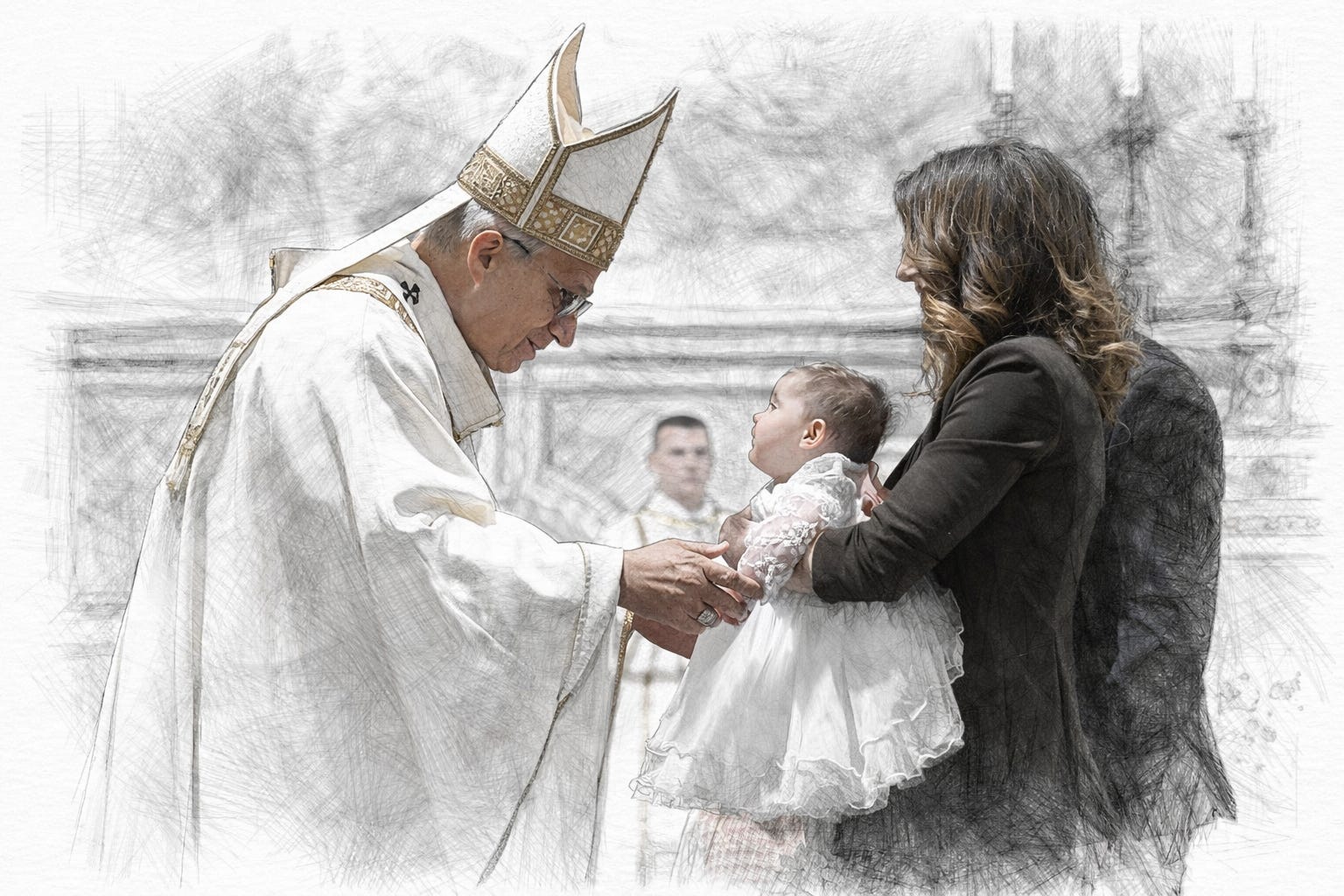
Luke’s theological project extends into Acts, and together the two volumes show baptism as initiation into the community of the risen Lord. Baptism in this trajectory is both sacramental—signing inclusion—and social—incorporating persons into a new people. At Pentecost and in later scenes, the Spirit’s coming and baptisms of new believers join to confirm that those baptized are not merely forgiven individuals but members of a Spirit-empowered community sent into the world.

Theologically and pastorally, baptism in Luke reshapes human identity in several interlocking ways. First, conversion functions as reorientation: baptism symbolizes and enacts repentance, forgiveness, and a decisive pivot from former loyalties. Second, incorporation and belonging follow: baptism marks entrance into a community that lives by Jesus’ priorities—care for the poor, mercy, and reconciliation—so identity is communal rather than individualistic. Third, the link between baptism and the Spirit gives identity a vocational edge: the baptized receive the Spirit’s empowering for witness and service. Finally, Luke insists that identity is tested by action; baptismal belonging carries ethical consequences, so that concrete moral change—justice, hospitality, care for the marginalized—must follow.

Reading Luke today, then, requires attending to identity as narrative and baptism as communal initiation. Persons in Luke are seen as beings whose pasts are reinterpreted by God’s acts: past wrongs and exclusions are neither erased nor ignored but are reconfigured within God’s restorative story.

Contemporary practice should emphasize baptism’s social and missional dimensions: it joins people into a visible community with obligations to the world.

Spirit and mission belong together; spiritual experience in Luke is inseparable from ethical transformation and public witness. Pastorally, ministries that form identity ought to teach repentance, cultivate belonging, and foster active discipleship—recognizing that baptism is a beginning that must be followed by lived faith.

In Luke’s theological vision, then, human identity is reconstituted by God’s decisive intervention in Jesus.

Baptism is the visible, communal, Spirit-empowered moment that marks this reconstitution: it enacts repentance, secures belonging, and commissions a life of justice and witness.

To be baptized, in Luke’s story, is to be called into a new narrative—one that redefines who you are by where you stand in God’s restorative purpose and by what you now do for neighbor and world.

Expand full comment

No posts

Ready for more?