


Thank you for reading! Letters from Leo is a reader-supported publication. To support my work, consider becoming a free or paid subscriber.
We’ve built a free reader for Pope Leo XIV’s first encyclical at standwithpopeleo.org/ai — full text, paragraph-by-paragraph explainers, and an audiobook companion.
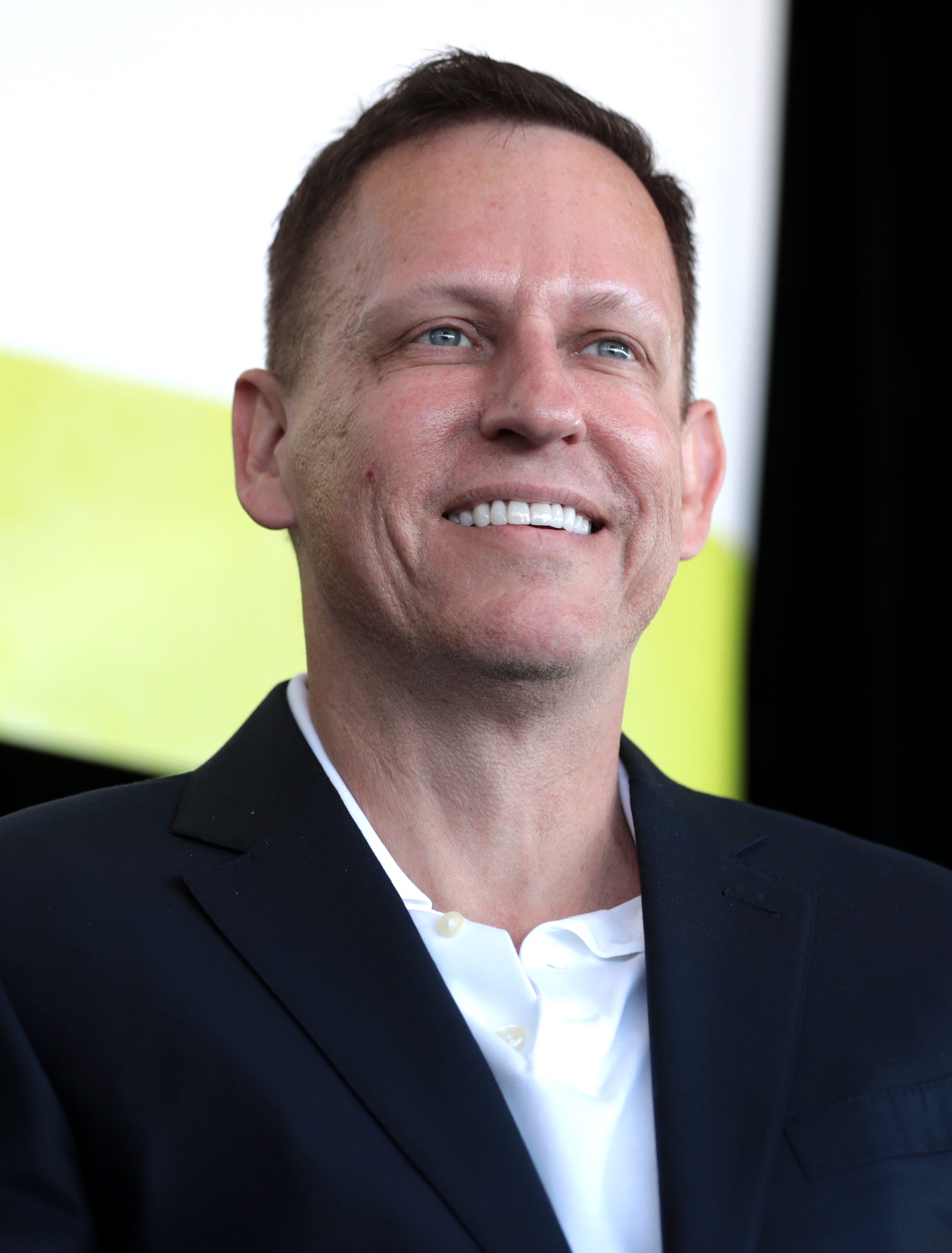
The New York Times reported today that Peter Thiel has decamped from Los Angeles and Miami to Buenos Aires.
He has bought a $12 million mansion in the Palermo Chico enclave and enrolled his children in a local school. Since arriving in April, he has been meeting regularly with President Javier Milei and his ministers — the deregulation minister, the economy minister, the inner circle of Argentina’s libertarian government.
One detail in the Times piece deserves to be lifted out. At a candlelit dinner at his new Buenos Aires mansion, Thiel reportedly once again steered the conversation toward the Antichrist — what the paper calls “one of his favorite conversation topics.”
I am not making that up — the paper of record put it on the page.
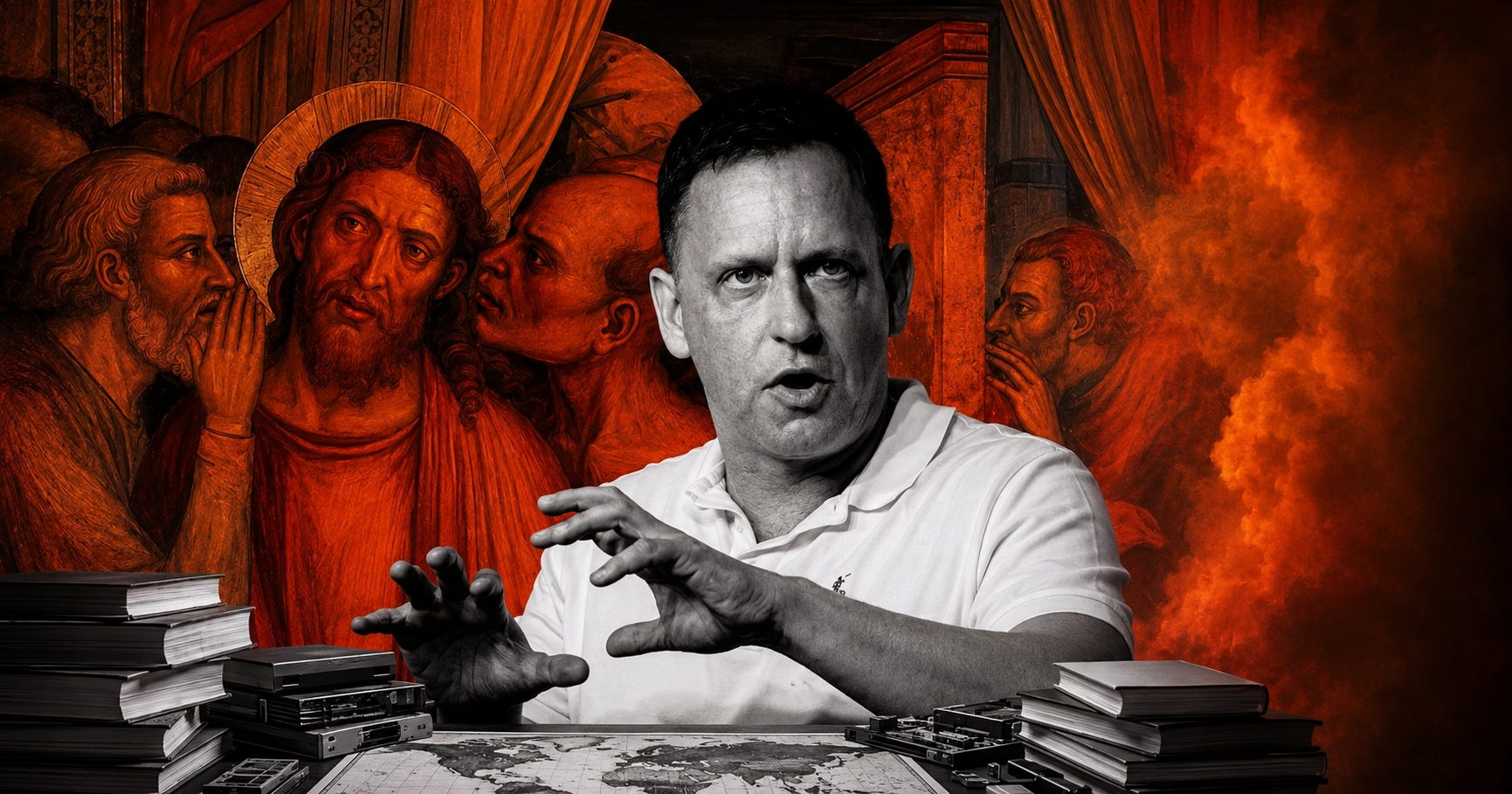
If you have been reading this newsletter, the dinner detail will land as déjà vu. Last fall I broke the story of leaked audio from Thiel’s San Francisco lecture series in which he suggested Pope Leo XIV himself might be a manifestation of the Antichrist. The Buenos Aires dinner is the latest chapter of an obsession that is now several years deep.
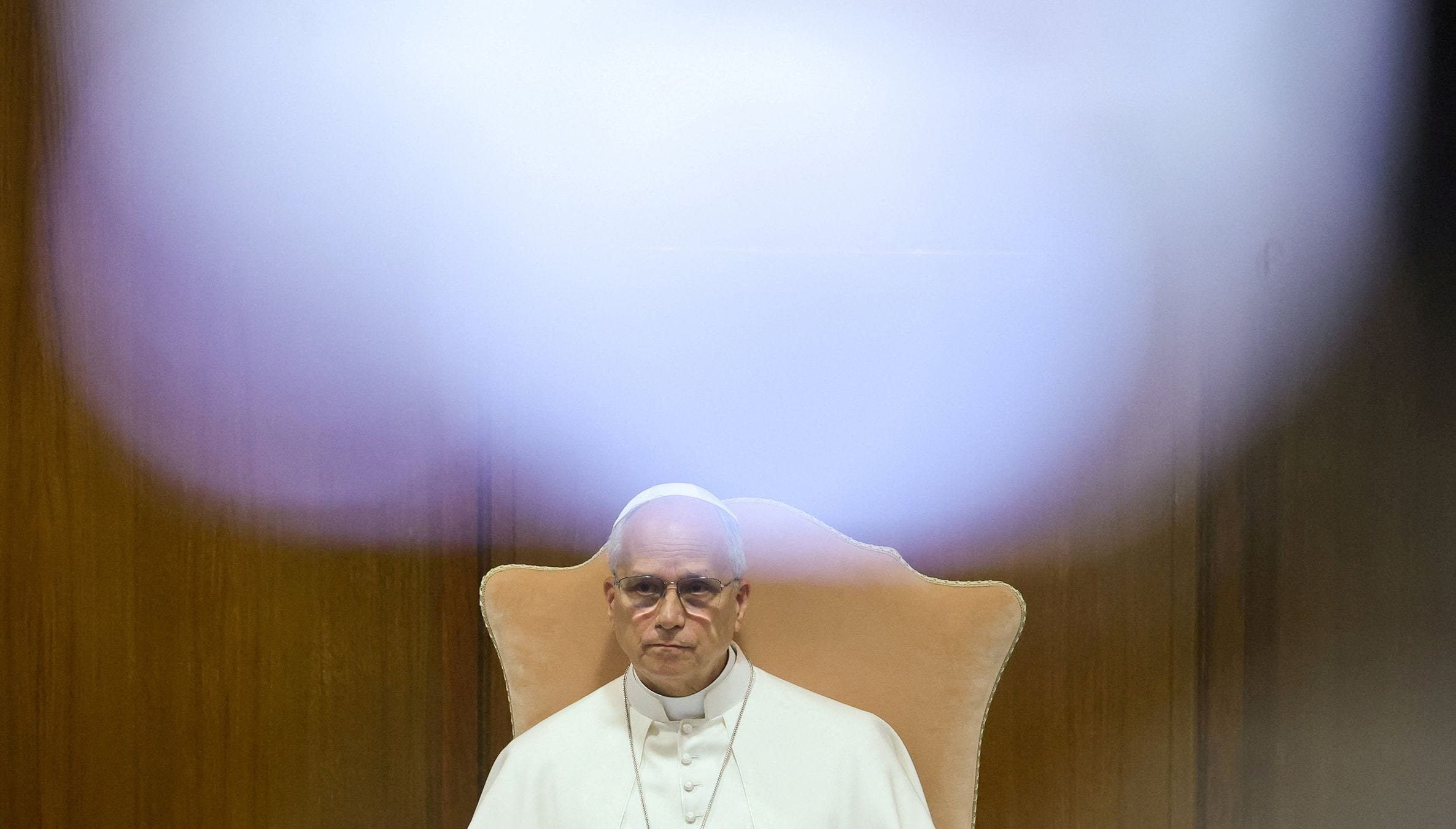
Three days before the Times story landed, on Memorial Day, Pope Leo XIV released his first encyclical and quoted The Lord of the Rings.
What the encyclical is actually doing
Beneath the literary flourish, Magnifica Humanitas is doing something specific. The encyclical is the Vatican’s answer to two years of Peter Thiel’s public theological campaign against the moral oversight of technology. By quoting Tolkien, Leo placed the magisterium of the Catholic Church on the side of the tradition Thiel has spent his life appropriating and inverting.
Whether Thiel ever reads the document is anyone’s guess. He has been collecting backup countries for years — New Zealand citizenship in 2011, a Malta passport application in 2022, now Argentina. The Buenos Aires move was in motion well before the Vatican press office sent the encyclical to print.
But the picture the two events form together is what serious Catholic writers spent the week reading.
Thomas Colsy in the Catholic Herald called the encyclical “a sustained Thomistic and scriptural critique of transhumanist currents that align strikingly with the public positions and institutional projects of Peter Thiel.” He cited my own reporting on the leaked San Francisco lectures as part of the evidence.
John Grosso at Where Peter Is walked through the cited Tolkien passage line by line and concluded that the connection to Thiel “becomes hard to refute.” In Italy, L’Avvenire, the newspaper of the bishops’ conference, framed the document as a defense of Tolkien against figures who have appropriated him while inverting his ethics. InsideOver in Italy went further, titling its piece “Magnifica Humanitas, the encyclical of Leo XIV to free AI from the Babel syndrome of Palantir.”
That is the room the encyclical landed in.
A primer for the rest of us
A confession before I go on. I am not a Lord of the Rings person — much to the chagrin of several people in my life who have spent years trying to fix that. If you are also not a Tolkien reader, the next few paragraphs are for you, written by someone who had to do the homework.
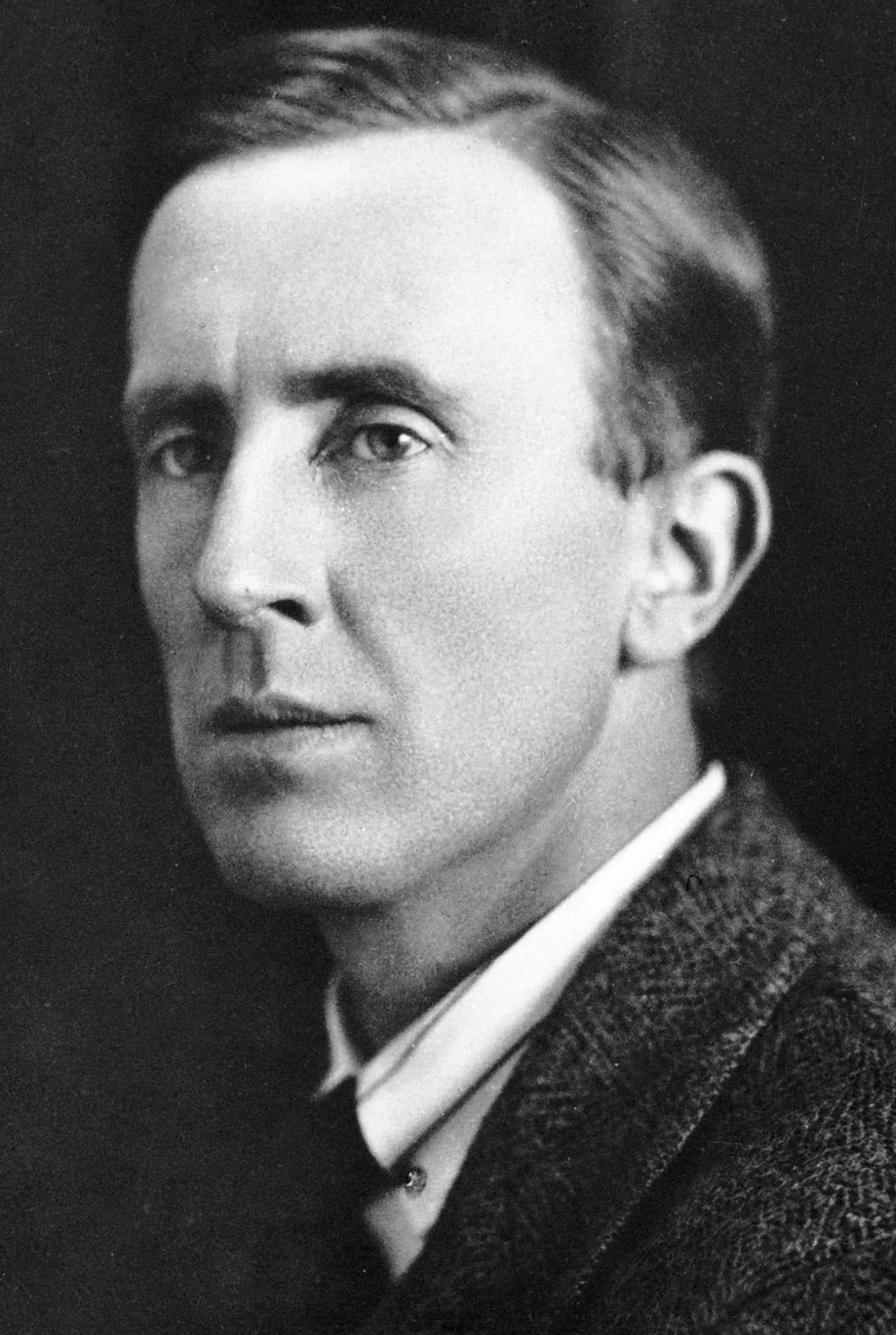
Tolkien spent twelve years writing The Lord of the Rings, between 1937 and 1949, and a lifetime building the Middle-earth legendarium that surrounds it. He once told a Jesuit friend, Father Robert Murray, that the book is “a fundamentally religious and Catholic work; unconsciously so at first, but consciously in the revision.”
The plot follows a small hobbit named Frodo, who carries the One Ring — forged by the dark lord Sauron to dominate all of Middle-earth — into the heart of Sauron’s kingdom to destroy it. Tolkien wrote thousands of pages around a single moral insight: that the men who pick up instruments of domination, even with good intentions, are claimed by them. The Ring is the central case, and the logic — that tools of pure power cannot be redeemed, only unmade — is the spine of the book.
Within that larger story sits a smaller set of artifacts that matter for this essay: the palantíri, the ancient seeing-stones of Númenor. They were made by the elves for honest communication, and Sauron has corrupted what they do.
John Grosso lays the core analytical point out cleanly in his Where Peter Is piece. The palantíri promise their users certainty about the future — that is what makes them seductive — and what they actually deliver is manipulation. The stone shows whoever is looking what someone with more power has chosen to display, framed as inevitable, and lets the user believe he is the one looking.
Saruman, the white wizard who was supposed to be Middle-earth’s wisest defender against Sauron, looked into his palantír to learn the enemy’s mind. The enemy used the connection to flip him. By the time Frodo set out for Mordor, Saruman was operating an industrial war machine in Isengard — razing the forest of Fangorn for fuel, breeding orcs in pits, and rebuilding Middle-earth in the dark image of the Dark Lord he was meant to resist.
That is the closest Tolkien character to what Peter Thiel does for a living.
Denethor, the Steward of Gondor, looks into his palantír and sees only Sauron’s armies, marshaled in numbers no human kingdom could withstand. What he sees is technically accurate. The framing is engineered.
Sauron has shown Denethor exactly enough to break him, and the despair drives the Steward to suicide. He went looking for control over the enemy, and was delivered, by the same instrument, into the enemy’s hands.
Aragorn, the rightful king of Gondor, uses his palantír differently. He reveals himself to Sauron deliberately, drawing the Dark Lord’s attention toward his own claim to the throne, so that Frodo can carry the Ring through Mordor unseen. The same instrument that destroyed Denethor became, in Aragorn’s hands, an offering — a way of giving up control so someone smaller and weaker could complete the work.
Grosso’s reading of Tolkien’s point is the right one. The palantír amplifies whatever the user brings to it — corruption in Saruman, despair in Denethor, sacrifice in Aragorn — and frames the result as inevitable, regardless of what is actually true.
Why this matters for Peter Thiel
Peter Thiel named his surveillance company Palantir.
He has said publicly that he has read the books at least ten times. The Tolkien quotation he chose for his high school yearbook actually came from the 1977 animated Hobbit film, not the book it adapted. His references to Middle-earth are so constant that even sympathetic conservative critics have spent the last few years arguing he does not understand the books he claims as scripture.
Thiel has named at least five companies after Tolkien artifacts: Palantir, Mithril Capital, Anduril Industries, Valar Ventures, and Rivendell LLC. His protégé, Vice President JD Vance, has called Tolkien his favorite author and runs an investment fund called Narya — the Ring of Fire, the Elven ring Tolkien entrusted to Gandalf.
The naming runs deeper than the company list. As Miles Klee reported in Wired, Thiel reportedly nicknames his venture capital firm, the Founders Fund, “the precious” — which is what Gollum calls the One Ring, the artifact of total domination Tolkien wrote his thousand pages to warn against. A man who claims to have read The Lord of the Rings ten times chose, as a private nickname for his investment fund, the word Gollum uses for the instrument of his own ruin.
Two of the most Tolkien-saturated men in American public life have spent the last decade naming their financial and political vehicles after Middle-earth artifacts. And the pope, in his first encyclical, chose the one passage in all of Tolkien that explicitly warns the powerful that mastery of the tides is not their part.
That passage appears in paragraph 213 of Magnifica Humanitas. It comes from “The Last Debate” in The Return of the King, the council scene in which Gandalf addresses the captains of the West after the siege of Minas Tirith.
Gandalf is proposing a desperate gambit: march on the Black Gate of Mordor, not to defeat Sauron — Sauron cannot be defeated in open battle — but to draw his army out and buy Frodo a chance to throw the Ring into the fire. The plan turns on Aragorn’s sacrificial use of the palantír.
The line Leo chose is the heart of Gandalf’s argument: “It is not our part to master all the tides of the world, but to do what is in us for the succour of those years wherein we are set, uprooting the evil in the fields that we know, so that those who live after may have clean earth to till.”
Translate the line into the twenty-first century. The work of the human person is not to engineer immortality, not to deport the world’s poor through algorithmic surveillance, not to play the seeing-stone against the enemies of your political faction. The work is to do what is in you, where you are, for the years you are given.
That is the moral logic of Magnifica Humanitas, drawn straight from the heart of the Catholic literary tradition Thiel has spent his career mining for product names.
The Palantir we actually live with
Thiel’s Palantir, in the world we actually live in, is the data-mining engine of Trump’s mass deportation program. The company holds a strategic partnership with Israel’s Ministry of Defense for what it describes as “war-related missions.” Its federal contracts nearly doubled in 2025 to north of $970 million.
What the company actually does, in plain English, is sort populations into futures.
Here’s what I mean, why it matters, and how Pope Leo XIV has responded to it:
