
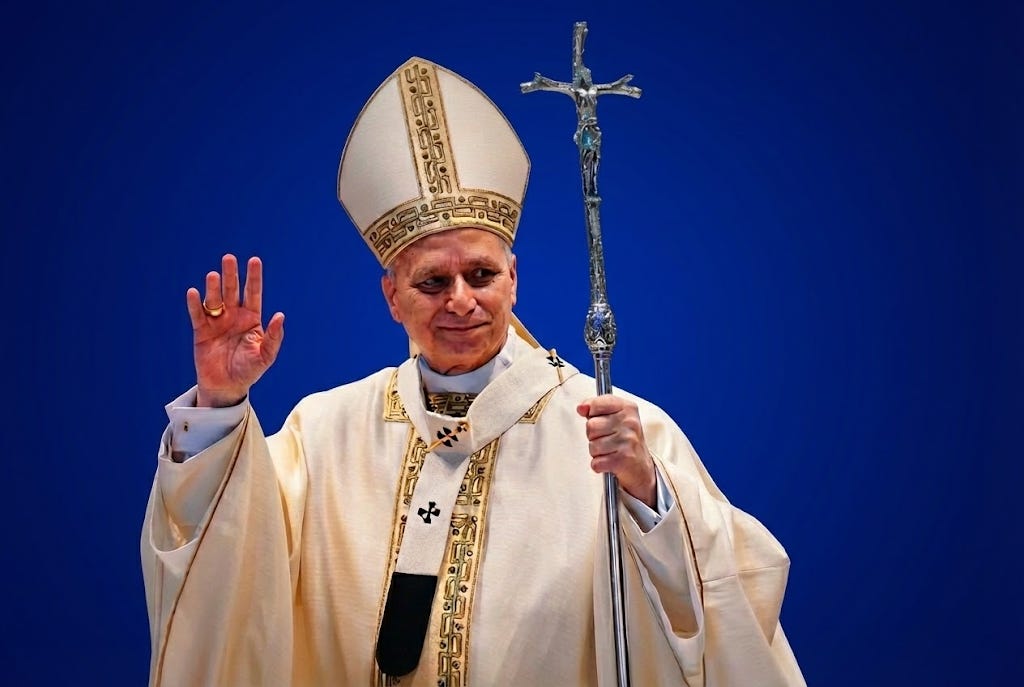
Resist Tyrants, Welcome Strangers, Reject War, Serve the Poor: Pope Leo’s Epiphany Mandate
After closing the Jubilee Holy Door, Leo XIV urged the faithful to resist the “flattery and seduction” of worldly power, welcome the stranger, and set out together toward a more just future.
Thank you for reading! Letters from Leo is a reader-supported publication. If you find value in my work, please consider becoming a paid subscriber or making a one-time donation.
At a packed St. Peter’s Basilica on Epiphany, Pope Leo XIV delivered a stirring homily that closed the Jubilee of Hope with both solemnity and fire. In front of tens of thousands of pilgrims, Leo declared that in God’s presence “nothing stays the same” — a true Epiphany that marks “the beginning of hope.”
He challenged the faithful to become “pilgrims of hope” on the road with God, rather than settle into complacency.
“Dear brothers and sisters, it is wonderful to become pilgrims of hope. It is wonderful for us to continue to be pilgrims together!” Leo exclaimed. This emphasis on journey evoked Pope Francis’s very first homily as pope in 2013, when Francis warned that “our life is a journey, and when we stop moving, things go wrong.”
Like Francis, Leo made clear the Church must not fear new paths. Like the Magi following the star, believers are meant to be homo viator — people on the move toward God — open to the “something new” that Christ brings.
Yet Pope Leo also drew a sharp contrast between the joy of those who seek Christ and the fear of those who cling to power. He recounted how King Herod reacted to Jesus’s birth with lies and violence, desperate to control what he could not understand.
“Fear does indeed blind us,” Leo said, whereas “the joy of the Gospel liberates us. It beckons us along ways that are different.” Leo warned that the Church today must resist falling into Herod’s temptation — the urge to guard power and privilege rather than embrace God’s unsettling newness.
“If we stand united and resist the flattery and seduction of those in power, then we will be the generation of a new dawn,” he said, closing the Holy Door of the basilica as a sign of a new chapter.
His words have an uncanny resonance in the United States, where modern “Herods” try to seduce the faithful with political flattery and fear. Leo’s message is that Christians cannot allow themselves to be manipulated by rulers who promise greatness but sow division. The Gospel calls the Church to be bold and creative, not beholden to any earthly throne.
As Newsweek put it, Leo’s Epiphany charge “underscores the Catholic Church’s stance against rising xenophobia and economic inequality” in our world.
In other words, the pope is telling believers: bow to no Herod.
Crucially, Pope Leo grounded these lofty spiritual calls in concrete mercy and justice. He stressed that God’s saving presence is revealed not “in a prestigious location” but “in a humble place” — an unmistakable reminder that Christ is found among the lowly.
The child of Bethlehem was small and fragile, Leo noted, and today the Church’s duty is to protect the vulnerable from a world that “tries to profit from everything.” He lamented “a distorted economy” that turns human yearning into a commodity, even treating pilgrims as mere business opportunities.
In contrast, the Church must be a place where faith is alive and the poor and weak are cherished, not exploited. This vision continues Pope Francis’s constant call for the Church to be a field hospital of mercy — a family where everyone is welcomed, loved, and forgiven.
Leo even invoked the ancient Jubilee tradition, asking if this holy year has taught us to “flee” the mindset that reduces people to consumers and to work instead for a society of grace.
After millions passed through the Church’s doors during the Jubilee, Leo asked pointedly, “What did they find?”
Did we learn to recognize “a pilgrim in the visitor, a seeker in the stranger, a neighbor in the foreigner, and fellow travelers in those who are different?”
The Gospel, he insisted, demands that our communities throw open their doors and hearts. No longer can parishes be museums or fortresses; they must be home — alive with hope, open to the outsider, and ready for the new life God brings.
Later, appearing for the Angelus prayer, Pope Leo doubled down on these Epiphany themes. “Dear friends, the hope that we proclaim must be grounded in reality, for Jesus came down from heaven in order to create a new story here below,” he said from the central balcony.
Christian hope isn’t pie-in-the-sky; it means actively building that “new story” of justice and peace on earth. Leo prayed in words that echoed the prophets:
“May strangers and enemies become brothers and sisters. In the place of inequality, may there be fairness, and may the industry of war be replaced by the craft of peace.”
It was a breathtaking litany of social Gospel priorities at the end of the Jubilee year. He spoke of integrating those on the margins, redistributing resources to those in need, and rejecting the “industry of war” in favor of the “craft of peace.”
These are not abstract ideals for Leo – they are the very “signs of the times” the Church must read and act upon.
Just as the Magi returned home “by another road” to avoid Herod (Mt 2:12), Leo is urging the whole people of God to take another road into the future. It is the road of mercy over vengeance, inclusion over exclusion, and humble service over selfish ambition.
Pope Leo’s Epiphany witness comes as a clarion call. In celebrating the Magi’s journey, he reminded the Church that we, too, are on the move — and when we stop moving, things go wrong.
The Epiphany is not just an ancient story of a star; it’s a vision for today.
Leo has effectively sketched a roadmap for a pilgrim Church in the 21st century: one that bows to no tyrant’s allure, that welcomes the migrant and stranger as Christ himself, and that prioritizes the poor and fragile where God’s glory quietly shines.
If we take up this journey of hope together, resisting the Herods and heeding the Gospel, Pope Leo believes we will “be the generation of a new dawn.”
Mary, Star of the Morning, will light the way, and in her Son we will discover an “extraordinary humanity, transformed by God who became flesh out of love.”
The path is before us. Now it’s our turn to arise and walk.
Letters from Leo is open to anyone who wants to be informed and inspired by our pope — and to turn that inspiration into action that leaves America and the world more just, less cold, and more alive with hope.
If you’d like to invest in our mission during this new year, here are three ways you can help:
Subscribe as a paid member to receive exclusive posts about the life and formation of Pope Leo and help sustain this newsletter.
Donate with a one-time gift to fuel this project’s mission.
Share this post (and Letters from Leo) with a friend who might enjoy it.
Whether you give $0, $1, or $1,000, your presence here matters — no matter your faith or your politics.
Thank you for reading. I’ll see you on the road.


Thank you thank you thank you.