


Thank you for reading! Letters from Leo is a reader-supported publication. To receive new posts and support my work, consider becoming a free or paid subscriber.
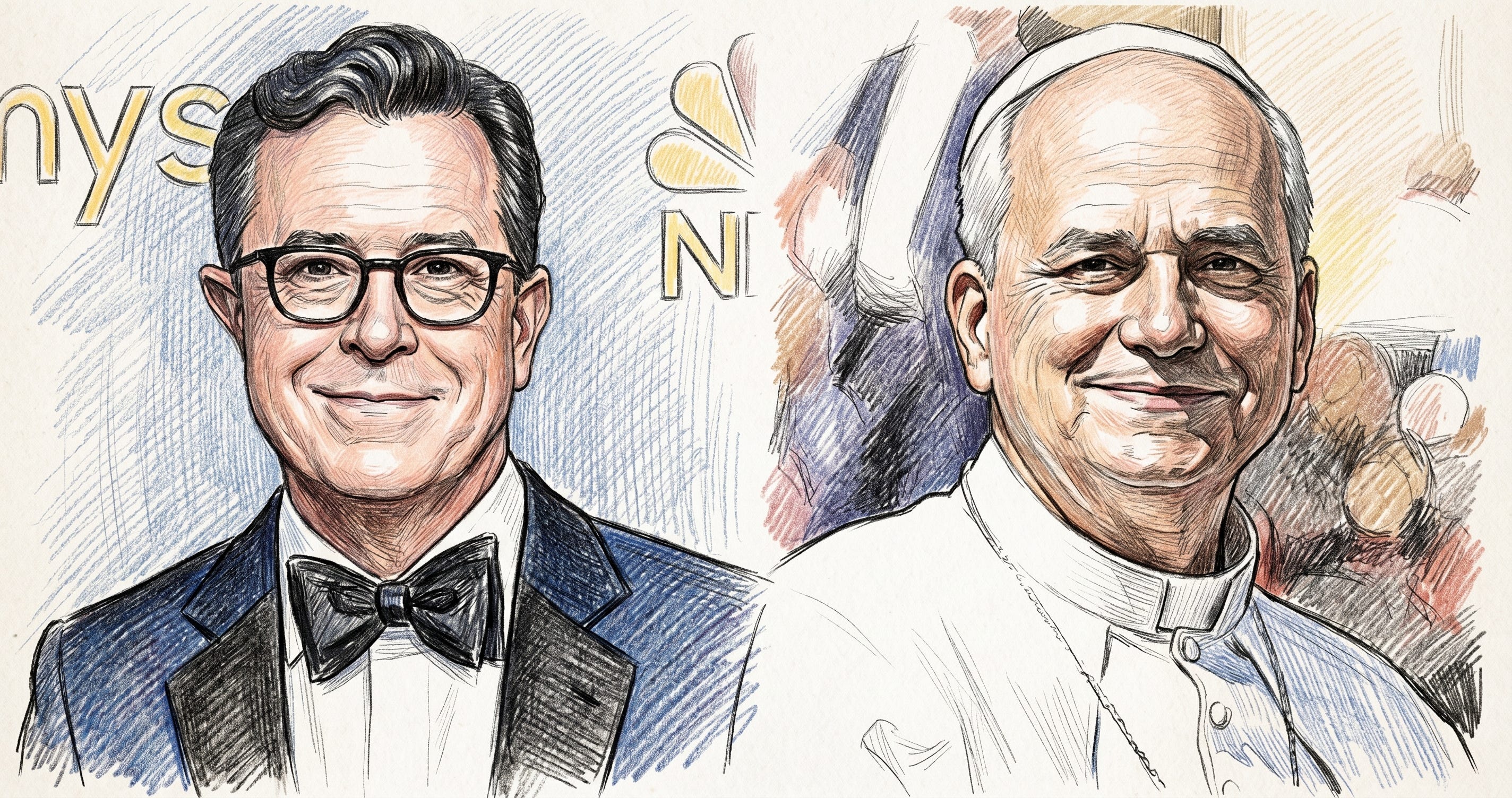
On Monday, I reached out to CBS with a single question: would Stephen Colbert close The Late Show on Thursday night with an interview of Pope Leo XIV, the first U.S.-born pope?
They declined to comment. The silence has done nothing to slow the rumor. Colbert himself has already named the guest he wanted before his show ended: in a recent interview with Entertainment Weekly, he called Pope Leo XIV his “white whale” — the dream booking he was still chasing in the final weeks of The Late Show.
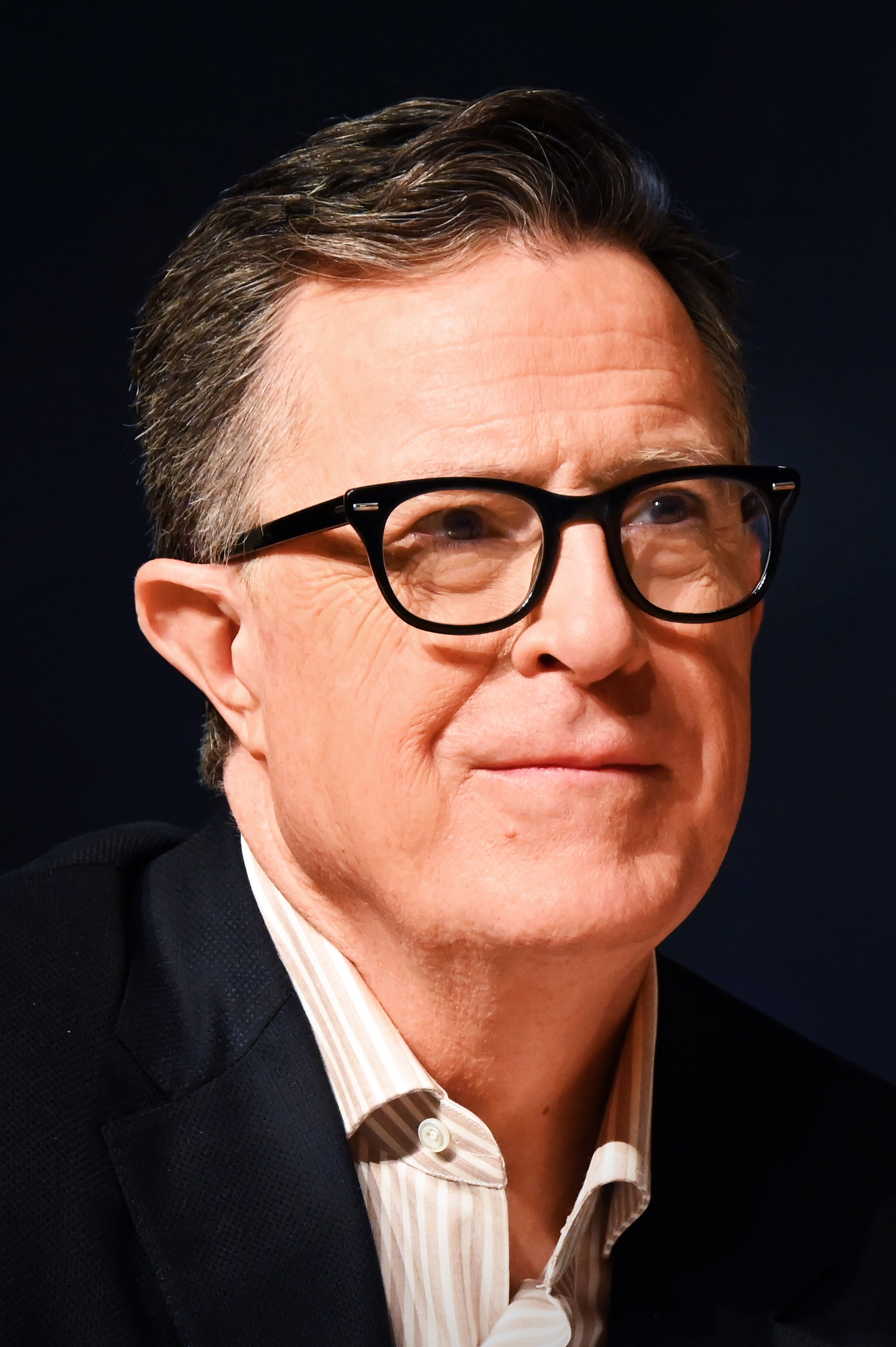
According to Deadline’s reporting on the closing run, the announced guests for the final week include Jon Stewart, Steven Spielberg, and Bruce Springsteen. The Thursday slot — the final broadcast, the slot CBS traditionally reserves for the biggest moment — remains a mystery.
As I wrote earlier this year, Stephen Colbert and Pope Leo XIV are arguably the two most beloved Americans in public life right now.
Both have spent decades being publicly Catholic in a country that prefers its religion either privatized or weaponized, and millions of Americans have stayed with them for offering a third option. A conversation between them, on the last Thursday night on one of the only late-night shows that ever took the Gospel seriously, would have the feel of a homecoming rather than a curtain call.
To understand why, you have to start with the worst day of his life.
On September 11, 1974, Eastern Air Lines Flight 212 crashed in dense fog on its approach to Charlotte. Seventy-two of the eighty-two people on board died.
Among them were James William Colbert Jr., a beloved physician and dean at the Medical University of South Carolina, and two of his sons — Paul, who was eighteen, and Peter, who was fifteen. James and the boys were flying north so the brothers could begin the school year at the Canterbury School in Connecticut.
Stephen was ten years old, the youngest of eleven children. He has said the world after the crash felt like a place where he simply walked around waiting for the next loss.
His mother, Lorna, refused to let grief swallow the family. According to Good Faith Media, she told her grieving son that he should not despair, because there was nothing the world could do to him that God had not already endured. That sentence shaped his theology before he could shave.
Years later, in an Anderson Cooper interview that has been watched tens of millions of times, Colbert told the CNN anchor that he had come to “love the thing that I most wish had not happened.”
Grief, he said, introduces you to a God who has already met every variety of it. The full conversation with Cooper, conducted for CNN’s All There Is podcast on grief, is the most extended public account Colbert has given of how the crash made him a Catholic capable of comedy.
College knocked the certainty out of him. Colbert drifted through Hampden-Sydney and then Northwestern, and by his early twenties he had stopped believing altogether. He has described that period as cold, in every sense.
One winter morning in Chicago, walking down the street, a Gideon volunteer handed him a pocket New Testament. Colbert opened it to the index — under Anxiety, it pointed him to Matthew V, the Sermon on the Mount. The verse that struck him was Jesus asking who among the worried can add a single hour to his life by worrying — the same passage where Jesus tells anxious people to consider the lilies of the field.
Something cracked open. He has called it a mystical return, an unbidden recognition that the words had been waiting for him longer than he had been gone. He walked into the next chapter of his life a practicing Catholic again, and he never left.
The faith he came back to is built around a crucifix. Colbert has spoken often about why he prefers the bloodied figure to the polished empty beam, and he is unapologetic about it.
A crucifix keeps Christ’s body on the wood, which is the version Colbert needs — a reminder that suffering was endured before resurrection was offered. He looks to it for what he calls solidarity, the assurance that a God who hung on a cross is not embarrassed by the wreckage in our lives.
The crucifix taught him to read human pain as the exact place where God chooses to be most present.
He brought all of this with him into comedy. At The Colbert Report he played a blowhard cable-news pundit who was also, inconveniently for the satire, a daily-Mass Catholic who taught Sunday school in real life.
Colbert testified before Congress in character about migrant farmworkers and quoted Matthew 25 with a straight face. He interviewed bishops, biblical scholars, and at least one cardinal on a stage built mostly for political punchlines.
When he moved to The Late Show in 2015, he carried the same habit of mind. He has prayed on air with guests and wept with them when the conversation took that turn. Other times he has pressed unbelievers gently toward the questions that scare them most.
The exchange with Andrew Garfield about losing a parent has been watched tens of millions of times for a reason — there was no host underneath the suit, just a man who knows what mourning costs.
The clearest articulation Colbert has ever given of how his Catholicism feeds his comedy came in February 2022, when Dua Lipa turned the tables on him and asked, on his own show, whether his faith and his work ever overlap.
His words that night ring in my ears. Here’s what he said:
