
The Night the Church Changed Forever
On March 13, 2013, a Jesuit from Buenos Aires stepped onto the loggia of St. Peter's and subverted 1200 years of papal ceremony with a single act of humility — and the Church has never been the same.
Thank you for reading! Letters from Leo is a reader-supported publication. To receive new posts and support my work, consider becoming a free or paid subscriber.
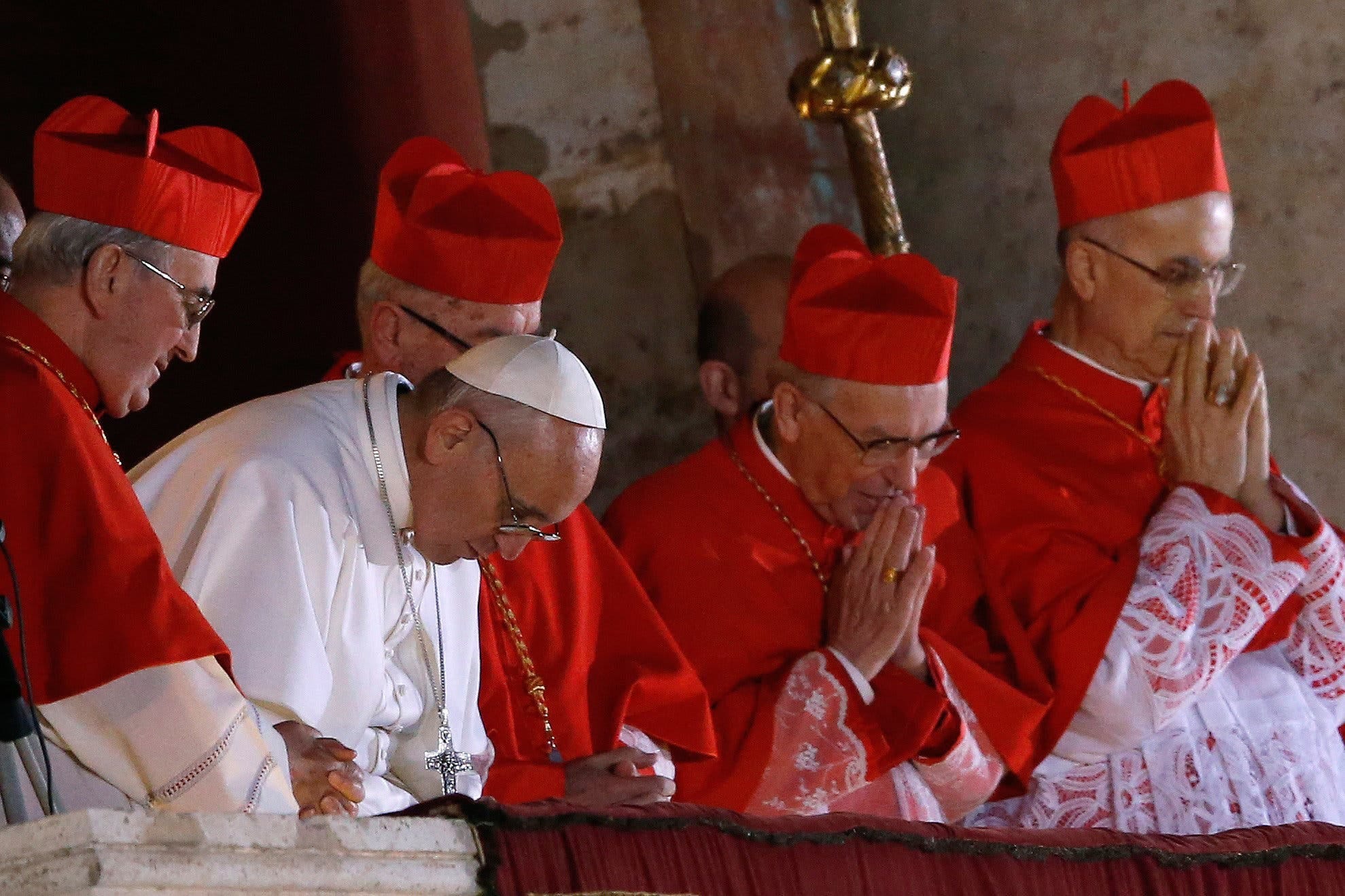
Thirteen years ago tonight, the loggia doors at St. Peter’s opened and a 76-year-old cardinal from Buenos Aires looked out at 100,000 rain-soaked pilgrims and said: “Buonasera!”
Good evening.
That was it. No grand proclamation. No thunderous Latin declaration. The 266th bishop of Rome — the first Jesuit pope in the Church’s two-thousand-year history, the first Latin American, the first non-European elected in 1,285 years — greeted the world with the same two words he might have offered a neighbor in his apartment building on Calle Conesa.
Jorge Mario Bergoglio had been elected on the fifth ballot of a two-day conclave. He had reportedly turned to his colleague Cardinal Cláudio Hummes after the decisive votes — the Brazilian had whispered “Don’t forget the poor” — and in that moment, Bergoglio chose his name.
He would be Francis. Not after a pope or a martyr. After the man from Assisi who stripped off his merchant’s clothes in a public square, returned them to his father, and walked barefoot toward the lepers.
The crowd in St. Peter’s Square didn’t yet know any of this. They knew only that white smoke had risen at 7:06 p.m. and that the new pope was standing before them in a plain white cassock.
He wore no red ermine-trimmed mozzetta — the velvet shoulder cape popes had worn at their own first appearances for centuries. No gold. No embroidery. Just the simple iron pectoral cross he had carried since his days as Archbishop of Buenos Aires, a cross he would never exchange for the ornate papal one.
Then he did something that stunned even seasoned Vatican correspondents. He bowed his head.
Before blessing the crowd, he asked the crowd to bless him. He stood in silence, 100,000 pairs of eyes trained on the white figure on the balcony, and waited while the faithful prayed over their new pope.
The gesture inverted every ceremony that had preceded it — a pope placing himself under the authority of the people rather than above them. When he finally spoke again, before saying good night, he said: “Pray for me.”
He would say it almost every day for the remaining twelve years of his life.
Afterward, returning to the Sistine Chapel for dinner with the cardinal electors who had just changed the course of Catholic history, Francis offered a toast: “May God forgive you for what you have done.”
The first night was just the beginning.
The following morning — March 14 — Francis woke at Casa Santa Marta, the Vatican guesthouse where he had stayed during the conclave. He would never move. While every pope since Pius X had lived in the Apostolic Palace’s private apartments,
Francis stayed at Santa Marta for the entirety of his pontificate, eating in the common dining room with priests and Vatican workers. A child later asked him why he didn’t live in the palace. His answer was characteristically blunt: “We should ask ourselves: How can I become a little poorer to be more like Jesus, who was the poor teacher?”
That first full day as pope, he got into a simple Vatican car and drove to the Basilica of Santa Maria Maggiore to pray before the Salus Populi Romani — the ancient icon of the Madonna that had watched over Rome through plague and war for centuries. He would make this trip before and after every international journey for the rest of his life.
When he died in April 2025 at age 88, he chose to be buried there, not in the Vatican grottoes beneath St. Peter’s alongside his predecessors, but in a side chapel near the altar of St. Francis, close to the people of Rome.
After the basilica, Francis stopped at the clergy residence where he had lived before the conclave to pay his hotel bill and collect his luggage. He settled the account himself, in person, the way an ordinary man would. Vatican staff tried to handle it.
He declined. He also declined the special sedan that had been arranged to transport him back and instead rode the bus with the other cardinals.
This was a man who had ridden the buses and subways of Buenos Aires for 50 years.
These were not accidents of temperament. This was the faith of Jesus Christ made visible.
On March 19, Francis celebrated his inaugural Mass before an estimated 200,000 people in St. Peter’s Square.
The fisherman’s ring placed on his finger that day — the ancient symbol of Petrine authority — was made of gilded silver rather than gold. He had chosen it from three options presented to him. The choice was not incidental; the man who designed it was a layman from Milan, and the design depicted Peter holding his keys over the world.
Within the first month, Francis abolished the bonuses paid to Vatican employees upon the election of a new pope, which had amounted to several million euros, and donated the funds to charity. He eliminated the €25,000 annual bonus paid to cardinals on the Vatican Bank’s board of supervisors. The Vatican Bank had been mired in financial scandal for years. Francis had no interest in rewarding its managers.
On April 13 — thirty-one days into his pontificate — he named eight cardinals from around the world to a new Council of Cardinal Advisers to help restructure the Roman Curia. Six of the eight represented continents outside Europe. The group was nicknamed the “C8,” and its very composition was a declaration: the Church was not Roman with satellites. It was global at its core.
Eighty-seven days after his election, Francis made his first trip outside Rome. He went to Lampedusa.
The tiny Italian island, 70 miles from the coast of Tunisia, was then the main entry point for migrants crossing the Mediterranean from North Africa. Dozens had drowned in sight of its shores.
Francis went there to grieve with survivors, to denounce what he called “the globalization of indifference,” and to throw a wreath of flowers into the sea. He wore green vestments. The altar was made from wood salvaged from migrant boats.
The Church had a new program.
Thirteen years after that rainy evening when a Jesuit from Buenos Aires bowed his head before the faithful and asked their prayers, the world is still measuring what he began. Pope Leo XIV now carries the office Francis reshaped.
The agenda — a poor Church for the poor, closeness to the margins, the insistence that love must be structural and not merely sentimental — did not die with Francis in April 2025. It was transferred.
The real question is not whether we remember what Francis did on those first extraordinary days. The question is whether we have taken it seriously enough to make it our own.
At Letters from Leo, we stand in the tradition Francis opened — Catholics and people of goodwill who believe that the Church’s task is not to occupy the centers of power but to stand with those power has forgotten.
His pontificate began with a bow. That bow was not weakness.
It was a model of what authority looks like when it remembers whom it serves.
In a moment when powerful men are constructing walls — physical, legal, and moral — against the poor and the stranger, the memory of March 13, 2013, is a prophetic call to go a different way.
If you believe this community matters — a gathering of Catholics and people of goodwill committed to that same demanding tradition — I am asking you to join us.
If you’d like to invest in our mission, here are three ways you can help this Lenten season:
Subscribe as a paid member to receive exclusive posts about the life and formation of Pope Leo XIV and help sustain this work.
Donate with a one-time gift to fuel this project’s mission.
Share this post (and Letters from Leo) with a friend who might need to read it today.
Paid subscribers have access to our ongoing biographical series on Pope Leo’s Life & Formation, our Lenten Reflection Series, and the best of our published work.
Whether you give $0, $1, or $1,000, your presence here matters — no matter your faith or your politics.
Thank you for reading. I’ll see you on the road.


This one brought me tears. Thank you.
The most beloved Pope of the people❤️