


Dear friends —
I hope you and those you love have been able to spend meaningful time together during this Christmas season.
To my surprise, the Advent Reflection Series became one of the most widely read and shared parts of Letters from Leo in 2025.
Many of you wrote to tell me that these reflections helped steady your hearts during a difficult year for our nation — one marked by political division, anxiety, and real moral uncertainty.
Because of that response, I’ve decided to make these reflections a permanent part of this work.
Beginning this year, I’m publishing a weekly Sunday reflection, rooted in the Mass readings of the day, and written to help us think more clearly about what it means to follow Jesus in the middle of today’s political realities — not by retreating from public life, and not by baptizing any party or ideology, but by letting the Gospel form our conscience, our courage, and our compassion.
These reflections will be available to all paid subscribers, as a small but sincere way of saying thank you for making Letters from Leo possible.
Letters from Leo is open to anyone who wants to be informed and inspired by our pope — and to turn that inspiration into action that leaves America and the world more just, less cold, and more alive with hope.
If you’d like to invest in our mission during this new year, here are three ways you can help:
Subscribe as a paid member to receive exclusive posts about the life and formation of Pope Leo and help sustain this newsletter.
Donate with a one-time gift to fuel this project’s mission.
Share this post (and Letters from Leo) with a friend who might enjoy it.
Whether you give $0, $1, or $1,000, your presence here matters — no matter your faith or your politics.
Thank you for reading. I’ll see you on the road.

“Beginning in Galilee after the baptism that John preached, God anointed Jesus of Nazareth with the Holy Spirit and power. He went about doing good and healing all those oppressed by the devil, for God was with him.” — (cf. Acts 10:37-38)
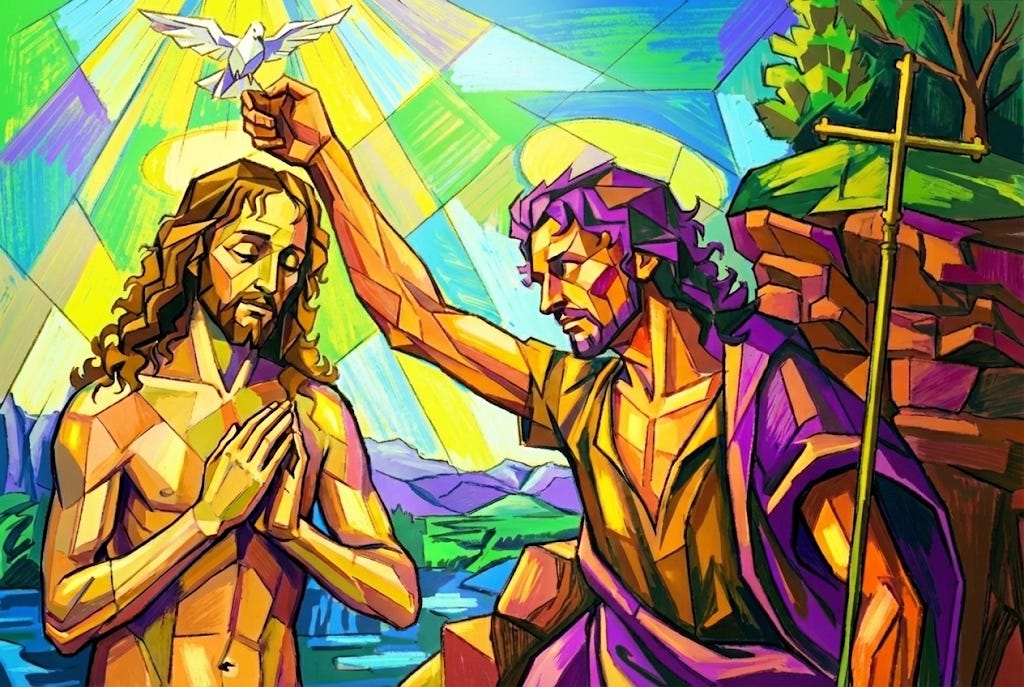
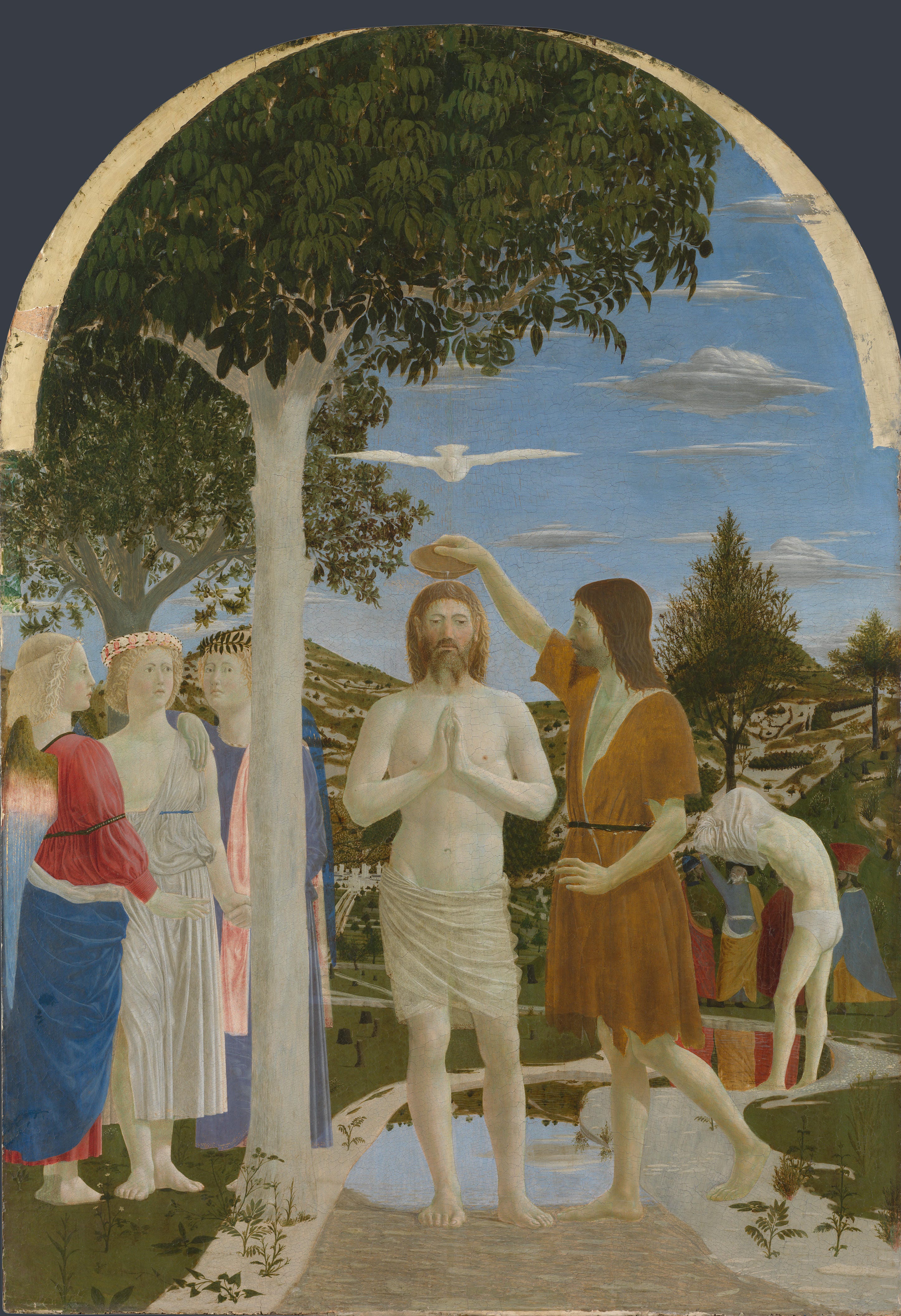
All throughout my Christian journey, I’ve struggled to understand why Jesus wanted to be baptized. If he is the sinless Son of God, what need is there for baptism? Even John the Baptist was perplexed, saying, “I need to be baptized by you, and yet you are coming to me?” (Matthew 3:14).
As we will explore today, Jesus’s reply — “Allow it now, for thus it is fitting for us to fulfill all righteousness” — shows there’s more to baptism than washing away sin.
Today’s feast of the Baptism of the Lord holds a unique place in the liturgical year. In the post–Vatican II calendar, it is traditionally recognized as the last day of the Christmas season.
The child born in Bethlehem — whom we’ve adored through Christmas and Epiphany — is suddenly an adult standing by the Jordan River. This feast serves as a bridge between the joy of Christ’s Nativity and the work of his public ministry.
In a sense, we move from celebration to mission: after rejoicing in the Savior’s birth, the Church now follows him out into the world.
Closing the Christmas cycle here underscores a powerful truth: Christmas isn’t an ending but a beginning.
Just as Jesus’s hidden years at Nazareth give way to his mission, our own moments of spiritual comfort must give way to action. The same Jesus who lay in a manger now goes into the waters of baptism to sanctify them for our sake.
We, too, are invited to carry the light of Christmas forward, letting it propel us into the mission field of daily life as the new year unfolds.
This moment marks a dramatic transition. Scripture is strangely silent about Jesus’s life from infancy to adulthood — apart from his presentation before the priests in the temple as an infant and a brief episode of teaching in the temple at age twelve (cf. Luke 2:22–52).
After that, the Gospels simply say Jesus “grew in wisdom and stature, and in favor with God and man” (Luke 2:52).
Now, about eighteen years later, Jesus steps onto the public stage. His baptism at age 30 inaugurates his public ministry, ending the long quiet years.
Jesus’s baptism is a turning of the page — his quiet, hidden life becomes one of active preaching, healing, and teaching.
At the Jordan, Jesus embraces the mission for which He was sent. The heavens open, the God’s voice declares Jesus his “beloved Son,” and the Spirit anoints him.
It is a moment of paternal affirmation and sending forth.
Notably, Jesus’s first public act is one of humility — he who is without sin consents to a baptism of repentance. In doing so, he aligns himself with us sinners and sanctifies the waters for our baptism. The stage is set for everything to come: the kingdom of God he will proclaim in word and deed.
This pattern holds a message for us. Many of us live long “ordinary” periods of life that seem uneventful in faith, yet there comes a time God calls us to step out in a new way. Jesus’s hidden life reminds us that our daily duties — family, work, growth in virtue — are an important foundation.
But eventually, like Jesus, we too are called to actively witness when the moment is right. The feast of the Lord’s Baptism invites us to ask: Has the time come for me to embrace more fully the mission God has for me?
In the drama of Jesus’s baptism, we can already see the pattern of our own. Christian baptism is in fact a drowning and a rebirth. The very word baptism means “immersion” or “plunge.”
When we were baptized — whether as infants or adults — it was as if our old self was plunged under the water, dying to sin, and a new self emerged, born anew in Christ.
St. Paul explains that “we were buried with Christ by baptism into death, so that, as Christ was raised from the dead, we too might walk in newness of life” (cf. Romans 6:4).
In other words, the baptismal waters are both a tomb and a womb: a place of death and a place of birth. We go under the water as slaves to sin and rise up free, as children of God.
The early Church loved this paradox — they saw in baptism both the flood that drowns evil and the cleansing bath that delivers new life.
We recognize the same truth in our own lives. Water gives life and takes it away — quenching our thirst even as it becomes the force of the storm.
For Jesus, who had no sin, being baptized was not about personal repentance but about fully entering our condition. He descended into the same waters we do, in order to fill them with his presence and grace.
When we are baptized, we “put on Christ” and are incorporated into Hhs Body.
In baptism we receive the Holy Spirit, who empowers us to live like Jesus. Thus every baptism is a little Paschal mystery — a dying and rising with Christ — and a personal Pentecost, being anointed by the Spirit for holy living.
This “drowning and rebirth” also gives us a new identity and purpose. We emerge from the font as beloved sons and daughters of God, and as members of Christ’s Church.
In baptism, God claimed us as his own and called us to a lifelong journey of discipleship.
It is not a private or magical rite; it’s a missionary commissioning. Since the days of the early Church, newly baptized Christians were given a white garment — a sign of new dignity — and a candle lit from the Paschal flame.
The message is clear: you have risen with Christ, carry his light into the world’s darkness. We are meant to radiate what we have received.
The Baptism of the Lord is also a perfect moment to reflect on our own baptism and the mission flowing from it.
As we stand at the start of the year 2026, the whole year lies before us like an unwritten chapter.
We can practically hear the Holy Spirit urging us on. How can we witness the kingdom of Christ here and now, in our world today?
How is the Spirit of God sanctifying us — setting us apart — to lead forth in this new year? When, where, and how are we called to live out our faith?
These questions stir in the heart of every disciple. And the answers begin with our baptismal identity.
Here’s what that means and why it matters for us today in 2026.
