


Dear friends,
Letters from Leo is publishing daily Lenten reflections through Easter, available exclusively to paid subscribers.
Each meditation will explore what it means to follow Jesus more faithfully — not as partisans first, but as Christians whose consciences are shaped by the Cross.
It’s Holy Week, which means these are the most important reflections of the year, and it’s not too late to join.
These reflections are personal writing: vulnerable, searching, and grounded in the conviction that repentance, renewal, and resolve are not abstract concepts but daily choices.
I hope you’ll walk with us as we journey to the redemption of the cross.

“Surely it is not I, Lord?” — Matthew 26:22
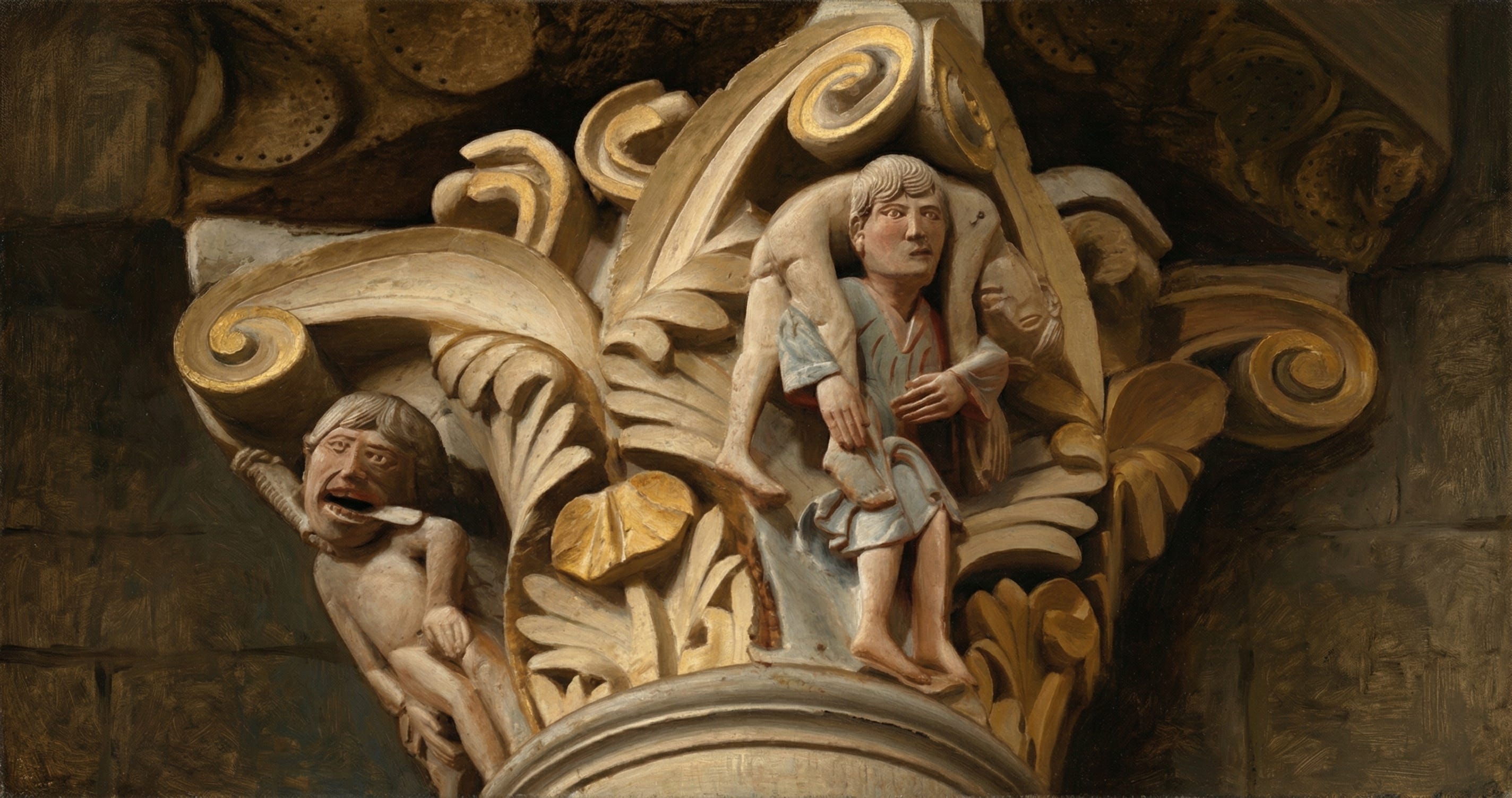
There is a medieval sculpture in Vézelay, France, carved into the top of a column in the Basilica of Saint Mary Magdalene, that most visitors walk right past. On one side, it shows exactly what you would expect: Judas, hanged, the rope taut, the body limp. The story over. The traitor condemned.
On the other side of that same stone, the Good Shepherd lifts the dead man onto his shoulders.
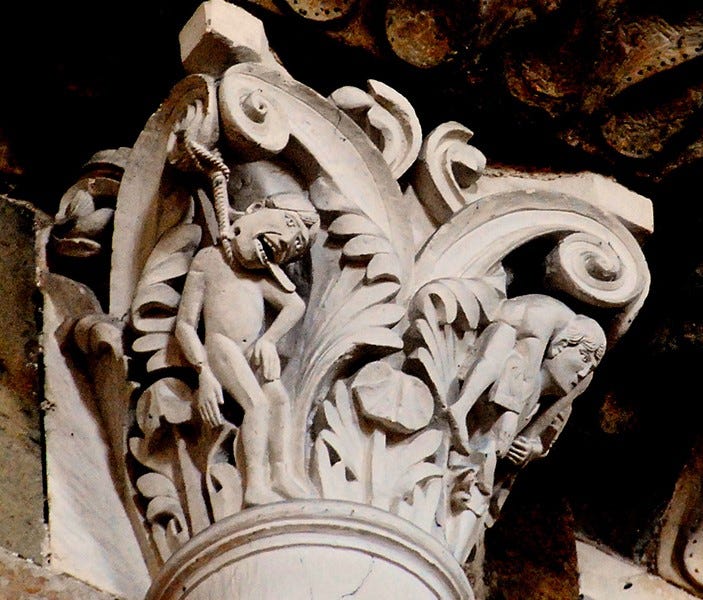
Pope Francis kept a photograph of this sculpture behind his desk. He stared at it for years.
In his book When You Pray, Say Our Father, he wrote that on the lips of the Good Shepherd there is “the hint of a smile that I would not call ironic, but somewhat shrewdly knowing.” Francis never claimed that Judas was saved.
He also refused to claim the opposite. “There is one thing that makes me think,” he wrote, “that the story of Judas does not end there.”
Today is Spy Wednesday. The Gospel is Matthew 26:14–25 — the moment Judas agrees to hand Jesus over for thirty pieces of silver. At the Passover meal, Jesus announces that one of those eating with him will betray him. The disciples ask, one by one: “Surely it is not I, Lord?” Judas asks too. Jesus answers: “You have said so.”
It would be easy to feel a comfortable distance from Judas. He is the villain. We know where this goes. But yesterday we sat with Peter — Peter, who swore he would die before betraying Jesus, and who broke that promise before sunrise. The distance between Peter and Judas is narrower than we want it to be. And the gap between Judas and us? Narrower still.
I have betrayed people I love. I know I’m not alone.
