


Dear friends,
Letters from Leo is publishing daily Lenten reflections through Easter, available exclusively to paid subscribers.
This series is a forty-day journey of repentance, renewal, and resolve — a sustained encounter between the day’s scripture readings and the demands of the Gospel in our time.
Each reflection invites you into prayer, confronting the idols we carry and the mercy that waits on the other side.
Easter is in nine days, but it’s not too late to join us. I promise you it’s a journey you won’t regret.
Thank you for reading.

Make A One-Time Gift to Support My Work
“If I am not doing the works of my Father, then do not believe me; but if I do them, even though you do not believe me, believe the works.” — John 10:37–38
Most people who abandon the truth do not do so all at once. It begins with a trimmed sentence or a swallowed conviction. Over time, you learn which rooms reward silence.
The cost of honesty registers somewhere deeper — in the body, before the mind catches up. Eventually, the trimming stops feeling like a compromise and hardens into something you mistake for wisdom.
Jeremiah knew what it cost to refuse that bargain. His own friends — not strangers, but people who had eaten at his table — were watching for him to stumble. “Terror on every side,” they whispered. “Denounce! Let us denounce him!” The prophet had become inconvenient. His words about Jerusalem’s reckoning made powerful people uncomfortable, and uncomfortable people look for ways to make the discomfort stop.
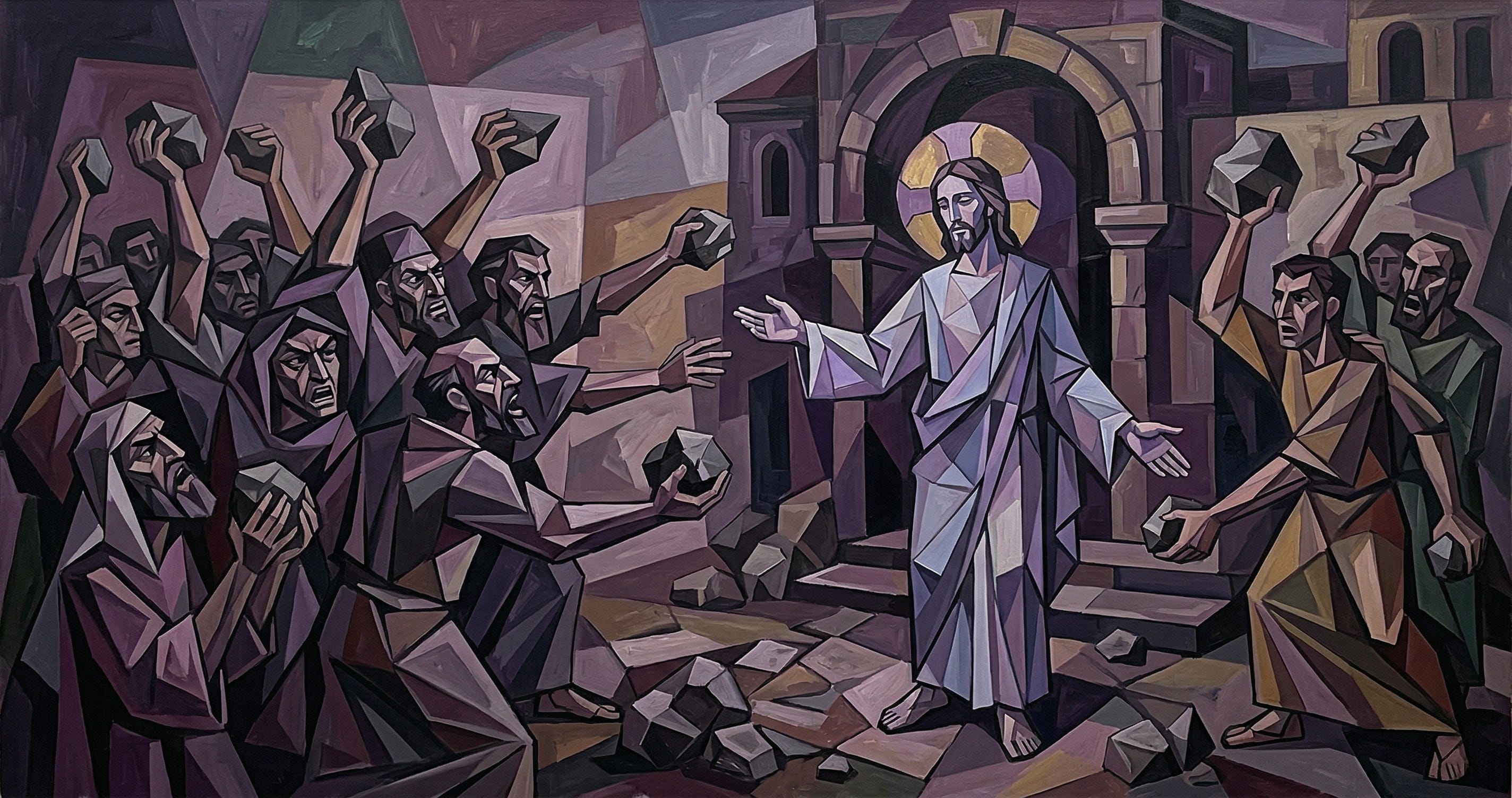
The Gospel today puts Jesus in the same position. Religious authorities pick up stones. The charge is plain: he told the truth about who he was. “For a good work we are not stoning you,” they say, “but for blasphemy.” Rename the truth as something dangerous, and you can punish it with a clean conscience.
Jesus does not retreat. He points to the evidence: “If I am not doing the works of my Father, then do not believe me; but if I do them, even though you do not believe me, believe the works.” The question underneath is unsparing: are you rejecting me because the evidence is lacking, or because the evidence terrifies you?
That question has never gone away.
