“A Church of the Poor” — Pope Leo XIV Will Share Mass and a Meal With 200 Vulnerable Romans at Castel Gandolfo
He reached the Alban Hills straight from Lampedusa, where he spent America’s 250th birthday among migrants at Europe’s southern door. From Ukraine’s president to a shelled church in Gaza to a homeless

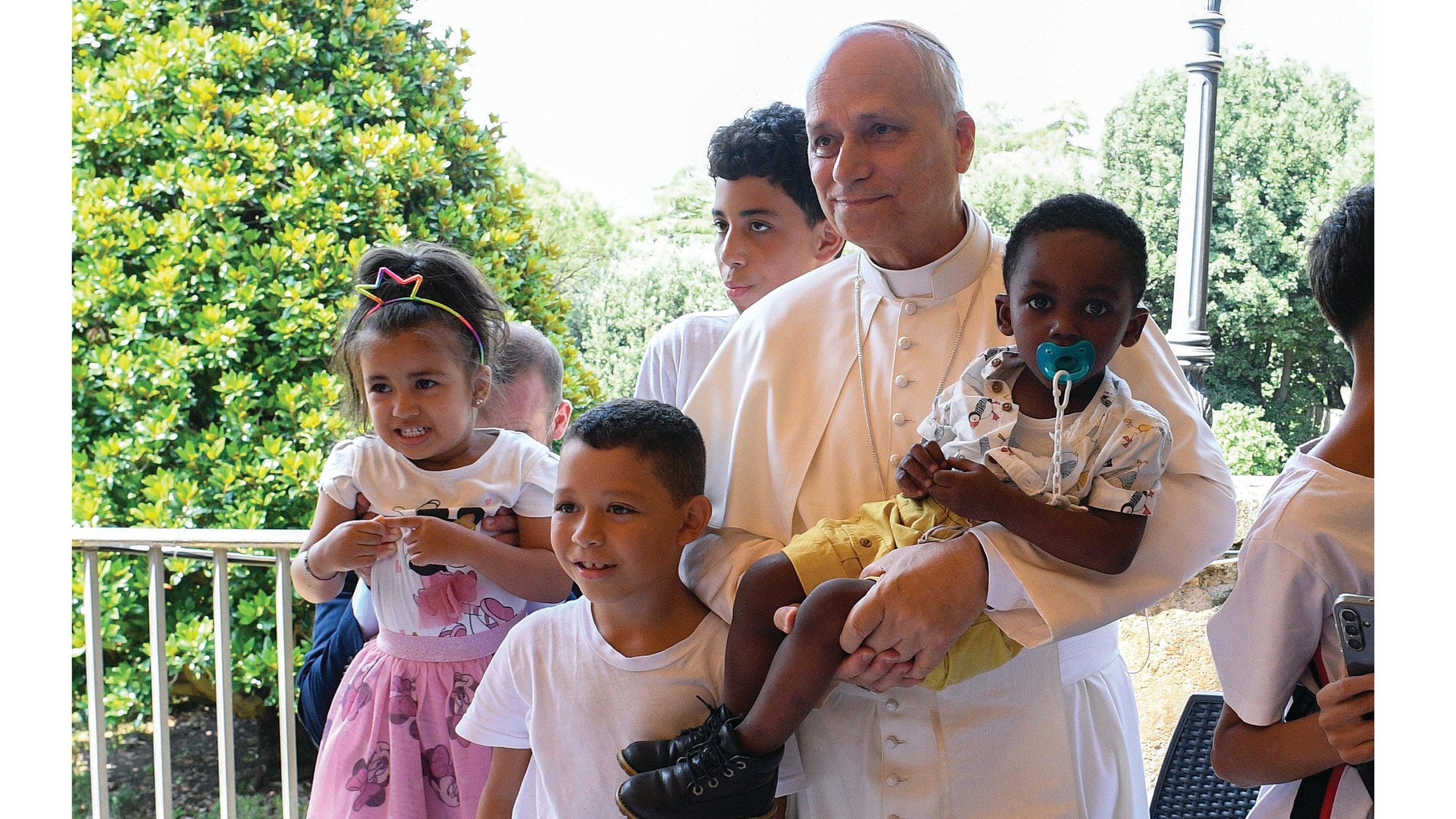
Pope Leo XIV will celebrate Mass with roughly 200 poor and vulnerable residents of the Diocese of Rome this Saturday in the gardens of Castel Gandolfo — and when the liturgy ends, he will sit down and eat with them.
Organizers announced the July 11 gathering, called “A Lunch with the Pope,” on Tuesday. The day opens with a Eucharistic celebration using the new Mass for the Care of Creation, continues with a guided tour of Borgo Laudato Si’ — the ecological formation center Pope Francis established in the pontifical gardens — and culminates in a shared meal with the pope himself.
Three institutions built the day together: the Laudato Si’ Center for Advanced Formation, the Dicastery for the Service of Charity, and the Diocese of Rome. Organizers describe it as the start of an annual tradition. Each summer, a different diocese will bring people living in poverty — along with refugees, migrants, and others in fragile circumstances — for a day immersed in the beauty of creation and a place at the pope’s table.
Leo did both of these things last summer, but on separate days.
On July 9, 2025, he offered the first Mass ever written for the care of creation, the Pro Custodia Creationis, in these same lakeside gardens.

Weeks later, in the cathedral at Albano, he preached to the poor of the diocese and welcomed them to lunch on the papal grounds. This year he is folding the two rites into a single afternoon, and that fusion is the whole point.
To most ears, a liturgy for the environment and a lunch for the destitute sound like separate causes, tended by separate committees.
Leo refuses that division. The Mass he approved last year was no symbolic flourish either — the Vatican slotted it into the Roman Missal among the Masses for various needs, where it now sits near the Mass for the sanctification of human labor and the Mass for refugees and exiles. The liturgy already keeps creation and the migrant under one roof.
The instinct has deep roots.
Eleven years ago, Francis wrote in Laudato Si’ that we do not face two crises, one of nature and one of society, but a single crisis that is at once environmental and human. When the earth is stripped for profit, the poor are the first to be buried under the rubble. A Mass that honored creation while averting its eyes from the people crushed by its plunder would be hollow.

Leo said as much at that first creation Mass.
Only “a contemplative gaze,” he preached, can heal our relationship with the world and lead us out of an ecological crisis born from “the rupture of relationships — with God, with our neighbor, and with the earth.” Sin, in his telling, is relational before it is anything else, and it tears the same web that binds a river to a farmer to a child downstream.
The place itself argues his case.
The Borgo Laudato Si’, the ecology project Francis planted in the pontifical gardens and Leo has carried forward, trains migrants, refugees, former prisoners, and women who survived abuse to work the land and run a farm-to-table kitchen there. The ground that grows the food is tended by the same people the world discards. At the Borgo, caring for creation and caring for the poor are the same job.

Leo made that logic unmistakable last August. Preaching to the poor gathered in Albano, he told them there can be “no distinction between those who serve and those who are served,” that “each one is a gift to the others,” and that together they form “a Church of the poor.” Those were not gentle words of hospitality. He was making a claim about who the Church actually belongs to.
The guests at his table are chosen with intention. Last year’s included refugees and migrants, the very people the Trump administration has spent its months in power hunting, detaining, and deporting.
In November, at the Vatican’s World Day of the Poor, Leo shared lunch with roughly 1,300 people, among them a group of transgender women from the seaside town of Torvaianica whom his own almoner had invited. I reported on that meal when it happened, and it showed how wide Leo means to draw the circle of belonging.

The contrast writes itself. Washington measures human beings by their paperwork and stages raids on worksites and courthouses. Leo keeps setting more places at his table. In the Gospel, a shared meal was always a more dangerous act than a decree, and he seems to know it.
A phrase like “a Church of the poor” does not surface by accident. In September 1962, a month before he opened the Second Vatican Council, John XXIII spoke over Vatican Radio and said the Church “wishes to be the Church of all, and especially the Church of the poor.”

Half a century on, in the first days of his papacy, Francis told a hall of journalists how he longed for “a Church that is poor and for the poor.” Leo has taken that inheritance down from the shelf of famous papal lines and set it on a lunch table in the Alban Hills.
There is something distinctly American in how he is doing it. Leo brought the papal summer residence at Castel Gandolfo back to life after Francis let the custom lapse, and then he declined to treat the holiday as ordinary leisure.
I wrote yesterday about the old Catholic conviction that rest is meant to be re-creation — a remaking of the person — rather than idleness. For Leo, the vacation itself becomes labor: he spends his days off drawing the forgotten close.
That labor has a single subject, and it is the stranger at the door. Villa Barberini was no idle retreat last summer — Leo hosted Volodymyr Zelensky there and offered the Vatican as ground for peace talks, and days later, after Israeli fire tore through Gaza’s Holy Family Church and killed three of the people sheltering inside, he took Benjamin Netanyahu’s call and pressed again for a ceasefire and the protection of every place of worship. This year he reached the Alban Hills straight from Lampedusa, where he spent America’s 250th birthday at Europe’s southern door, praying over the memorial to the migrants the sea has swallowed.
He left none of it to chance. From that island he sent the United States a letter for its anniversary, reminding a country built by newcomers that welcoming the immigrant is more than charity — it is a recognition of the dignity every person carries. Whether the guest is a war refugee, a Christian buried under a shelled church, a migrant at the border, or a homeless man at Saturday’s table, Leo keeps answering one Gospel command: I was a stranger, and you welcomed me.
It is worth sitting with how strange this is.
Picture another head of state giving up a summer Saturday to celebrate a rite for the wounded planet and then eating lasagna beside homeless men and trafficked women. No president or prime minister would think to stage it, and none would likely gain a point in the polls if they did. That is exactly what sets Leo’s office apart. His authority rises from neither an electorate nor a party nor a market; he stands in the world as the vicar of Christ, and the man he represents spent his life at precisely these tables.
So on Saturday, when the incense thins over the gardens and the plates are carried out, Leo will preach a homily without needing to say a word.
Care for the earth and care for the poor are one commandment, spoken to one human family, under one God who made both the soil and the souls who work it. The powerful of our moment want us to believe that mercy is a luxury and that some lives can be spent. From a hillside above Rome, an American pope is quietly refusing to concede the point.
At Letters from Leo, we stand with the pope who believes the wounded earth and the discarded poor cry out with a single voice — and that a Church worthy of the name answers both at the same table.
We built this community on the conviction that the Gospel belongs first to the poor, and that a faith which blesses creation while ignoring the people crushed beneath its ruins has misread both. That conviction has made Letters from Leo the fastest-growing Catholic community in the country — tens of thousands of readers hungry for courage, for truth, and for love made visible in action.
In an age that calls mercy naïve and manages the vulnerable as a problem, we stay rooted in the conviction that every person carries the image of God, and that no one falls beyond the reach of the table.
If you believe this movement matters — Catholics and people of goodwill standing for human dignity against a culture of disposal — I am asking you to join us.
If you’d like to invest in our mission, here are three ways you can help during this critical time:
Subscribe as a paid member to receive exclusive posts about the life and formation of Pope Leo and help sustain this newsletter.
Donate with a one-time gift to fuel this project’s mission.
Share this post (and Letters from Leo) with a friend who might enjoy it.
Paid members keep this work alive and unlock the full archive — including the biographical series on Pope Leo’s life and formation and the exclusive investigations that dig deeper than the news cycle allows.
Whether you give $0, $5, $50, $500, $1,000, or more, your presence here matters — no matter your faith or your politics.
Thank you for reading. I’ll see you on the road.


May God bless and guide our own Papa Leo . Amen.❤️❤️❤️
what i wouldn't give to be among those in the kitchen making those lasagnas....maybe the point is to do the same here, in my own little kitchen along the shores of lake michigan....
