

A Late Night Letter From My Heart
On my birthday, I give thanks to God for the gift of this community and for your friendship.

Thank you for reading! Letters from Leo is a reader-supported publication. To receive new posts and support my work, consider becoming a free or paid subscriber.
Dear friends,
Today is my birthday, so I wanted to send you a letter before bed.
I was born on Holy Saturday, March 25, 1989 — the same day the Church celebrates the Annunciation, Gabriel’s visit to Mary announcing that she would give birth to Christ.
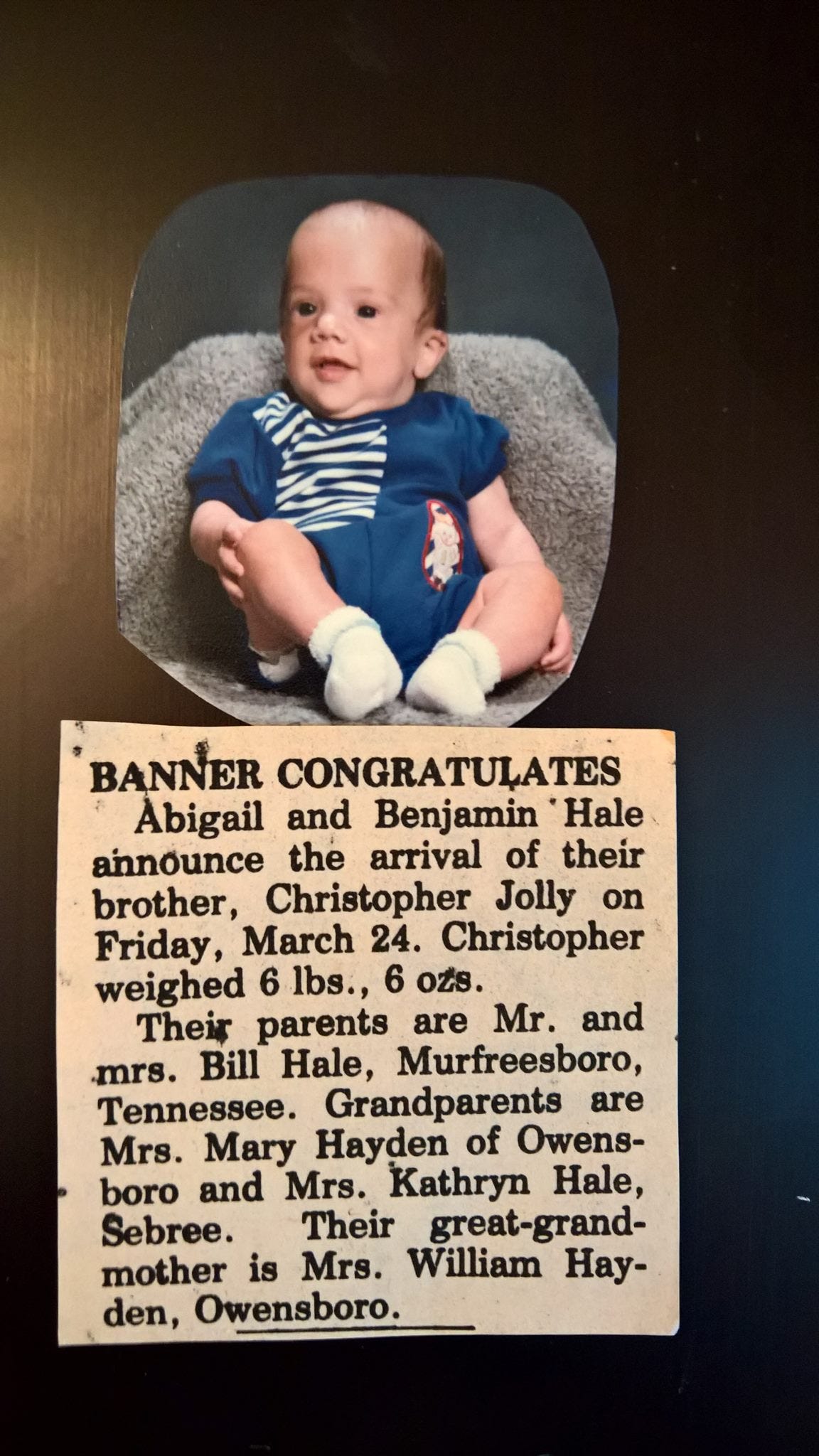
For the past several years, three things about that day have stayed with me: a young woman saying yes to God and declaring a new reign that “tears every tyrant from his throne,” the quiet anxiety of Holy Saturday, a day that situates us where we spend most of our lives — between the crucifixion and the resurrection, and finally the name my parents gave me: Christopher, in Greek, Christ-bearer.
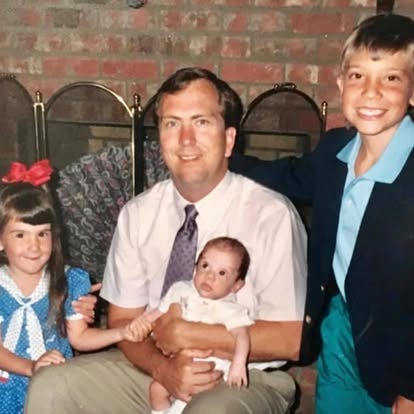
At the time, my name carried no particular religious meaning for my parents, and for most of my life, I never thought twice about it.
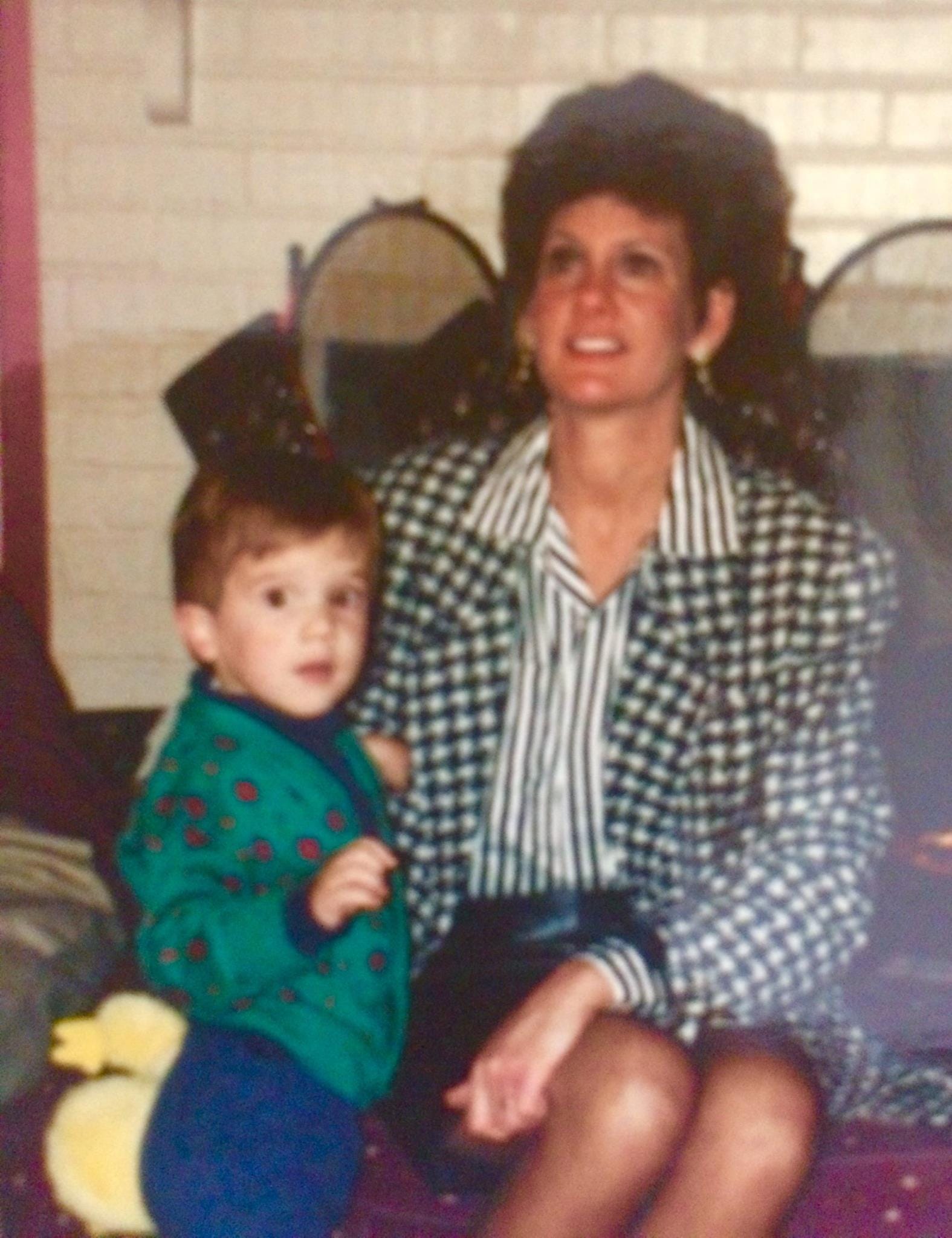
But as I grew in my faith and learned the origins and fictional legend of St. Christopher, I came to a startling conclusion:
Mary of Nazareth was the first Christopher.
She bore Christ in her body before the word “Christian” existed, before there were churches or creeds or catechisms, and into a world that had not yet learned to want him.
We get Mary wrong when we make her small. Centuries of saccharine holy cards have flattened her into a portrait of passive obedience: eyes downcast, hands folded, waiting quietly for instructions.
The Gospel of Luke tells a different story.
The angel Gabriel arrives with an announcement that will upend her entire life: an unplanned pregnancy in a culture that could stone her for it, a destiny she did not choose and could not control.
And Mary’s response, according to Luke, is to ask a question. “How can this be?”
Rather than simply accepting, she interrogates the angel. She needs to understand what God is asking before she gives her answer.
Pope Francis, preaching on this same Gospel, called Mary’s yes “no passive or resigned acceptance, but a lively desire to obey God.”
He is right.
And the Epistle to the Hebrews, which the Church pairs with this Gospel today, frames the Incarnation in the same active terms: “Behold, I come to do your will.”
The body that Mary offered became the instrument of salvation. What she did with her freedom changed the trajectory of human history.
Pope Leo XIV picked up this thread in his first homily of 2026, celebrating the Solemnity of Mary, Mother of God.
He described two “unarmed realities” meeting in the Annunciation: God renouncing every privilege of divinity to be born in the flesh, and a human person who “trustingly and fully embraces God’s will.” Then he named what Mary gave: “the greatest power she possesses — her freedom.”
That word landed hard when I read it. Freedom is not a synonym for compliance. Mary’s yes was a sovereign act of a woman who could have said no.
This matters for the Church today.
I wrote a decade ago in Time that Mary Magdalene, standing alone at the empty tomb, “was the Church” in the moment she proclaimed the resurrection. Women have always done the essential work of bearing Christ into the world — teaching children the faith, caring for the sick, feeding the hungry, sustaining parishes that would collapse without them.
The question I asked then remains unanswered today: if women can lead the Church on the ground, why do they still lack a seat at the table?
Mary’s courage at the Annunciation was the opening act of salvation history, and the Church still has not fully reckoned with what that means.
A Church that celebrates her courage on March 25 and ignores the courage of women the other 364 days has not yet understood its own feast.
And the Magnificat — the prayer Mary sings after her yes, rushing to visit Elizabeth — is among the most radical texts in scripture. In it, God pulls the mighty from their thrones and fills the hungry with good things while the rich leave empty-handed — tyrants toppled, the lowly finally raised up.
Mary did not whisper any of this in the temple. Luke tells us she proclaimed it — publicly.
This is the woman the tradition calls meek, and she is announcing the overthrow of every unjust power structure in human civilization. In a nation that treats cruelty toward immigrants as policy, where the powerful hoard wealth while children go hungry and lies get laundered into law — the Magnificat reads like a warrant for the world God actually wants.
I keep coming back to the name my parents gave me.
Christopher. Christ-bearer.
I have never lived up to the calling of that name.
But the Annunciation reminds me that the work of carrying Christ into the world did not begin with someone who had it all figured out. It began with a young woman who was “greatly troubled” and said yes anyway. That is what discipleship looks like — troubled, questioning, free, and still willing to show up.
As we reflected earlier this Lenten season, the Gospel keeps asking us to stop performing our faith and start living it. Mary lived it before anyone wrote it down.
And right now — in this Lent, in this country, in this moment — an awakening is underway that has everything to do with what Mary proclaimed in the Magnificat.
The Catholic Church in America is rising as a force for conscience against the ethos of fear and exclusion that MAGA has tried to normalize.
At the center of that awakening stands the American Pope Leo XIV, who, from his first day, put the plight of the poor and displaced at the forefront of his pontificate, immediately placing himself at odds with a president who treats cruelty as policy.
Leo denounced America’s treatment of immigrants as “inhuman” and questioned whether one can truly be pro-life while supporting such brutality. “The Church cannot stay silent before injustice,” he told a group of migrants with tears in his eyes.
“You stand with me. And I stand with you.”
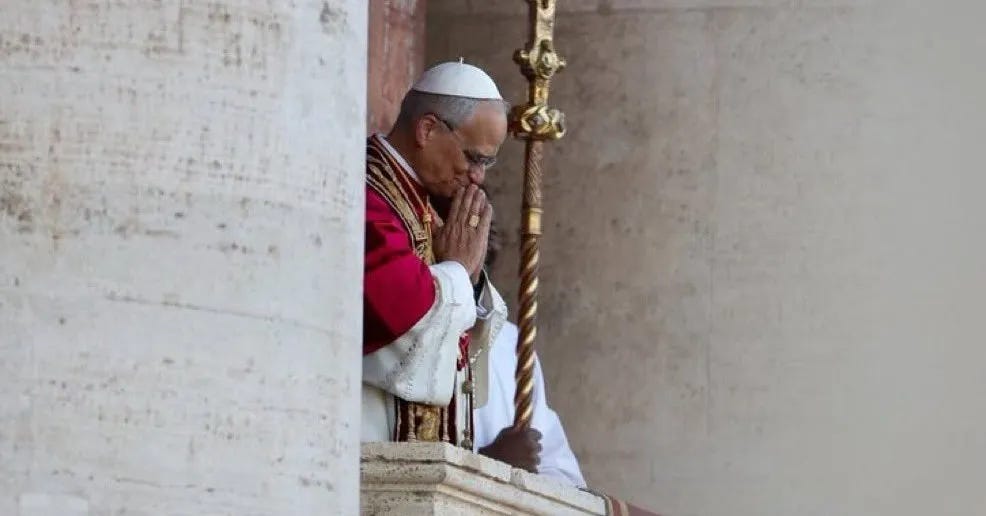
Those words have become our rallying cry. Under Leo’s leadership, Catholic social teaching is being reawakened in the American public square — not as an abstraction, but as a test of whether our faith means anything at all.
Parish protests against the war, prayer vigils at ICE offices, bishops leading processions for compassion — the signs of a Church uniting in prophetic witness are everywhere. The Magnificat is coming to life in the streets of this country.
I have a dogmatic belief that you and I are living through a providential moment. Just as God raised up a pope from behind the Iron Curtain to help defeat communism, God has raised up a pope from the Americas to confront MAGA authoritarianism.
And just as Mary said yes to carrying Christ into a world that was not ready for him, we are being asked to carry the Gospel into a nation that desperately needs it.
Today, I rededicate my entire heart to this mission.
To paraphrase Peter: I bring neither silver nor gold to this project. I bring my back, my mind, my heart, and my faith — offered in the belief that you and I were made for this moment, to be repairers of the breach.
Letters from Leo has grown to over 22,000 members in less than a year — the fastest-growing Catholic community in the United States.
Based on our trajectory, this publication could reach one million readers by the 2028 election. Imagine what a community that size — hopeful, formed, and engaged — could do for a country starving for moral clarity.
But none of that will happen without you.
This work is sustained entirely by readers like you.
There are no corporate sponsors, no billionaire benefactors, no institutional safety net. Just ordinary people choosing to invest in something they believe matters.
If you feel the same urgency I do, the same fire the Magnificat lit in Mary’s bones, I am asking for your help — as a birthday gift to me and as an investment in the mission God has placed before all of us.
If you’d like to invest in our mission, here are three ways you can help this Lenten season:
Subscribe as a paid member to receive exclusive posts — including the ongoing Lenten Reflection Series, the biographical deep-dive into Pope Leo’s Life and Formation, and investigative reporting you won’t find anywhere else.
Donate with a one-time gift to fuel this project’s mission.
Share this post with a friend who might need to hear that Mary was a revolutionary, and the Church needs more of her courage.
And if you are someone who prays, I ask for your prayers: for me, for this project, and for Pope Leo XIV.
Whether you can give $0, $1, or $1,000, please know that your being here matters — no matter your faith, your doubts, or your politics. We need people of goodwill united in hope, now more than ever.
Mary said yes to God in a small room in Nazareth and changed the course of human history. We are being asked to say yes from our own small rooms, with imperfect faith, into a moment that terrifies us. The road ahead is long, and none of us can walk it alone.
So let us rise — you and I — and make of this blessed nation something more blessed still.
Thank you for reading. I’ll see you on the road.

PS — If you’d like to make a larger gift through a credit card, check, family foundation, or donor-advised fund, reply to this email or reach out to me at cjh@christopherhale.com. I would be glad to help you invest in our mission.
Happy birthday! Thank you for all that you do.
Thank you for your great work. Happy birthday and God bless you!