


Dear friends,
The late Mark Shields once said that strong institutions seek converts and weak institutions punish heretics. Put another way, are we spending our time and energy making our communities bigger and more vibrant or smaller and more rigid?
Pope Francis said that choice runs through the whole history of the Church, and Pope Leo XIV preached on this exact theme in St. Peter’s Square this morning.
Today’s Gospel gives us a modus operandi to be a people who build up and unite rather than tear down and divide.
We’ll explore that in depth in today’s scripture reflection.
These Scripture reflections are available exclusively to paid subscribers. If my work means something to you, I’m asking for your help.
If you’d like to invest in our mission during this critical time, here are three ways you can help:
Subscribe as a paid member to receive exclusive posts about the life and formation of Pope Leo and help sustain this newsletter.
Donate with a one-time gift to fuel this project’s mission.
Share this post (and Letters from Leo) with a friend who might enjoy it.
Whether you give $0, $5, $50, $500, $1,000, or more, your presence here matters — no matter your faith or your politics.
Thank you for reading. I’ll see you on the road.

“If your brother sins against you, go and tell him his fault between you and him alone. If he listens to you, you have won over your brother.” — Matthew 18:15
For close to a thousand years, the Easter Vigil was celebrated on Saturday morning.
Many of you know it is my favorite night of the year, and I have written before about what it feels like to watch grown adults decide to enter the Church.
Fewer people know how new the night itself is. Sometime in the Middle Ages, the liturgy started creeping earlier, until a rite originally built around fire and darkness was being celebrated in the morning sunlight.
Pius XII sent it back to the night in 1951 as a temporary experiment, and in November 1955 he made the change permanent with a decree that said the vigil, “torn from its own place in the night hours, lost its innate clarity and the sense of its words and symbols.”
The night Augustine called the mother of all vigils is, in the form you and I know it, barely seventy years old.
My favorite moment of the night comes after the baptisms, when the newly baptized are confirmed, and the whole Church stands to profess the faith in the old question-and-answer form (do you believe in God, the Father almighty? I do).
Then the celebrant says this line: “This is our faith. This is the faith of the Church. We are proud to profess it in Christ Jesus our Lord.”
The word that carries that sentence is “our.”
Nobody stands up alone that night to profess a private faith they worked out for themselves. They do so as a collective community of believers.
Since the Enlightenment, the West has been building a civilization on the sovereign individual, the self who believes as she pleases and answers to no one. Christianity has never worked that way; you cannot baptize yourself, and there is no such thing as a Mass said by a congregation of one.
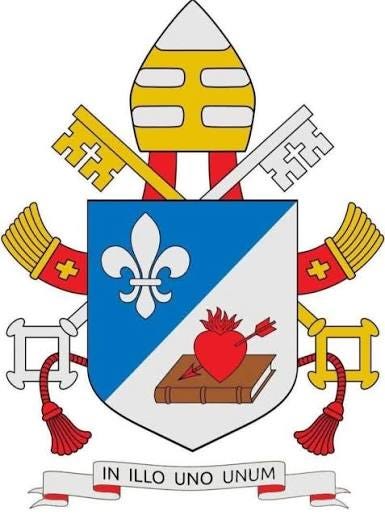
Pope Leo chose as his episcopal motto a phrase from Augustine’s commentary on Psalm 127, In Illo uno unum, which the saint used to say that although we Christians are many, in the one Christ we are one. It is the shortest version of the argument I made last week about how Augustine made this pope.
A line that circulates in disability ministry, attributed to the artist Dan Wilkins, goes: “A community that excludes even one of its members is no community at all.” Communities have rules and thresholds, of course, and somebody always lands outside them.
But the Church’s name is a claim about who belongs. Catholic means universal, every nation and the whole human family, and a Church that quietly writes people off has stopped being what it says it is.
That’s exactly what today’s readings are about. Pope Francis made that clear back in perhaps the best homily of his entire pontificate.
