


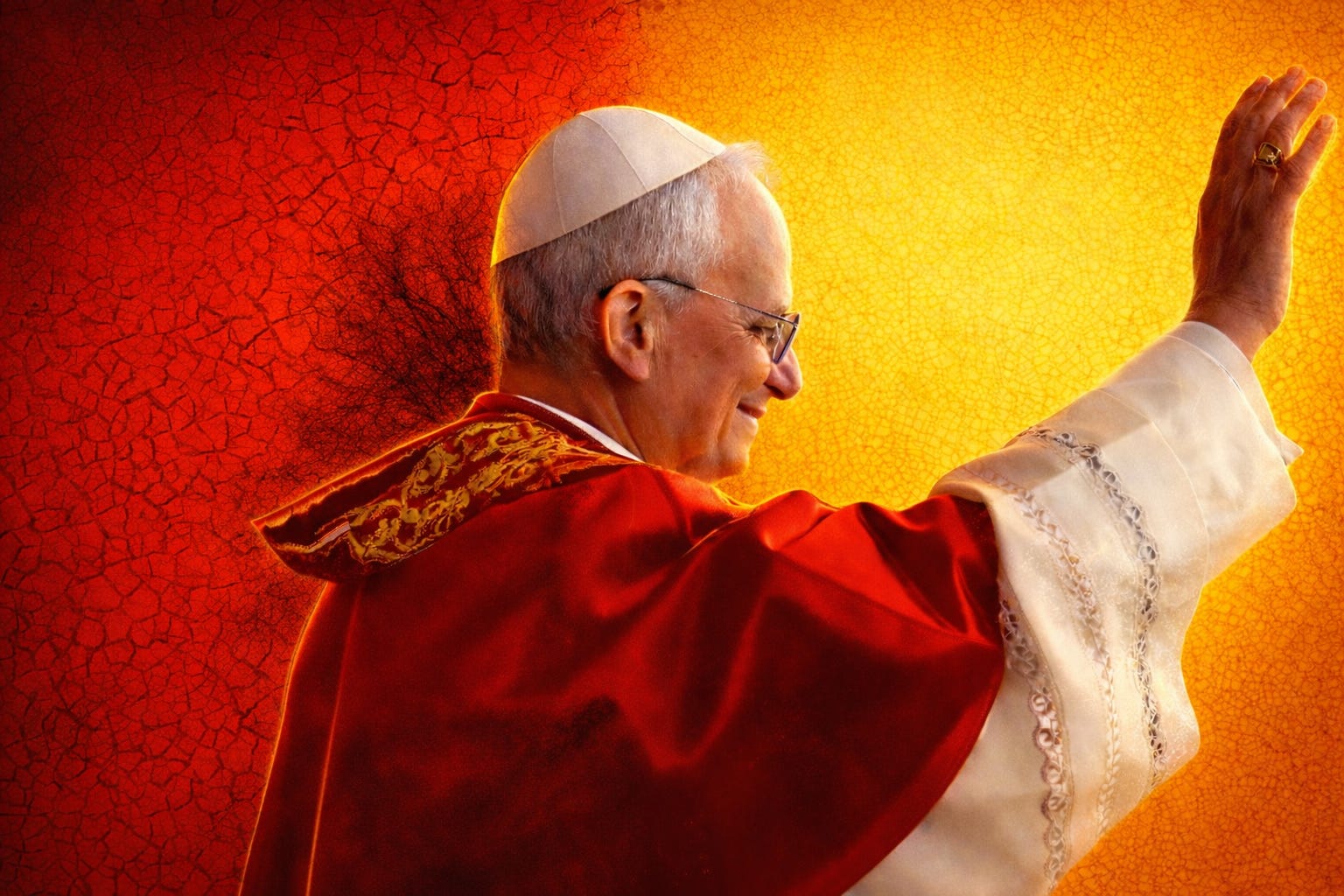
This morning, new details emerged from a closed-door Vatican meeting that could reshape how Catholics understand the moral confrontation between the Catholic Church and the far right.
In November, Pope Leo XIV met privately with Spain’s top bishops and delivered a stark warning: the gravest threat facing the nation was not secularism or economic instability, but the rise of far-right ideology seeking to instrumentalize the Church for political gain.
According to El País reporting confirmed by two senior churchmen familiar with the meeting, Leo cautioned that extremist movements were attempting to “win the Catholic vote” and manipulate Catholic identity for partisan ends.
What followed in Spain was not subtle.
Within weeks, the bishops reversed course on long-stalled abuse compensation talks and gave full-throated support to the government’s extraordinary immigration regularization plan — setting off a fierce backlash from nationalist forces.
Today’s subscriber-only essay tells the story of that meeting, the long history of far-right efforts to co-opt the Spanish Church, and what it could mean for Leo’s own moral confrontations with authoritarianism at home and abroad.
As right-wing efforts to mobilize the Catholic vote for 2026 and 2028 begin to accelerate, this story matters all the more.
If you’re already a paid subscriber, thank you — your support makes this work possible.
Letters from Leo is open to anyone who wants to be informed and inspired by our pope — and to turn that inspiration into action that leaves America and the world more just, less cold, and more alive with hope.
If you’d like to invest in our mission this Lenten season, here are three ways you can help:
Subscribe as a paid member to receive exclusive posts about the life and formation of Pope Leo and help sustain this newsletter.
Donate with a one-time gift to fuel this project’s mission.
Share this post (and Letters from Leo) with a friend who might enjoy it.
Paid subscribers receive full access to the Lenten Reflection Series, our new investigative series on Jeffrey Epstein and Steve Bannon’s attempt to destroy Pope Francis’s pontificate, and the Q&A mailbag covering American politics, Catholicism, Pope Leo XIV, Donald Trump, JD Vance — and my own journey of faith.
Whether you give $0, $1, or $1,000, your presence here matters — no matter your faith or your politics.
Thank you for reading. I’ll see you on the road.

In the Vatican last November, Pope Leo XIV sat face-to-face with Spain’s top bishops and delivered a blunt warning. His greatest worry for their country, he told them, was not economic turmoil or secularism — but the rise of ultra-right politics.
In a closed-door meeting on November 17, Leo warned that Spain’s far-right forces “seek to win the Catholic vote” and “instrumentalize the Church” for partisan ends.
According to an El País report confirmed by two senior churchmen familiar with the contents of the meeting, the pope stressed that this extremist ideology was the gravest threat facing the nation’s social cohesion. The bishops, some of whom had once aligned comfortably with conservative power, sat sobered as Leo XIV implored them to guard the Church’s independence from political manipulation.
This dramatic Vatican encounter came after months of confrontation between the new pope and right-wing leaders across the Atlantic.
For ten months, Leo XIV had been standing up to U.S. President Donald Trump and Vice President JD Vance on a variety of issues, clashing with Washington’s hardline stance on migrants, war and peace, and creeping nationalism and authoritarianism.
Just weeks before the Spain meeting, Leo publicly urged “deep reflection” in the United States over the harsh treatment of detained migrants, reminding Americans that a society would be judged by its compassion toward foreigners.
It was one of many moments in which the Chicago-born pontiff proved unafraid to speak moral truth to power — even as the Trump administration bristled. That same moral urgency infused his message to Spain’s bishops: the Church must not be co-opted by political extremes, whether in Europe or America.
The message was unmistakable: the Gospel cannot be subcontracted to nationalism.
The November summit marked a significant turning point. Pope Leo’s stark admonitions galvanized the Spanish bishops to take action back home.
“Today we are settling a debt and doing justice to the victims,” declared Spain’s justice minister as Church leaders, once reticent, finally accepted an independent reparations process.
Around the same time, Spain’s bishops also lent their full-throated support to a bold new immigration amnesty.
Late January saw the approval of an extraordinary plan to grant legal residency to over 500,000 undocumented migrants — the most generous regularization in Spain’s modern history.
Crucially, the Catholic Church actively championed the measure. The Spanish bishops’ conference hailed it as an “act of social justice and recognition” of migrants who have long contributed to the country.
In a public statement, the bishops celebrated the amnesty as a reflection of Gospel values and human dignity, pointedly distancing themselves from the anti-immigrant stance of Spain’s right-wing parties.
This dramatic pivot — embracing a policy anathema to the nationalist Vox party — marked a major break from the Church’s old alignment with Spain’s conservative establishment.
It sent a clear signal that Leo’s exhortation had hit home.
Since then, Spain’s church leaders have grown far more outspoken against xenophobia and authoritarian rhetoric. Prominent bishops now openly condemn the demonization of immigrants and insist Catholics cannot support ideologies that scapegoat the vulnerable.
But this prophetic voice has provoked furious backlash from the far-right. Ultra-conservative clerics and nationalist politicians accuse the bishops of betrayal.
In far-right online circles, critics framed the immigration push as a form of “population replacement,” echoing conspiracy-laden rhetoric about shadowy elites.
Figures in Vox have blasted the Church for “participating in the government’s operation” and claimed that “the oligarchy hates the Spanish people”.
Even Spain’s fringe Falange party — which wraps itself in Catholic symbols — lashed out with a venomous campaign.
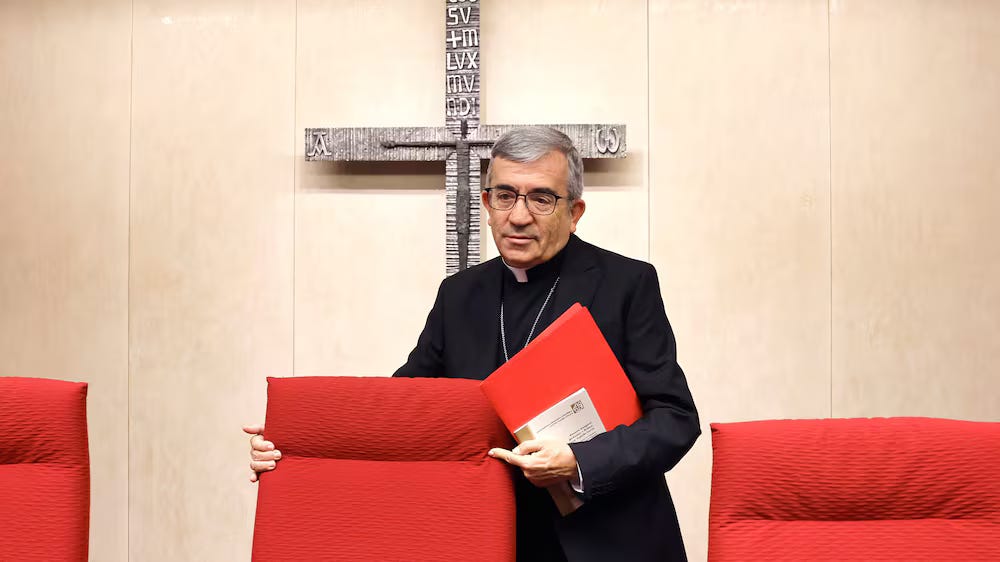
The Falangists circulated a deep-fake video morphing the conference’s president, Archbishop Luis Argüello, into a grinning demon amid flames.
Their message: the bishops are “closer to the devil than to the poor,” and have abandoned “true” Spaniards. Such attacks underscore how deeply Leo’s course correction has rattled the far-right’s claim on religious Spain.
There is a poignant historical irony in this clash.
The Spanish far right — and its admirers abroad — often idolize General Francisco Franco as a model Catholic strongman, invoking the late dictator’s alliance with the Church as a badge of legitimacy.
In the United States especially, some ultra-right Catholic figures have even praised Franco as an avatar of religious authoritarianism, touting his 1930s crusade against Spanish democracy as a blueprint for confronting the secular left today.
In recent months, influential American voices on the far right have explicitly called for “a Protestant Franco” in the U.S., implying that only a Franco-like figure could save Christian civilization.
For those who remember Spain’s history, the echo is chilling.
