


Thank you for reading! Letters from Leo is a reader-supported publication and the fastest-growing Catholic community in the country. To receive new posts and support this movement, consider becoming a free or paid subscriber.
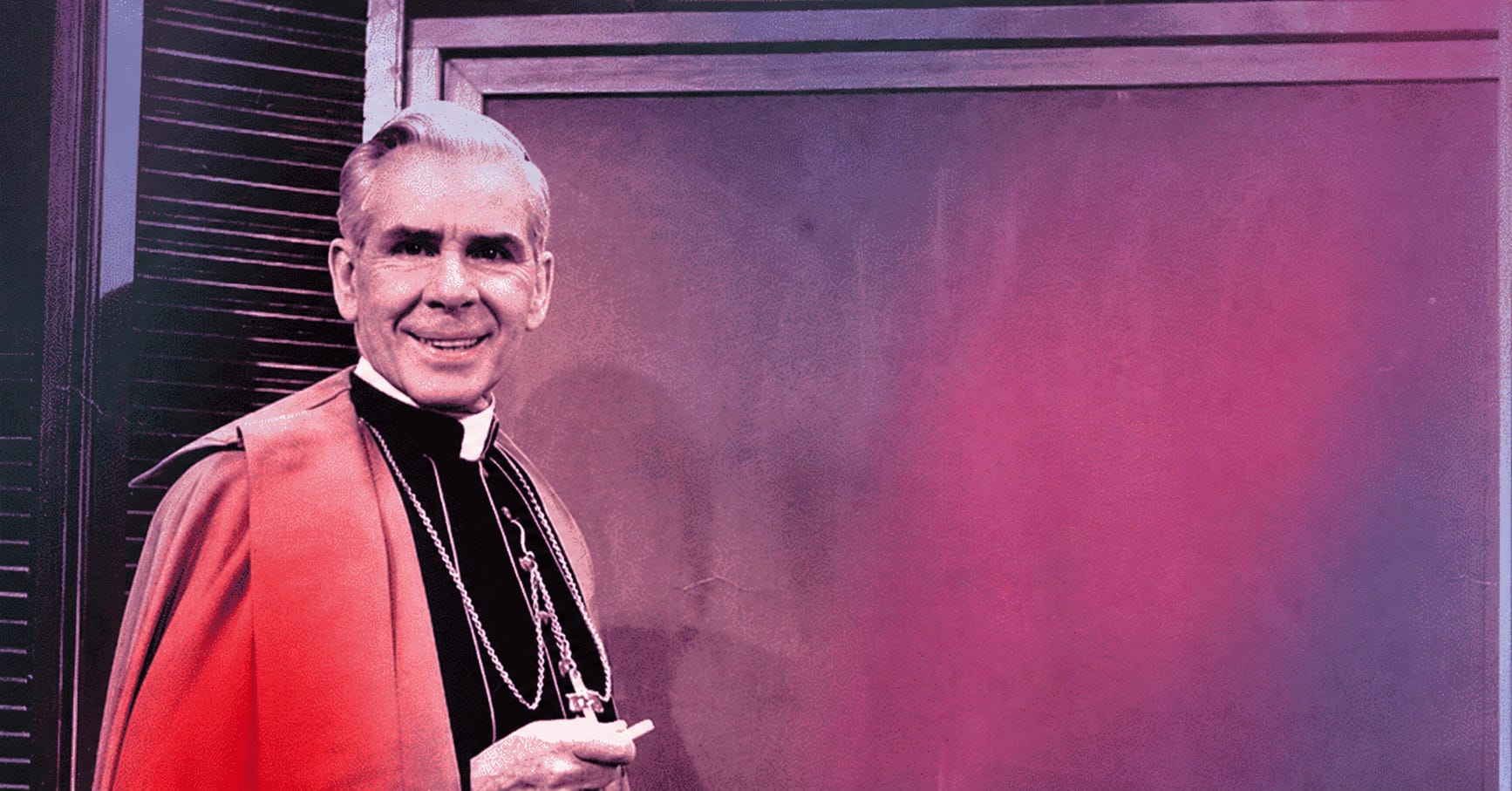
Cardinal Luis Antonio Tagle will beatify Archbishop Fulton J. Sheen on Thursday in St. Louis, where organizers expect some 50,000 pilgrims inside the Dome at America’s Center.
Pope Leo XIV, who was elected on May 8, the anniversary of Sheen’s birth, sent the cardinal as his representative.
On Wednesday he asked English-speaking pilgrims at the general audience to pray that “the example and intercession of this holy bishop, known for his evangelizing work through the media, inspire many others likewise to find new ways of spreading the Gospel message with joyful enthusiasm.”
The pope has a personal stake in this one. “I myself am a witness of his evangelization when I was growing up,” Leo told the Pontifical Mission Societies in June, recalling the television broadcasts he watched as a boy in Dolton, Illinois.
Father James Martin, SJ, wrote on Wednesday that the church “does not ‘make’ saints and blesseds. God does that.”
Buried in his tribute is the sentence that explains Sheen best: for a time, he “suffered for that at the hands of some in the church who were jealous of his success.”
The celebrity and the saint
American Catholicism now has a celebrity clergy of its own, priests and bishops with production companies and seats on presidential commissions. Several of them claim Sheen as their model.
The catechist Michael Fox has traced how one prominent bishop has invoked Sheen for sixteen years while leaving out every moment when Sheen spent his standing on the poor, and Fox’s verdict is that fame alone has never made anyone a prophet. Matthew Walther, writing in The Washington Post on Wednesday, calls the idea of Sheen as a patron saint of influencers “as ludicrous as it sounds.”
Sheen had the fame. He made the cover of Time in April 1952 and won an Emmy for television work that used little more than a chalkboard and a cape. At its peak, Life Is Worth Living drew as many as 30 million viewers.
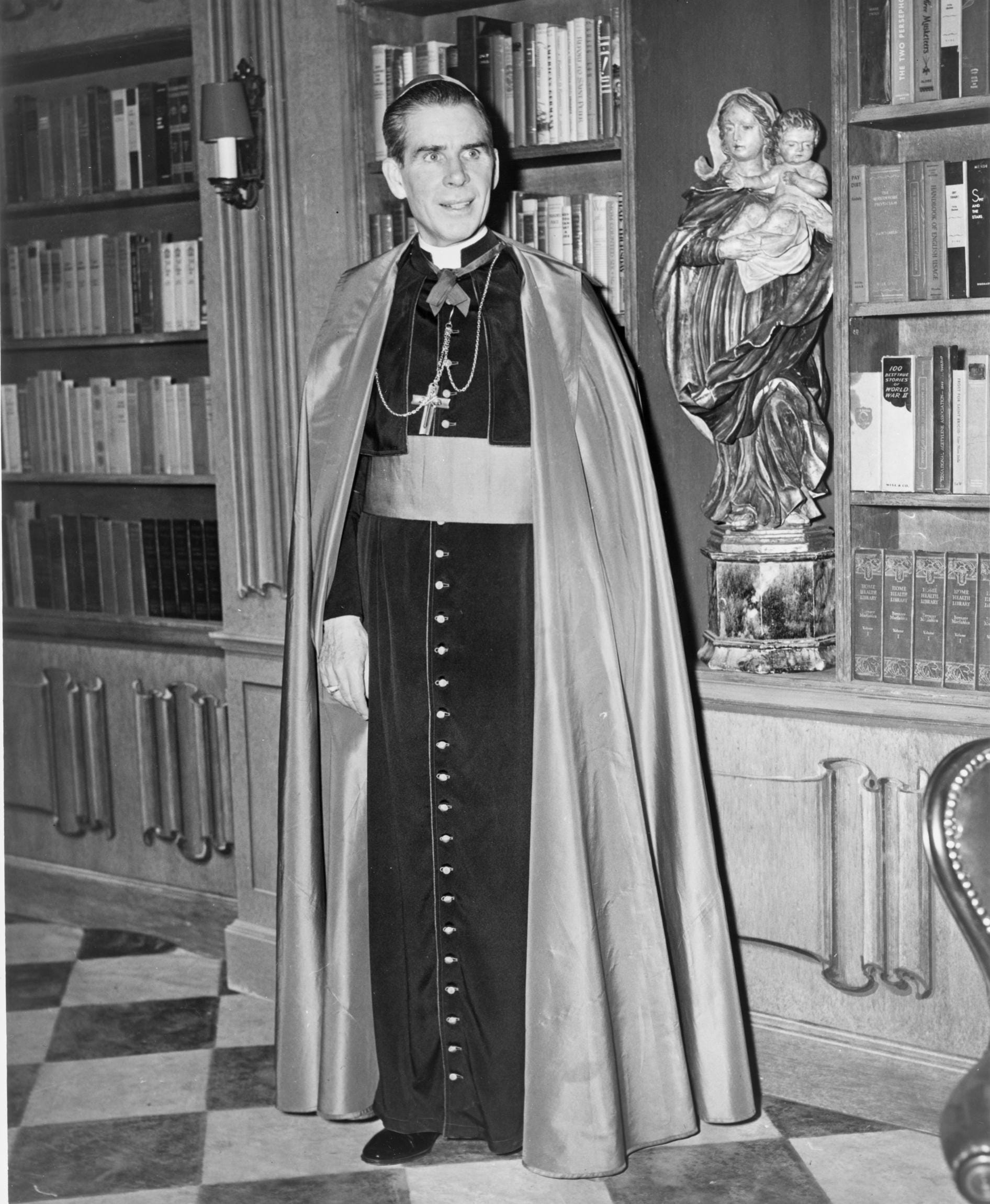
What set Sheen apart was what he was willing to lose.
The Council’s evangelist, before the Council
Sheen began preaching on NBC’s The Catholic Hour in 1930. When the bishops of the Second Vatican Council approved Inter Mirifica in December 1963, declaring that the Church “considers it one of its duties to announce the Good News of salvation also with the help of the media of social communication,” he had been doing exactly that for thirty-three years.
The Council, in other words, caught up to him. Sheen attended all four sessions and served on the commission that drafted Ad Gentes, the decree on the Church’s missionary work. Pope Benedict XVI, then a young theologian named Joseph Ratzinger, remembered those drafting sessions decades later: “There was Fulton Sheen who would fascinate us in the evenings with his talks.”
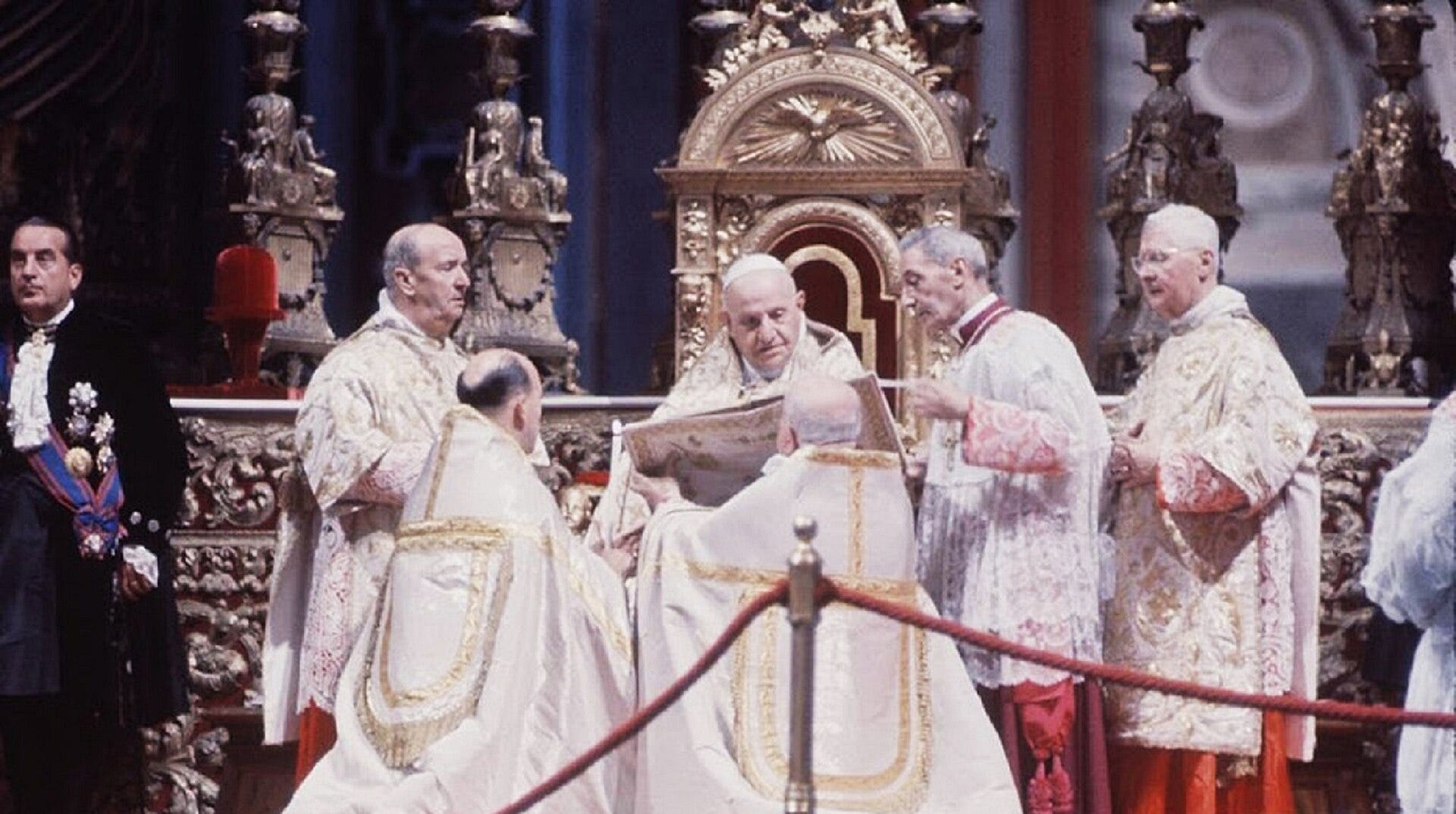
Leo, who has called Vatican II the church’s “guiding star,” reads the Council the same way.
Sheen versus Buckley
In a Firing Line episode recorded Jan. 6, 1970, three months after he left Rochester, Sheen sat across from William F. Buckley Jr. Buckley pressed the complaint Catholic conservatives were making then (and still make now). Mass attendance was falling, he said, and he wanted to know why Pope Paul VI would not excommunicate Catholics who openly rejected the creed.
Sheen defended the Council. “The Church was very much locked up in itself,” he answered. “After all, what the Vatican Council did was to relate us to the world.”
When Buckley asked why the pews weren’t filling, Sheen told him, “It’s going to take a long time for the yeast to work through the dough.”
Then he gave Buckley a number. Not one bishop from Asia or Africa sat at the First Vatican Council in 1870, he said, while at the Second, “61 percent of the bishops were from Americas, Asia, and Africa.” The Council had moved the Church, in his words, “from the rigidity of excommunication to the patient bearing of offenses.”
Archbishop Fulton J. Sheen defends the Second Vatican Council to William F. Buckley Jr. on Firing Line, recorded Jan. 6, 1970. (Hoover Institution Library & Archives)
The price
That patience was learned the hard way. In the 1950s, Cardinal Francis Spellman demanded that the Society for the Propagation of the Faith, which Sheen directed, pay the Archdiocese of New York for surplus powdered milk the government had donated. Sheen refused and appealed to Pius XII, who sided with him. Spellman is reported to have warned, “I will get even with you.”
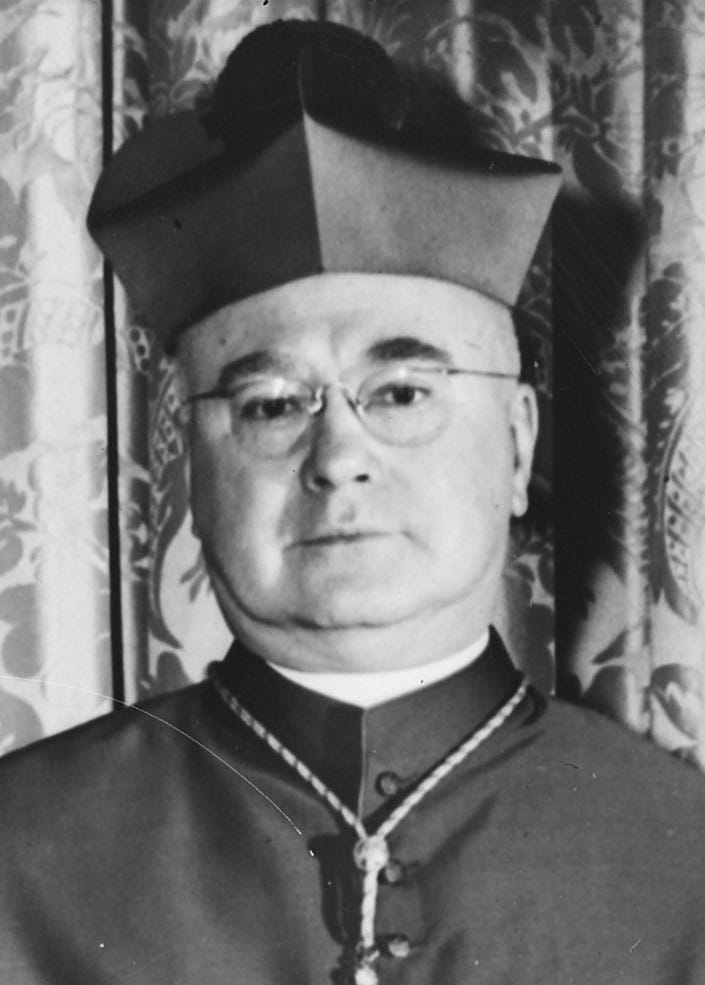
Life Is Worth Living went off the air in 1957, and Sheen lost his Good Friday pulpit at St. Patrick’s Cathedral. In 1966, Rome sent him to Rochester.
There he challenged Eastman Kodak over its hiring of Black residents, and in the summer of 1967 he called for American withdrawal from Vietnam while Spellman still backed the war.
In 1969 he tried to give St. Bridget’s parish to the federal government for low-income housing without consulting its people. Priests protested, Sheen withdrew the offer, and by October he had resigned. He later counted the episode among his failures.
Sheen never answered in kind. Walther notes that Sheen refused to criticize Spellman publicly, and that even his autobiography, published after his death, “had only kind words for a man who spent years attempting to destroy him.”
Walther points out that the Church lists bearing wrongs patiently among the spiritual works of mercy. On Firing Line, Sheen had used nearly the same words for what the Council asked of the whole Church.
Saints in their own time
Monsignor James Shea, president of the University of Mary, captured this pattern in Glimpses Along the Way of the Cross. Christ, he said, “remains on earth unrecognized very often in the saints. When they are dead, we see their glory and burn little candles at their feet. But while they live, they are usually thought to be eccentric, ridiculous, and even positively hypocritical.”
It is not the social reformer or the economist or even the leaders of the church who changed the human race, Shea continued, “but the silly saints in their rags and tatters with their empty pockets and their impossible dreams.”
Sheen waited a decade for the church to notice. On Oct. 2, 1979, Pope John Paul II embraced him at St. Patrick’s and told him, “You have written and spoken well of the Lord Jesus Christ. You are a loyal son of the Church.” Sheen died ten weeks later. His cause stalled again in 2019, when some American bishops asked for a delay to examine his handling of abuse allegations.
According to Religion News Service, a later review cleared him, and the Vatican let the beatification go forward in February.
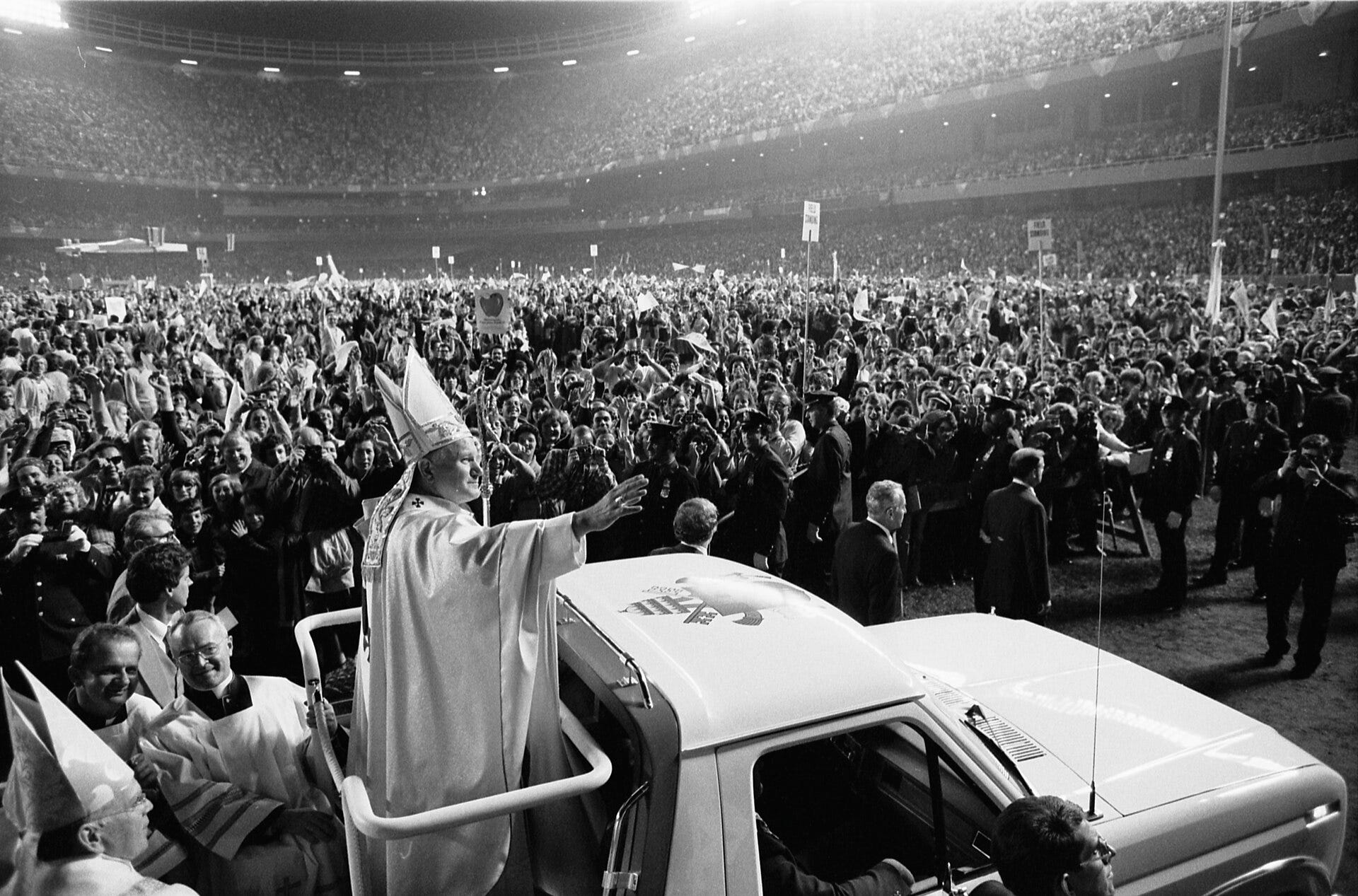
On Thursday, a cardinal sent by the boy from Chicago will call him Blessed. The celebrity priests will be watching, and some will post about it. Sheen’s life asks them a harder question than any television producer ever did: what platform they would be willing to lose for the poor, or for a Council that asked the Church to go out into the world.
At Letters from Leo, we stand with Pope Leo XIV and with every Catholic, and countless others of goodwill, who believe the Gospel was meant to be carried into the world and not hoarded behind a velvet rope.
Fulton Sheen used every microphone he was given to preach Christ crucified, and when the preaching cost him his show and then his diocese, he paid the price. That is the witness American Catholics are hungry for now, as too many churchmen trade the Council’s open doors for access to power.
If you believe this movement matters, a Church that goes out to the poor and the forgotten the way Sheen did, I am asking you to join us.
If you’d like to invest in our mission, here are three ways you can help:
Subscribe as a paid member to receive exclusive posts about the life and formation of Pope Leo and help sustain this newsletter.
Donate with a one-time gift to fuel this project’s mission.
Share this post (and Letters from Leo) with a friend who might enjoy it.
Paid subscribers get the full series on Pope Leo’s life and formation, including the Chicago childhood that put a young Robert Prevost in front of Sheen’s broadcasts, along with our Sunday Scripture Reflection Series.
Whether you give $0, $5, $50, $500, $1,000, or more, your presence here matters — no matter your faith or your politics.
Thank you for reading. I’ll see you on the road.

I love Archbishop Sheen. I read his autobiography a few years ago, Treasure in Clay. I highly recommend it.
Growing up in Chicago, I remember Archbishop Fulton Sheen very well.
He spoke at our Catholic grade school and I remember the nuns and priests loved him. So did all of us kids.