
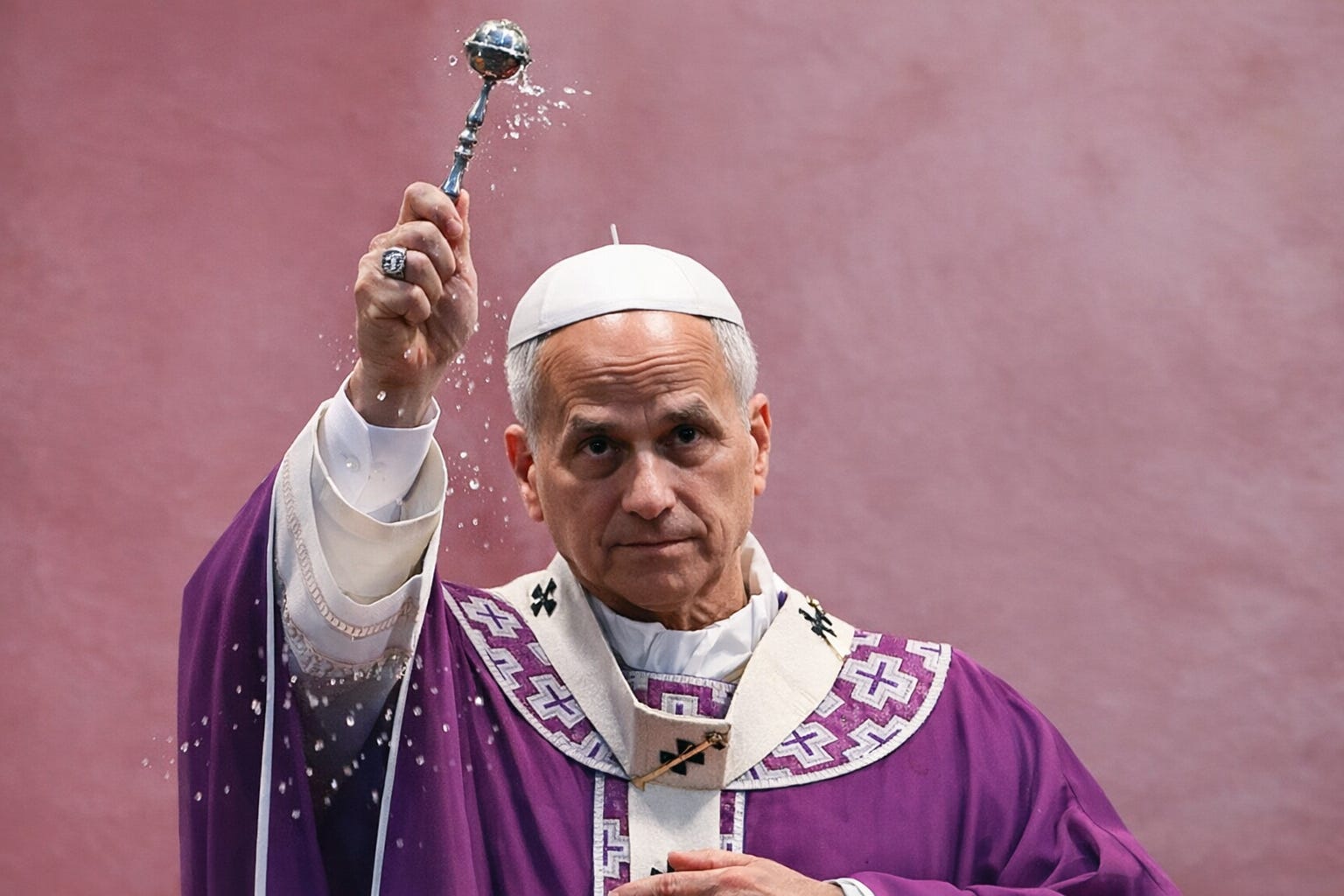
Here’s What Pope Leo Wants You to Give Up for Lent
If you want to change your body, perhaps alcohol and candy is the way to go. But if you want to change your heart, Pope Leo XIV argues a harder fast is needed.
Thank you for reading! Letters from Leo is a reader-supported publication. If you find value in my work, please consider becoming a paid subscriber or making a one-time donation.
Christians around the world mark the beginning of Lent with the celebration of Ash Wednesday next week. This ancient day and season has a surprising modern appeal.
Priests and pastors often tell you that outside of Christmas, more people show up to church on Ash Wednesday than any other day of the year — including Easter.
But this mystique isn’t reserved for Christians alone. The customs that surround the season have a quality to them that transcend religion. Perhaps most notable is the act of fasting.
While Catholics fast on Ash Wednesday and on Fridays during the Lenten season, many people — religious or not — take up this increasingly popular discipline during the year.
The pope has asked us to reconsider the heart of this activity this Lenten season. According to Leo, fasting must never become superficial.
During his time in Peru, the future pope often quoted the early Christian mystic John Chrysostom who said: “No act of virtue can be great if it is not followed by advantage for others. So, no matter how much time you spend fasting, no matter how much you sleep on a hard floor and eat ashes and sigh continually, if you do no good to others, you do nothing great.”
But this isn’t to downplay the role of sacrifice during the Lenten season. Lent is a good time for penance and self-denial. But once again, Leo reminds us that these activities must truly enrich others: “[Fasting is about] keeping our hunger and thirst for justice alive and freeing us from complacency.”
So, if we’re going to fast from anything this Lent, Leo suggests that even more than candy or alcohol, we fast from cruelty towards others, especially in what we say.
He invites the faithful to undertake a “very practical and frequently unappreciated form of abstinence: that of refraining from words that offend and hurt our neighbor.”
Leo writes, “Let us begin by disarming our language, avoiding harsh words and rash judgment, refraining from slander and speaking ill of those who are not present and cannot defend themselves. Instead, let us strive to measure our words and cultivate kindness and respect.. In this way, words of hatred will give way to words of hope and peace.”
It’s a call to fast from destructive speech — to give up gossip, insults, vindictive tweets and online trolling for Lent. And it comes with a promise: if we do so, our cruel words will be replaced by healing ones, and our communities will become more compassionate.
In fact, Pope Leo goes so far as to pray for “the strength that comes from [this] fasting” so that hurtful words diminish and “the voice of others” — especially the suffering and the poor — can be heard.
His hope is that by guarding our tongues, we’ll make space in our hearts for what he calls a “civilization of love.”
This plea could not be more timely. The past year has been a cacophony of harsh words, from political arenas to social media. It often feels like cruelty is celebrated, even rewarded, in public life.
Just last week, President Donald Trump shared a grotesquely racist video on his social media, an AI clip that depicted Barack and Michelle Obama as apes. The post was so offensive that even members of Trump’s own party called it “beyond disaster” and urged him to take it down.
A few weeks before that, the president’s response to the tragic murder of Hollywood director Rob Reiner and Reiner’s wife was a tirade of blame and mockery.
As the nation mourned the slain couple, Trump took to his platform to sneer that Reiner’s “incurable Trump Derangement” had essentially caused his own death. Even the dead became targets for insult. It was a new low in a year already marked by taunts and toxic rhetoric emanating from the highest office.
In this climate, Pope Leo’s exhortation to “disarm our language” is a direct challenge.
It asks everyone — from world leaders to ordinary social media users — to do what might feel impossible: hold their tongue when tempted to lash out.
To be sure, this Lenten fast will be far more difficult for some than giving up sweets or beer.
The president himself, known for his constant belittling of critics, would likely have great difficulty fasting from harsh words; it may well be a sacrifice beyond what he’s willing to make.
Yet Leo’s point is that without charity, our piety rings hollow. If a Christian skips meals but spews anger, what has really been gained? The pope is reminding the world that character is measured by how we treat others, especially in our speech.
Fasting from hatred and cruelty is a “narrow road” — it’s gritty and challenging — but it isn’t sterile or empty. On the contrary, surrendering our anger and scorn creates room within us for something beautiful.
When we lay down the harsh word, we can pick up words of empathy and encouragement.
When we fast from hate, we can feast on love.
In fact, Lent is the perfect time to learn how to love again. Jesus — the great protagonist of this holy season — certainly showed us the way.
In him, God descends all the way down to bring everyone up. In his life and his ministry, no one is excluded.
As this holy season begins, the question arises again: “What are you giving up for Lent?”
If you want to change your body, perhaps alcohol and candy is the way to go. But if you want to change your heart, a harder fast is needed.
The fast Pope Leo is urging is one that could actually transform hearts, make us whole, and set us free.
Now that’s something worth fasting for.
At Letters from Leo, we stand with the millions of American Catholics—and countless others of goodwill — who rise each day to defend the dignity of every person, regardless of race, religion, background, or belief.
In an era poisoned by cruelty and division, we remain rooted in a faith that refuses to flinch before injustice or bow to the idols of fear and authoritarianism.
We’re not just watching this moment. We’re part of it.
This is the fastest-growing Catholic community in the country because people are hungry for something deeper than rage and cynicism. They’re looking for courage, for truth, for love made visible in action.
If you’re ready to build a country — and a Church — that is more just, less cruel, and more alive with hope, then you’re already one of us. Let’s walk together.
If you’d like to invest in our mission, here are three ways you can help:
Subscribe as a paid member to receive exclusive posts about the life and formation of Pope Leo and help sustain this newsletter.
Donate with a one-time gift to fuel this project’s mission.
Share this post (and Letters from Leo) with a friend who might enjoy it.
Paid subscribers have access to the Sunday Scripture Reflection Series, the upcoming Lenten Reflection Series, and our new investigative series on Jeffrey Epstein and Steve Bannon’s attempt to take down Pope Francis.
You’ll also get access to the Q&A mailbag that opened last month, where you can ask me anything about American politics, Catholicism, Donald Trump, Pope Leo, JD Vance — or my own faith, biography, and life.
Whether you give $0, $1, or $1,000, your presence here matters — no matter your faith or your politics.
Thank you for reading. I’ll see you on the road.


We fast or abstain from licit pleasures or conveniences, etc., but not from unkind remarks about others, simply because we should never do that anyway. Lent is a great time to focus on amending our lives, but I think it is unwise to belittle penances like doing without certain foods, or skipping meals. It is easy to kid oneself that those are somehow of little worth as long as one is doing good to others.
Excellent. This is a fast I can get behind. I love the quote from St John.