


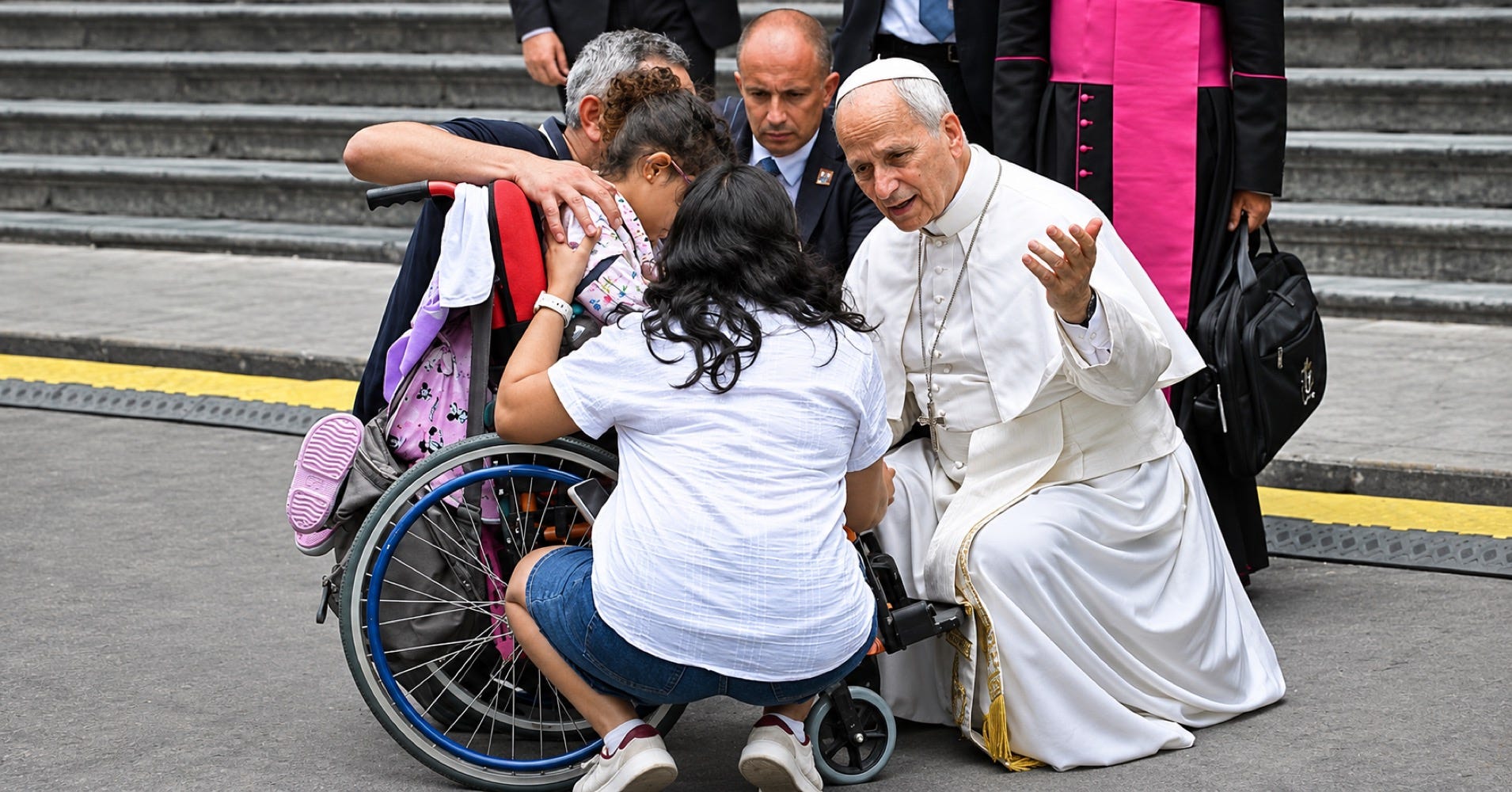
Thank you for reading! Letters from Leo is a reader-supported publication and the fastest-growing Catholic community in the country. To receive new posts and support this movement, consider becoming a free or paid subscriber.
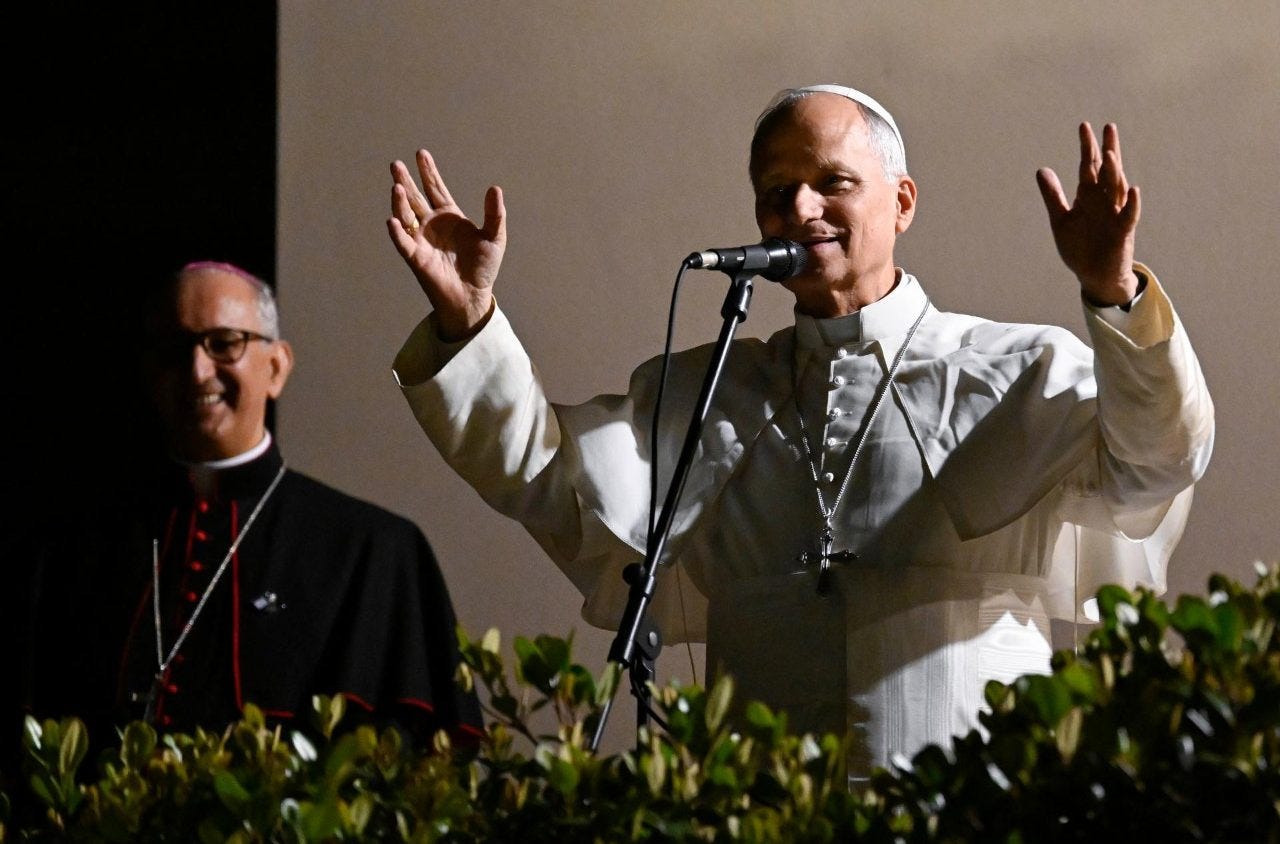
Pope Leo XIV walked out onto the balcony of the Apostolic Nunciature in Lima at about 10:30 on Wednesday night, at the end of a day that began in Argentina. “Muy buenas noches, Lima,” he said to the crowd below. “Buenas noches, Perú.”
He told them he had no words to thank them for “una acogida tan calurosa,” such a warm welcome, on the day he had come back to his house. Then he said it plainly: “Aquí estoy en casa.” Here, I am at home.
The people on Avenida Salaverry, in the Jesús María district, had been waiting since two in the afternoon. El Comercio counted sisters from several religious congregations among them, and young volunteers kept the street singing for hours (some of the pilgrims had come all the way from Bolivia and Chile).
“I am returning to my homeland”
The welcome began hours earlier at the air base in Callao, where President Keiko Fujimori met his plane from Buenos Aires. The Holy See Press Office estimated that about three million people filled the route into Lima. At the Government Palace, Leo sang the Peruvian national anthem with the National Children’s Choir, and he was moved to tears.
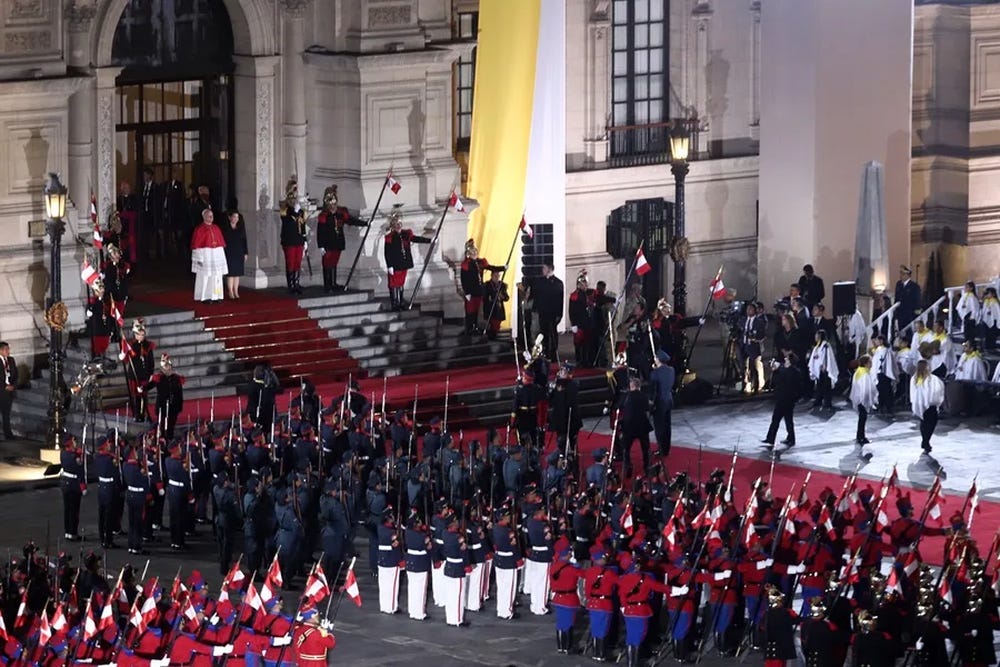
That evening at the Gran Teatro Nacional, in his first address on Peruvian soil, he told the country’s leaders and the diplomatic corps, “I am returning to my homeland.” When he walked in, some in the hall shouted their welcome home. He remembered the families who “opened the doors of their homes to me, shared their table with me — and, of course, some good ceviche — and made me feel like one of their own.”
Then he spoke to the country’s wounds, without naming specific politicians. Leo asked public officials to “cultivate honesty, integrity and a willingness to engage with others,” in a nation where corruption scandals have toppled one president after another.
He remembered the roughly 3.5 million Peruvians who have emigrated. For families, he said, “peace has a very concrete meaning,” which is the freedom to leave for work in the morning and come home at night without fear.
The balcony
Back at the nunciature, he spoke for only a few minutes. Leo thanked the crowd for its joy and for its prayers, “especialmente en este periodo,” especially in this period.
Nobody on Avenida Salaverry needed that phrase explained. Twenty-nine days earlier, surgeons at Rome’s Gemelli hospital removed the lower lobe of his right lung, and the Vatican confirmed a diagnosis of lung adenocarcinoma.
In Uruguay last week, as I reported, he said his own illness made him think of everyone who cannot get a timely diagnosis.
He pointed down at the statue of a dove in front of the building. “Aquí delante de la Nunciatura hay esta hermosa paloma, signo de la paz,” he said (here in front of the nunciature is this beautiful dove, a sign of peace), and he asked for prayers for peace in every country on earth.
The crowd laughed at what came next. Someone had asked him to add one more word, Leo explained, because a few neighbors had windows facing the street and wanted to sleep.
The party could go on a little longer, he told them, “pero no toda la noche.” Then he prayed the Our Father with the people below, blessed them and everyone they love, and said goodnight.
A bedtime tradition
Peruvian television calls this a balconazo. Lima was the third capital in six nights where Leo has closed his day with one.
On Nov. 6 in Montevideo, after vespers at the cathedral, he came out on the nunciature balcony and told the young people waiting that Uruguay looked to him like “un país de jóvenes con fe,” a country of young people with faith.
Buenos Aires got even more of him. On his first night in Argentina, he left the nunciature and walked onto the sidewalk to bless the neighbors watching from their own balconies. The next night, after the Argentine bishops serenaded him at dinner with the tango “Volver,” he stepped onto the archbishop’s balcony above the Plaza de Mayo. “Gracias por recibirme. Gracias, Argentina,” he said.
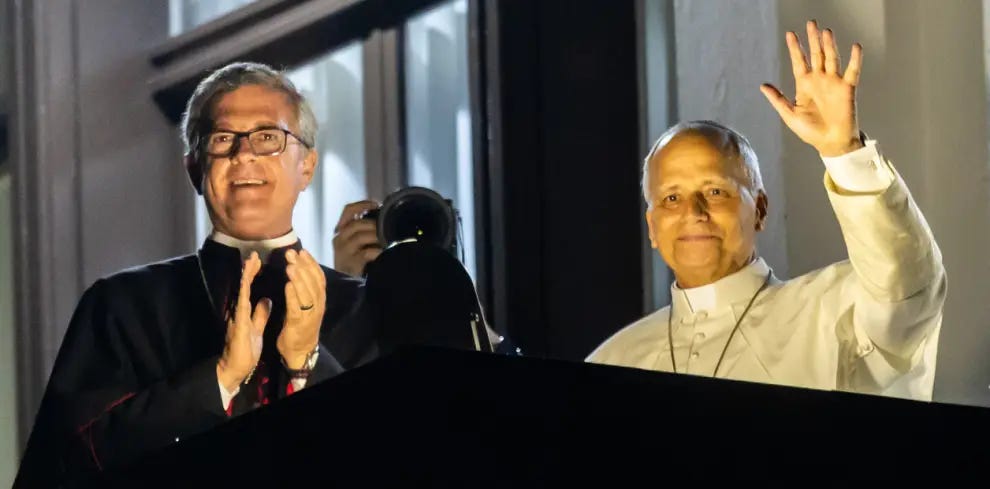
Later, when the crowd outside the nunciature would not stop calling for him, he came down to the street, pressed his palms against his cheek like a pillow, and made one of his own security guards laugh.
You will not find these moments on the official program the Holy See released in September. The Masses and speeches were set weeks ago; the balconies are a habit Leo has added on his own.
A shepherd at the door
The bedtime blessing carries its own theology in a way I suppose.
A pope on a long journey spends his day inside protocol, reading prepared texts to ministers while honor guards stand at attention. At the balcony, the people who never had a ticket to the Gran Teatro get their pope anyway, and so does the neighbor who just wants some sleep.
It is a missionary’s habit. Leo arrived in Chulucanas as a 31-year-old Augustinian in 1985, spent years teaching and forming priests in Trujillo, and served as bishop of Chiclayo until Francis called him to Rome in 2023. Peru made him a citizen in 2015, and as I’ve written before, the country shaped the kind of shepherd he became. In the parishes of northern Peru, a priest’s night ends at the church door, greeting whoever is still standing there.
Francis asked priests to be shepherds who carry “the smell of the sheep.” His successor is doing it at 71, a month after cancer surgery, at an hour when most men his age would long since have gone to bed.
On Thursday, after meeting Peru’s bishops, Leo gathers young people for a vigil at the Estadio Nacional. He sleeps at the nunciature again tonight and once more on Sunday, after Cusco. If the last six nights are any guide, Avenida Salaverry will be full again by sundown.
A pope who calls a country home owes it more than a prepared speech, and Leo seems to know it. He gave Lima the Lord’s Prayer, a joke about the neighbors, and most importantly, himself, and then he asked Peru to keep praying for him.
At Letters from Leo, we stand with a pope who ends his longest day at the door, blessing the people who waited for him in the street. In a political age that treats the powerful as the only audience worth having, Leo keeps giving his last hour to the people no protocol office ever puts in the front row, down to the neighbor who wants the party to end.
This is the fastest-growing Catholic community in the country because people are hungry for that kind of shepherd. They want a Church that goes out to meet them, and a faith that still knows its neighbors by the windows they sleep behind.
If you believe this movement matters — Catholics and people of goodwill standing for the dignity of every person, from the Plaza de Mayo to Avenida Salaverry — I am asking you to join us. If you’d like to invest in our mission, here are three ways you can help:
Subscribe as a paid member to receive exclusive posts about the life and formation of Pope Leo and help sustain this newsletter.
Donate with a one-time gift to fuel this project’s mission.
Share this post (and Letters from Leo) with a friend who might enjoy it.
Paid members get our full series on Pope Leo’s Life & Formation, including the years in Chulucanas, Trujillo, and Chiclayo that explain the man on that balcony, plus the Sunday Scripture Reflection Series and our exclusive investigations.
Whether you give $0, $5, $50, $500, $1,000, or more, your presence here matters — no matter your faith or your politics.
Thank you for reading. I’ll see you on the road.

THIS is just so beautiful! I am happy he was able to go HOME - and the PEOPLE were sooooo happy to see him!!! Makes my heart feel good.
Pope Leo is truly a gift from God. We Americans are so very proud of him. 💙