


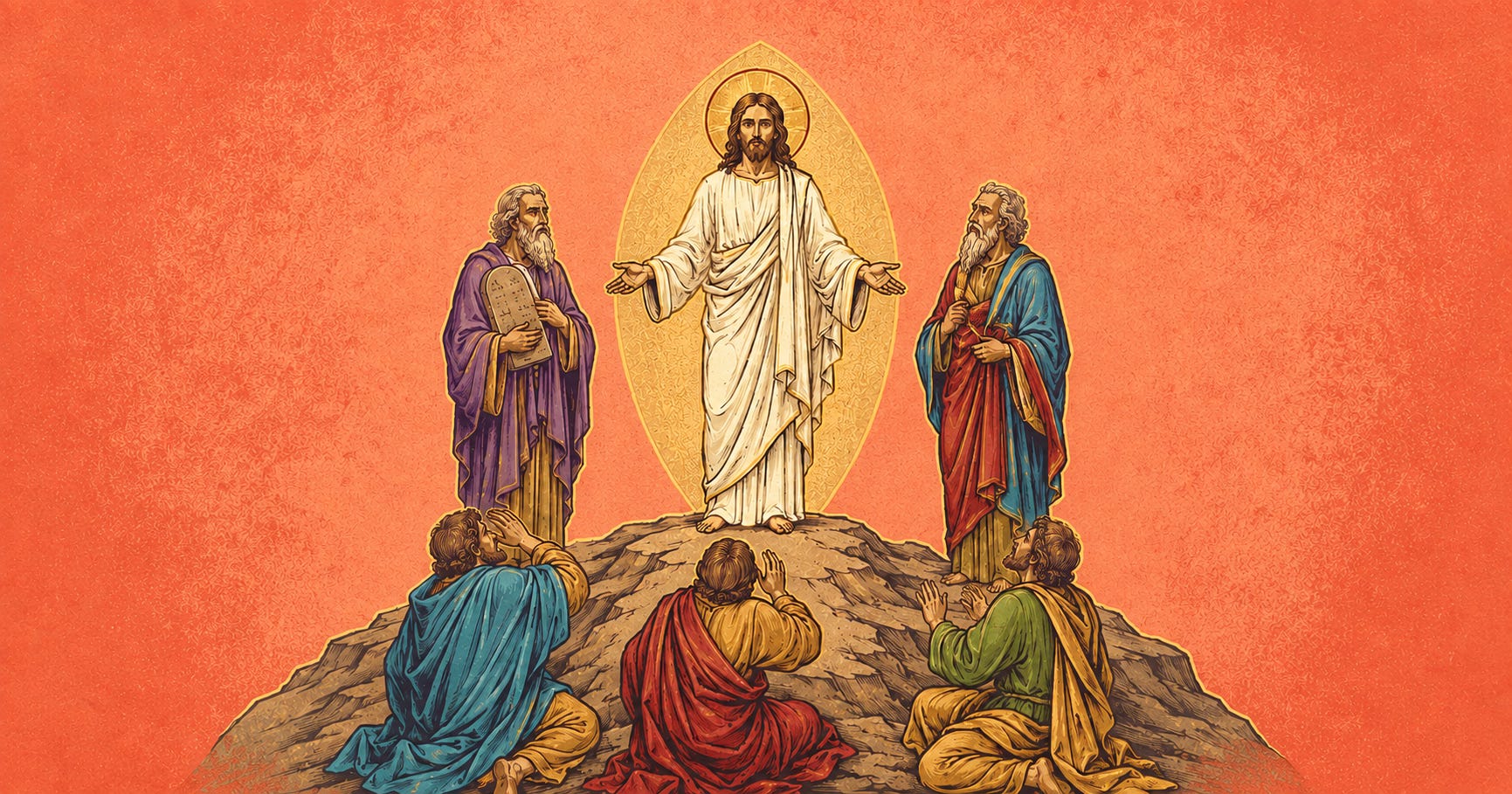
Dear friends,
Letters from Leo publishes Scripture reflections for the Sundays and great feasts of the year, available exclusively to paid subscribers.
Today, for the Feast of the Transfiguration of the Lord, come pray with us — you can upgrade below.

“Lord, it is good that we are here.” — Matthew 17:4
This morning in Assisi, Pope Leo XIV celebrated Mass for some 2,500 young pilgrims at the Basilica of St. Mary of the Angels, the great church that shelters the Portiuncula, the little chapel tied forever to the vocation of St. Francis.
I covered the news of that homily earlier today. Tonight I want to slow down and sit with the day itself, because the Feast of the Transfiguration of the Lord deserves prayer, and this year’s readings are worth pondering.
The feast carries no obligation to attend Mass here in the United States, yet around the world it stands among the great days of the Christian year; the Orthodox count it among their Twelve Great Feasts.
Its place on the calendar preaches a homily of its own. August 6 falls forty days before September 14, the Exaltation of the Holy Cross, which means the Church gives us the glory of Mount Tabor one biblical span before she walks us to Calvary. Tabor and Golgotha interpret each other, and neither makes sense alone.
The readings build toward the mountain. Daniel watches “one like a Son of Man” come on the clouds of heaven to receive everlasting dominion. Peter, writing near the end of his life, swears the apostles “had been eyewitnesses of his majesty” on “the holy mountain,” with no “cleverly devised myths” about it. Then Matthew takes us up the mountain itself, where Jesus’s face shines like the sun, and Moses and Elijah appear beside him, conversing with him.
Two things in today’s readings strike me.
The first is Peter’s very human response to the vision.
