Dear friends —
This is part three of an investigative series that grows more unsettling with each layer.
In Part One, we exposed how Steve Bannon and Jeffrey Epstein formed a clandestine alliance bent on undermining Pope Francis’s papacy.
In Part Two, we revealed Epstein’s own depravity toward the Holy Father — including a vile 2015 email in which Epstein joked about inviting Pope Francis over “for a massage,” complete with a crude punchline that reduced the pontiff to a sexual object.
Now, we turn to the accomplices.
These are the figures — some prominent, others obscure — who abetted Bannon and Epstein’s campaign from the shadows. What we uncover is a cast of unlikely allies drawn together by a shared disdain for Francis’s vision of a humble, inclusive Church.
It is a story of ideological crusades fused with personal contempt, a convergence that weaponized faith for a dark cause.
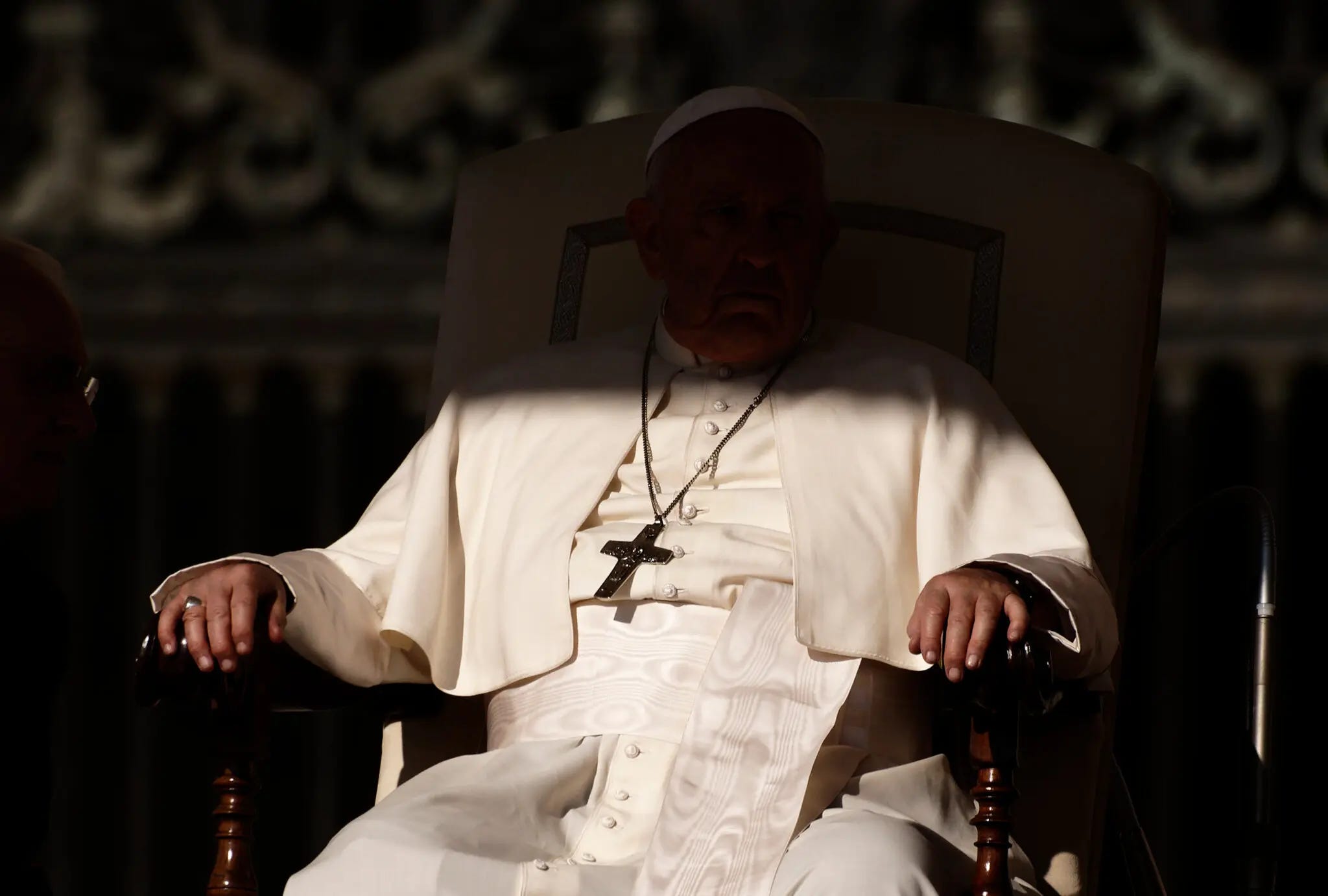
Pope Francis — with his emphasis on the poor, the marginalized, and the inherent worth of every person — represented precisely the kind of authority Epstein and Bannon could not tolerate.
This series matters now because it is not merely historical.
As right-wing efforts to mobilize the Catholic vote for 2026 and 2028 begin to accelerate, many of the same networks, alliances, and instincts we are documenting are reemerging.
The attempt to neutralize Francis’s legacy, to strip Catholicism of its social conscience, and to weaponize faith for raw political power did not end with Epstein’s death. It simply adapted.
In the coming parts of this series, we will show how those schemes continue into the pontificate of Pope Leo XIV. What began as obscene emails and cynical mockery hardened into strategy — and that strategy is still with us.
If you are already a paid subscriber, thank you. This work exists because of you. If you are not, I invite you to join us.
And if this story unsettles you — if it makes you angry, or uneasy, or newly alert — I’m asking for your help to support this work. Silence has always been the ally of men like Epstein and Bannon.
We’re just getting started.
Paid subscribers have access to the Sunday Scripture Reflection Series, the upcoming Lenten Reflection Series, and the Q&A mailbag that opened last month, where you can ask me anything about American politics, Catholicism, Donald Trump, Pope Leo, JD Vance — or my own faith, biography, and life.
Letters from Leo is open to anyone who wants to be informed and inspired by our pope — and to turn that inspiration into action that leaves America and the world more just, less cold, and more alive with hope.
If you’d like to invest in our mission, here are three ways you can help:
Subscribe as a paid member to receive exclusive posts about the life and formation of Pope Leo and help sustain this newsletter.
Donate with a one-time gift to fuel this project’s mission.
Share this post (and Letters from Leo) with a friend who might enjoy it.
Whether you give $0, $1, or $1,000, your presence here matters — no matter your faith or your politics.
Thank you for reading. I’ll see you on the road.

Newly released Department of Justice files and corroborating reports have laid bare just how far the Jeffrey Epstein and Steve Bannon network to depose Pope Francis went.
In June 2019, as Francis pressed on with reforms and a message of mercy, Bannon was boasting to Epstein about a plan to “take down Francis”.
New reporting from Religion News Service and CNN this past week has built upon Letters from Leo’s Feb. 5 and Feb. 9 reports to give us a better sense of the context around those messages.
The scheme centered on a proposed documentary film adaptation of In the Closet of the Vatican, a tell-all book by French author Frédéric Martel that attempted to expose sexual hypocrisy in Rome.
Bannon told Epstein he’d make him an executive producer on the project — code-named after Martel’s book — and exulted that the film would hit Francis and other perceived enemies: “The Clintons, Xi, Francis, EU — come on brother,” Bannon crowed.
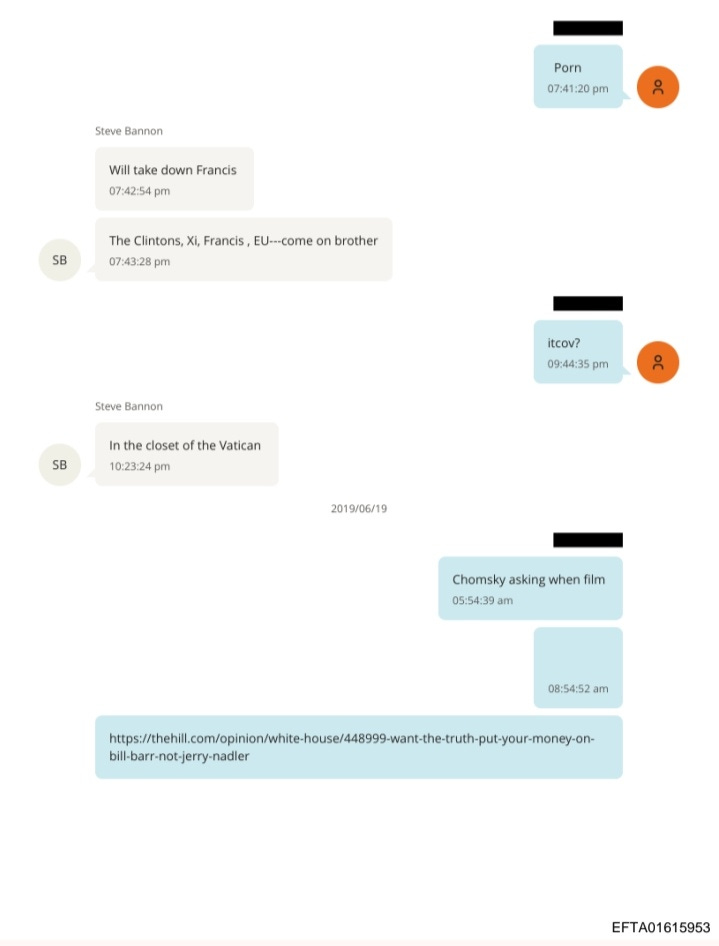
Epstein encouraged the idea. This wasn’t idle chatter; Martel confirms Bannon courted him, raving about the book and floating the movie deal in a Paris penthouse meeting. Martel, to his credit, refused; he says he never took a penny, and had no contact with Epstein. But just the attempt was enough to set off alarm bells in the Catholic world.
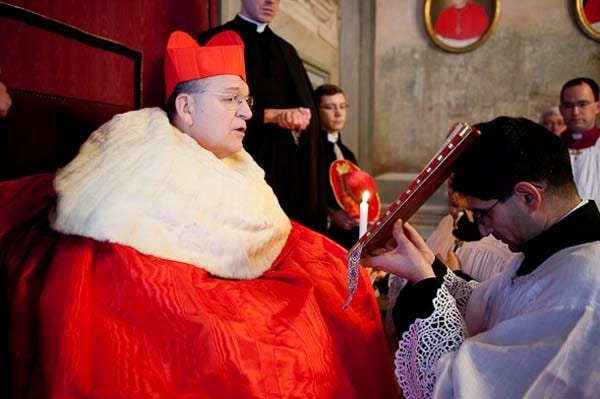
One of the first to recoil was Cardinal Raymond Burke, a towering figure among Catholic traditionalists — and initially an ally in Bannon’s circle.
Burke had lent his prestige to Bannon’s Dignitatis Humanae Institute (DHI) in Italy, serving as its honorary president.
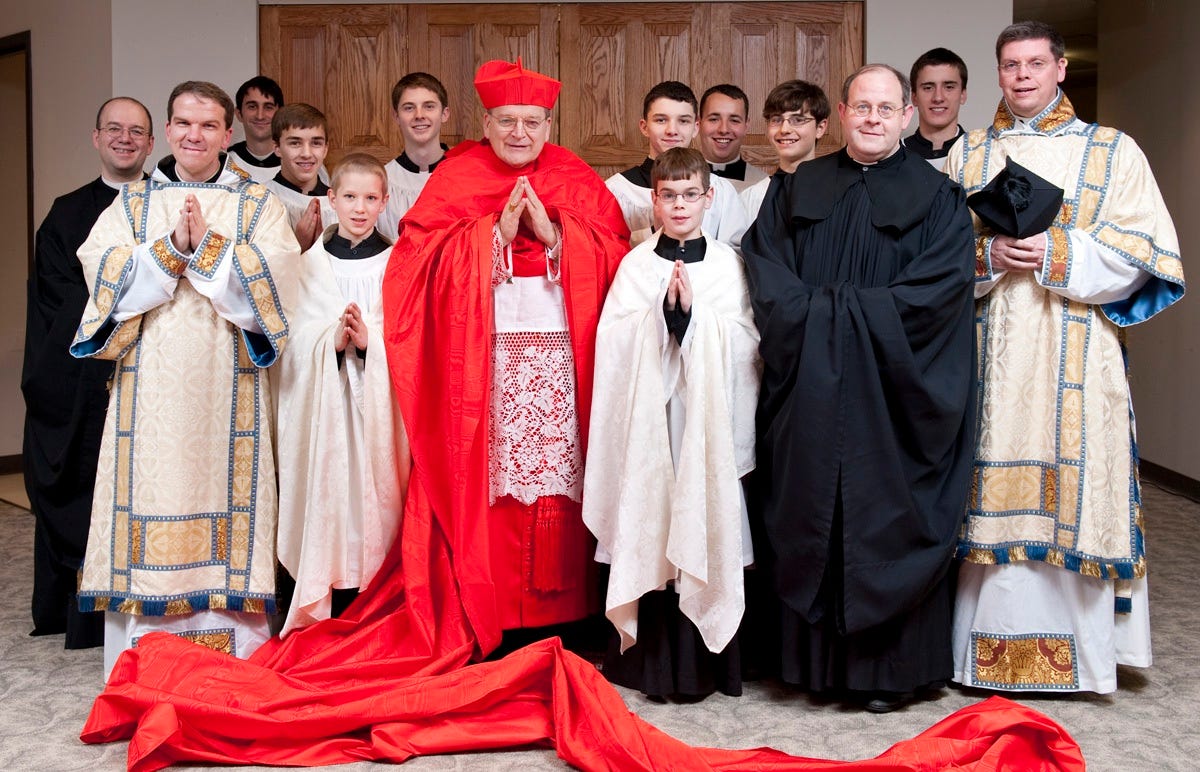
Yet when Burke learned of Bannon’s Martel movie gambit, he cut ties immediately. “I am not at all of the mind that the book should be made into a film,” Burke wrote bluntly in a June 25, 2019 letter.
Burke objected to the book’s assertion that a majority of priests and bishops serving in the Vatican — including several prelates known for delivering strongly anti-gay speeches — are themselves gay, and either engage in secret sexual relationships with men or struggle deeply to live out their vow of celibacy.
Therefore, he saw the project as beyond the pale.
Burke’s break from Bannon was striking: here was a cardinal who had publicly challenged Francis’s teachings before — even joining other conservatives in issuing a formal dubia (questioning of the Pope’s 2016 Amoris Laetitia exhortation on mercy in family life) — yet even he found Bannon’s tactics too toxic.
Burke’s departure signaled that Bannon’s crusade had crossed a line. Still, in the years prior, Burke’s very prominence gave traditionalist credibility to the anti-Francis campaign.
He and a handful of like-minded prelates fanned discontent with Francis’s reforms, lamenting the pontiff’s shift toward inclusivity and “a church of mercy.”
In 2018 that dissent reached a crescendo when Archbishop Carlo Maria Viganò, the former papal nuncio to the U.S., published a scathing open letter accusing Francis of covering up abuse and calling on him to resign.
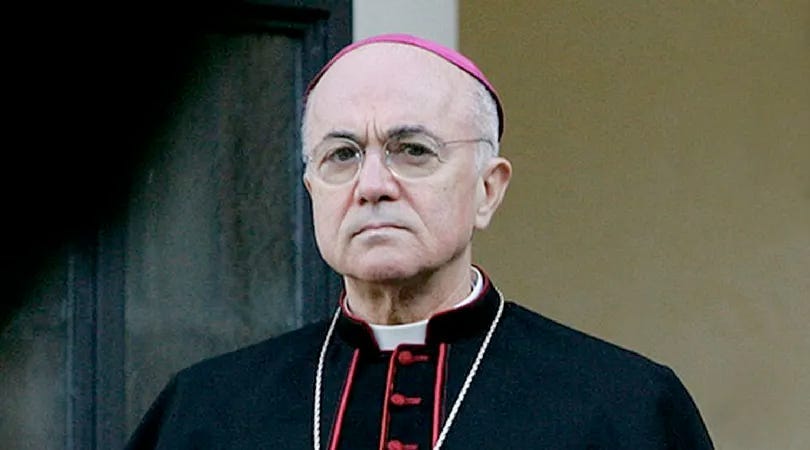
Bannon and Epstein watched these developments with interest — seeing in figures like Burke and Viganò useful champions for their cause of “purification” in the Church.
Not all of the accomplices wore a collar. In fact, one of them forfeited his after it was revealed in 2012 that he had broken his vow of celibacy by fathering a child.