


Thank you for reading! Letters from Leo is a reader-supported publication and the fastest-growing Catholic community in the country. To receive new posts and support this movement, consider becoming a free or paid subscriber.
Pope Leo XIV turned seventy-one on Monday, and he spent the morning of it standing under a wave of water.
The wave is seventy meters of white line-work by the French artist JR, draped across the sixteenth-century face of the Vatican Apostolic Library, and its title is “Diluvium.” Leo came to open the exhibition underneath it, “AQVA: Catastrophe and Wonder,” which runs in the papal library until May 14, 2027 and treats water as a gift that can also drown you.
Two weeks earlier, a loud section of American Catholic media had spent days mocking him for caring about water at all.
Leo walked the galleries with Archbishop Giovanni Cesare Pagazzi, the librarian and archivist of the Holy See, stopping at Renaissance manuscripts on sea creatures, at an installation drawn from Gustave Doré’s 1866 engraving of the deluge, at culinary work by the chef Fulvio Pierangelini and marine prints by the American typographer Bill Moran. JR, who met the pope outside in a flat cap, said his job is to build bridges between art and institutions, and that the Vatican had been “pretty intimidating to work in.”
Then the pope explained to the staff why he had come to them, of all the places he could have been on his birthday.
“I would just like to say that God, in his providence — and sometimes with a touch of humor — reminds us always that he is with us. Many of you may not know, my mother was a librarian, and today, I find myself here on my birthday, to greet all of you.”
Mildred Martínez Prevost studied library science at DePaul University and worked in a Chicago public library while she and Louis Prevost raised three sons in Dolton, Illinois. Her family’s roots ran back to Creole New Orleans, and in her house the youngest boy learned that a library is a moral institution before it is a building.
A heart, not a warehouse
Leo never read that long address aloud. He handed it over in writing, and the text runs on an image borrowed from the body.
“The Apostolic Library is a heart. A beating heart is a symbol of life, and it results from two opposing movements, systole and diastole: a contraction and a relaxation, a movement towards the center and another towards the periphery.”
A good book, he wrote, “awakens a restlessness, feeding the desire and daring to search.” He referred to his patron Augustine, converted by a page of Scripture in a Milan garden, and warned that when the search for truth dies, “everything withdraws from the living God, the source of truth and love.”
He left the archivists with a sentence worth carving over their door: “If you have to build, if you have to fight, first sit down and study.”
Two decrees landed alongside the speech.
The first, signed September 1 and made public Monday, repeals the pandemic-era pay cuts imposed in March 2021 during the pandemic for Vatican staff. The Holy See’s finances, Leo wrote, have improved enough that the emergency “can now be overcome.”
On his birthday, in other words, the pope handed out the presents.
A building for the record
The second decree is a chirograph dated Monday.
It hands the Fontana dell’Autoparco area inside Vatican City over to the Apostolic Archive and the Library, and orders that “a new building be constructed, to be primarily dedicated to the needs of the Vatican Apostolic Archive and the Vatican Apostolic Library.”
Leo pointed to the growth of the Holy See’s holdings over recent decades, which has simply outrun the shelving. A Vatican foundation will raise the money, and the Library keeps its overflow at the Pontifical Major Roman Seminary until the doors open.
Francis had settled on a Lateran site for the same problem. Leo wrote that new opportunities had come up inside the Vatican City State itself, and that keeping the collections at home is “preferable for multiple reasons.”
The water they mocked
Now the wave makes sense.
At the start of September, Leo released his monthly prayer intention, a short video asking the Church to pray for the 2.1 billion people on this planet who cannot get safely managed drinking water. He asked God’s forgiveness for “turning it into a commodity, forgetting that it is a universal gift, a right without borders, meant for all your children,” and prayed that “our care for water be a sign of love for the Creator and a commitment to the lives of the poor.”
The online Catholic right went off within hours.
Tom Woods and Deacon Nick Donnelly led a pile-on that ran for days, working the familiar charge — that a pope praying about drinking water has traded the supernatural for an NGO brochure.


At the general audience that week, Leo answered the sentiment, telling the crowd that “we cannot remain as unengaged spectators” and that we must “listen with our hearts.”
He has been through this cycle over this very library before. Last October the same crowd came after him for opening a Muslim prayer room inside the Vatican’s collections.
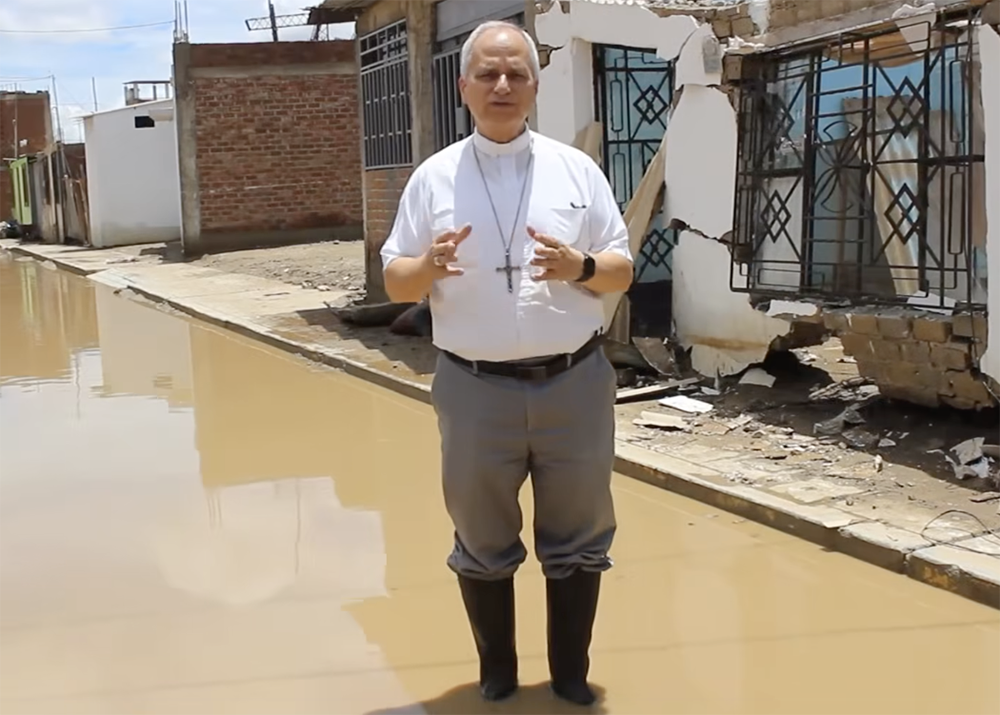
Leo know how lifegiving and deadly water can be. When Cyclone Yaku drowned northwestern Peru in March 2023, the bishop of Chiclayo pulled on rubber boots, went out into the standing water at Íllimo, and spent the following weeks hauling relief sacks off the back of a pickup.
Leo has since told climate skeptics to repent; he was making the argument with his feet years before anyone called him Holy Father.
Seven photographs, one from each decade
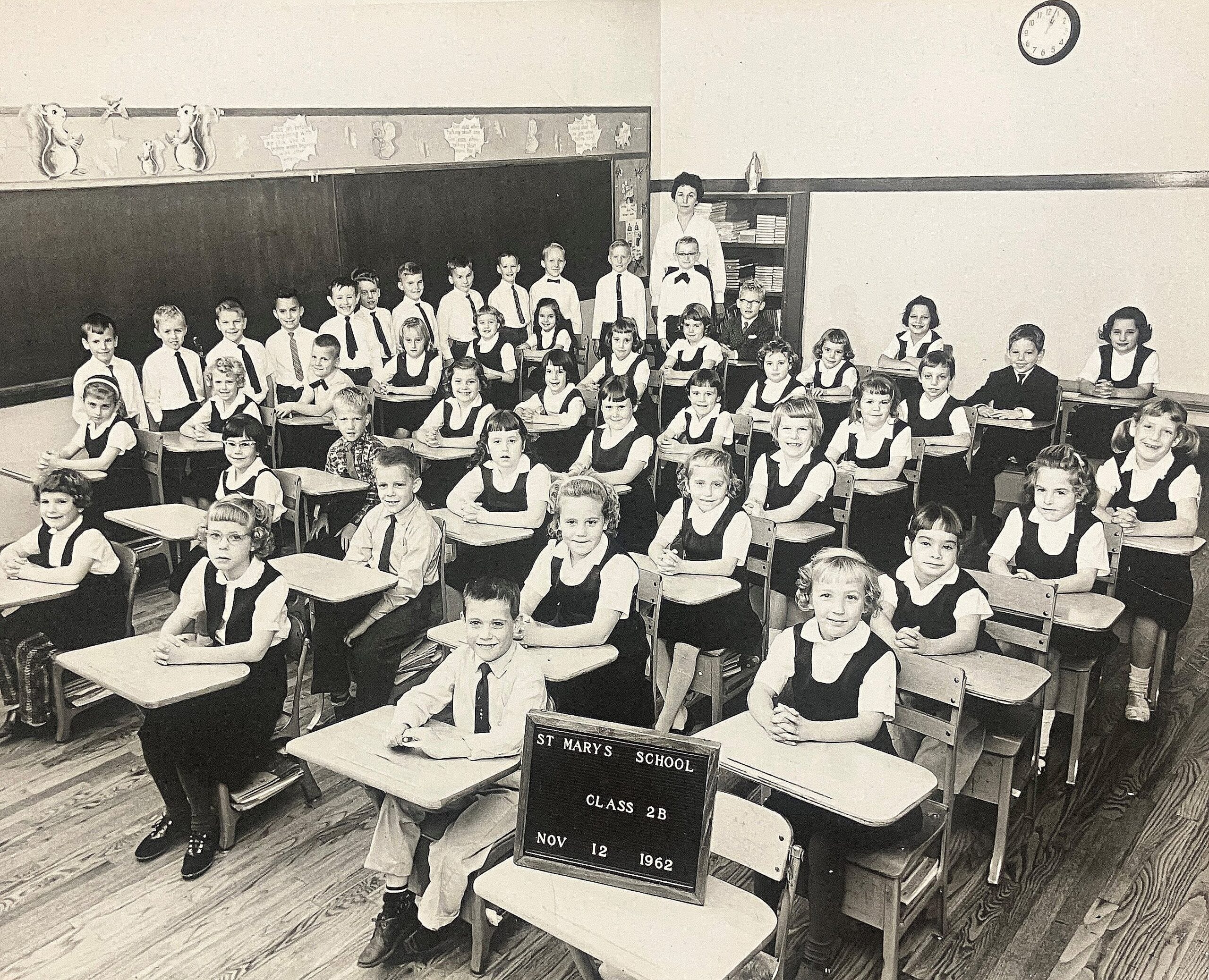
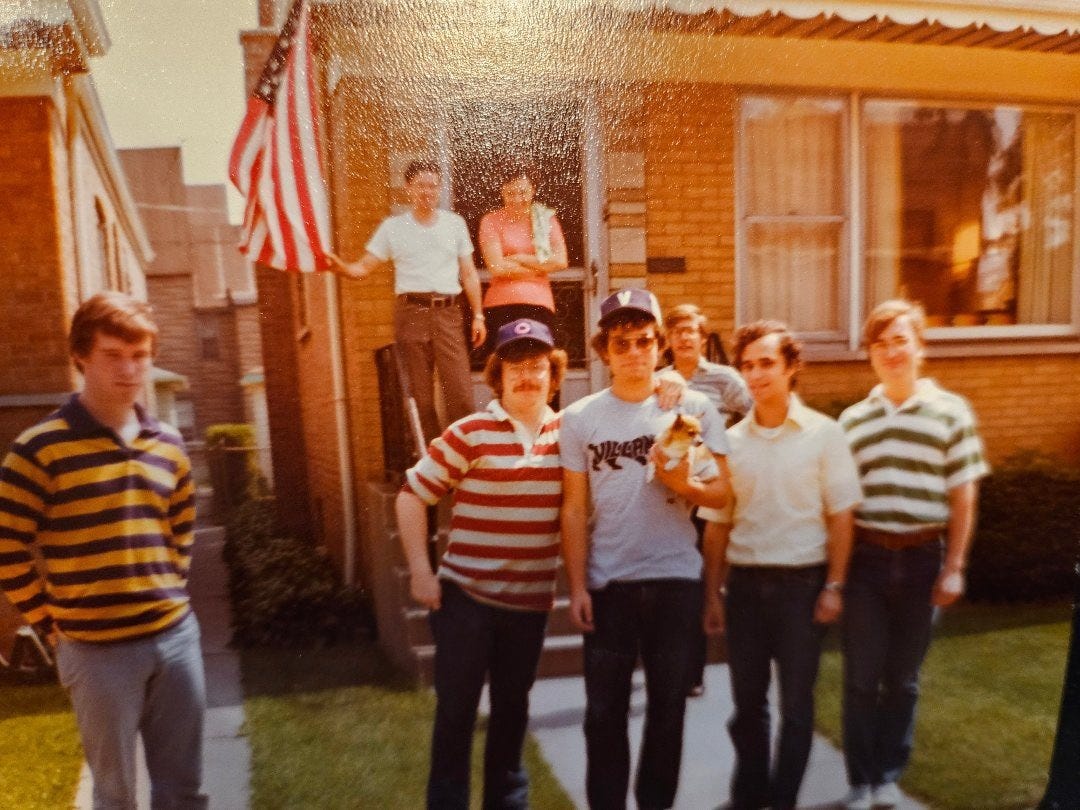
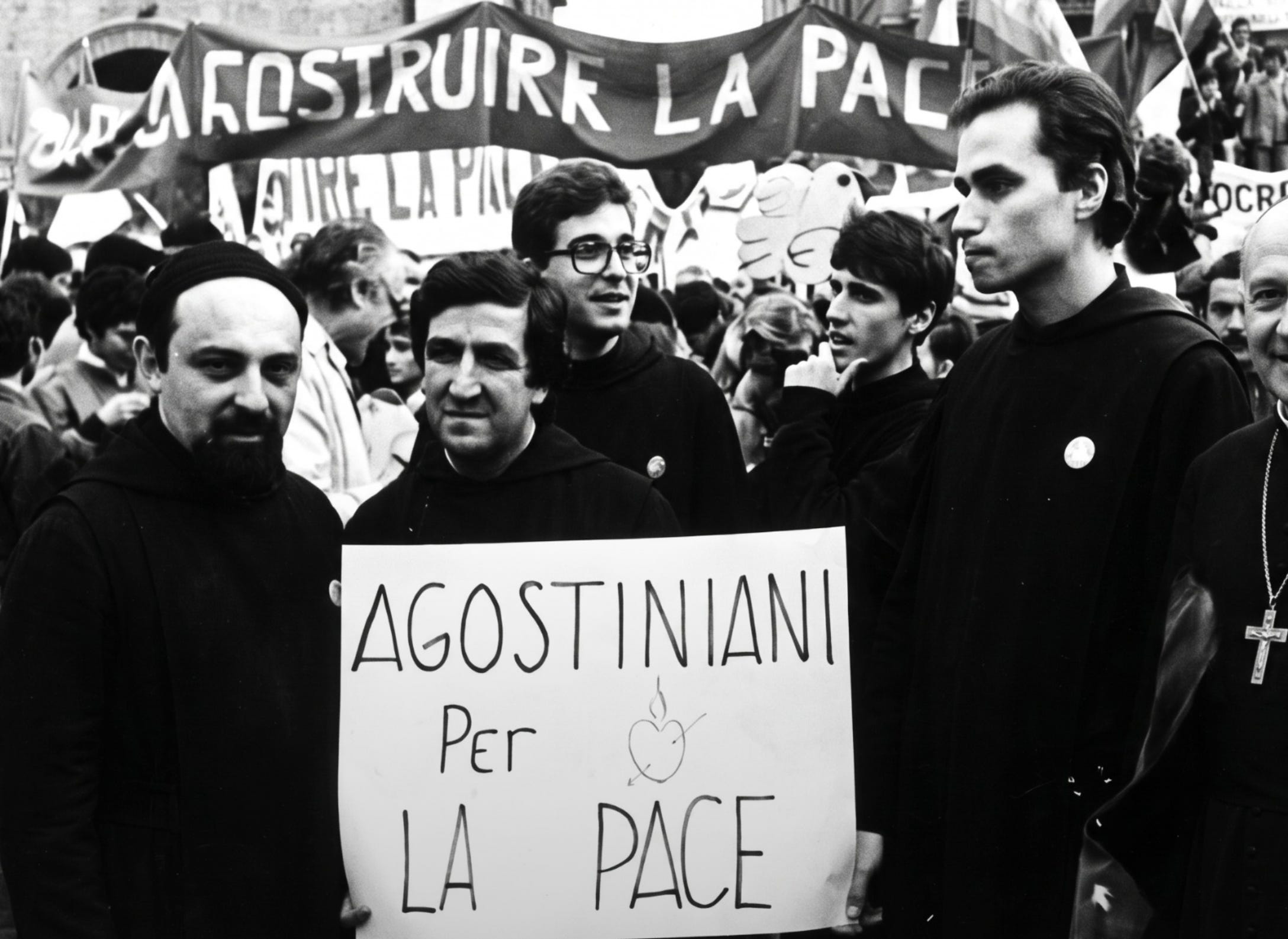
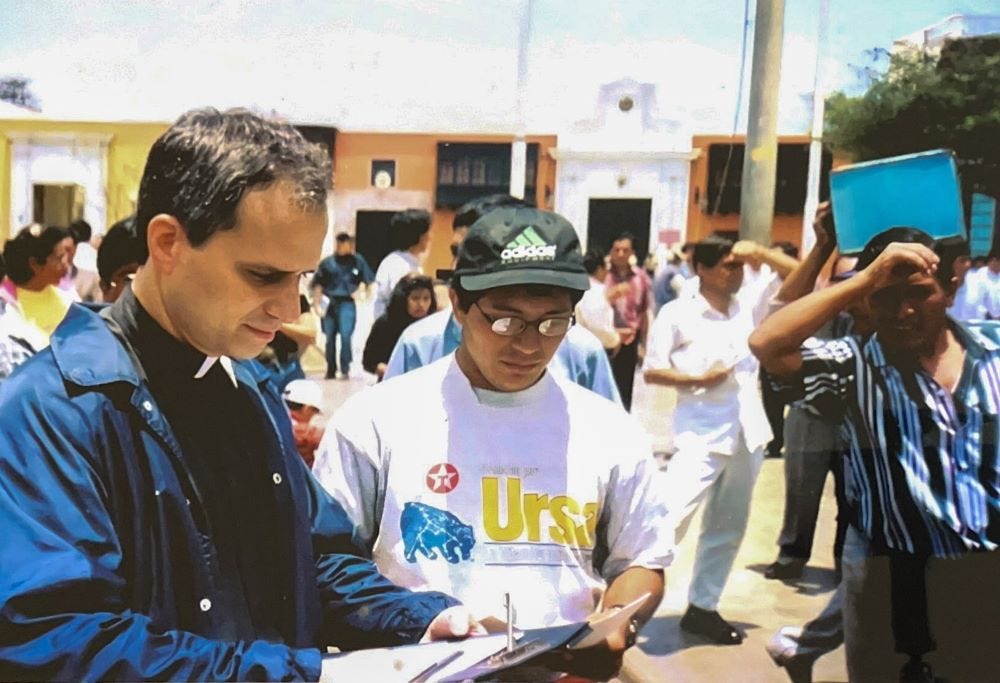
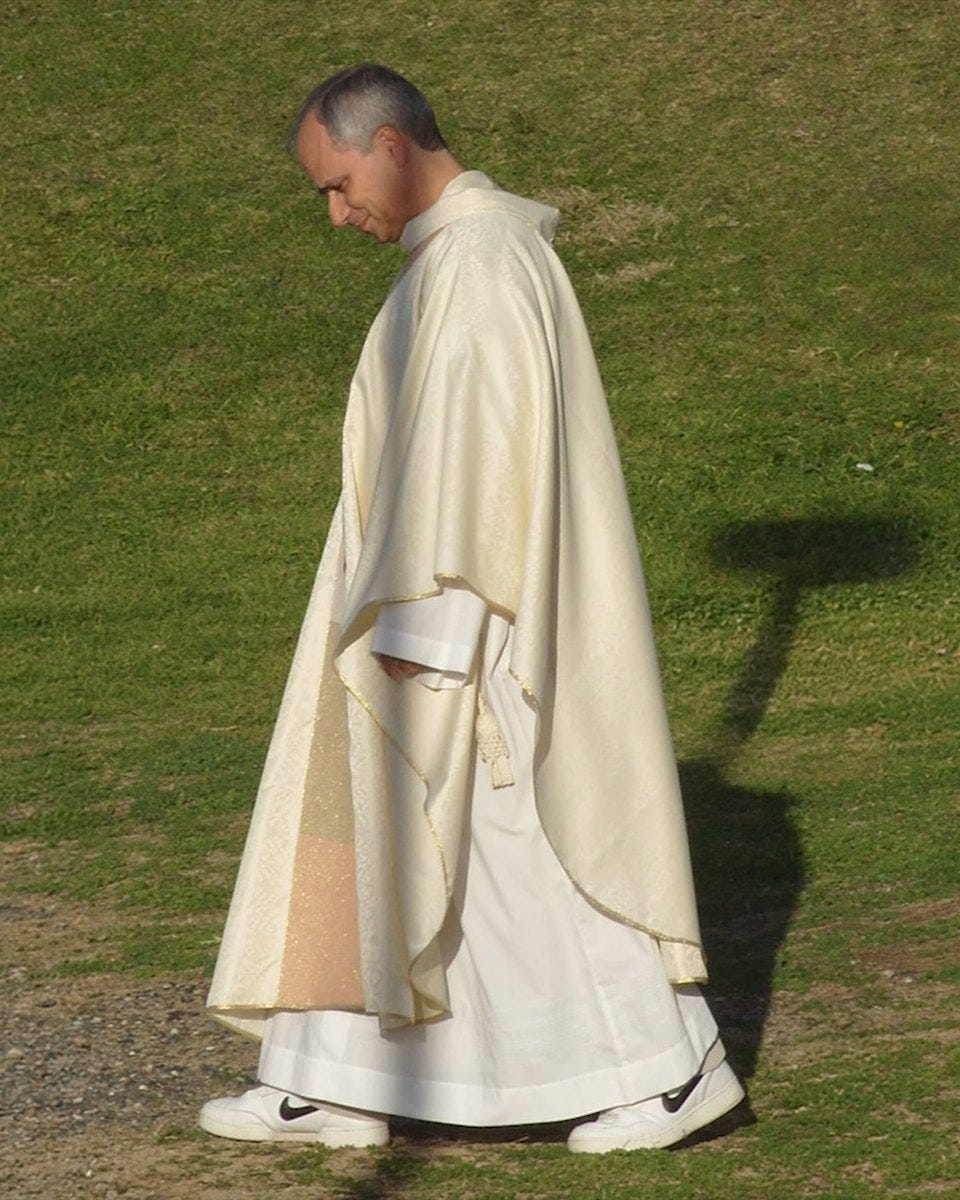
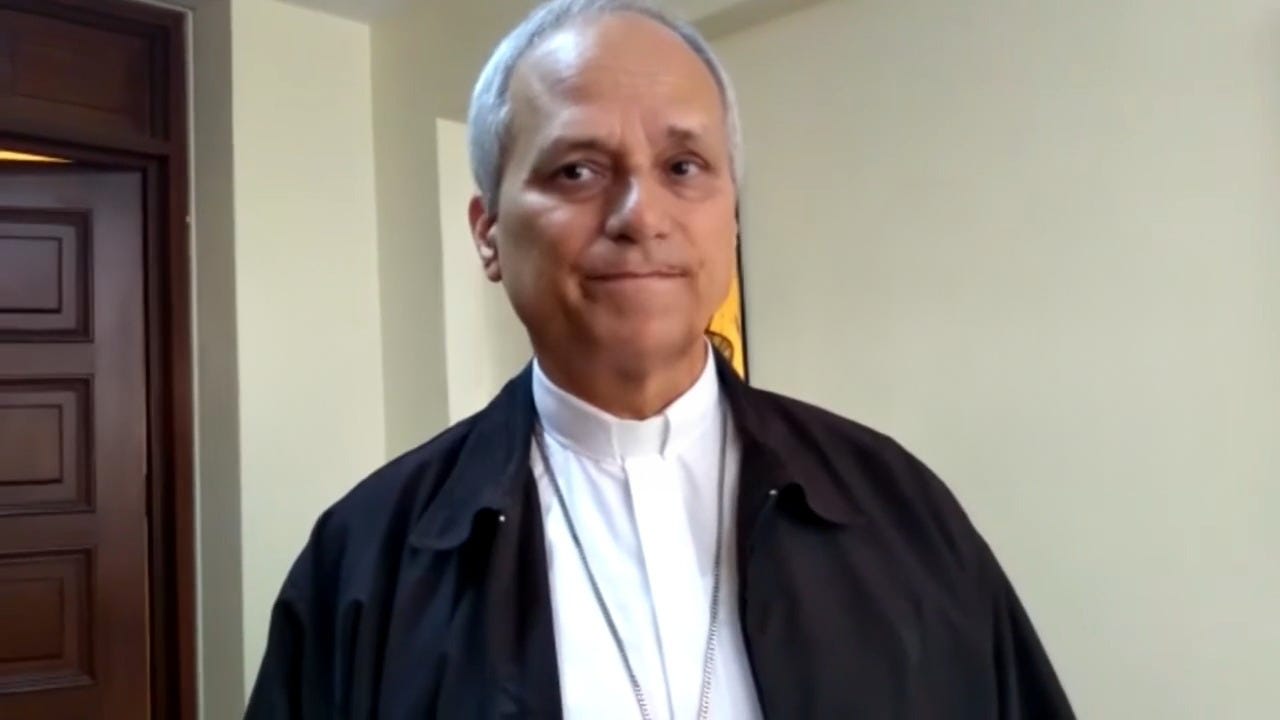
To mark the day, here are seven rarely circulated pictures of Robert Francis Prevost, one from every decade he has lived through. They run from a second-grade classroom in 1962 to a flooded street in Lambayeque in 2023, and a few of them have almost never appeared in an American publication.
The candle
Vatican Media caught the end of the morning. The library staff carried out a low, square, sugar-dusted cake with one candle in it, sang to him in Italian, and applauded while the pope bent over the table and blew it out. He looked, for a second there, like a man surrounded by his own people.
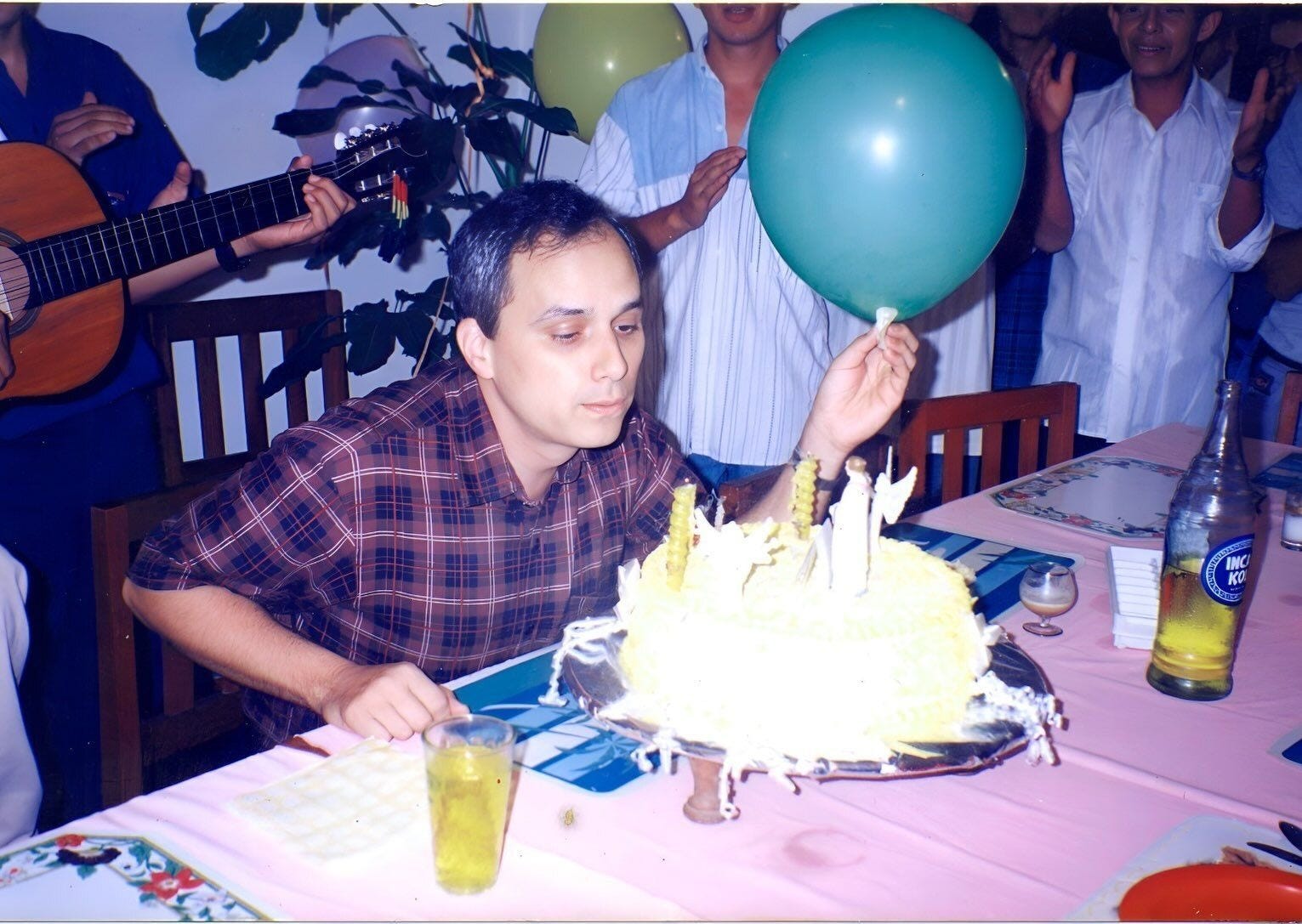
There is an older version of that scene, and it is the reason I keep coming back to the picture at the top of this piece: a younger Robert Prevost, in a plaid shirt, leaning into the candles on a sheet cake in Peru while somebody works a guitar behind him and a bottle of Inca Kola sweats on the table.
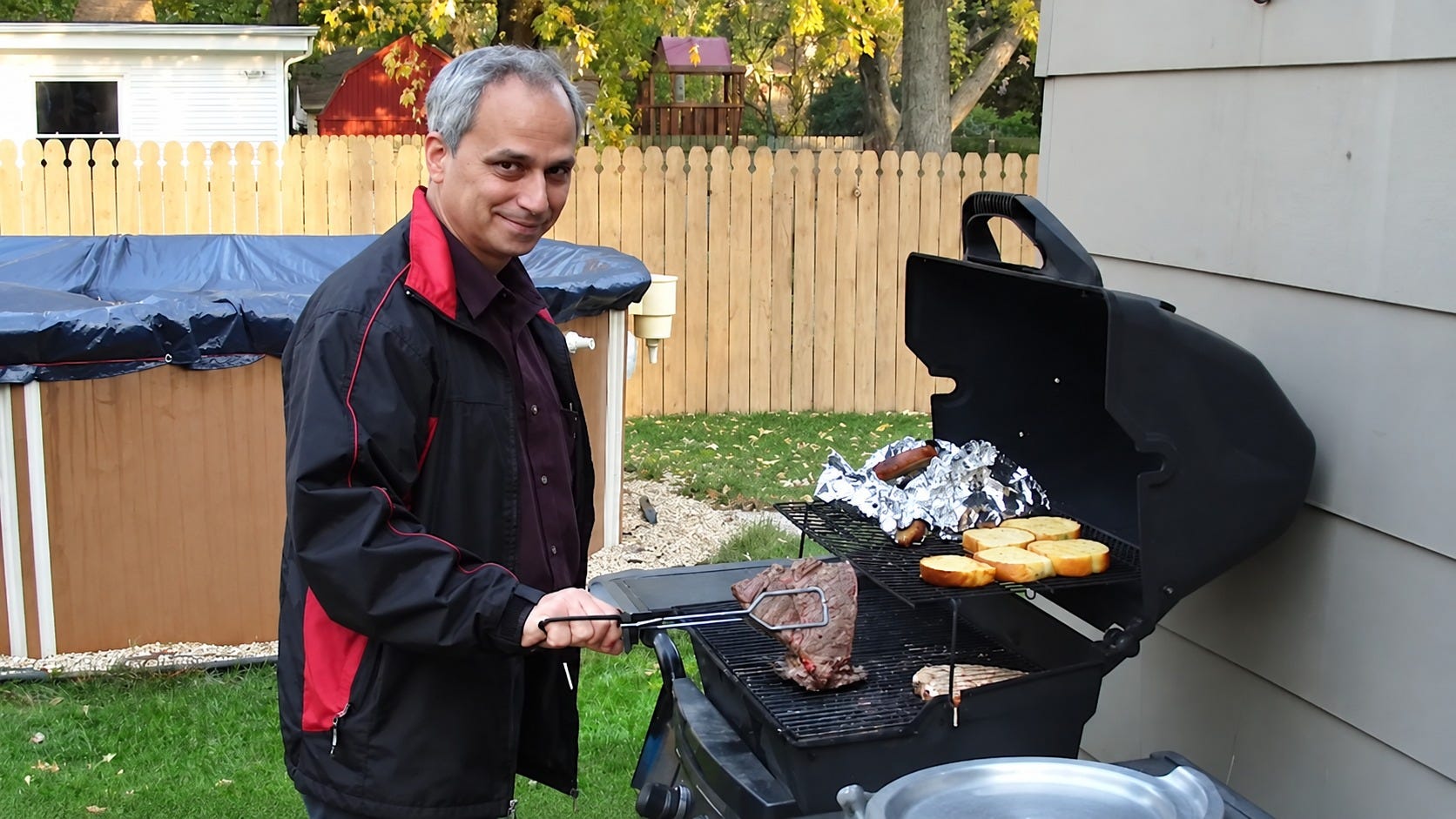
And there is the backyard, too. The photograph of him grilling that we posted in July has been seen nearly four hundred thousand times, which tells you something about what people want from a pope right now.
A pope who spends his birthday among archivists, and who uses the same morning to restore the wages of the people work in the Church’s goverenance, is telling you plainly what he believes the Church is for. The critics who spent early September insisting that clean water is a distraction from the Gospel got their answer on Monday, and it was seventy meters long.
At Letters from Leo, we stand with a pope on his birthday who prays for the 2.1 billion people who cannot safely drink, and with every Catholic and person of goodwill who understands that thirst is not a political opinion.
The people who mocked that prayer would like you to believe the Gospel floats free of bodies, untroubled by wells, pipes, rivers and rain.
Our faith teaches something harder and far more beautiful than that. God took on flesh, went down into a river to be baptized, asked a Samaritan woman for a drink at a well, and told us that whatever we do for the least of these we do for him.
This is the fastest-growing Catholic community in the country because people are exhausted by a hollowed-out religion that exists to flatter power. What they are hungry for is a faith that shows up in boots.
If you believe this movement matters, with Catholics and people of goodwill standing for human dignity against the cruelty of this moment, I am asking you to join us.
If you’d like to invest in our mission, here are three ways you can help:
Subscribe as a paid member to receive exclusive posts about the life and formation of Pope Leo and help sustain this newsletter.
Donate with a one-time gift to fuel this project’s mission.
Share this post (and Letters from Leo) with a friend who might enjoy it.
Paid members get the full biographical work on Pope Leo’s Life & Formation, including the Villanova years and the two decades in Peru, alongside our investigations and the Sunday Scripture Reflection Series.
Whether you give $0, $5, $50, $500, $1,000, or more, your presence here matters — no matter your faith or your politics.
Thank you for reading. I’ll see you on the road.

It is wonderful that the Pope has strongly spoken for access to water for all people. The privatization of water in many places is making some people not able to afford potable water, and the loss of the balance for agricultural needs as well as urban and suburban use is a big risk to food production all over the planet. The laws need to protect human beings' access to water.