
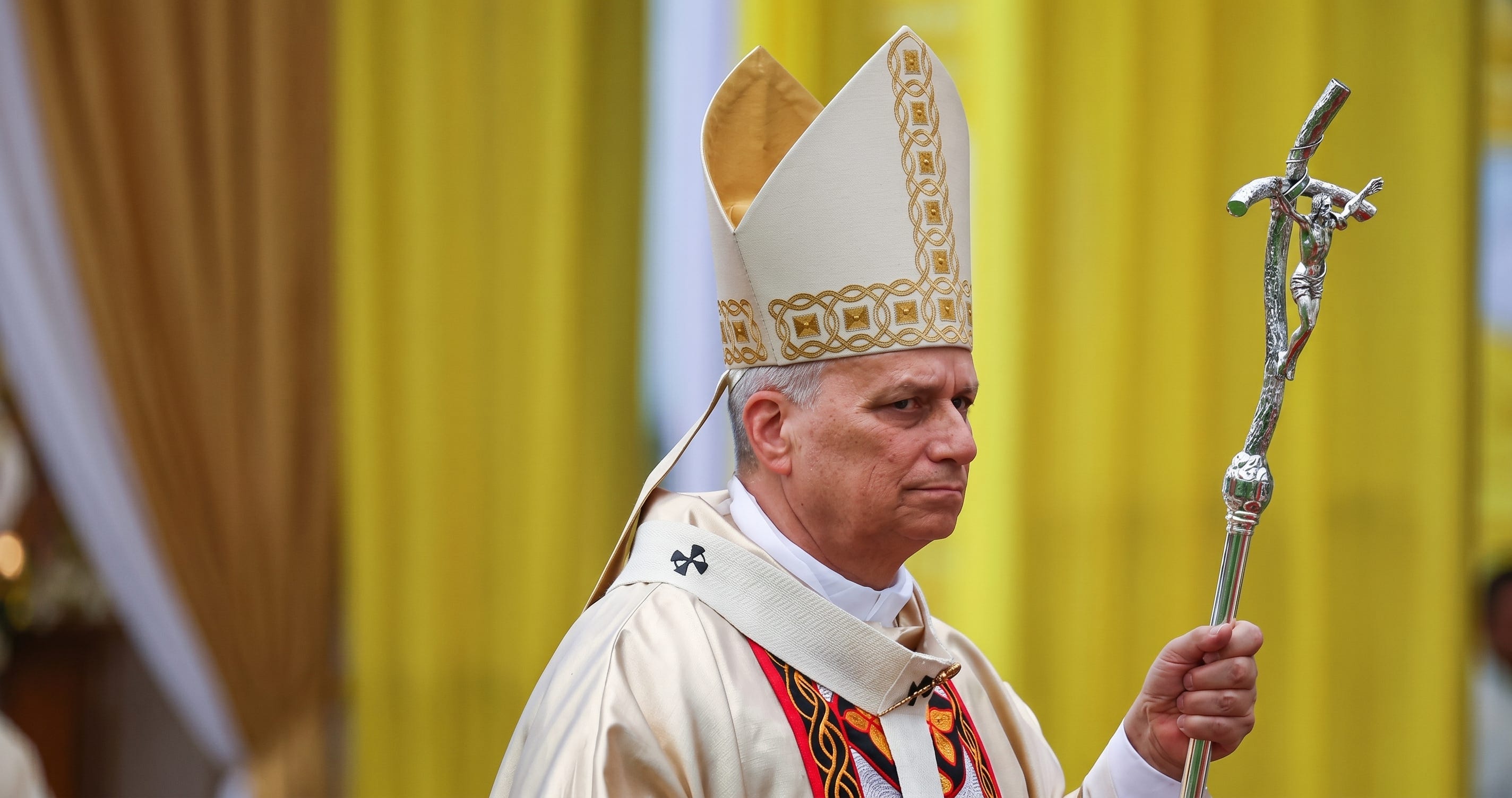
“Not Overtly Confessional” — Pope Leo XIV’s Indictment of Christian Political Performance
On Saturday, the U.S-born pontiff warned Europe’s centre-right party against using Christianity as a performative act — and against the “digital triumph” that has replaced authentic governance.
Letters from Leo is a reader-supported community chronicling the first American pope and the moral collision between Rome and Washington. If you believe in this work, please consider subscribing or making a one-time gift below.
Pope Leo XIV welcomed parliamentarians from the European People’s Party to the Clementine Hall on Saturday morning and laid out a vision of Christian political engagement aimed squarely at the temptations of the moment.
The EPP is the center-right group that traces its lineage to Konrad Adenauer, Alcide De Gasperi, and Robert Schuman — the Christian-democratic architects of the postwar European project. Pope Leo blessed that inheritance, then warned what could become of it.
“Being a Christian in politics does not mean being overtly confessional. Instead, it means allowing the Gospel to guide the decisions that have to be made, even those that may not attract easy consensus.”
That single line is the architecture of the speech. Leo drew a distinction between prophetic religious witness, which belongs to the ecclesial community, and Christian witness expressed through concrete political choices — the work of legislators, not pulpits.
To collapse the two — to treat governance as a pulpit, or to dress legislation in scripture so as to baptize it — is, in his reading, a category error and a political vice.
In the United States, this is the default setting of one party. Speaker Mike Johnson tells reporters that his worldview is the Bible on a shelf. JD Vance defended mass deportation by mischaracterizing the medieval doctrine of ordo amoris, a move two popes have publicly rebuked. And while Donald Trump publicly wonders whether he was heaven-bound, he shares Franklin Graham’s imprimatur letter to his social media feed.
Pope Leo confronted none of that directly. He spoke instead to a more dangerous version of the same instinct — the temptation, available on every continent, to wear Christianity as the costume of a political program instead of letting it form the conscience underneath.
“Pursuing an ideal does not mean glorifying an ideology,” he said. Every ideology, he warned, “is always the result of a distortion of reality and a kind of violence imposed upon it.” Leo grew up in a Church that watched Christian language get conscripted into nationalism more than once. He has no interest in presiding over a third act.
The remedy he proposed has the quiet force of common sense. Politics, Leo said, must return to “the people” — to actual neighbors with concrete problems, rather than the rhetorical abstraction of populism.
That meant workers facing a market the pope called “increasingly dehumanizing,” young couples afraid to have children, and migrants whose root causes of displacement go unaddressed even as their bodies are turned into political content.
He called for politicians to abandon the era of “digital triumph” and return to the “analogue” — personal contact between citizens and their representatives, the slow rebuilding of community ties in the places where people actually live.
That return, Leo said, is “the real antidote to a politics that often shouts, consists only of slogans and is incapable of responding to people’s actual needs.”
To make the case, Leo turned to his predecessor. He quoted Pope Francis’s signature line from Evangelii Gaudium: “Unity is greater than conflict.” That isn’t a one-off.
Two weeks ago, Leo wrote to the College of Cardinals and confirmed that Evangelii Gaudium would be the guiding charter of his own pontificate, a document to be “relaunched” rather than archived.
By naming Francis on Saturday before a room of European center-right lawmakers — many of whom spent the last decade tilting toward the nationalist temptations Francis spent his papacy confronting — Leo answered a question that had hovered since his election. He intends to read the political moment through Francis’s lens, and he said so plainly.
The address was given to Europeans, and while the pope continually reminds us to understand him in context, it is hard to read his comments other than as a global critique.
The United States is a country led by Christians in public life, governed in significant part by men who quote scripture from the Capitol floor while signing the deportation orders that scripture’s own God seems to forbid.
To them, and to all of us, Leo offered a way that is neither secularist nor authoritarian. He said freedom of religion — which the pope on his return flight from Africa called a more urgent moral concern than the Church’s debates over sexual ethics — must be safeguarded everywhere, for everyone, because faith convinces no one through coercion.
A politics shaped by Christian conscience wins people through love, work, dignity, and presence. Bible-verse posts cannot get there.
That is the inheritance Adenauer, De Gasperi, and Schuman left. Leo on Saturday asked the European People’s Party, and by implication the rest of us, to claim it again.
At Letters from Leo, we stand with the millions of Catholics — and people of every faith and none — who believe Christianity is a way of life, not a tool used for political effect.
The Gospel is supposed to form conscience for legislators, dignity in the workplace, mercy at the border, and a refusal to baptize cruelty in any form. Pope Leo XIV said as much to Europe’s Christian Democrats on Saturday morning. He could have said it just as easily to the U.S. Capitol.
In a moment when American power is wielded by men who post scripture on social media while running deportation flights, Letters from Leo exists to insist on the difference between Christian witness and Christian theater.
We are the fastest-growing Catholic community in the country because readers are hungry for a faith that holds power accountable rather than blessing it.
If you believe this movement matters — Catholics and people of goodwill standing for human dignity against the politics of performance — I am asking you to join us.
If you’d like to invest in our mission, here are three ways you can help this Easter season:
Subscribe as a paid member to receive exclusive posts about the life and formation of Pope Leo and help sustain this newsletter.
Donate with a one-time gift to fuel this project’s mission.
Share this post (and Letters from Leo) with a friend who might enjoy it.
Paid subscribers get the deeper work — the biographical series on Pope Leo’s Life & Formation, the ongoing Epstein-Bannon Investigation, our Sunday Scripture Reflection Series, and the archive of the essays that built this community.
Your support is what makes all of it possible.
Whether you give $0, $1, or $1,000, your presence here matters — no matter your faith or your politics.
Thank you for reading. I’ll see you on the road.


Thank, God for Pope Leo 🙏🏽
I'm so glad to have this newsletter, otherwise it would be difficult if not impossible to keep up with what Pope Leo is saying to us.