


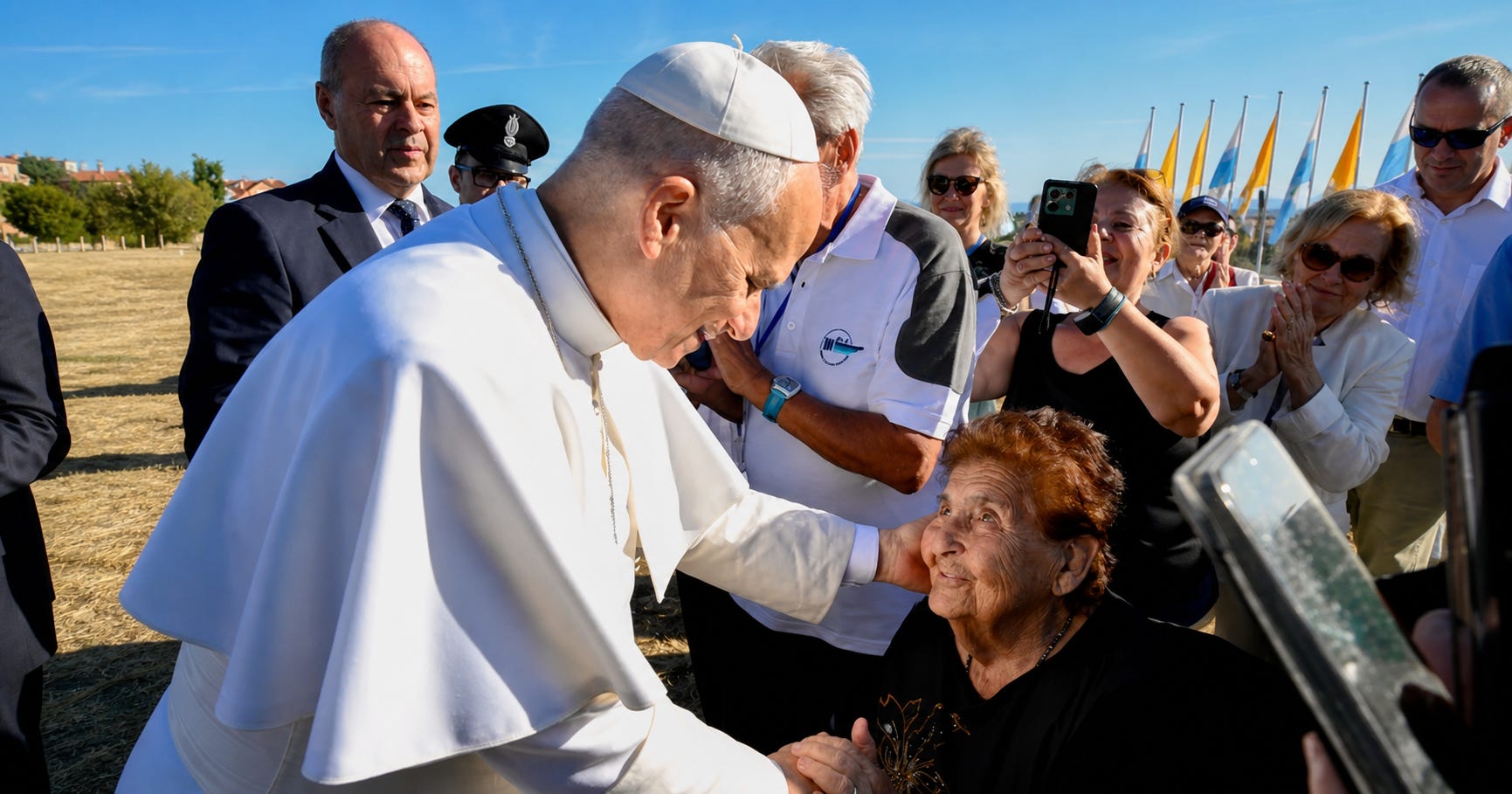
San Marino is one of the smallest countries in the world. It is also a Catholic republic, governed by two captains regent who serve together for six months at a time.
When Leo went to Monaco earlier this year, postliberals hoped he would hold up Catholic theocracy. He didn’t. Now he has come to another tiny Catholic country and done the same thing. Both times, Leo has stood firm for democratic rule inspired by Christian principles.
That is what made Libertas the right word.
Libertas is stamped on the republic’s coat of arms, and Leo went to the trouble of explaining where the word comes from. Tradition holds that Saint Marinus, the Dalmatian stonemason who founded the community in 301, left it with this line: Relinquo vos liberos ab utroque homine. I leave you free from both men.
The Sanmarinese have always read those two men as the emperor and the pope. Their founding charter releases them from temporal and ecclesiastical authority at once, and they held that independence for seventeen centuries.
“A single word,” Leo said, “but of what density.”
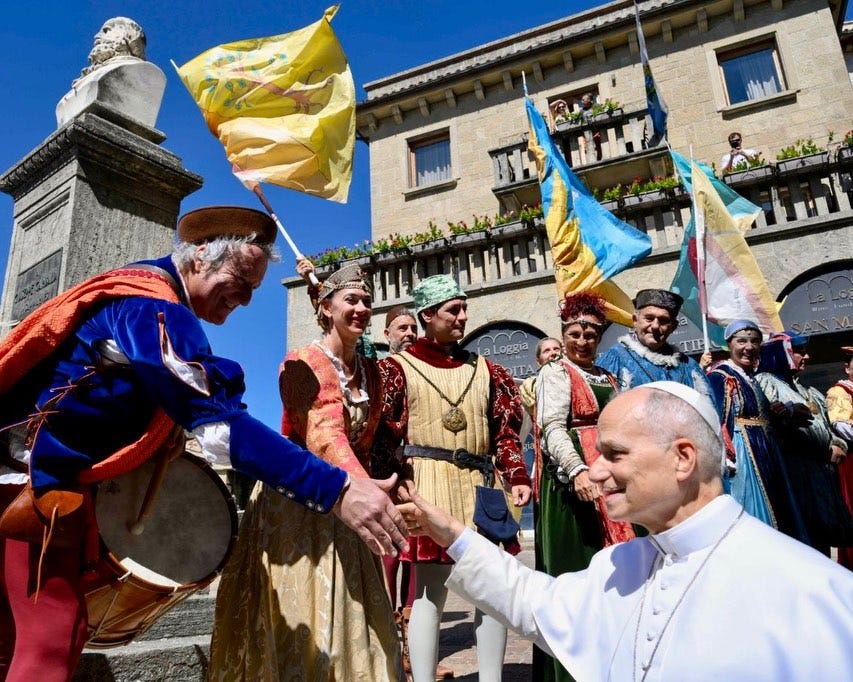
He granted that it means self-determination, the aspiration “not to depend on other political authorities,” and then told the council that Libertas means a great deal more than that.
“Promoting freedom entails defending the spaces of conscience,” he told the council, and then he named the cost of doing so.
And here my thoughts turn to the many men and women who, in every age and every place, are martyrs of freedom because they bear witness precisely to the primacy of conscience. Firmly formed by the search for truth, they are fully responsible for their own decisions and therefore free from every bond except the one proper to the creature, which binds them to God.
His example was Thomas More, whom he called the patron of governors and politicians, and whose claim to that patronage rests on refusing to sign what his king told him to sign.
Shifting into the present tense, he asked the council to hold in mind “those who, at this moment, are paying personally for not having betrayed their own conscience.”
The pope was not describing a thirteenth-century problem. He’s describing a problem we face right here in the United States today.
