


Dear friends —
Letters from Leo has been closely tracking an extraordinary clash unfolding on Catholic social media this week.
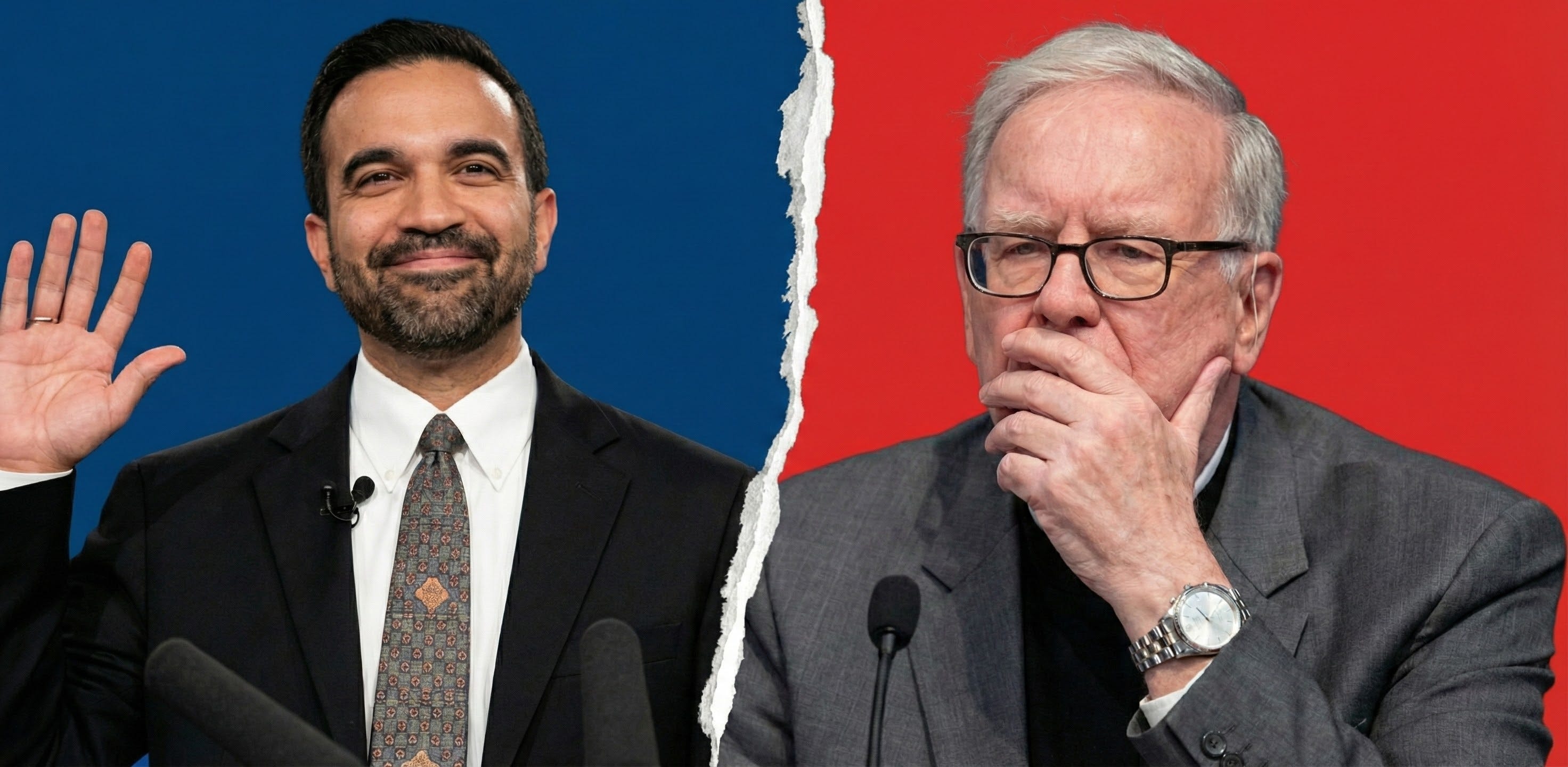
Just one day after Zohran Mamdani was sworn in as New York City’s new democratic socialist mayor, one of America’s most famous bishops suddenly took to Twitter to denounce him.
Bishop Robert Barron —writing from his diocese in Minnesota — blasted a single line from Mamdani’s inaugural address about “the warmth of collectivism,” effectively comparing the new mayor’s words to the evils of Stalin.
It’s a bizarre confrontation that raises big questions about Church leadership, political double standards, and what Catholic social teaching really says about markets and socialism.
This is the kind of story mainstream outlets often overlook — a Catholic bishop 1,100 miles away wading into New York’s City Hall politics, seemingly out of the blue.
Letters from Leo exists to connect these dots and shine light on the deeper context. Today’s subscriber-only deep dive unpacks why Bishop Barron’s Twitter broadside at Mayor Mamdani is so peculiar, how it misrepresents Catholic teaching, and what it reveals about priorities in the American Church.
We’ll explore the irony of Barron ignoring grave injustices like migrant family deportations, only to crusade against a mayor’s left-wing rhetoric, and we’ll see how Pope Leo XIV’s vision offers a much-needed corrective.
If you’re already a subscriber, thank you — you make this work possible. If you’re not, I invite you to subscribe today for full access to all our coverage of Pope Leo XIV and his impact.
Paid subscribers will receive our Sunday Reflection Series, rooted in the Mass readings of the day, and written to help us think more clearly about what it means to follow Jesus in the middle of today’s political realities.
Letters from Leo is open to anyone who wants to be informed and inspired by our pope — and to turn that inspiration into action that leaves America and the world more just, less cold, and more alive with hope.
If you’d like to invest in our mission during this new year, here are three ways you can help:
Subscribe as a paid member to receive exclusive posts about the life and formation of Pope Leo and help sustain this newsletter.
Donate with a one-time gift to fuel this project’s mission.
Share this post (and Letters from Leo) with a friend who might enjoy it.
Whether you give $0, $1, or $1,000, your presence here matters — no matter your faith or your politics.
Thank you for reading. I’ll see you on the road.

Twenty-four hours after Zohran Mamdani took office as New York City’s new mayor, Bishop Robert Barron of Winona–Rochester (Minnesota) logged onto Twitter and unleashed a scathing critique of the mayor’s inaugural address.
Mamdani, a 34-year-old democratic socialist, had vowed to replace “the frigidity of rugged individualism with the warmth of collectivism” in New York.
That turn of phrase — clearly meant to connote the common good — sent Barron into an online tirade.
The bishop — who leads a diocese of only about 114,000 Catholics in southern Minnesota, roughly 1,100 miles from New York — warned that “collectivism in its various forms” caused “at least 100 million” deaths in the last century, denounced socialist governments from Cuba to North Korea as “disastrous,” and proclaimed that “Catholic social teaching has consistently condemned socialism and has embraced the market economy.”
With an almost palpable sneer, Barron concluded: “For God’s sake, spare me the ‘warmth of collectivism.’”

The spectacle is peculiar for several reasons. First, Barron’s intervention is wildly out of his lane.
He is not the archbishop of New York (that prominent see is in transition, with Cardinal Timothy Dolan soon to be succeeded by Bishop Ronald Hicks), yet here he was, effectively appointing himself the Church’s spokesman to New York’s mayor.
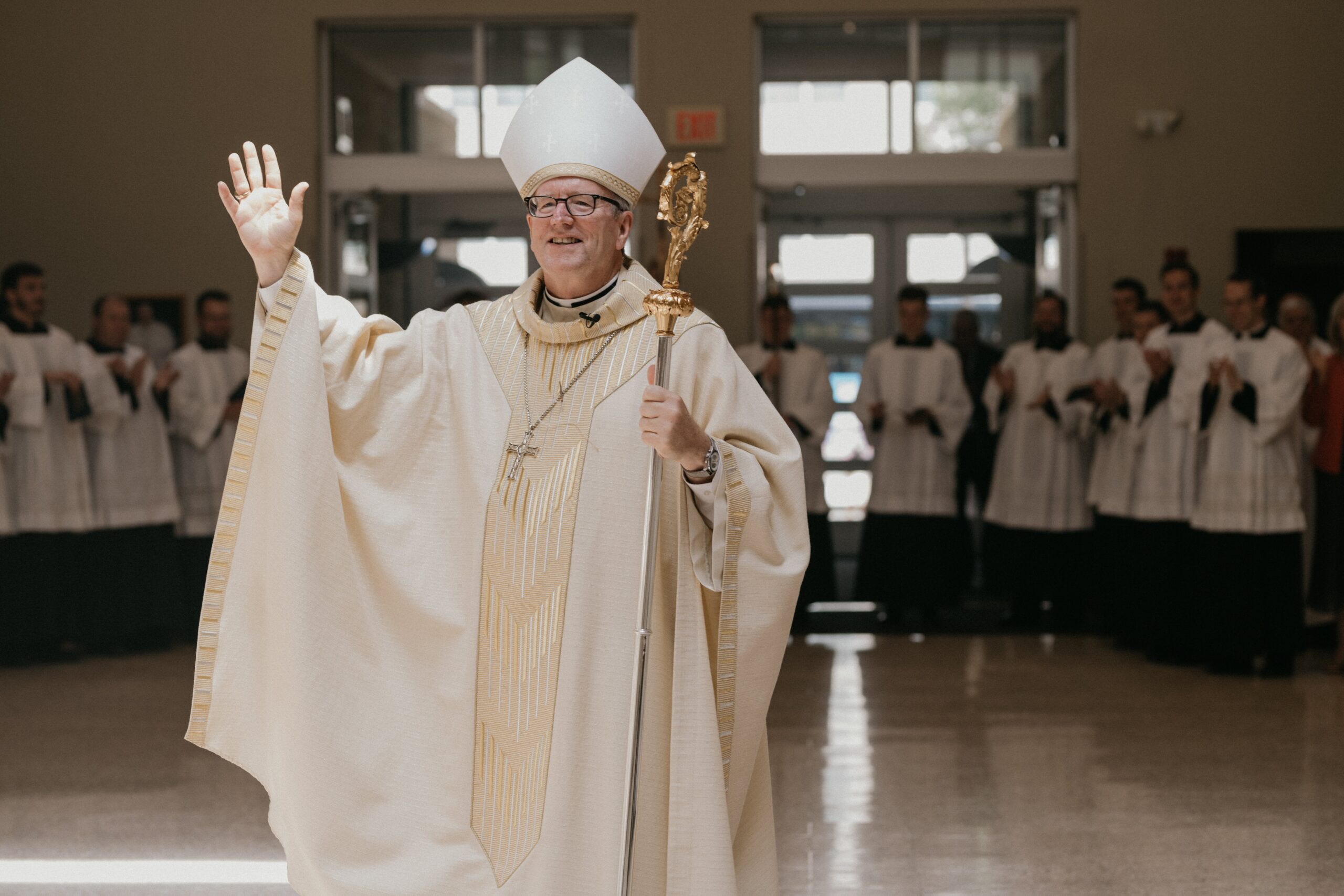
It’s highly unusual for a diocesan bishop from another state to so pointedly rebuke a new mayor on Day 1.
Barron’s own diocese — Winona–Rochester — sits over a thousand miles from City Hall, and its flock is a fraction of New York’s Catholic population. By swooping in uninvited, Barron appeared to step on Cardinal Dolan’s toes and preempt the authority of New York’s incoming archbishop.
The optics aren’t great: imagine a Midwestern bishop publicly lecturing the mayor of any major city outside his jurisdiction.
It raises the question: Why was Barron so eager to insert himself?
Second, the timing of Barron’s moral crusade is jarring given his own situation.
The bishop has plenty of fires burning in his backyard. Just before Christmas, Catholics discovered that Barron’s personal Facebook account had been following explicit homoerotic pages — including one called “Brazilian Male Feet” — plus a few muscular young men who post provocative content.

In response, Barron’s media ministry claimed his account was “hacked” and that a “bad actor” had liked those scandalous pages.
That explanation was met with widespread skepticism, and the incident left many observers unconvinced of the bishop’s innocence.
Meanwhile, memories have resurfaced of the Word on Fire scandal of 2021 and 2022.
That episode saw multiple employees resign from Barron’s Catholic media apostolate amid allegations of a toxic “boys’ club” culture warped by “secrecy and hypermasculinity,” and the mishandling of a prominent staffer’s sexual misconduct.
In that episode, multiple employees resigned from Bishop Robert Barron’s Word on Fire apostolate amid allegations of a toxic, insular “boys’ club” culture marked by secrecy and hypermasculinity.
The crisis centered on Word on Fire producer Joseph Gloor — a former bodybuilder and reality TV contestant — who was accused by multiple women of sexually abusive behavior.

As the situation unfolded, staffers alleged that CEO Fr. Steve Grunow mishandled the misconduct investigation and warned employees against speaking out under threat of termination, claims that compounded the fallout and ultimately tarnished Barron’s reputation for leadership.

Barron’s Word on Fire ministry insists the Facebook fiasco was a hacking and not his doing, and there’s no evidence he’s violated his promise of celibacy.
Furthermore, Bishop Barron has tried in the past create bridges between the Church and the LGBTQ community.
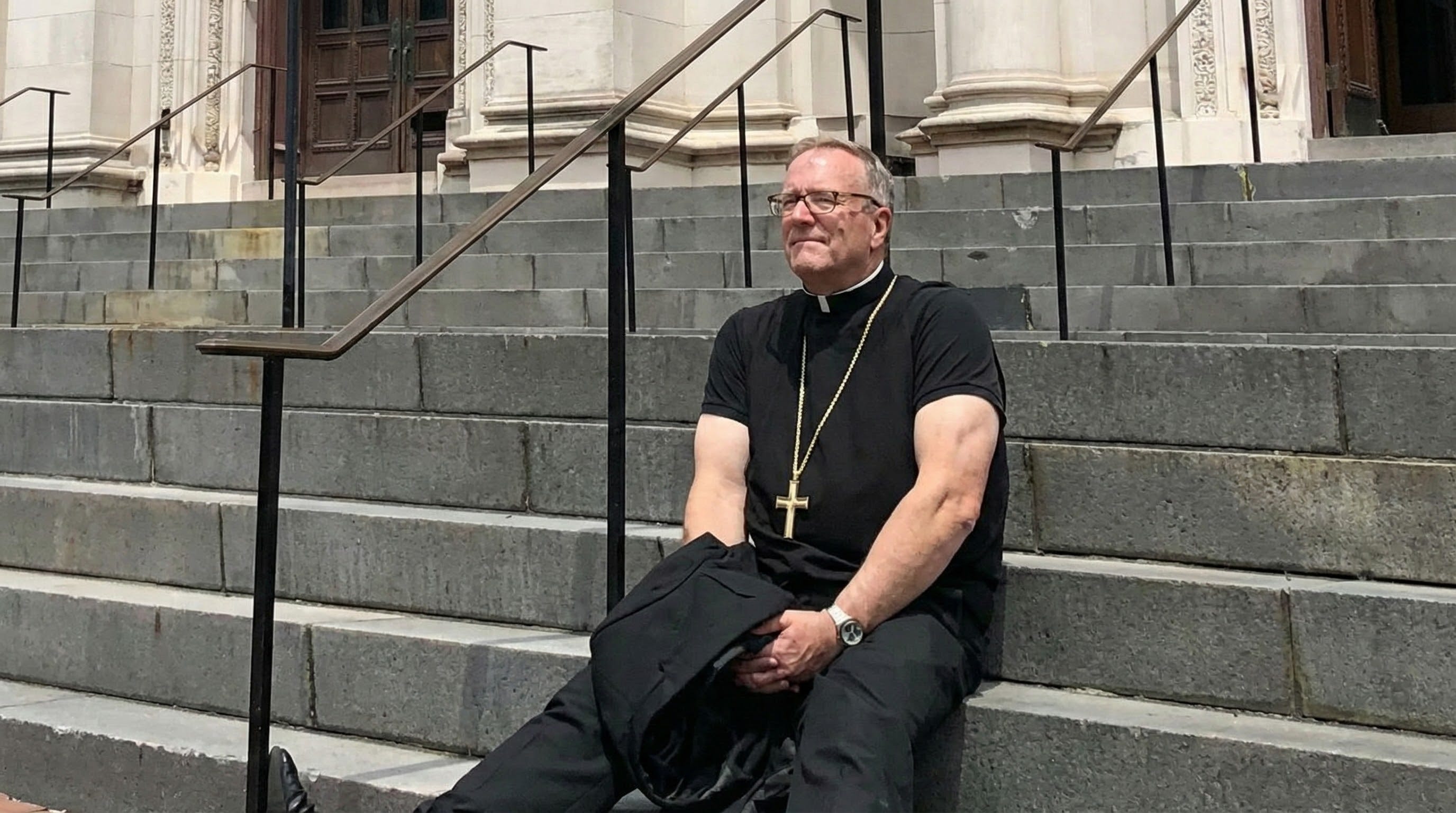
But the cumulative effect of these controversies has undoubtedly eroded some of his moral high ground.
All of which makes it bizarre that, at this very moment, Barron would train his guns on a new mayor’s inaugural rhetoric. It’s a bit like a man with a log in his eye obsessing over the speck in another’s.
Even on the merits, Barron’s critique of Mamdani is off-base. Yes, Zohran Mamdani used the word “collectivism” — a term that understandably raises red flags given the horrors of 20th-century Communism. But the bishop’s response was intellectually sloppy at best.
Mamdani is a democratic socialist, an elected official operating within a democracy, not a Marxist dictator nationalizing industries or sending dissidents to gulags.
To conflate Mamdani’s call for community and solidarity with Stalin’s totalitarian collectivism is a straw man.
It’s the oldest Cold War trope: equating any whiff of socialism with the gulag. And it’s simply not honest.
In fact, democratic socialism per se is not incompatible with Catholic teaching— a point even one of the Church’s most tradition-minded pontiffs made clear.
Back in 2006, Pope Benedict XVI (hardly anyone’s idea of a “woke Marxist”) remarked that “in many respects, democratic socialism was and is close to Catholic social doctrine” and that it “made a remarkable contribution” to fostering social justice and solidarity.
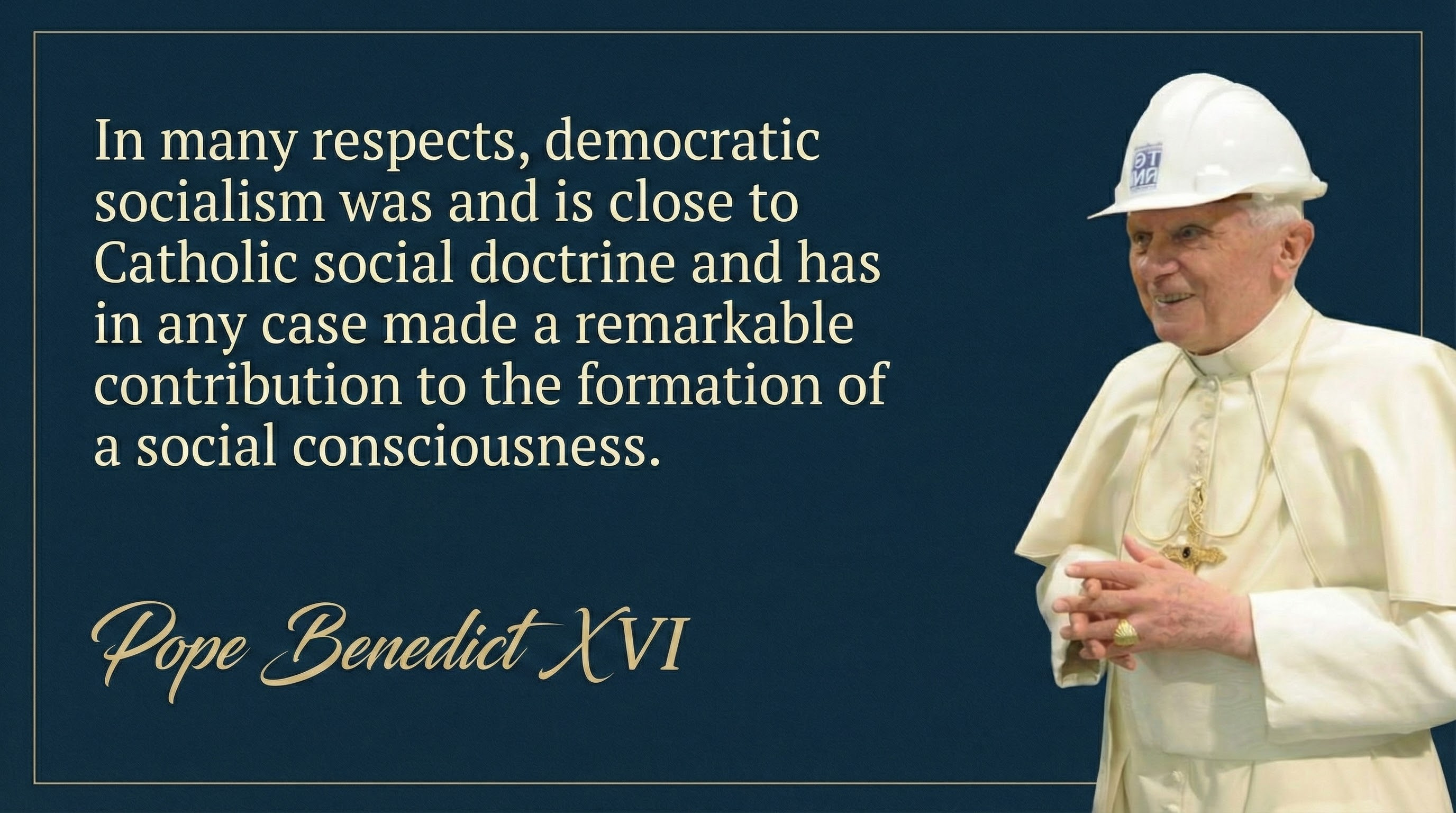
Benedict’s point was that movements aiming to temper capitalism’s excesses and empower the working class often overlap with Christian values. You won’t hear that from culture-warriors on Twitter, but it’s history.
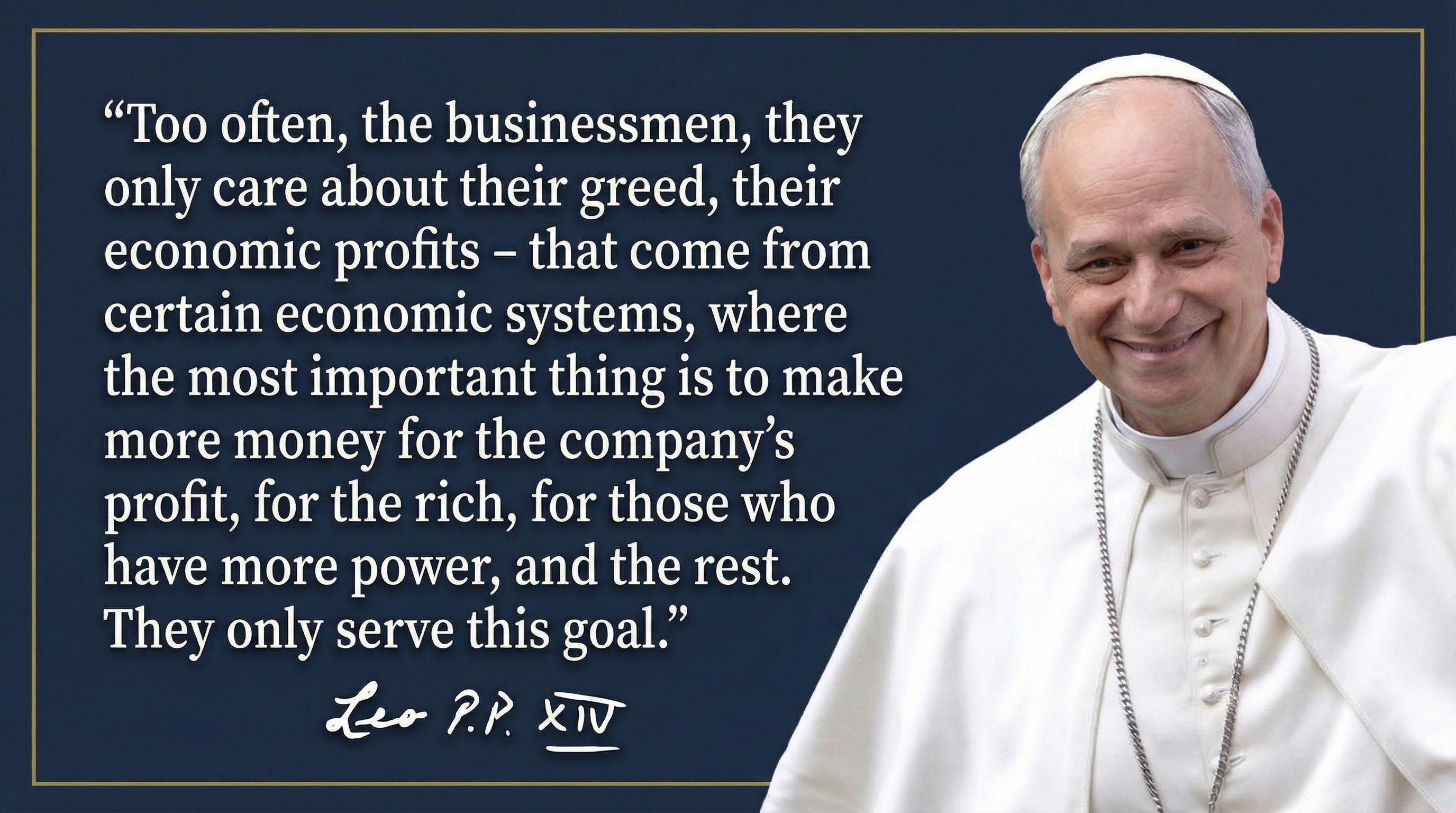
He’s not alone. Here’s what our current pope said in an online conference shortly before his election:
“Too often, the businessmen, they only care about their greed, their economic profits that come from certain economic systems, where the most important thing is to make more money for the company’s profit, for the rich, for those who have more power, and the rest. They only serve this goal.”
Barron’s rant also misrepresents what Catholic social teaching actually says.
It’s true that the Church has consistently condemned Communist‐style collectivism — the kind that obliterates private property and treats individuals as cogs of the state.
From Pope Pius XI onward, the Vatican castigated Marxist Communism for subordinating the person to an all-powerful government. But Barron conveniently left out that the Church has equally and repeatedly condemned the opposite extreme: the “greed of unchecked competition” in unfettered capitalism.
As far back as 1891, Pope Leo XIII warned that under laissez-faire capitalism, workers had been “surrendered, isolated and helpless, to the hardheartedness of employers and the greed of unchecked competition.”
His successor Pius XI went on to denounce both “individualist economic thinking” and socialist collectivism as twin dangers to the common good.
In Catholic thought, it’s not a binary choice between the state swallowing the person (Communism) or the person idolizing unbridled freedom (libertarian individualism). The Church charts a personalist path beyond those false alternatives.
I Love This Church. I Love This Country. And I Refuse to Give Up on Either.

At the beginning of the year, I’m asking you to help build something sturdy enough to stand against cynicism, authoritarianism, and despair.
The human person is neither a regimented ant in a colony nor a lone wolf accountable to no one. We are inherently relational beings: made for community, endowed with inalienable dignity, and bound by mutual obligations that precede any political ideology.
Catholic social teaching calls for solidarity with others and respect for individual freedom — a delicate balance that rejects both collectivist coercion and the social Darwinism of “rugged individualism.”
As one theologian neatly put it, the Church “forged a middle path” from the start.
It insists markets and governments alike must be morally ordered to serve human dignity, family, and the common good. The market economy is not canonized as Barron suggests; it’s tolerated and even praised only insofar as it serves the human person justly.
And if “the warmth of collectivism” sometimes becomes an excuse for authoritarian excess, the “frigidity” of radical individualism is no virtue either — it breeds its own kind of human coldness.
The Catholic vision is personalist: it imagines a society where each person is cherished as part of a community, where economic life is governed by justice and charity, and where both state and market are kept within moral bounds. In short, Catholic teaching transcends the cheap collectivism vs. capitalism shout-fest that played out on Twitter this week.
Finally, there’s an undeniable double standard in Bishop Barron’s sudden zeal.
Consider what Bishop Barron hasn’t been outspoken about for the past year Donald Trump has been president.
Here’s the rundown.
