


Dear friends —
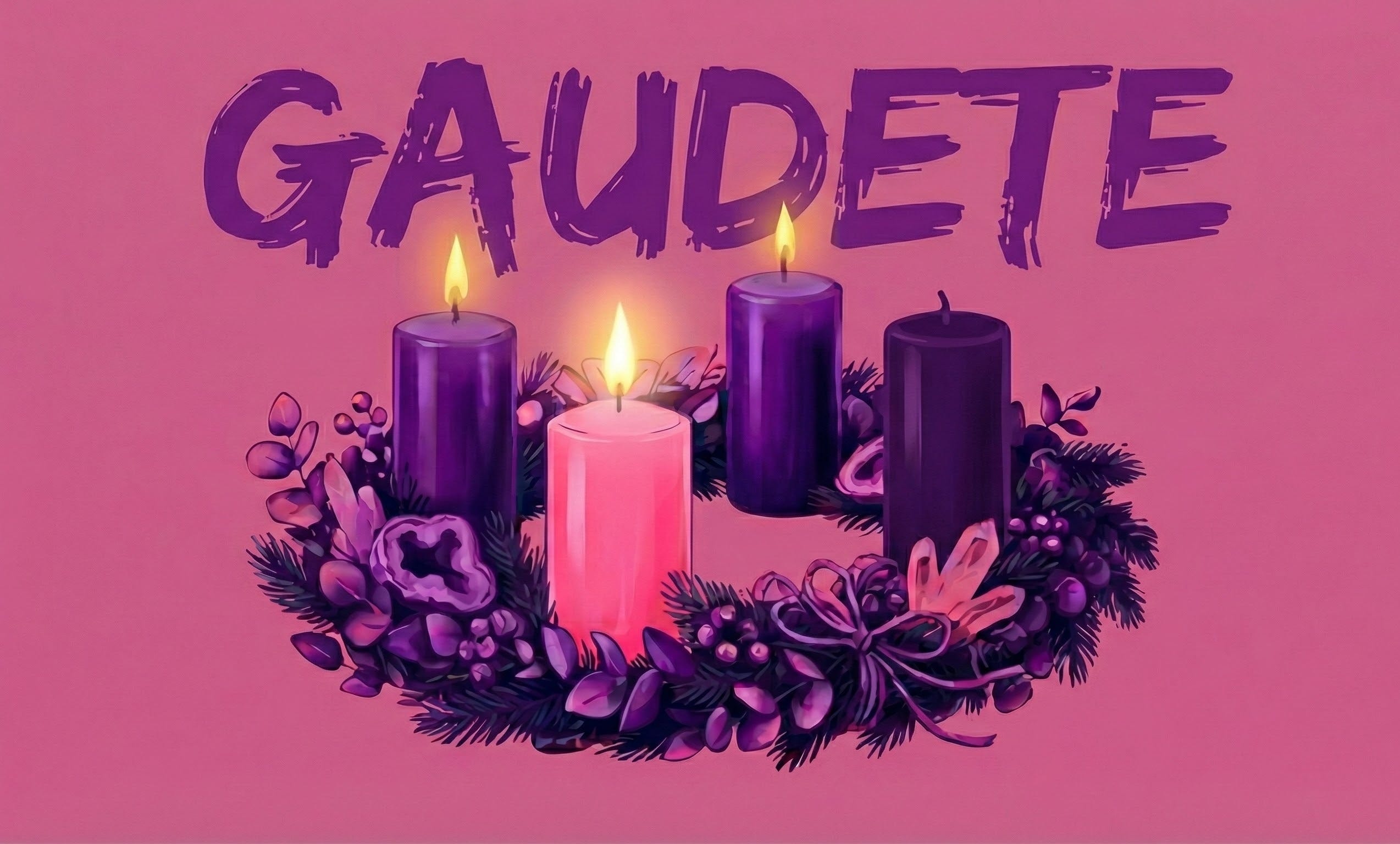
Gaudete (Latin for “Rejoice!”) marks today, the Third Sunday of Advent — a flash of gladness in the midst of a penitential season. The name comes from the opening words of the Mass’s entrance antiphon: “Rejoice in the Lord always.”
It’s also the title of a famous, joyful 16th-century Latin carol—“Gaudete, Christus est natus” (“Rejoice, rejoice, Christ is born”) — later revived in modern folk tradition, especially by Steeleye Span.
The Church signals the day’s brightness visually, too: rose-colored vestments (or a rose candle) appear in place of purple.
And yet, as my reflection below suggests, rejoicing doesn’t mean pretending the darkness isn’t real. Today is the Church’s invitation — echoing the Psalmist — to encounter the darkness and say: “Darkness, be my light.”
Thank you for being part of Letters from Leo. Your presence here — whether you’re Catholic or not, a believer or just curious — sustains one of the most important conversations in public life today.
This Advent, all paid subscribers are receiving the Letters from Leo Advent Reflection Series: a daily companion to prepare for the coming of Christ at Christmas — and to reckon with what his arrival demands of us, personally and publicly, in a moment of deep moral and political crisis.
It’s not too late to join us. Today’s reflection is below.
To give you a sense of what you’ll encounter, I’ve unlocked two pieces for all readers.
The first is our opening Sunday reflection, which sets the tone for the season.
The second is Tuesday’s reflection, where I wrote candidly about the isolating pain me and so many others experience during the holidays — and how Advent meets us there, not to deny the loneliness, but to reveal God’s quiet presence within it.
These reflections will continue each day through Christmas.
Letters from Leo is open to anyone who wants to be informed and inspired by our pope — and to turn that inspiration into action that leaves America and the world more just, less cold, and more alive with hope.
If you’d like to support this work during the holiday season, here are three ways you can help:
Subscribe as a paid member to receive exclusive posts about the life and formation of Pope Leo and help sustain this newsletter.
Donate with a one-time gift to fuel this project’s mission.
Share this post (and Letters from Leo) with a friend who might enjoy it.
Whether you give $0, $1, or $1,000, your presence here matters — no matter your faith or your politics.
Thank you for reading. I’ll see you on the road.

“Go and tell John what you hear and see: the blind regain their sight, the lame walk… the dead are raised, and the poor have the good news proclaimed to them.” (Matthew 11:4-5)
For a moment, even John the Baptist wasn’t sure.
From a dark prison cell, he sent disciples to Jesus with a poignant question: “Are you the one who is to come, or should we look for another?”
It’s astonishing — this is the same prophet who once recognized Jesus as the Lamb of God. But confinement and looming death can darken even the brightest faith.
In our own bleak times, we too might wonder if our hope has been misplaced.
I certainly do.
I look at my own shortcomings as a lackluster, half-hearted follower of Jesus.
I look at the failures of my country and our world — the violence, the corruption, the injustice that scars the faces of children and the poor — and I wonder if my shreds of hope are folly.
But Jesus responds — not with a political manifesto or a thunderbolt of judgment — but with evidence of transformation.
