


Dear friends,
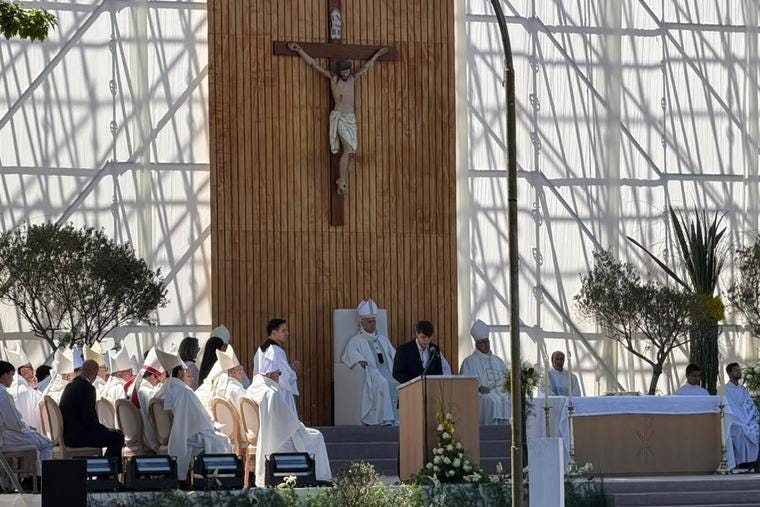
Today is the Thirty-Second Sunday in Ordinary Time, and Pope Leo XIV celebrated Mass this morning in Florida, Uruguay, before leaving for Argentina.
This week’s reflection is about the parable of the ten virgins, the oil no one can lend you, and the grandmothers Leo thanked today for handing down the faith anyway.
These Scripture reflections are available exclusively to paid subscribers. If my work means something to you, I’m asking for your help.
If you’d like to invest in our mission during this critical time, here are three ways you can help:
Subscribe as a paid member to receive exclusive posts about the life and formation of Pope Leo and help sustain this newsletter.
Donate with a one-time gift to fuel this project’s mission.
Share this post (and Letters from Leo) with a friend who might enjoy it.
Whether you give $0, $5, $50, $500, $1,000, or more, your presence here matters — no matter your faith or your politics.
Thank you for reading. I’ll see you on the road.

“Give us some of your oil, for our lamps are going out.” — Matthew 25:8
Pope Leo XIV celebrated Mass this morning in Florida, Uruguay, a small city about sixty miles north of Montevideo. In 1825, the men fighting for the country’s independence placed their cause under the protection of a small image of the Virgin Mary there, and Uruguayans still call her Our Lady of the Thirty-Three. Tens of thousands of people filled the square in front of her shrine, some of them after walking for miles.
It was Leo’s last stop in what the Associated Press calls Latin America’s most secular country, where he spent his first full day with the poor. In his homily, he thanked the people who kept the faith alive there anyway. He named mothers, grandmothers, godmothers, religious sisters, and catechists, and then he spoke directly to the parents whose children stopped going to Mass years ago and who now wonder whether all that teaching was for nothing.
Read beside today’s Gospel, that homily is hard to shake.
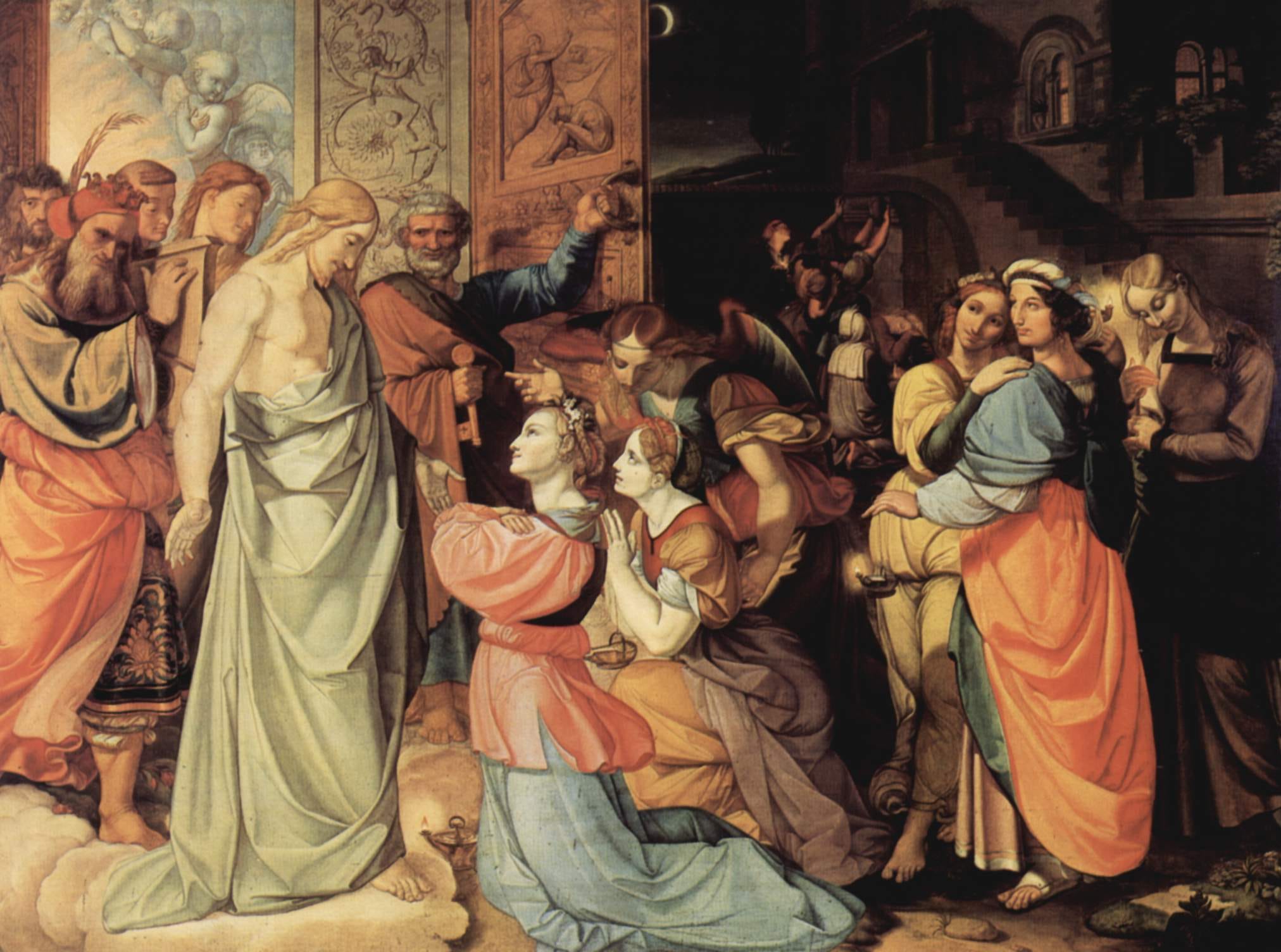
Jesus tells of ten young women waiting at night for a bridegroom who is running late. Five of them brought flasks of extra oil, and five did not. When the cry goes up at midnight, the ones with empty flasks turn to the others and ask, “Give us some of your oil, for our lamps are going out.”
The answer is no.
I have never much liked the wise virgins. They strike me as the kind of bridesmaids who would rather be right than kind, and on a morning when the pope was thanking grandmothers for a lifetime of giving their faith away, their refusal stings more than usual.
My own faith came to me secondhand, the way most people’s does, through my mother’s side of the family and the Italian Catholic people of my late grandmother, Mary Michael Fiorella. Our parish was St. Rose of Lima in Murfreesboro, Tennessee, which the Ku Klux Klan marched against while it was being built in 1929. Along the way, priests and nuns who read Flannery O’Connor and Thomas Merton handed both writers to me long before I could make sense of either one.
For a good stretch of my twenties, if I’m honest, I ran on that inherited oil. I went to Mass and knew all the words, but much of what kept my lamp lit belonged to other people.
Pope Francis noticed something about the oil that I missed for years. Preaching on this parable at the Angelus in November 2023, he pointed out that you can’t see it; it sits inside the lamp, and nobody thinks about it until the flame starts to gutter. “An inner life cannot be improvised,” he said.
Six years earlier, on the same Sunday in 2017, he gave the oil another name. The lamp is faith, he told the crowd in St. Peter’s Square, and the oil is the charity that feeds it, built up through acts of love and service to a neighbor in trouble. “Faith inspires charity and charity safeguards faith.”
That changes how I read the wise virgins. What the others want at midnight can’t be poured from one flask into another. The wise had spent years filling theirs, through prayer and through love for the people in front of them, a little at a time.
The bridegroom’s last words to the latecomers are worth hearing slowly: “I do not know you.”
Nobody can know Jesus on someone else’s behalf. A grandmother can teach a child the Hail Mary, and at midnight the child will still have to pray it himself.
