


Dear friends,
Letters from Leo’s Sunday Reflection Series are essays grounded in the Mass readings — offering a clear-eyed way to follow Jesus amid today’s political realities, not by retreating from public life or baptizing any ideology, but by letting the Gospel shape our conscience, courage, and compassion.
These reflections will be available to all paid subscribers, as a small but sincere way of saying thank you for making Letters from Leo possible.
Letters from Leo is open to anyone who wants to be informed and inspired by our pope — and to turn that inspiration into action that leaves America and the world more just, less cold, and more alive with hope.
If you’d like to invest in our mission during this critical time, here are three ways you can help:
Subscribe as a paid member to receive exclusive posts about the life and formation of Pope Leo and help sustain this newsletter.
Donate with a one-time gift to fuel this project’s mission.
Share this post (and Letters from Leo) with a friend who might enjoy it.
Whether you give $0, $1, $100, $500, $1,000, or more, your presence here matters — no matter your faith or your politics.
Thank you for reading. I’ll see you on the road.
“All you who are thirsty, come to the water!” — Isaiah 55:1
Today’s Gospel begins with a man in mourning.
Jesus has just learned that Herod Antipas beheaded John the Baptist — the prophet who baptized him in the Jordan, his kinsman in Luke’s telling. Matthew tells us he got into a boat and withdrew to a deserted place to grieve alone.
The crowds refused to allow it. They poured out of the towns along the Sea of Galilee and followed him on foot, thousands of them, carrying their sick. When Jesus came ashore and saw them, Matthew writes, “his heart was moved with pity.”
The Greek verb there is splanchnizomai. It means he was moved in his guts.
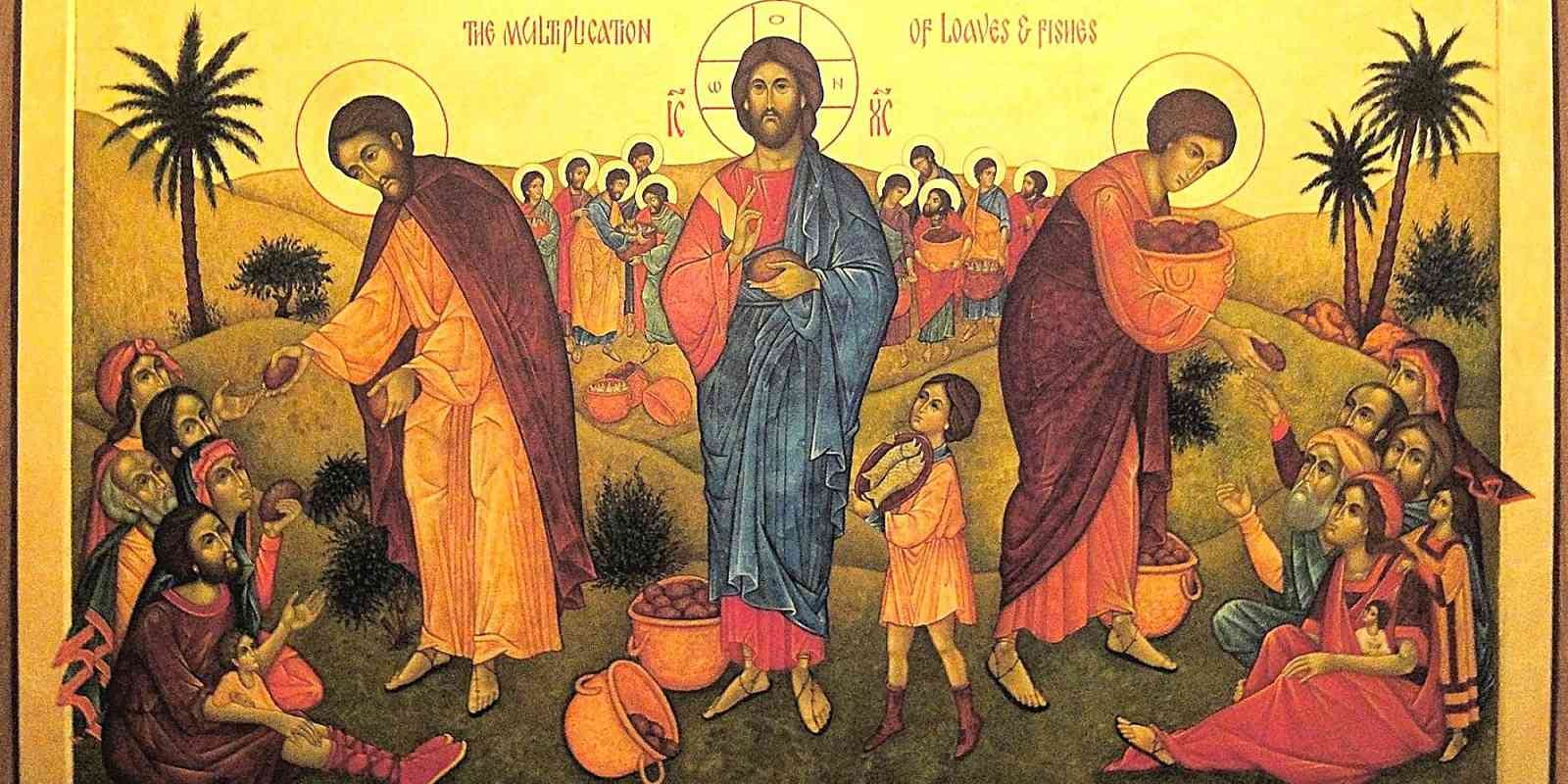
What follows is the only miracle, apart from the resurrection, that all four evangelists record. Five loaves and two fish fed “about five thousand men, not counting women and children.” Everyone ate until they were satisfied, and when the disciples gathered the fragments afterward, they filled twelve wicker baskets — as though God meant one for every tribe of Israel.
The leftovers outweighed the lunch itself.
That detail carries the whole story. Our God does not ration his grace. He answers a crowd’s hunger with a surplus, and it is not even close.
Isaiah brought the same news to a people exiled in Babylon in the sixth century before Christ:
All you who are thirsty, come to the water! You who have no money, come, receive grain and eat; Come, without paying and without cost, drink wine and milk!
No bill ever arrives at this table. The one thing asked of us is to show up thirsty.
The Church sets Psalm 145 on our lips today as the answer to Isaiah’s invitation: “The hand of the Lord feeds us; he answers all our needs.” The psalmist presses the point further — “you open your hand and satisfy the desire of every living thing.”
Anyone who has spent this summer in the pews has watched the theme build.
Three Sundays ago, Matthew gave us the sower who flings seed onto the road, the rocks, and the thorns because he refuses to farm carefully.
Then came the wheat and the weeds, and with them a God whose love makes itself felt even among the weeds.
Last week a man joyfully sold everything he owned for a field with treasure buried in it. Today the parables stop, and the abundance they promised lands on a Galilean hillside as bread.
I keep reaching for the same word to describe the God of these readings: extravagant. He is a reckless lover. He wastes seed on bad ground, liquidates estates for buried treasure, pours wine and milk for customers who have no money, and caters a wilderness supper with twelve baskets to spare. Calculation plays no part in how God loves.
But before the miracle, though, Matthew records an exchange that ought to make every reader squirm.
