


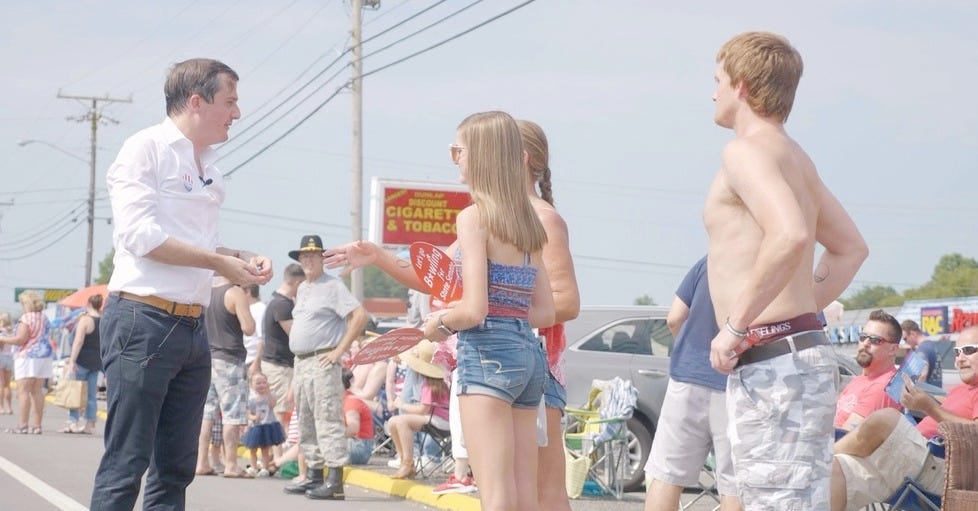
Thank you for reading! Letters from Leo is a reader-supported publication and the fastest-growing Catholic community in the country. To receive new posts and support this movement, consider becoming a free or paid subscriber.
God made me for politics. I have believed that since I was young, and I believe it most on Election Day.
I think of politics as my secular priesthood, and James Carville says it best. On the eve of the 1992 election, in a scene from The War Room, Bill Clinton’s chief strategist (a Louisiana Catholic who told me this summer he is “excited to be a Catholic again” under Pope Leo XIV) stood before an exhausted staff and said, “I’m a political professional. That’s what I do for a living. I’m proud of it.”
He gave them a doctrine, too: “Outside of a person’s love, the most sacred thing that they can give is their labor.” I feel adamantly that he is right.
I fell in love with politics as a child in Murfreesboro, Tennessee. I watched the 1996 election closely, and in 2000 I watched Al Gore, a fellow Tennessean, lose his home state and then the presidency.
Politics gets a bad rap, and plenty of us (I include myself at times) have earned it one. The word comes from the Greek polis, the city, and at its root it means caring for the whole community, including the many people you will never meet. I have always thought of it as a vocation.
Two popes taught me how to hold that idea. Pope Francis wrote in Evangelii Gaudium that politics, “though often denigrated, remains a lofty vocation and one of the highest forms of charity, inasmuch as it seeks the common good.”
Years before he became Pope Benedict XVI, Joseph Ratzinger added a warning that belongs beside it: “Wherever politics tries to be redemptive, it is promising too much. Where it wishes to do the work of God, it becomes not divine, but demonic.”
A confession
Here it is. I have too often treated politics as an end in itself, as though winning were the point. All of us are tempted that way by the things we love most, and after God and the people in my life, I have loved nothing the way I love this work.
Every night before every Election Day, I go to confession. In 2020, when I was a candidate myself, that night fell on All Souls’ Day.
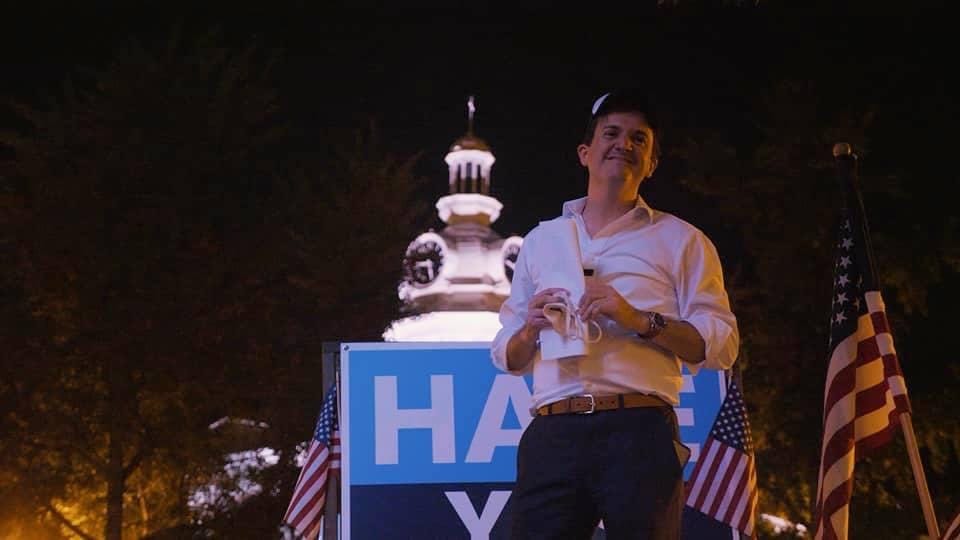
That evening, in the middle of the pandemic, I texted Father John Sims Baker. He had become pastor of St. Rose of Lima, my childhood parish in Murfreesboro, after I left Tennessee for the East Coast, so I had never really been one of his parishioners.
Father Baker is a conservative priest, and he knew I was running as a Democrat. I doubt he shared my politics, but he’s an extraordinary priest nevertheless. He wanted to shepherd me no matter my politics, and he was exactly what Pope Francis meant when he asked for shepherds who live with “the smell of the sheep.”
Campaigns give a man plenty to confess. In honor of that tradition, I want to confess to you today that my actions have often fallen short of my words—even in this newsletter. And please, don’t read my Twitter account.
The Confeitor prayer that opens Masses belongs to me: mea culpa, mea culpa, mea maxima culpa. I say it out of love.
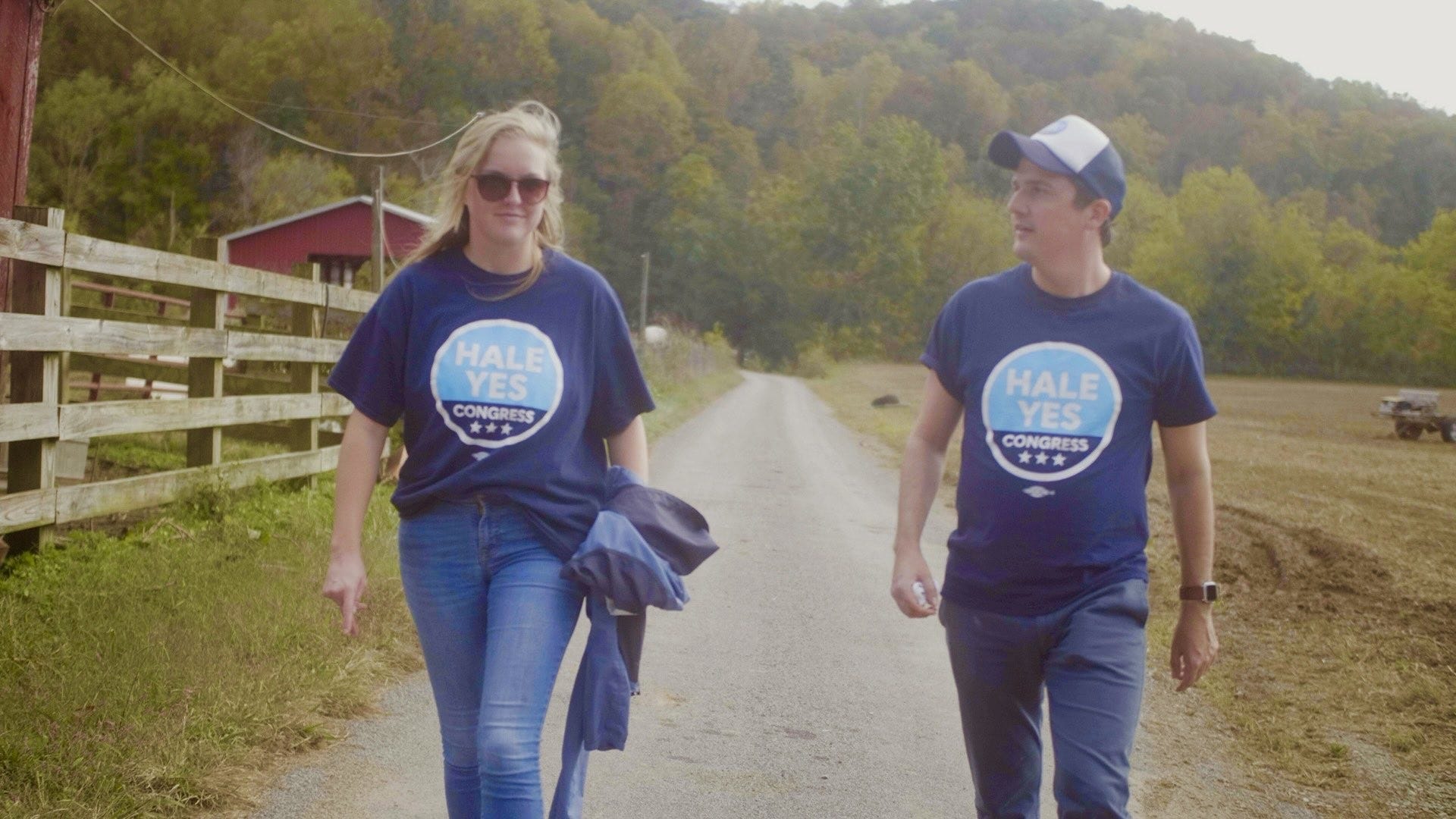
That All Souls’ Day carried a second weight. My grandmother, Mary Michael Fiorella, whose story I told on Columbus Day, had died with COVID just days before. At Mass that evening, the priest prayed the Eucharistic preface for the dead, and it carried a line I have latched onto for as long as I can remember: “Indeed for your faithful, Lord, life is changed not ended.”
The next morning, Nov. 3, 2020, my own name was on the ballot. I had lost the Democratic primary in Tennessee’s 4th Congressional District two years earlier, then won it that August. That night, six years ago today, though I was one of the nation's top overperforming Democrats, I lost the general election to Rep. Scott DesJarlais.
I would do every bit of it again.
Changed, not ended
I have come to think politics asks us to face two directions at once. Behind us stand our ancestors, the people whose labor brought us here. We also answer to our children and grandchildren, the “posterity” for whom the Constitution’s preamble promises to secure the blessings of liberty. Good politics lives in between, asking what the past can teach us about honoring the future.
That is how I read the Eucharistic preface now. A country, like a life, is changed and handed on, and in a voting booth today each of us decides a small part of what we hand to the next generation.
Every generation, in the words of the late Jesuit Superior General Fr. Adolfo Nicolas, SJ, has a moral responsibility to “re-create the faith; they have to re-create the journey; they have to re-create the institutions.
“This is not only a good desire,” Nicolas argued. “If we lose the ability to re-create, we have lost the spirit.”
Voting is our act of civic re-creation for ourselves and our posterity.
However you vote, you have our Catholic voter guides, which now compare the candidates in every Senate, governor, and House race on the ballot, 506 races across all 50 states. You have Pope Leo’s case for why every Catholic should vote, and you have everything we have written together this fall.
So go and take part in what Notre Dame’s Father Theodore Hesburgh called “a civic sacrament.”
At Letters from Leo, we stand with every volunteer who has knocked on doors or worked a polling place this fall, and with everyone who believes the care of our common home is worth our labor.
In a season poisoned by cynicism, we keep faith with a Church that calls politics a form of charity and refuses to let it become an idol. Many of those who taught us that have gone home to God, and much of what we do today is for grandchildren who have yet to be born.
This is the fastest-growing Catholic community in the country because people are hungry for a politics that serves the common good, and for a faith that sends them out the door to do something about it.
If you believe this movement matters — Catholics and people of goodwill giving their love and their labor to the common good — I am asking you to join us.
If you’d like to invest in our mission, here are three ways you can help:
Subscribe as a paid member to receive exclusive posts about the life and formation of Pope Leo and help sustain this newsletter.
Donate with a one-time gift to fuel this project’s mission.
Share this post (and Letters from Leo) with a friend who might enjoy it.
Paid subscribers support our ongoing series on Pope Leo’s life and formation, our exclusive investigations, and the Sunday Scripture Reflection Series, and they make work like this fall’s voter guides possible.
Whether you give $0, $5, $50, $500, $1,000, or more, your presence here matters — no matter your faith or your politics.
Thank you for reading. I’ll see you on the road.

Anyone feeling called to public service in politics needs to know about Run for Something, the remarkable organization that helped James Talarico run for his first office and with whom he consulted before his run for senate.
Please step up, they will help you https://runforsomething.net/run/
Thanks for sharing this. Someday you could be president. You'd have all our votes.