


Letters from Leo is the fastest-growing Catholic community in the country, and it runs on readers rather than advertisers. If Wednesday’s catechesis on the dignity of every person is the kind of thing you want covered the day it happens, join us as a paid subscriber or make a one-time gift below.
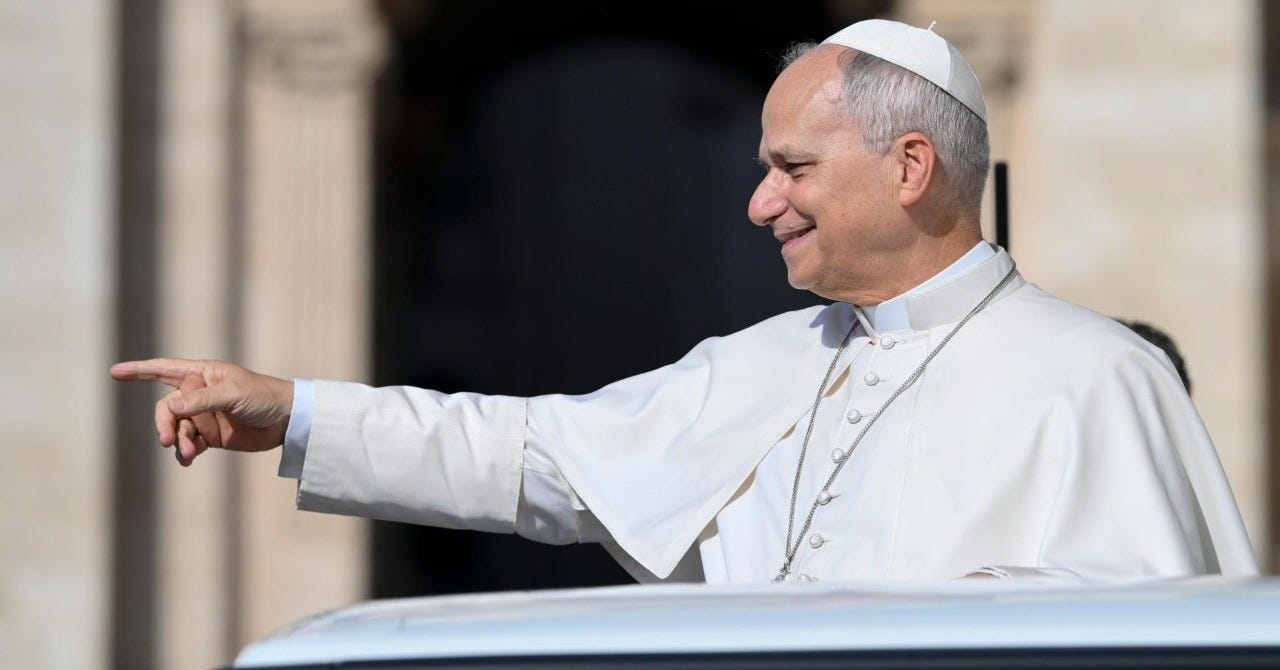
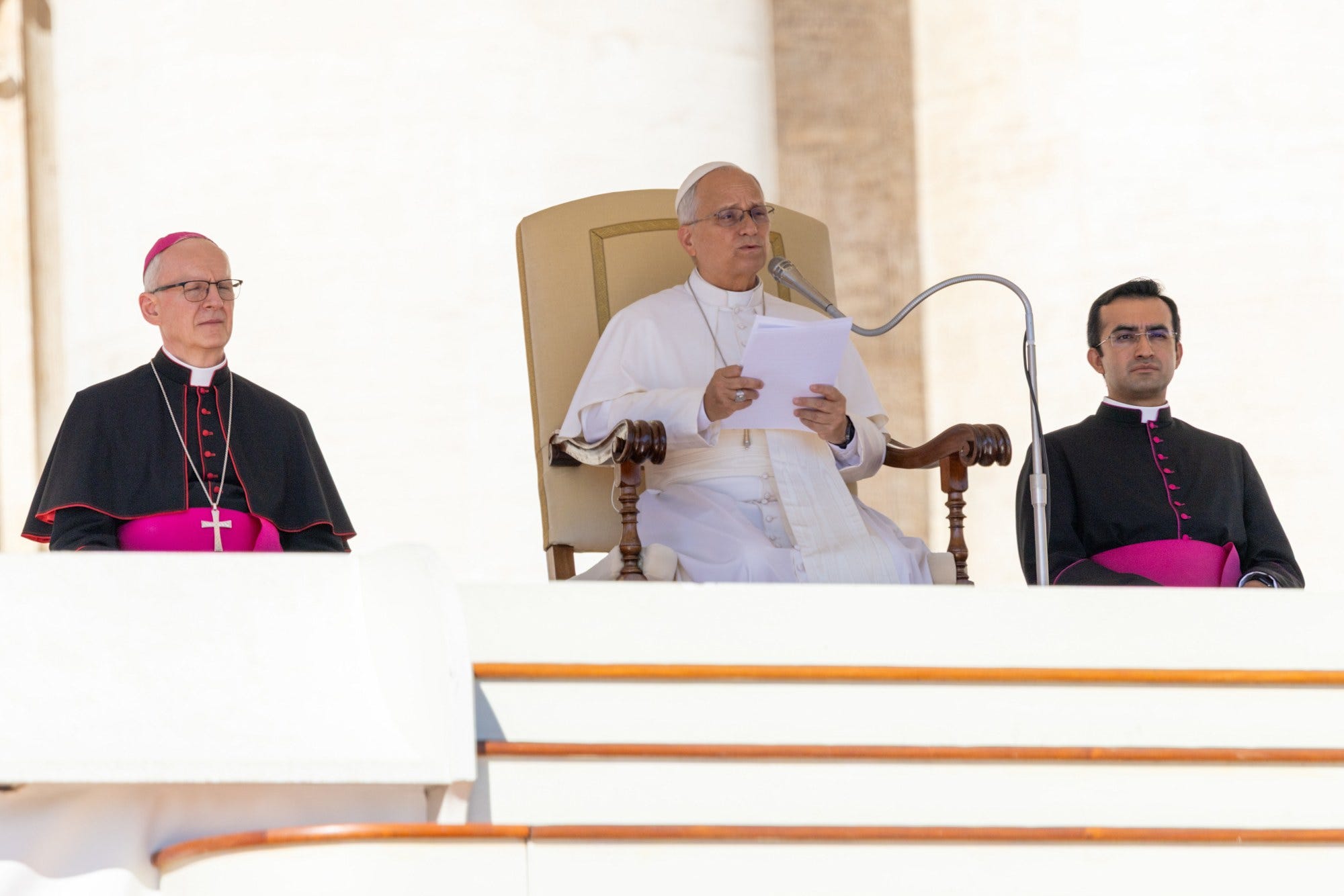
Pope Leo XIV told a crowd in St. Peter’s Square on Wednesday morning that the differences among peoples make the world richer, and he read the Second Vatican Council’s teaching on the human community into an age that runs on algorithms.
The catechesis was the third stop in his walk through Gaudium et spes, the Council’s 1965 pastoral constitution, and he had reached its second chapter, paragraphs 23 through 32.
One housekeeping note before the text: the free copy of Freedom Under Grace for brand-new yearly subscribers and $80 donors runs through Friday night, and it can only be claimed from the review itself.
The Council opened the chapter by calling “the growing interdependence of men” one of “the salient features of the modern world.” Leo pressed on the gap between contact and communion.
Technology has broken down barriers, he said, while relationships “are tending to become less and less personal, more virtual, and there is a risk of becoming accustomed to delegating to algorithms decisions that are the sole preserve of the human conscience.”
Machines sort and predict, and a great deal of modern life now runs on what they recommend.
What they cannot do is answer for a choice, and the Council’s whole chapter on community rests on people who can.
Leo said the Christian contribution to this age is to keep social relationships stocked with “real substance and personal depth,” which means the person on the other side of the screen stays a person. Conscience, in his telling, is not a task you hand off.
That is the warning of Magnifica Humanitas in a lower register, spoken without an encyclical’s weight behind it. The full address, in his Italian with English subtitles, is here:
Difference as wealth
“The diversity of people and peoples in the world must not be considered as a danger or a threat,” Leo said, “but rather as a resource for enrichment and growth.” Conflict, in his telling, is what sin does to habits and institutions once it gets inside them; it ends in destruction and death.
What he set against it was “the logic of reciprocity, sharing and care,” borrowed from Paul’s image of the body in First Corinthians, where the eye cannot tell the hand it has no use for it.
The pope, of course, named no country.
On his first day back in office in January 2025, Donald Trump signed an order titled “Ending Radical and Wasteful Government DEI Programs and Preferencing” and closed the diversity offices across the federal government, with a second order the next day reaching into the companies that hold federal contracts.
The Council’s sentence about difference as a resource was written in 1965, and in 2026 it reads like a reply.
The common good came next, and he gave the Council’s definition rather than one of his own: “the sum of those conditions of social life which allow social groups and their individual members relatively thorough and ready access to their own fulfillment.”
A duty follows from the definition. Every social group, Vatican II wrote, “must take account of the needs and legitimate aspirations of other groups, and even of the general welfare of the entire human family.”
The catalog
The Council had listed what it considered the most urgent violations of the person, and the pope read the list aloud: murder, genocide, abortion, euthanasia, mutilation, torments inflicted on body or mind, attempts to coerce the will, “subhuman living conditions, arbitrary imprisonment, deportation, slavery, prostitution, the selling of women and children,” along with working conditions that treat people “as mere tools for profit, rather than free and responsible persons.”
Vatican II called all of it infamy, and the pope kept the word.
An American listening in September 2026 doesn’t have to reach for the application.
The second consequence he named was respect and love for adversaries, “those who think and act in ways different from our own.”
He has had recent practice. When Leo prayed for the dead of September 11 at the Sunday Angelus, two days after the twenty-fifth anniversary, a wing of MAGA Catholic media turned on him within the hour, led by the white-nationalist podcaster Kevin DeAnna, whose complaint was that the pope had been two days late.
Third came equality. “Every type of discrimination, whether social or cultural, whether based on sex, race, color, social condition, language or religion, is to be overcome and eradicated as contrary to God’s intent.” He read it without commentary, which in Rome is its own commentary.
Fourth, he asked for an end to the individualistic mindset, with “an attitude of responsibility and participation” in its place.
The square itself
He welcomed the chaplains of Italy’s prisons, with their director general, Don Raffaele Grimaldi, and thanked them for something I hadn’t known the Vatican did. Prisoners write to the pope about their dramas and their wounds (his words), and the chaplains work with him and the Secretariat of State to care for the people who send them. Knowing those letters reach him changes how the line about arbitrary imprisonment sounds.
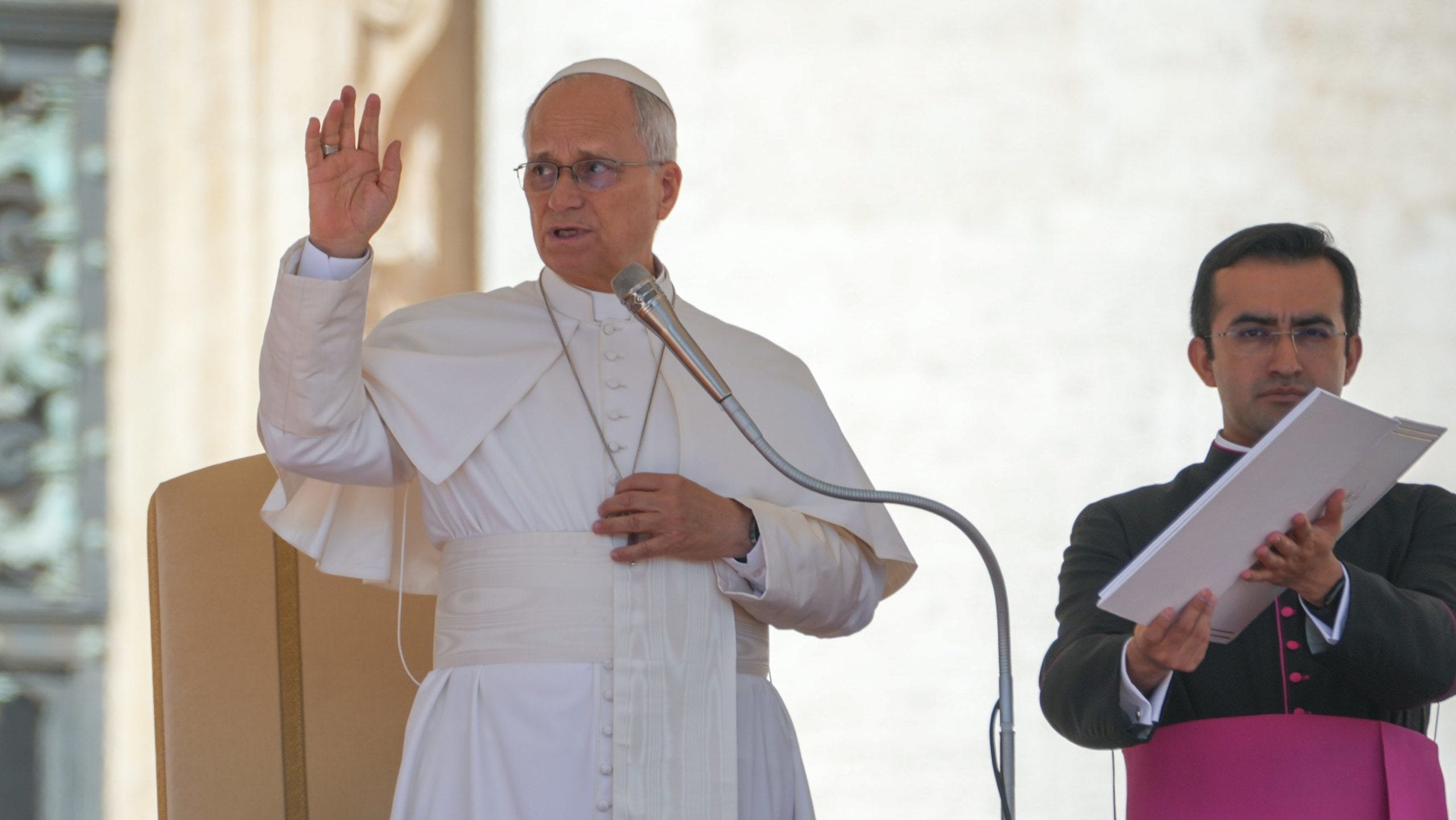
He closed with a standard for judging any political program.
Catholics should weigh “today’s social and political projects” against the dignity of the human person, asking whether a project delivers social justice and how freely ordinary people are allowed to take part in building the common good.
His last sentence put the burden on each of us: “the future of humanity depends on each person’s commitment to collaborate with God and with their brothers and sisters in building a more humane world.”
None of this is new teaching, which is what a catechesis is for. What Leo did on Wednesday was pull a sixty-year-old document off the shelf and read its most uncomfortable paragraphs out loud to a square full of pilgrims and to the chaplains who spend their working lives inside Italian jails.
At Letters from Leo, we stand with a pope who spent Wednesday morning telling St. Peter’s Square that the stranger enriches us and that a prisoner’s letter deserves an answer, and with the millions of American Catholics and countless others of goodwill who will not accept deportation and arbitrary imprisonment as the price of order.
In a season when fear of the neighbor is sold as policy, we stay rooted in a faith that calls difference a resource and treats the common good as a debt owed to every group, including the ones we would rather not share a country with.
This is the fastest-growing Catholic community in the country because people are hungry for something deeper than contempt. They want the Gospel read out loud and applied to the world as it is, and right now, as the machinery of the state grinds through the very list Vatican II called infamy, that hunger has an address.
If you believe this movement matters — Catholics and people of goodwill standing for human dignity against a politics that treats difference as a threat — I am asking you to join us.
If you’d like to invest in our mission, here are three ways you can help:
Subscribe as a paid member to receive exclusive posts about the life and formation of Pope Leo and help sustain this community.
Donate with a one-time gift to fuel this project’s mission.
Share this post (and Letters from Leo) with a friend who might enjoy it.
Paid members receive the biographical series on Pope Leo’s life and formation, the Sunday Scripture Reflection Series, and the exclusive investigations, including the running file on Pope Leo’s confrontation with artificial intelligence, which Wednesday’s line about algorithms belongs to.
Whether you give $0, $5, $50, $500, $1,000, or more, your presence here matters — no matter your faith or your politics.
Thank you for reading. I’ll see you on the road.

Genetically, diversity is best 👌.
Don't need with your cousin!