


Thank you for reading! Letters from Leo is a reader-supported publication and the fastest-growing Catholic community in the country. To receive new posts and support this movement, consider becoming a free or paid subscriber.
Dear friends —
Before you read today’s essay, one important note:
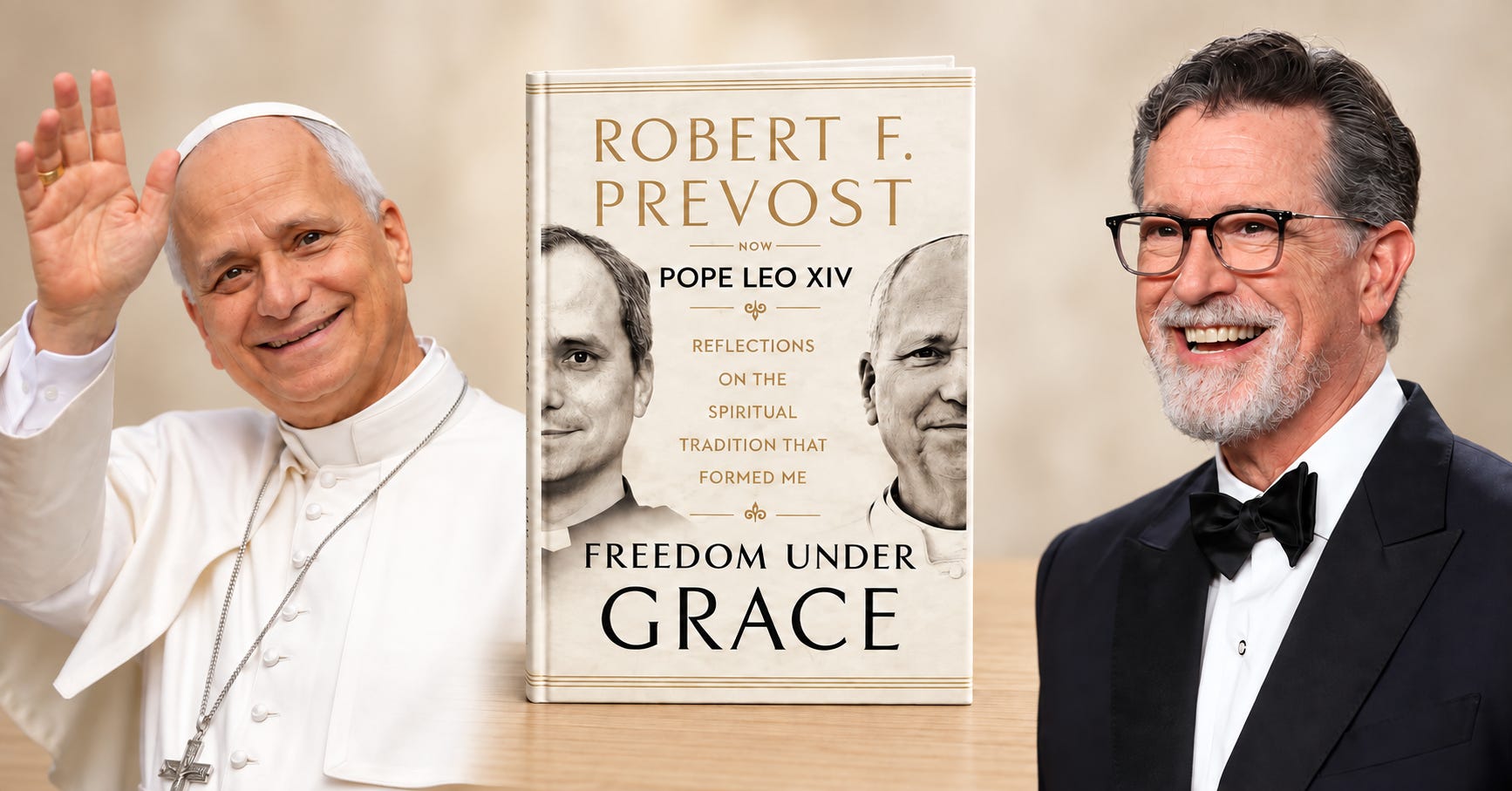
Anyone who purchases a yearly subscription to Letters from Leo or donates $80 or more from this post will receive a free copy of Freedom Under Grace: Reflections on the Spiritual Tradition That Formed Me, the first book of Pope Leo XIV’s own writings from before the papacy.
This offer is available through Friday, September 18 at 11:59 PM PT.
We have done this three times before — with Gerard O’Connell and Elisabetta Piqué’s The Election of Pope Leo XIV in March, with Christopher Lamb’s American Hope in April, and, most recently, with Elise Ann Allen’s biography in May — and so many of you joined our community through those books.
This time the author is the pope.
I’ll explain below why this one belongs on your shelf.
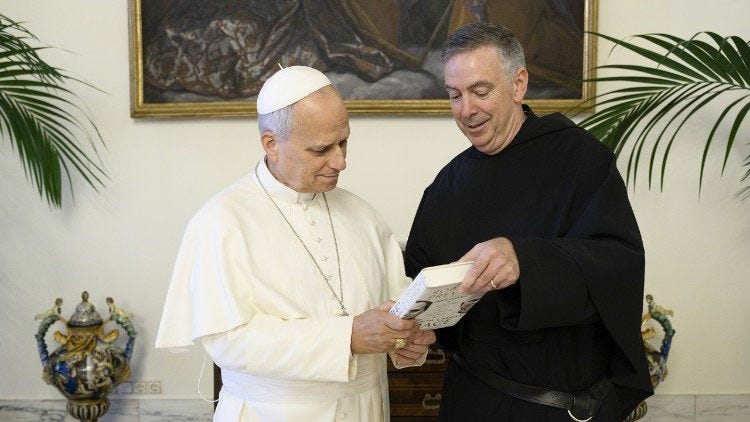
Father Joseph L. Farrell, the prior general of the Order of Saint Augustine, went on CNN’s OutFront with Erin Burnett on Tuesday night to talk about Pope Leo XIV’s new book, released that morning. Farrell, a Drexel Hill, Pennsylvania, native, was elected last September to the office Robert Prevost held from 2001 to 2013.
He wrote the book’s foreword, and he had spent Monday in Rome celebrating its release with the pope himself.
The full interview is embedded below, along with the four clips worth your time. My review of the book comes first.
Freedom Under Grace arrived in English on Tuesday, September 15, from Image Books, the Catholic imprint of Penguin Random House: 480 pages, $32 in hardcover. The Vatican Publishing House released the Italian original, Liberi sotto la Grazia, in May, and Cardinal Pietro Parolin presented it at the Augustinianum in Rome.
Three friars of the order (Miguel Ángel Juárez, Michael Di Gregorio, and Rocco Ronzani, the prefect of the Vatican Archives) selected and translated the texts, which Prevost wrote in English, Spanish, and German across the twelve years he governed the Augustinians.
The pope, Farrell writes in the foreword, “gave his initial placet to the very idea of publishing this book.”
Call it his first book with some care.
The Catholic University of America Press published his 1987 canon-law dissertation last October, and HarperOne bound his papal addresses into Peace Be With You in February.
Freedom Under Grace is a different thing: the first book of his own writing from before the papacy, and the first he chose to put out himself.
Matthew Burdette, the senior editor at Image, admits in his note to the reader that his team learned only after the conclave that “the newly elected pope had chosen as his first book a collection of writings, addresses, and homilies from his time overseeing the Order of Saint Augustine as its Prior General.”
There is no memoir here and no conclave scene, which will disappoint readers who wanted the Chicago childhood (Allen’s biography has it).
What you get is a man talking to his brothers across twelve years, in Rome and Jos and Iquitos and a monastery in New Lenox, Illinois, and the editors kept the texts in the order he gave them, so you can watch the thinking settle.
Burdette gets the voice exactly right.
“Prevost is not an academic theologian who writes for other scholars,” he writes; “he has honed his voice as a homilist.”
They hired Stephen Colbert to read the opening homilies on the audiobook, and Vatican News announced the casting in an article this week.
The casting has a backstory. CBS cancelled The Late Show last July, three days after Colbert called Paramount’s $16 million settlement with Donald Trump “a big fat bribe,” and insisted the decision was financial; the final episode aired May 21.
In March, an NBC News poll found that the pope and the comedian were the only two names in the survey with a net-positive rating, Leo at plus 34 and Colbert at plus 10, with Trump, JD Vance, and both parties underwater.
Colbert told Entertainment Weekly that the pope was his “white whale,” the guest he wanted before the show ended; he never got him, and settled for a hot-dog gag on the last night. Four months later he is reading him aloud.
The first homily, preached at Santa Maria del Popolo ten days after the towers fell, is the one I wrote about last Friday.
Readers of that essay already know the number (24,000 hunger deaths a day) and the warning against revenge. What the book adds is everything that came after, and the pattern that emerges over 450 pages is the pattern of this papacy.
Four months after 9/11, at the solemn profession of a Filipino friar in KwaZulu-Natal, South Africa, Prevost took apart the idea that humility means the poor should accept their lot.
“At times, ‘humility’ has been considered the ‘virtue’ of those who are poor and oppressed,” he said, “with the insistence they must be humble and accepting of their lot in life!”
He offered an image to shame the idea: “I sit on a man’s back, choking him and making him carry me, and yet assure myself and others that I am very sorry for him and wish to ease his lot by any means possible, except getting off his back.”
Then he named the system. “Neoliberalism has established itself as a means for the ‘salvation of peoples’ while mercilessly forgetting the majority of the human race.”
That was January 8, 2002.
George W. Bush had been president for a year, and a 46-year-old friar from Chicago was preaching against the reigning economics of the day to a chapel in Africa. He went on:
“The vow of poverty, especially for us as Augustinians, is not a statement that it is good to be poor! It is, rather, a declaration on the part of each of us that we want to share all things in common and that we want to live in solidarity with the poor and the needy.”
Two months later, addressing the civil and military authorities of Iquitos, Peru, he called the misery of millions “proof of the existence of sin in our world.” Amid “a globalization that increases the wealth of a select few and creates more poverty,” he told the officials, “it is ever more important to ask ourselves: Where will the poorest among us find a place to sleep?”
He handed them Augustine’s line that the poor are the “feet of the Lord,” and that “it is useless to try to kiss the head of some of the members while others are stamping upon their feet.” A friar who had spent a decade in Chulucanas and Trujillo was not guessing about any of this.
By December 2008 he was writing to the entire order for the sixtieth anniversary of the Universal Declaration of Human Rights, and that letter reads like an early draft of the social encyclical he would sign seventeen years later.
He agreed with the view that the declaration’s rights rest “on man’s very nature and his inalienable dignity as a person created by God.”
Catholic-inspired NGOs stand “on the front line in defending the rights and fundamental liberties of the most vulnerable groups such as refugees, the displaced, people in situations of extreme poverty, victims of contemporary forms of slavery,” and he credits them with the Jubilee debt cancellation of 2000 and “the abolition of the death penalty” in several countries.
Anyone who read Magnifica Humanitas in May, which I covered here, will recognize the architecture.
The book’s final text, from July 1, 2013, is the one I would hand to every bishop and, indeed, every Catholic in the United States.
Speaking to the friars of Castile three months into the Francis pontificate, Prevost warned that an Augustinian house at ease with itself “is no more Augustinian than a community of nice guys in a fraternity house,” and that reading the Confessions “does not make us Augustinian any more than reading the Gospels makes us Christian. Parrots, after all, could be made to memorize texts from Confessions or from Scripture.”
He continued: “There have been centuries of obedience in the Church. Unfortunately, it is probably safe to say that we have not had several centuries of leadership in the Church. Had there been such leadership, there would not have been the ecclesiastical corruption, the scandal of abuse, turning a blind eye to the horrors of slavery and other failures of leadership.”
An honest review has to say what else is here.
The editors printed, in full, his October 2012 intervention at the Synod of Bishops on the New Evangelization, the text that surfaced within a day of his election: the complaint that Western media fosters “enormous sympathy for beliefs and practices that are at odds with the gospel,” with “homosexual lifestyle” inside the parenthesis, and the line about “alternative families” on television.
I think leaving it in was correct, because the book is the record of a formation, and a reader who wants to understand how the man who wrote that became the pope whose cardinal in Naples put his name on a book about transgender Catholics this month needs the whole record, including the parts the pope has outgrown.
The same 2012 statement, by the way, warns the Church against turning “the sacred liturgy into spectacle,” which is the best one-line rebuke of Catholic influencer culture I have read.
Two habits run through the whole book, and I had noticed both by about the published third homily.
Prevost quotes Augustine constantly, and almost never on anything abstract; the saint turns up on hunger, on friendship, on the poor as the body of Christ, and once, in Iquitos, on the old line from the Roman stage that nothing truly human is foreign to me.
He also refuses to preach as if the world outside the sanctuary did not exist.
The friars of the new Nigerian province, in November 2001, heard about the riots in Jos and the attacks in New York in a single paragraph; the whole order, in December 2008, got a letter tracking human trafficking and forced labor “reaching record numbers.”
This is a homilist who reads the paper before he opens the daily readings.
What Father Farrell told Erin Burnett
Farrell and Prevost met in 1987, when Farrell was in his first year of Augustinian formation in Racine, Wisconsin, and the order brought the students to meet a young priest from Chicago who “had a strong intention to go to the missions, to serve in Peru, in Chulucanas.”
Nearly forty years later the friars have a joke about their brother. “It looks like our brother went to pope’s school,” Farrell told Burnett. “It just looks like he belongs where he is right now.”
Here is what else the interview established, in order of news value.
Monday was a double anniversary. Farrell celebrated the book’s release with the pope on September 14, Leo’s 71st birthday, with Villanova’s president in the room.
The date was also the 25th anniversary of Prevost’s election as prior general; the friars elected him on his 46th birthday, three days after the attacks of 2001. “What a gift to serve as prior general,” Farrell said.
Farrell built the foreword around three themes, and after sixteen months of this papacy I would not pick different ones.
Unity comes first, which Farrell tied to the motto on Leo’s coat of arms, In illo uno unum, “in the one, we are one.”
The second is interiority, and the Augustinians have a joke about it: they would like AI to stand for “Augustinian interiority,” and Farrell pointed to the pope’s habit of taking Tuesdays off, “that Sabbath, to pay attention to what’s going on inside.”
Renewal, the third, he put in one sentence: “We don’t always have to be the same person that we were 25 years ago.”
On artificial intelligence, Farrell declined to speak for the pope. Burnett had quoted an Anthropic researcher putting the odds that AI kills every human at ten percent and a former OpenAI researcher at seventy, and asked how much the question consumes Leo “in the dark of night.”
Farrell’s answer: “We have not talked about AI or his preoccupation with it, his worries about it.”
What he offered instead was the encyclical’s logic of personal responsibility, running “all the way along the line to the person who is developing artificial intelligence,” and a warning that the real danger is “humans becoming more like machines.”
Caring for each other and listening to each other, he said, is “something that we do as humans that we cannot and will not let a machine do that for us.”
On the “six-seven” video and Gen Z, Farrell was candid that the pope “has a team of people that work with him that are aware of that,” then added:
“That’s what’s really important for Pope Leo, is not that people are paying attention to him … but that whatever words he’s using, it’s leading people to a deeper sense of their own relationship with God.”
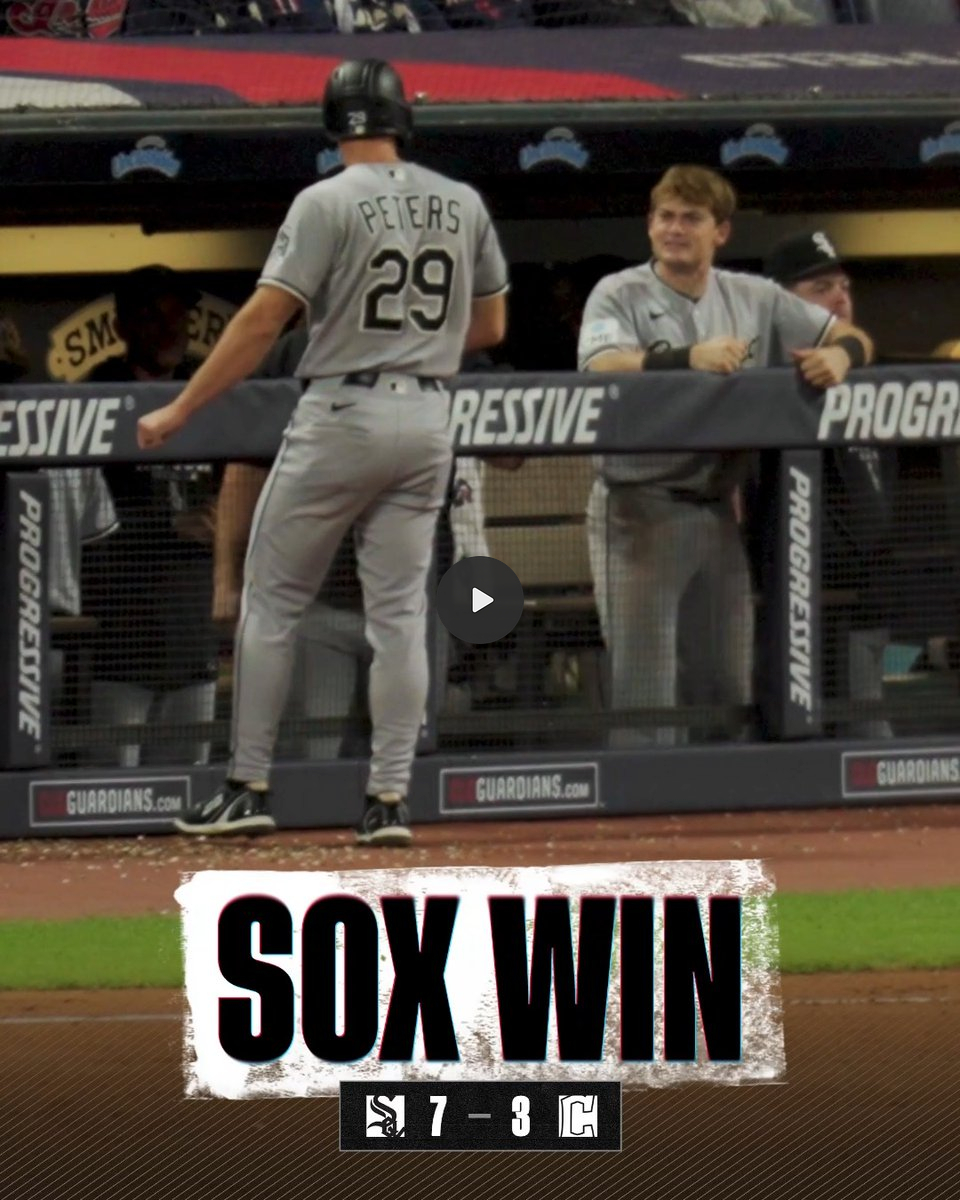
On the White Sox, who beat Cleveland 7–3 on his birthday and posted that they had “gifted Pope Leo XIV a W,” Farrell confirmed the pope still follows the team and then turned baseball into ecclesiology.
Leo “grew up in a house that was divided,” with Cubs fans in the family, “his own mother,” and “he learned how in that family system to live in peace, even with people that you don’t necessarily agree with everything that they say or that they value. And it was something that he now brings to the papacy.”

On the Villanova–Notre Dame doubleheader in Rome on November 1, Farrell committed to being there and said the pope “has not yet been able to commit,” though a papal audience is already planned for the day before.
“He’ll have to be very careful about revealing which team he’s rooting for,” Farrell said. “But we’re all pretty sure that Villanova has a special place in his heart.”
I have spent sixteen months in this newsletter arguing with Catholics who insist the pope’s politics were borrowed from Francis or improvised against Trump, and the book ends that argument. The friar who wrote in 2002 that neoliberalism was “mercilessly forgetting the majority of the human race” had no papacy to protect and no president to answer, and neither did the prior general who wrote about refugees and the death penalty in 2008, or the one who warned Castile in 2013 about centuries of obedience without leadership.
He was talking to his brothers, in rooms where nobody was taking notes for posterity (three of his own friars did the translating), and he said the same things for twelve years. Twenty-four years after that first homily, the cardinals chose him anyway, or perhaps because of it.
Buy this book. Read it with a pencil. Give it to the Catholic in your life who still believes the pope is making it up as he goes.
And if you want a free copy, join our community as a yearly paid subscriber or make a one-time donation of $80 or more, directly from this post, before Friday, September 18, at 11:59 PM PT.
If you’ve been considering joining our community, this is the moment — and this is the book. I’ll explain why below.
At Letters from Leo, we stand with the friar who told his brothers in a South African chapel that the gospel is “one of liberation and freedom,” and with the millions of American Catholics and people of goodwill who believe a Church that has had centuries of obedience is owed, at last, a century of leadership.
The man who asked where the poorest would sleep now asks it from the chair of Peter, and the answer he gets from Washington is a deportation flight.
This is the fastest-growing Catholic community in the country because people are hungry for something deeper than press-release Catholicism. They want a pope with a record, and a community that has read it.
If you believe that hunger matters, and that this papacy deserves a serious American readership grounded in the dignity of every human being, I am asking you to join us.
If you’d like to invest in our mission, here are three ways you can help:
Subscribe as a paid member to receive exclusive posts about the life and formation of Pope Leo and help sustain this newsletter.
Donate with a one-time gift to fuel this project’s mission.
Share this post (and Letters from Leo) with a friend who would read the book.
Paid subscribers go deeper into the friar behind these homilies through our biographical series on Pope Leo’s Life & Formation, our running coverage in Pope Leo Takes On AI, and the Sunday Scripture Reflection Series.
Whether you give $0, $5, $50, $500, $1,000, or more, your presence here matters — no matter your faith or your politics.
Thank you for reading. I’ll see you on the road.

“The vow of poverty, especially for us as Augustinians, is not a statement that it is good to be poor! It is, rather, a declaration on the part of each of us that we want to share all things in common and that we want to live in solidarity with the poor and the needy.”
Hey! No smirk is warranted when announcing Colbert as narrator. He is very devout and was the country’s most public Catholic until, what, a year ago!