


Thank you for reading! Letters from Leo is a reader-supported publication and the fastest-growing Catholic community in the country. To receive new posts and support this movement, consider becoming a free or paid subscriber.
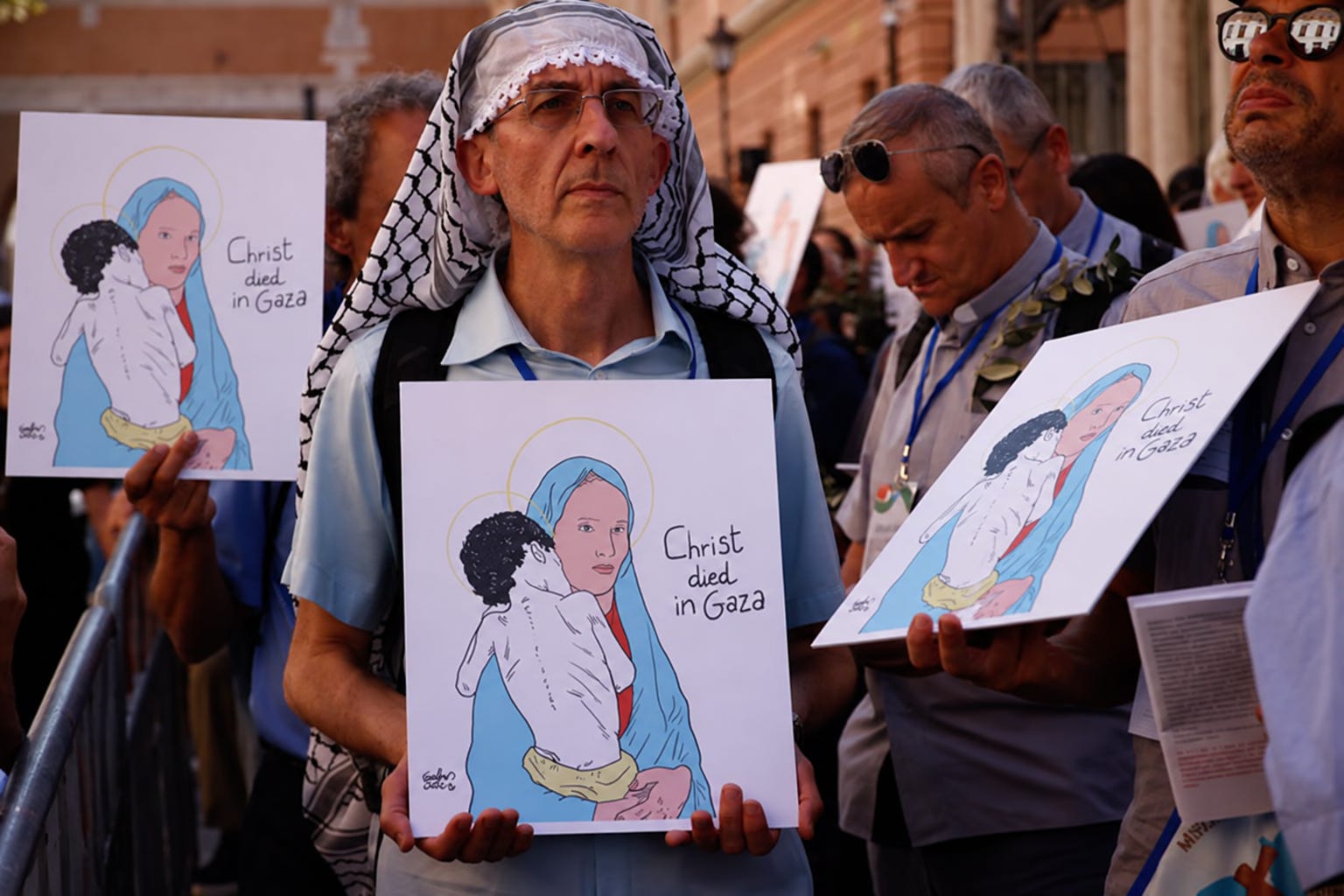
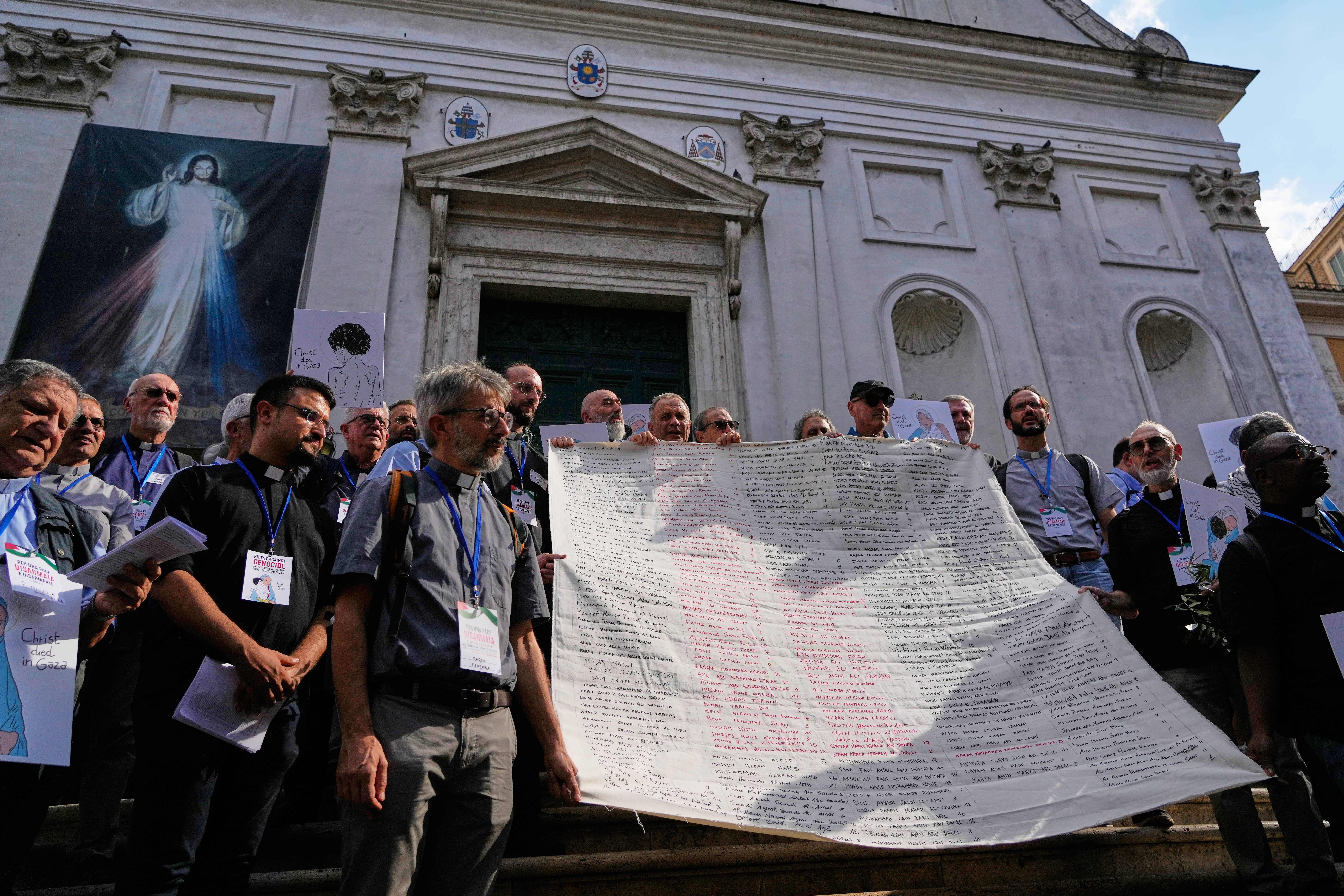
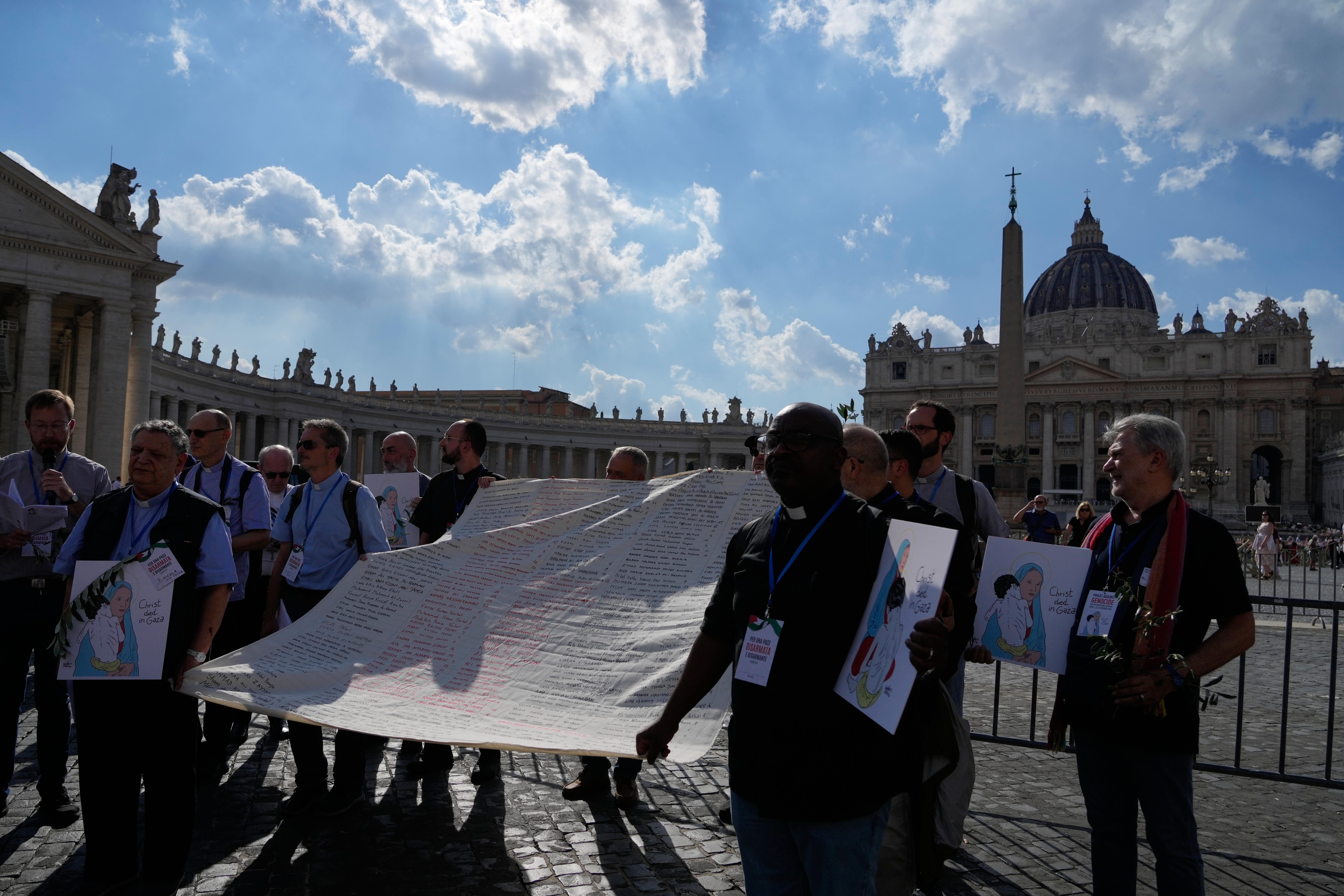
About 150 Catholic priests and nuns walked down Via della Conciliazione toward St. Peter’s Square on Tuesday afternoon, with three bishops in their ranks, carrying olive branches and a long white shroud.
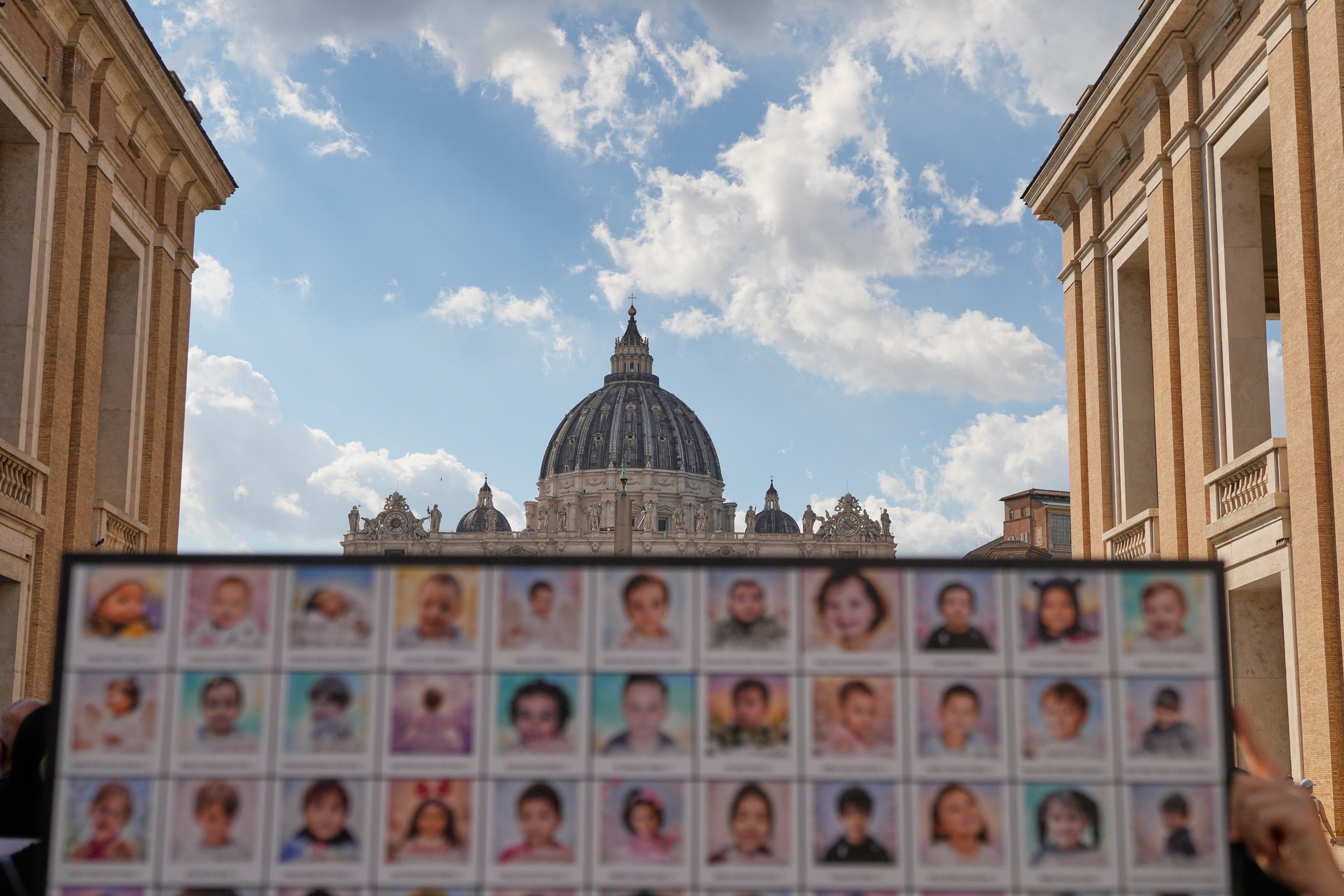
Written across it in red and black ink were the names of roughly 300 Palestinian and Lebanese children who, according to the organizers, were killed by the Israeli military after ceasefires had been declared.
They began inside Santo Spirito in Sassia, the Divine Mercy church a few hundred yards from the basilica, with prayer, and then set out on foot.
The route passed the Vatican and the Palestinian and Lebanese embassies before ending in Piazza Monte Grappa, outside the Rome headquarters of Leonardo, the defense giant in which the Italian treasury holds a 30 percent stake.
Rome has seen Gaza marches before, including general strikes that shut down trains and ports last fall.
What it had not seen was a procession of men in clerical collars, led by bishops, walking the boulevard Mussolini carved through the old Borgo to celebrate the 1929 treaty that made peace between the popes and the Italian state, and pointing the whole way at an arms maker.
The group calls itself Priests Against Genocide (in Italian, Preti contro il genocidio). It formed in August 2025, and a year ago a small group of its priests marched to the Italian Parliament claiming 1,200 members in 34 countries.
Don Rito Maresca, one of the organizers, told ANSA on Tuesday that the network now counts some 2,600 members, 27 bishops and three cardinals among them.
“The Gospel has to put its face on the line,” Maresca said. Neutrality, in his telling, slides into equidistance, and equidistance ends in indifference.
Archbishop Giovanni Ricchiuti, who leads Pax Christi Italy, walked at the head of the line with Bishop Christian Carlassare, the Italian missionary who was shot four times in the legs in South Sudan in 2021, weeks after Pope Francis named him a bishop. Bishop Franco Moscone of Manfredonia marched with them.
Michel Sabbah, the retired Latin patriarch of Jerusalem and the first Palestinian to hold the office, sent a letter to be read aloud. “Here, now, death reigns everywhere,” he wrote, “hatred is multiplied and blood is still shed.”
CNN’s Christopher Lamb followed the priests through the streets around the Vatican.
A pope on the phone every night
The marchers invoked Pope Francis by name, and they had reason to. Beginning on Oct. 9, 2023, two days into the war, Francis called Holy Family Parish, the only Catholic church in Gaza, almost every evening.
He kept calling from the Gemelli hospital with pneumonia in his lungs. His last call came on Holy Saturday night, April 19, 2025, and he died two days later.
“He was concerned about how we were doing, whether we had eaten, about the children,” the pastor, Father Gabriel Romanelli, said afterward. Vatican News released one of those calls, and it shows exactly that: an old man in an armchair, a phone held close to his face, asking two priests in a war zone what they had eaten that day.
Francis matched the calls with words. In November 2024, he wrote that what was happening in Gaza “has the characteristics of a genocide” according to some experts and should be carefully investigated. A month later, after children were bombed and the Latin patriarch was kept out of Gaza, he told the Roman Curia, “This is cruelty. This is not war.” Before he died, he asked that his own popemobile be rebuilt as a mobile clinic for Gaza’s children.
Leo kept the line open
Pope Leo XIV has not let the thread drop.
When an Israeli strike hit Holy Family in July 2025, killing three people and wounding Romanelli, Leo called for “an immediate halt to the barbarity of the war” and, after the Angelus at Castel Gandolfo, invoked the prohibition against collective punishment and forced displacement.
He pressed Netanyahu for a ceasefire when the Israeli prime minister called him, and in September, after the strike on Doha, he phoned the parish.
That same month he told a general audience he felt “profound closeness to the Palestinian people in Gaza, who continue to live in fear and to survive in unacceptable conditions, forced once again from their own lands.” Four days later he said from the Angelus window that there is “no future based on violence, forced exile, and revenge.”
Last November, aboard the papal plane, he called a Palestinian state the “only solution.” In February he turned down a seat on Trump’s Gaza “Board of Peace,” and on Aug. 16 he demanded an end to the violence against Palestinians in the West Bank (MAGA voices answered within hours).
The priests want even more, and they said so. Christopher Lamb noted on camera that Leo has stopped short of the word genocide. In a 2025 interview with Elise Ann Allen, the pope said that the word “is being thrown around more and more” and that the Holy See could not “make any declaration at this time.”
The names are the argument
Tuesday’s march asked the Church’s leadership to say more, and it built that case out of the popes’ own words. The organizers drew their line carefully, telling CNN that they are protesting the actions of Israel’s political leadership and hold “absolute respect for the Jewish people.”
Their statement before the march borrowed two lines from the papal archive: Francis’s “war is always a defeat” and Paul VI’s plea to the United Nations in 1965, “No more war, war never again!”
A shroud of names has a precedent here too. In August 2025, Pope Leo’s envoy helped read aloud the names of Gaza’s dead children during a seven-hour vigil. On Tuesday, priests walked 300 more names past the pope’s front door to the doorstep of a company that sells weapons.
“As pastors, we cannot remain silent,” they wrote. Francis never did, and Leo has spoken again and again. The question the priests left on the pavement of Piazza Monte Grappa belongs to the rest of us.
At Letters from Leo, we stand with the priests who carried those names through Rome, and with every Catholic who refuses to let a dead child in Gaza become a statistic.
Pope Francis picked up the phone nearly every night for a year and a half because he believed a shepherd goes where the sheep are suffering. Pope Leo has kept that line open. The rest of the Church, meaning you and me, has a part to play too.
This is the fastest-growing Catholic community in the country because people are hungry for a faith with a spine, one that prays for peace and then walks it to the door of the men who sell the weapons.
If you believe that witness matters, Catholics and people of goodwill standing for the dignity of every child in Gaza and Lebanon, I am asking you to join us.
If you’d like to invest in our mission, here are three ways you can help:
Subscribe as a paid member to receive exclusive posts about the life and formation of Pope Leo and help sustain this newsletter.
Donate with a one-time gift to fuel this project’s mission.
Share this post (and Letters from Leo) with a friend who might enjoy it.
Paid members get the full archive, including our series on Pope Leo’s Life & Formation and the Sunday Scripture Reflection Series, along with the investigations you won’t read anywhere else.
Whether you give $0, $5, $50, $500, $1,000, or more, your presence here matters — no matter your faith or your politics.
Thank you for reading. I’ll see you on the road.

👏👏👏❤️