“Blasphemous” — Archbishop Farrell Condemns Trump’s War on Immigrants
On the evening America celebrated its 250th birthday, Dublin’s archbishop named anti-immigrant hatred for what it is — while Pope Leo prayed with migrants on Lampedusa.

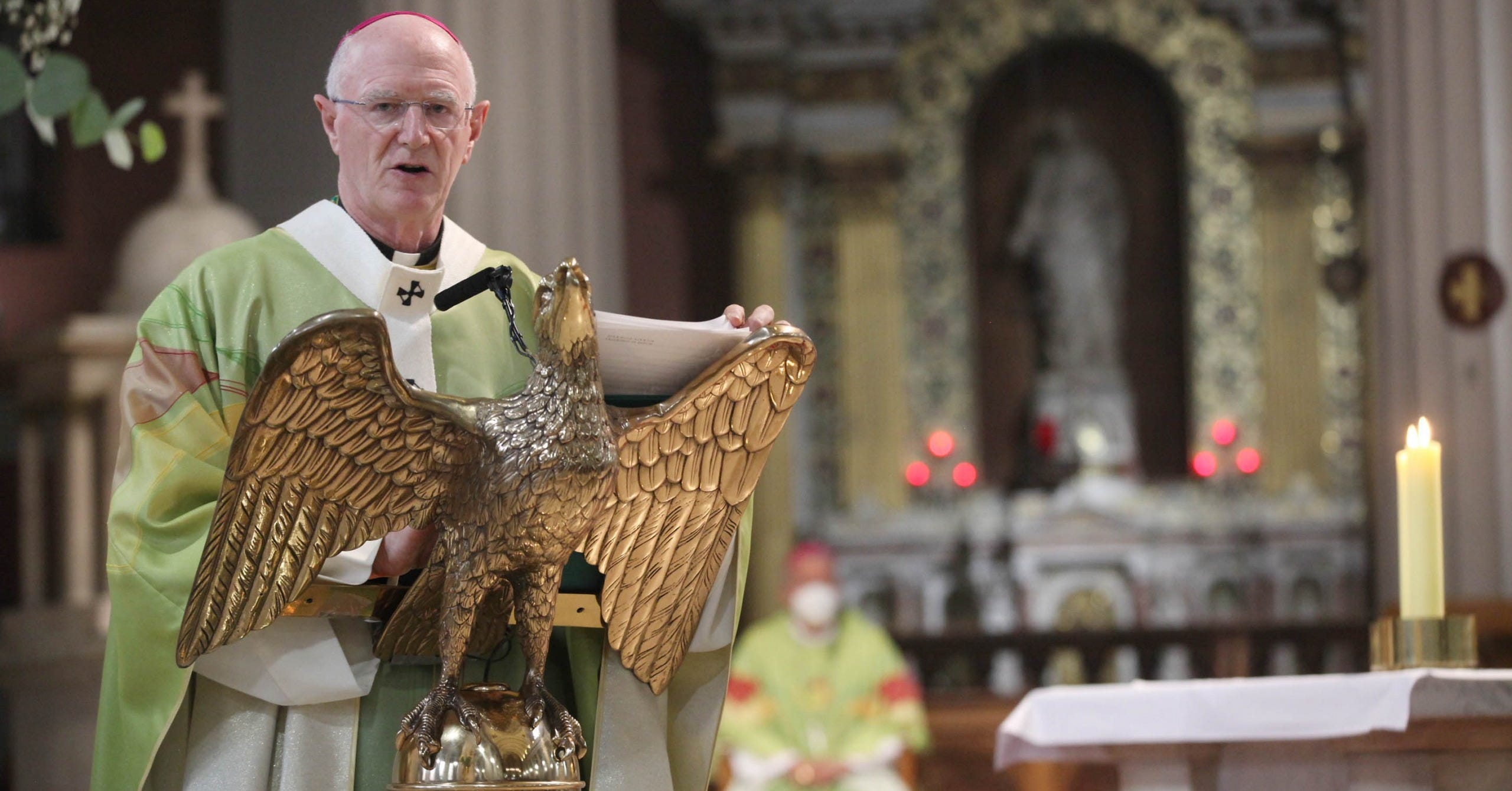
On the evening of July 4, as fireworks lit the American sky and politicians traded tributes to the republic’s founding, Archbishop Dermot Farrell of Dublin stepped into the pulpit of St Mary’s Cathedral and delivered a very different kind of anniversary address.
Refugees and asylum seekers fleeing war and destruction, Farrell told his congregation at the Saturday vigil Mass, are “often exploited by sinister forces who foster hate and division and stir anger and suspicion against all those who have come from overseas to seek asylum.” The tradition of refuge and sanctuary that once defined the American experiment, he said, has been abandoned.
“The great motto of the Republic, E pluribus unum, has been rejected by many through the rejection of diversity and a denial of equal human dignity,” the archbishop said.
The same day, a thousand miles to the south, Pope Leo XIV was standing on the island of Lampedusa — a frontline of the Mediterranean’s migration crisis — praying at the “Door to Europe” memorial for the thousands who have drowned trying to reach safety.

In a letter released from the island, the first American pope called on the United States to welcome immigrants with “compassion and generosity.”
“In every generation, those who have arrived seeking freedom, opportunity and a place to belong have helped to shape the nation’s character,” the pope wrote. To receive them, he said, “is not only an act of charity, but also a recognition of the dignity that belongs to every human person.”
On Lampedusa, Pope Leo met with migrants who had survived the crossing, among them a boy named Leo who had arrived on the island ten years earlier after losing his mother at sea. The boy handed his papal namesake a letter and a ball, asking that it be passed to another migrant child.

Both men spoke on the same day, and the convergence itself carries the message.
Four days earlier, Vice President JD Vance had appeared on Fox News and offered the Vatican a different message. “What I would hope that the Catholic leadership has learned from some of the things that me and Marco and the president have said about immigration is, it’s not just about the dignity of the immigrant,” Vance said on The Ingraham Angle.
The vice president was lecturing the Church on the moral weight of its own social teaching — days before the pope and an archbishop answered from opposite ends of Europe.
Farrell’s voice carries a weight that extends beyond his ecclesiastical rank. Ireland is a country forged by emigration, and the archbishop drew that connection explicitly, asking whether the nation’s own history of displacement — the Famine ships, the coffin boats, the generations who rebuilt their lives in Boston and New York and Chicago — had made it “sensitive to the needs of those who have immigrated from other countries.”
Within living memory, hundreds of thousands of Irish citizens left for the United States, the United Kingdom, and Australia in search of work and stability. The transformation of Ireland from a country that exported its people to a country that receives them has happened within a single generation. The moral questions that transformation raises are exactly the ones Farrell put before his congregation.
Many immigrants in Ireland today were “recruited by employers who need them to generate the economic resources which underpin the prosperity of us all,” Farrell acknowledged. And yet “the streets of our cities and towns have witnessed the mobilisation of hatred and rejection.”
The forces driving that hatred operate across borders. They traffic in the same grievances in Dublin as in Des Moines — stoking fear of the outsider, weaponizing anxiety about economic change, dressing up xenophobia in the language of cultural preservation.
Farrell named what he sees in movements that cloak xenophobia in faith. He called hostility toward immigrants that claims to defend Christianity “blasphemous.”
The word carries the full force of its theological meaning. In Catholic teaching, blasphemy is the deliberate violation of something sacred — the use of God’s name to sanctify what God condemns.
When politicians and media figures invoke Christian civilization to justify the deportation of families or the demonization of asylum seekers, the archbishop of Dublin has placed a theological name on what they are doing.
That judgment aligns with the consensus building across the global Church. Last year, the U.S. bishops voted with near-unanimity to oppose indiscriminate mass deportation — a position Cardinal Cupich reinforced from Chicago by publicly condemning the administration’s immigration raids.
Pope Leo has called the treatment of immigrants “inhuman.” What Farrell added from Dublin was the theological category for the political movement fueling the crackdown.
The archbishop also embedded his immigration critique within a moral framework that resists easy partisan sorting. He expressed concern over “a seeping culture of death reflected in the normalisation of abortion and assisted suicide, as well as the embracing by nations of a power paradigm that seeks to dominate through the dynamic of war and fear.”
Of course, the Catholic position on human dignity does not align neatly with either American party. What Farrell articulated — and what the Church insists on — is that every human life, from conception to the border crossing to the deathbed, demands protection.
Over the past few weeks, the picture has become unmistakable. Pope Leo defended the diversity of a nation of immigrants on the eve of the 250th anniversary, then walked the shores of Lampedusa on July 4 to pray for the dead. That same evening, from the pulpit of a Dublin cathedral, Archbishop Farrell told the world what the American motto actually means.
The Trump administration’s deportation apparatus continues to expand, with Vance openly dismissing the Church’s moral authority on immigration. Across Europe, anti-immigrant movements borrow from the same playbook.
The Catholic Church — in Rome, in Dublin, in Chicago — is answering with a clarity born of two thousand years of teaching. Sanctuary has always been a command of the Gospel. The archbishop of Dublin, standing in the cathedral where Ireland’s faith has been professed for centuries, gave the violation of that command the name the Church’s tradition demands: blasphemy.
At Letters from Leo, we stand with Archbishop Farrell and the Catholic communities — from Dublin to Chicago to Rome — who refuse to let the Gospel be weaponized against the vulnerable.
When politicians invoke Christian civilization to justify the deportation of families and the demonization of asylum seekers, we call that what the Church’s own tradition calls it: blasphemy.
This community exists because people across this country and around the world are hungry for a Church that lives its own teaching — that protects human dignity at the border, in the womb, at the deathbed, and everywhere in between.
That hunger is why Letters from Leo is the fastest-growing Catholic community in the country, and why readers from every background are joining every day.
If you believe this movement matters — Catholics and people of goodwill standing for human dignity against the forces Archbishop Farrell named — I am asking you to join us.
If you’d like to invest in our mission, here are three ways you can help during this critical time:
Subscribe as a paid member to receive exclusive posts about the life and formation of Pope Leo and help sustain this newsletter.
Donate with a one-time gift to fuel this project’s mission.
Share this post (and Letters from Leo) with a friend who might enjoy it.
Paid subscribers receive exclusive reporting on Pope Leo’s Life & Formation, investigations into the Epstein-Bannon network, and the Sunday Scripture Reflection Series.
Whether you give $0, $5, $50, $500, $1,000, or more, your presence here matters — no matter your faith or your politics.
Thank you for reading. I’ll see you on the road.


Thank you, Christopher! I had not seen this reporting anywhere else!
I'm so grateful you're doing this reporting here, Christopher.
