


Thank you for reading! Letters from Leo is a reader-supported publication and the fastest-growing Catholic community in the country. To receive new posts and support this movement, consider becoming a free or paid subscriber.
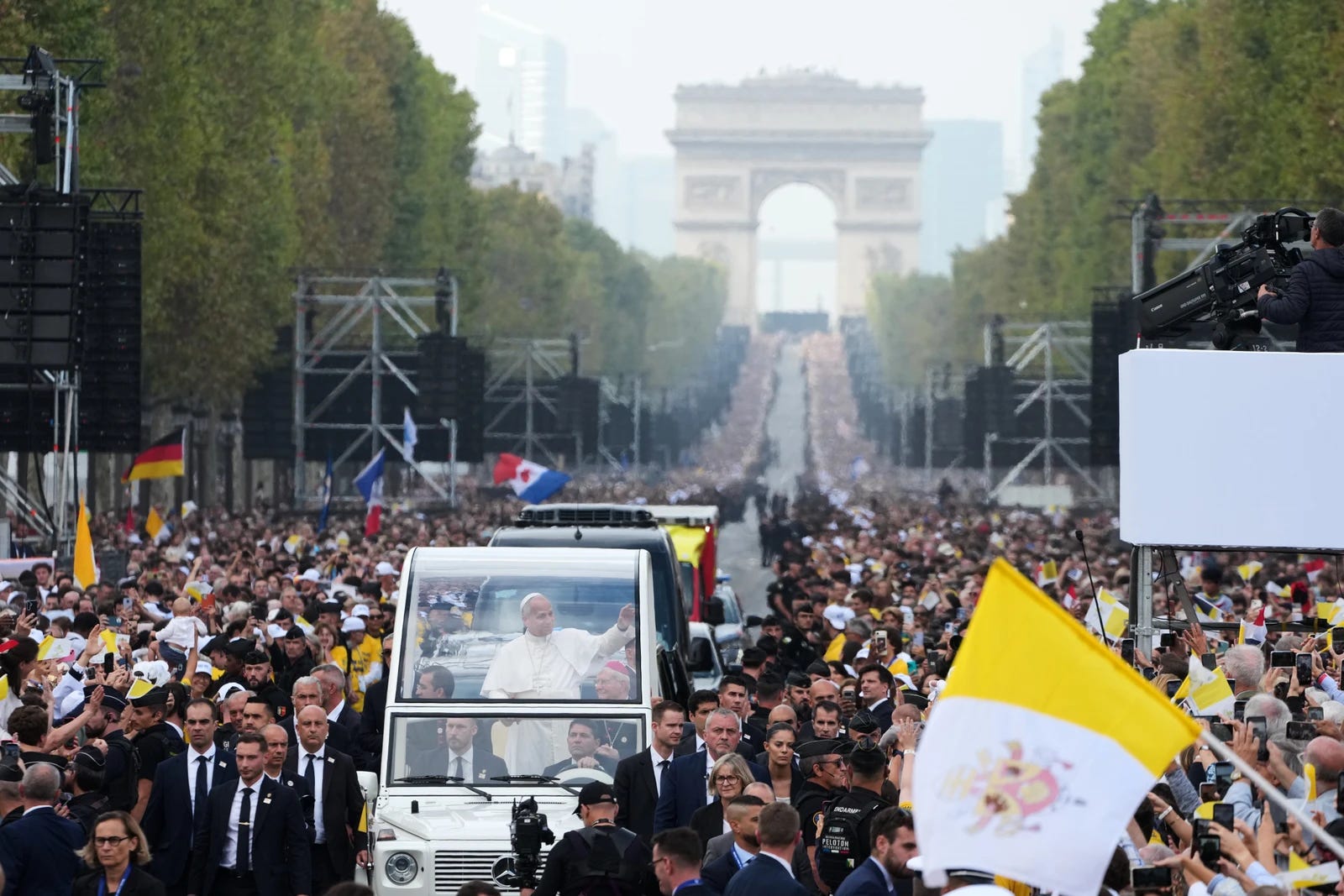
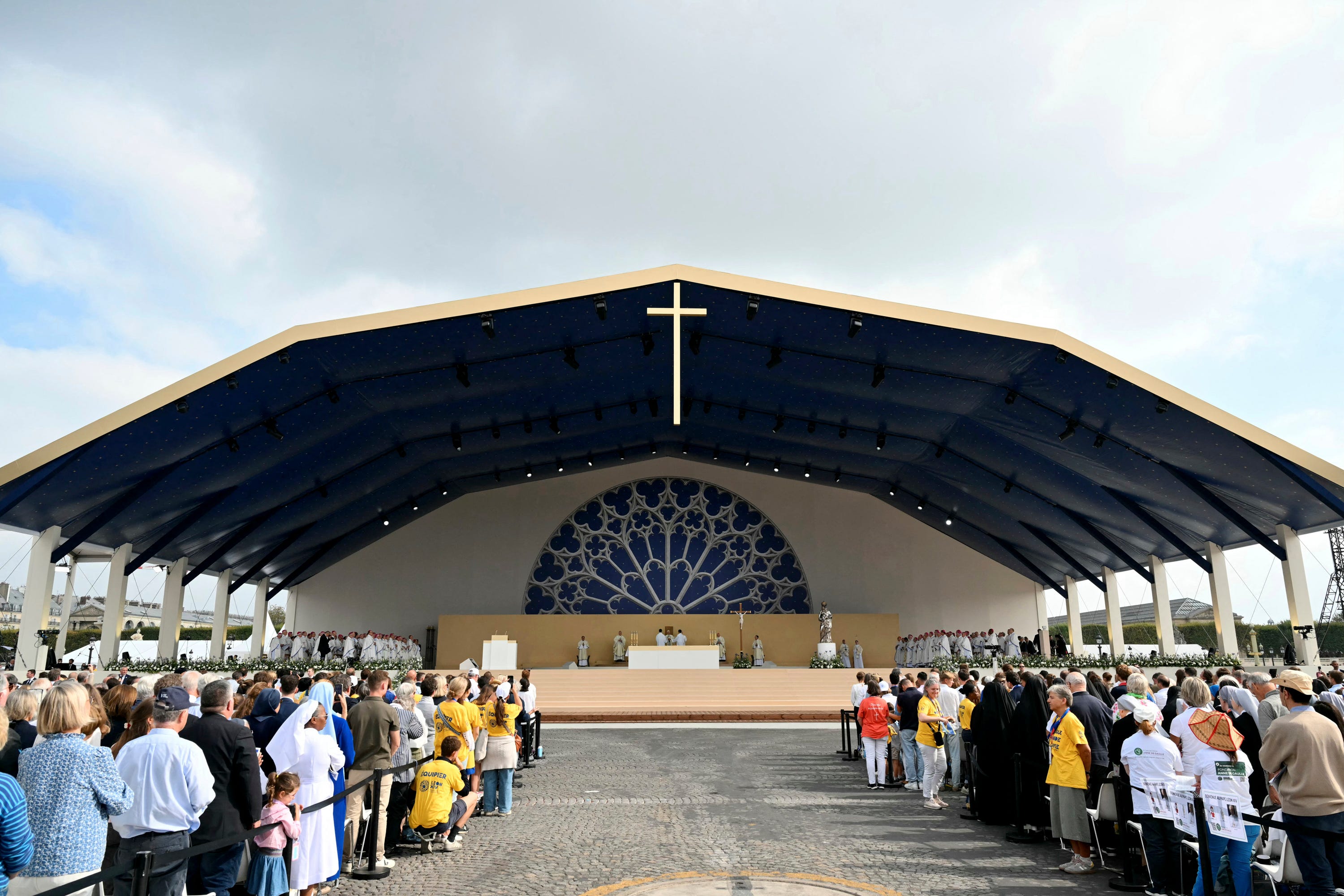
Pope Leo XIV celebrated Mass with an estimated 800,000 people at the Place de la Concorde on Saturday afternoon, the largest crowd of his four-day journey to France and roughly 200,000 more than had registered before organizers closed sign-ups earlier this month.
Brigitte Macron, Prime Minister Sébastien Lecornu, and Marine Le Pen attended, Reuters reported.
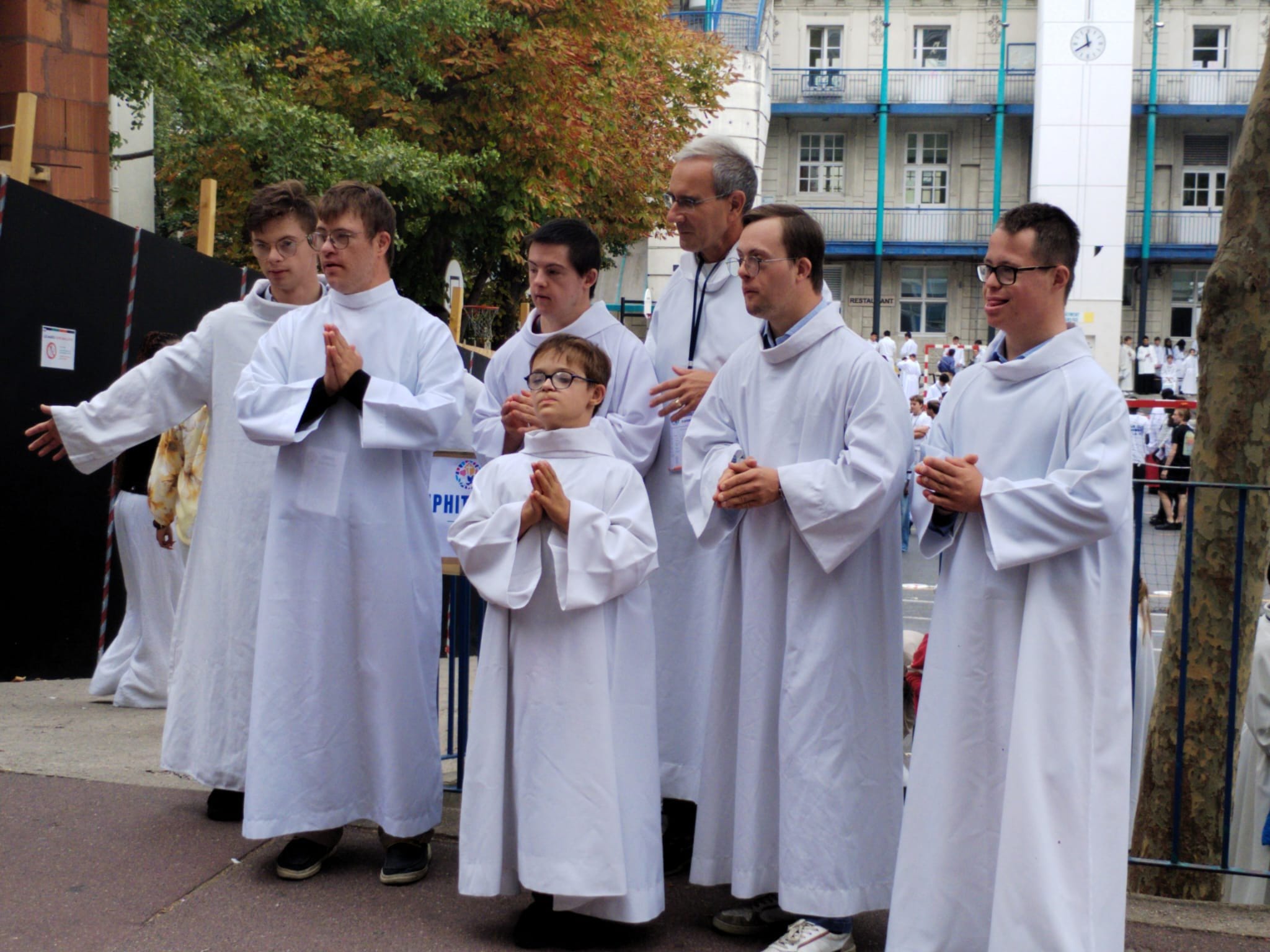
Serving at that altar, as I reported earlier this week, were six young people with Down syndrome.
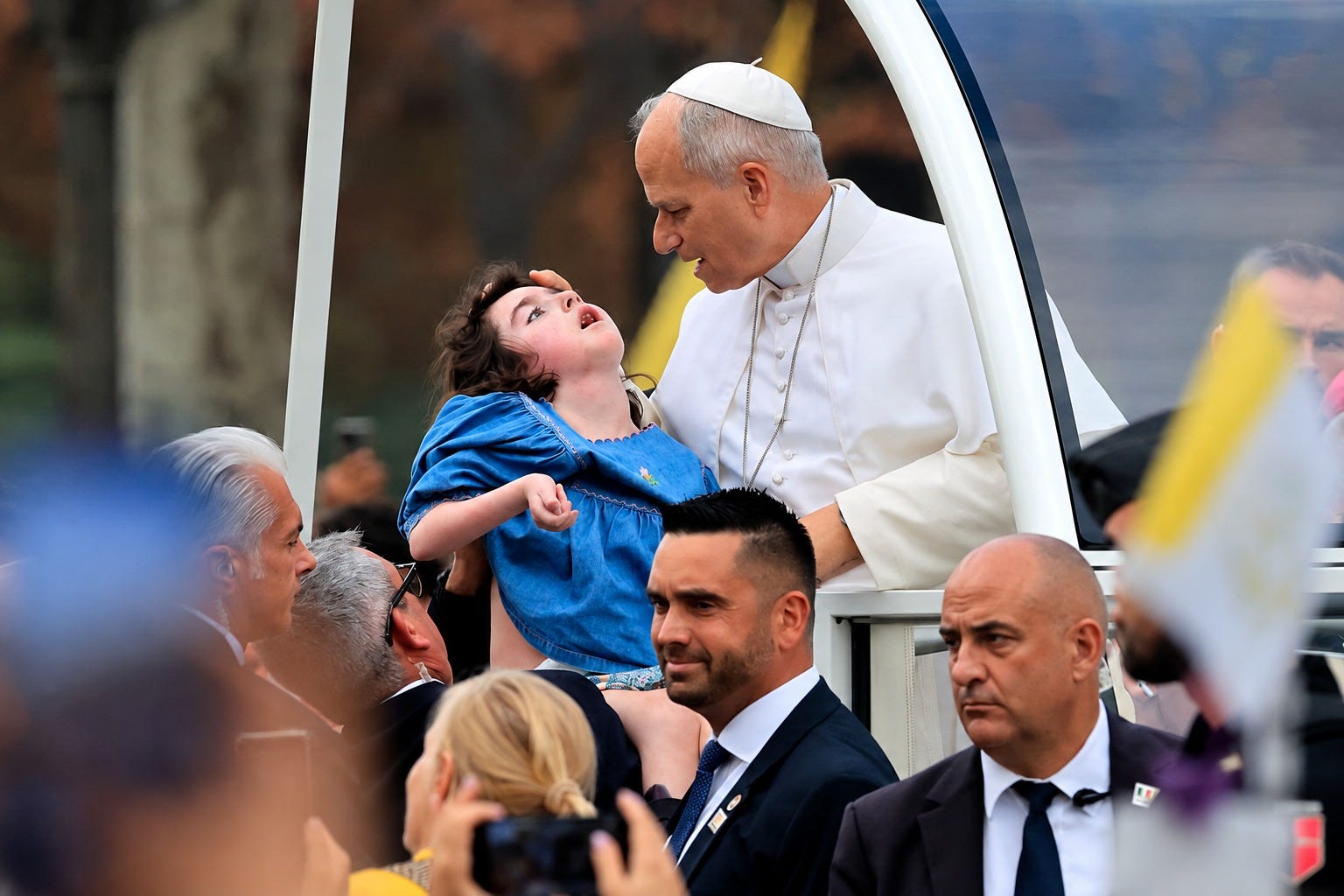
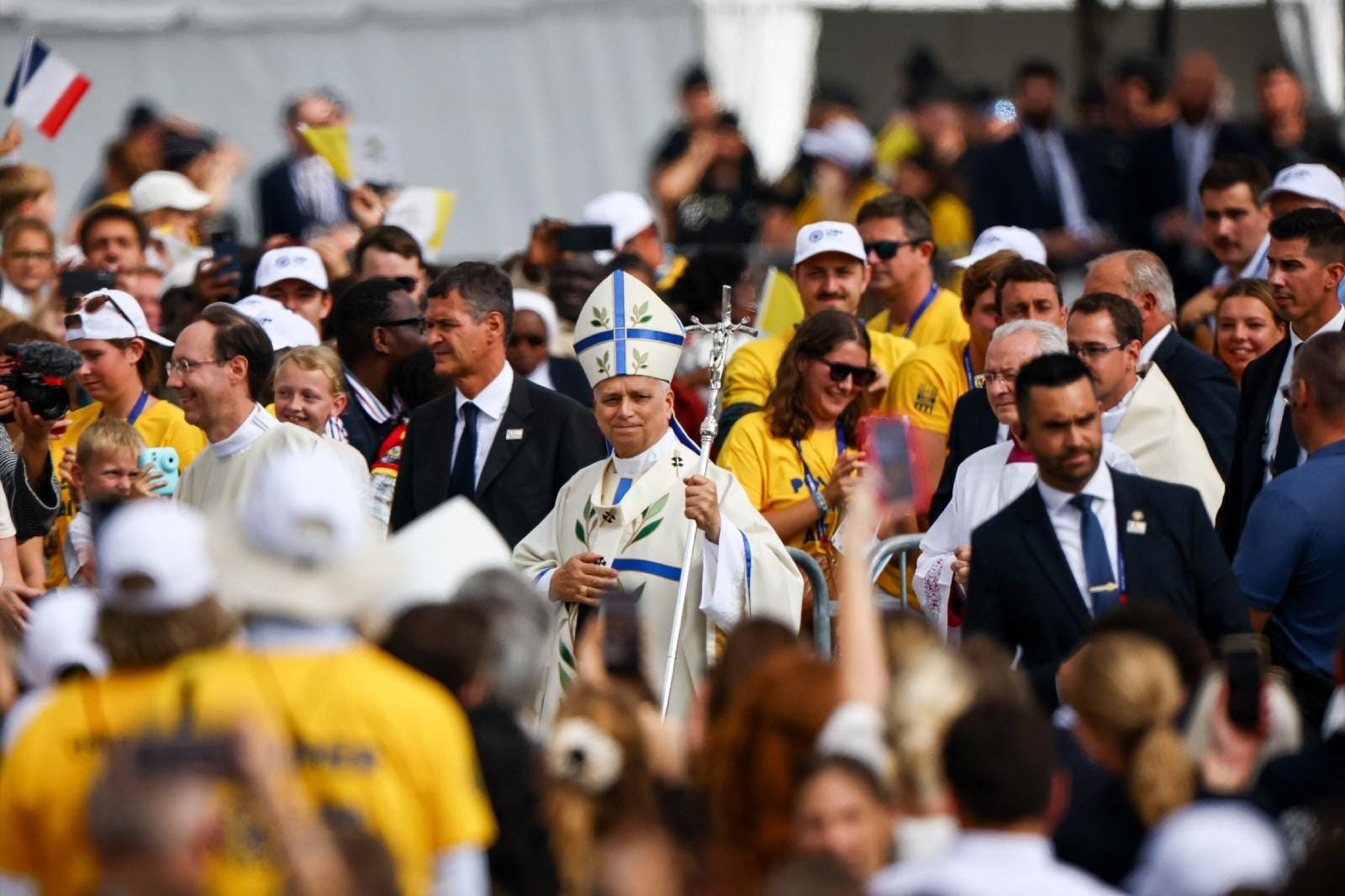
The popemobile ran two kilometers down the Champs-Élysées before the liturgy began, stopping again and again so the pope could bless the children and the people with disabilities that volunteers lifted toward him, while the crowd chanted “Leo, Leo.”
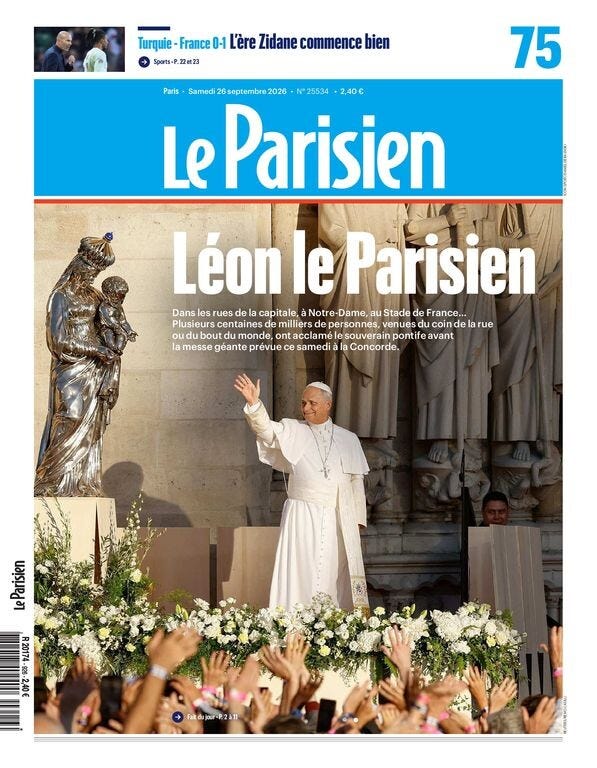
Le Parisien had claimed him before the Mass began. Saturday’s front page carried two words over a photograph of the pope waving outside Notre-Dame, “Léon le Parisien,” and a subhead counting the hundreds of thousands who had cheered him “from around the corner or from the ends of the earth.”
The two words mean Leo the Parisian, and the paper meant them the way a city means them about a neighbor: he is one of us.
The last American whose arrival this city waited for like this was John F. Kennedy in the spring of 1961, when Kennedy left, introducing himself as the man who had accompanied Jacqueline Kennedy to Paris.
Though Benjamin Franklin’s fans might contest it, I think it’s now fair to say that Leo XIV is the most famous and most popular American to ever set foot in Paris.
The crowd is the headline, and it deserves to be. The day that produced it, though, began in a much smaller room in the 18th arrondissement, and the small rooms are what explain the square.
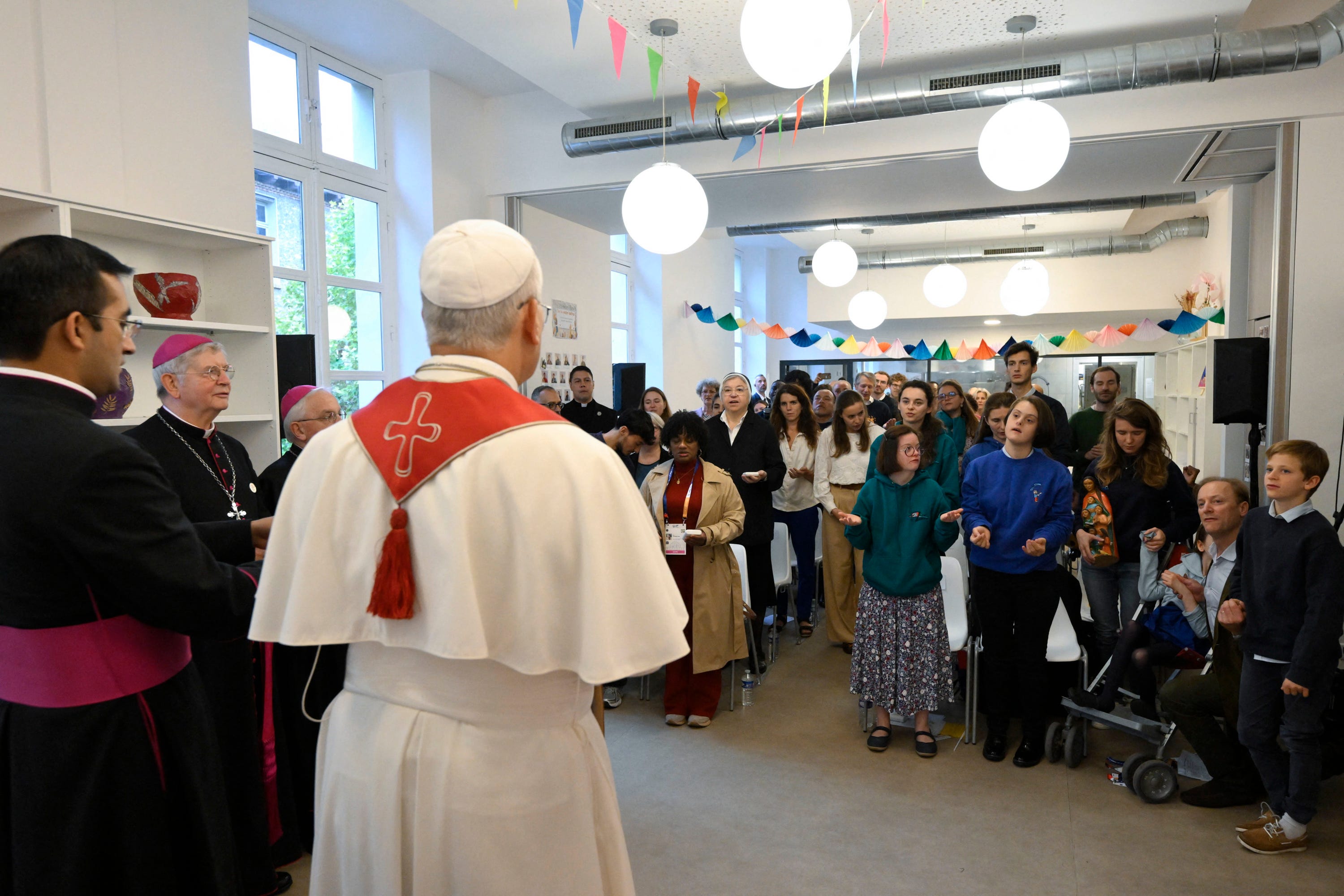
Maison Bakhita is a center the Archdiocese of Paris opened in September 2021 to welcome migrants regardless of their legal status, and Leo arrived there on its fifth anniversary. Two Scalabrinian Sisters live on site.
Since it opened, the house has received more than 2,500 people from 84 nations for French classes, job placement, sewing and cooking workshops, day care, and counseling, with a staff of five and about 100 volunteers.
Two of those people spoke before the pope did.
Blessing, a 31-year-old Nigerian woman who escaped exploitation with the help of a Catholic charity and now works in a restaurant, told him that “without God, nothing is possible.” Meysam, a 35-year-old Afghan who learned French and sewing in the house, now walks the streets twice a week to find others who are where he once was.
“It is a way of giving back what I myself received,” he said.
Leo then spoke. His words deserve our careful attention.
“When we look closely,” he said, “the history of the Church and of humanity is not written by those who give the impression of winning by imposing themselves and ‘dominating the room,’ but by those who ‘make room,’ initiate processes of peace, build trust and encourage life.”
He then quoted his own apostolic exhortation on the poor, Dilexi Te. “For Christians, the poor are not a sociological category, but the very ‘flesh’ of Christ,” he said. “It is not enough to profess the doctrine of God’s Incarnation in general terms. To enter truly into this great mystery, we need to understand clearly that the Lord took on a flesh that hungers and thirsts, and experiences infirmity and imprisonment.”
“No one is so poor as to have nothing to give; no one is so rich as to have nothing to receive,” Leo argued.
Meysam, out on the streets of Paris looking for the next person who needs what he was given is living proof of that.
From the migrant house the pope went to the Institut Catholique de Paris to meet the adults France has been baptizing in numbers that, he told them, “far surpass statistical and sociological analysis.”
The French bishops counted 13,234 adult baptisms this Easter, up 28 percent from 2025 and more than triple the 4,124 of a decade ago, plus another 8,100 adolescents.
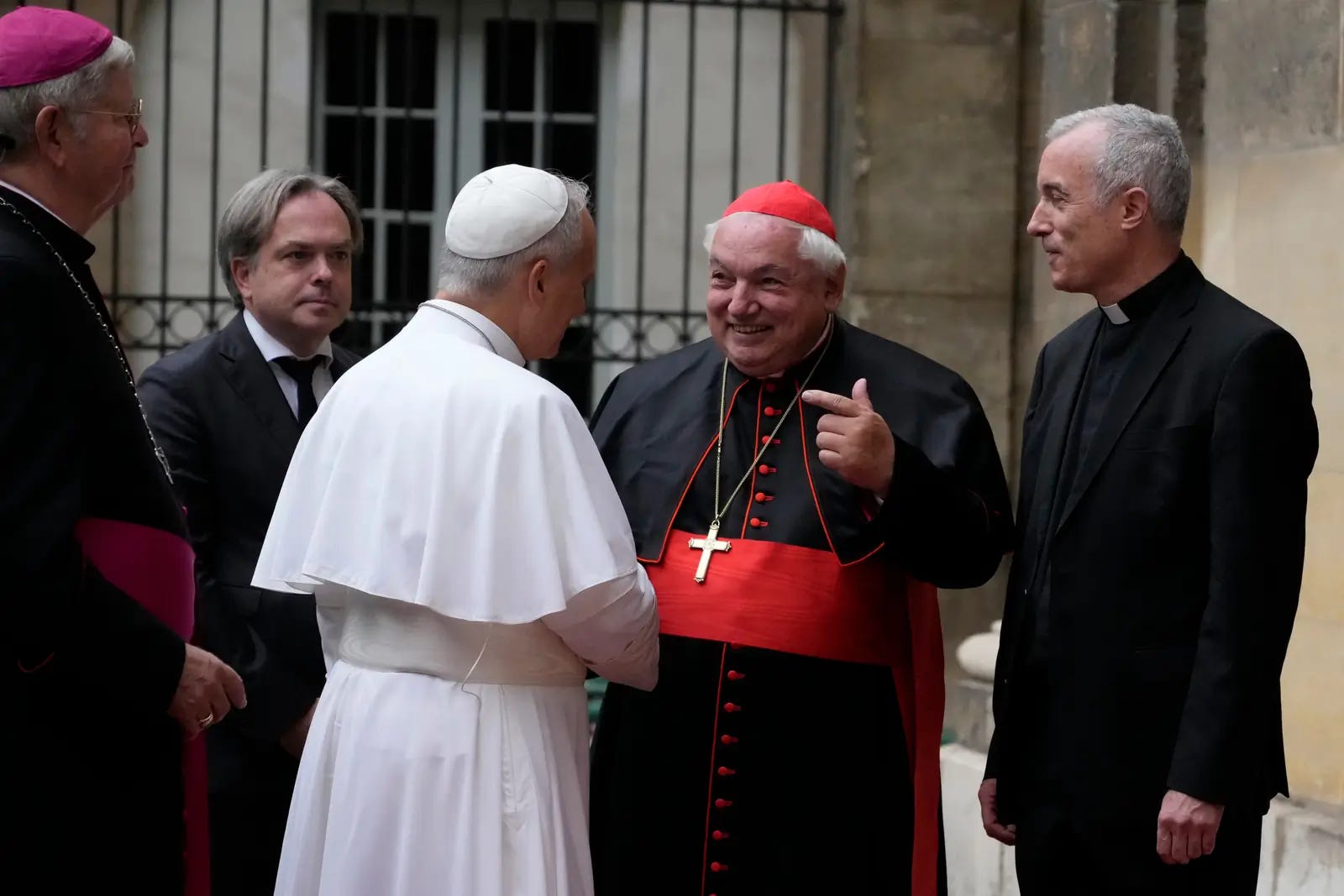
Waiting for him there was Archbishop Laurent Ulrich of Paris, who handed him the working document, the Instrumentum Laboris, of the Provincial Ecclesial Assembly of Île-de-France.
The bishops of the Paris region built that text from consultations with roughly 45,000 lay people, and the national assembly opens its first session on next month in the same building.
Leo called it “an expression of an ecclesial journey involving the People of God, characterized by mutual listening and synodality.”
That is the method Pope Francis built the synod around, and Leo told his own Diocese of Rome just last week that it is the ground the Church will keep walking on.
His instruction to the catechists was mostly about temperament. “We are called to reach out to our brothers and sisters,” he said, “rediscovering God’s own way of acting, which is characterized by closeness, compassion and tenderness.
“With pastoral tenderness and fraternal charity, we must recognize, welcome and protect the small flame that the Holy Spirit has kindled in the darkness of the night, the tiny seed that strives to grow even amid the thorns.”
The Church, he said, “must not become complacent or naively optimistic.” Some converts arrive with a simple thirst for meaning, others “burdened by painful experiences, situations of loneliness, and profound difficulties,” and the same welcome has to hold both.
“It is a journey in which we must respect each person’s pace, proceeding gradually and carefully with fraternal accompaniment. It means adopting the style of ‘walking together.’”
Leaving his prepared text, he added in French that even this is not enough, because the newly baptized are not called only to receive. Their faith, he said, is a treasure offered to the Church in France and to the universal Church.
Accompaniment was one of Francis’s favorite words. He gave it a chapter in Amoris Laetitia (“Accompanying, Discerning and Integrating Weakness”) and told the whole Church in Evangelii Gaudium to learn “the art of accompaniment,” which he described as removing our sandals before the sacred ground of the other.
Critics on the Catholic right spent a decade treating the word as a euphemism for going soft. What Paris showed on Saturday is a pope using it as his core program for growing the universal faith of the apostles.
Nobody at the Concorde heard anything resembling a victory speech.
The rebirth on display in France, with 21,000 people entering the Church in a single Easter, is being assembled through the accompaniment of fellow believers and doers of the faith.
Leo said as much when he told the catechumens that the Church in France should see itself as being “in a state of initiation,” a body still learning, alongside the people it is teaching.
By the time he reached the altar under the obelisk, he was ready to say where all of this energy emanates from.
“Seeing you gathered here, my brothers and sisters, heirs to France’s long and beautiful history of faith, I say to you: drink from the source that is the pierced heart of Jesus,” he preached.
“Do not keep this faith in Jesus Christ to yourselves. Let it overflow, so that those you meet may be refreshed and their thirst satisfied. You are called to bring hope wherever discouragement and spiritual dryness prevail.”
He was candid about what those lives look like from the inside.
“They are fragile, vulnerable and destined to pass through death,” he said, “yet they are also wonderful and miraculous, capable of being renewed through our relationships and of opening themselves to true love.”
Quoting Origen, he told the crowd that whoever drinks from Christ becomes “wells, springs and rivers for others.”
This is a journeying faith, whatever 800,000 people in the square where Louis XVI was guillotined will look like on the front pages tomorrow.
The pope who drew them spent the morning with a Nigerian restaurant worker and an Afghan street volunteer, then with a room full of adults who are working towards entering the faith during the Easter sacraments.
By nightfall he will be praying at the grotto in Lourdes. The Church he leaves behind in Paris has been told, in three rooms of very different sizes, that the way back for Christianity in the West runs through the people it too often has been walking past.
At Letters from Leo, we stand with Blessing and Meysam, with the 21,000 people France baptized this Easter and the countless others of goodwill who believe that a Church is measured by whom it walks beside.
Eight hundred thousand people came to the Place de la Concorde on Saturday to hear a pope tell them that the poor are the flesh of Christ, and that tells you what people are hungry for.
They are hungry for a faith that makes room instead of dominating it, and for a Church that respects the pace of every person who approaches its door. That hunger is why this community has become the fastest-growing Catholic movement in the country.
If you believe this movement matters — Catholics and people of goodwill standing for a Church that goes out to meet people where they are — I am asking you to join us.
If you’d like to invest in our mission, here are three ways you can help:
Subscribe as a paid member to receive exclusive posts about the life and formation of Pope Leo and help sustain this newsletter.
Donate with a one-time gift to fuel this project’s mission.
Share this post (and Letters from Leo) with a friend who might enjoy it.
Paid subscribers receive our biographical series on Pope Leo’s life and formation, our exclusive investigations, and the Sunday Scripture Reflection Series.
Whether you give $0, $5, $50, $500, $1,000, or more, your presence here matters — no matter your faith or your politics.
Thank you for reading. I’ll see you on the road.

What beautiful examples by the pope's actions
I'm sure this was as exciting for the French as it was for us Chicagoans when Pope John Paul II said Mass in Grant Park in 1979. I remember the feeling of love that wafted through our city for days afterward. I wish the same for the French.