



Thank you for reading! Letters from Leo is a reader-supported publication and the fastest-growing Catholic community in the country. To receive new posts and support this movement, consider becoming a free or paid subscriber.
Pope Leo XIV boarded a Peruvian Air Force Mi-17 helicopter in Chiclayo on Saturday morning and flew about 40 minutes east, over the first ridges of the Andes, to the mountain town of Santa Cruz de Succhabamba, more than 6,000 feet up. A Vatican photographer caught him with his face close to the window, watching the slopes go by, and Peruvian Air Force video shows him climbing up into the cockpit to ride, headset on, between the two pilots.
He used to make that trip on the ground.
As bishop of Chiclayo, Robert Prevost drove a Mahindra 4x4 pickup up into the highland parishes of his diocese, to Cañaris, Incahuasi, Uyurpampa and Santa Cruz itself. Where the road gave out, he got on a horse.
Tens of thousands of people were waiting for him on the town’s esplanade for the 11 a.m. Mass, and some had slept there, a day after half a million people welcomed him back to Chiclayo.
His last Mass in Santa Cruz was on Sept. 28, 2022, for the town’s patron, the Señor del Costado, and before he left for Rome he promised to come back. Standing before them again, he called it “a very big dream the Lord has allowed me.”
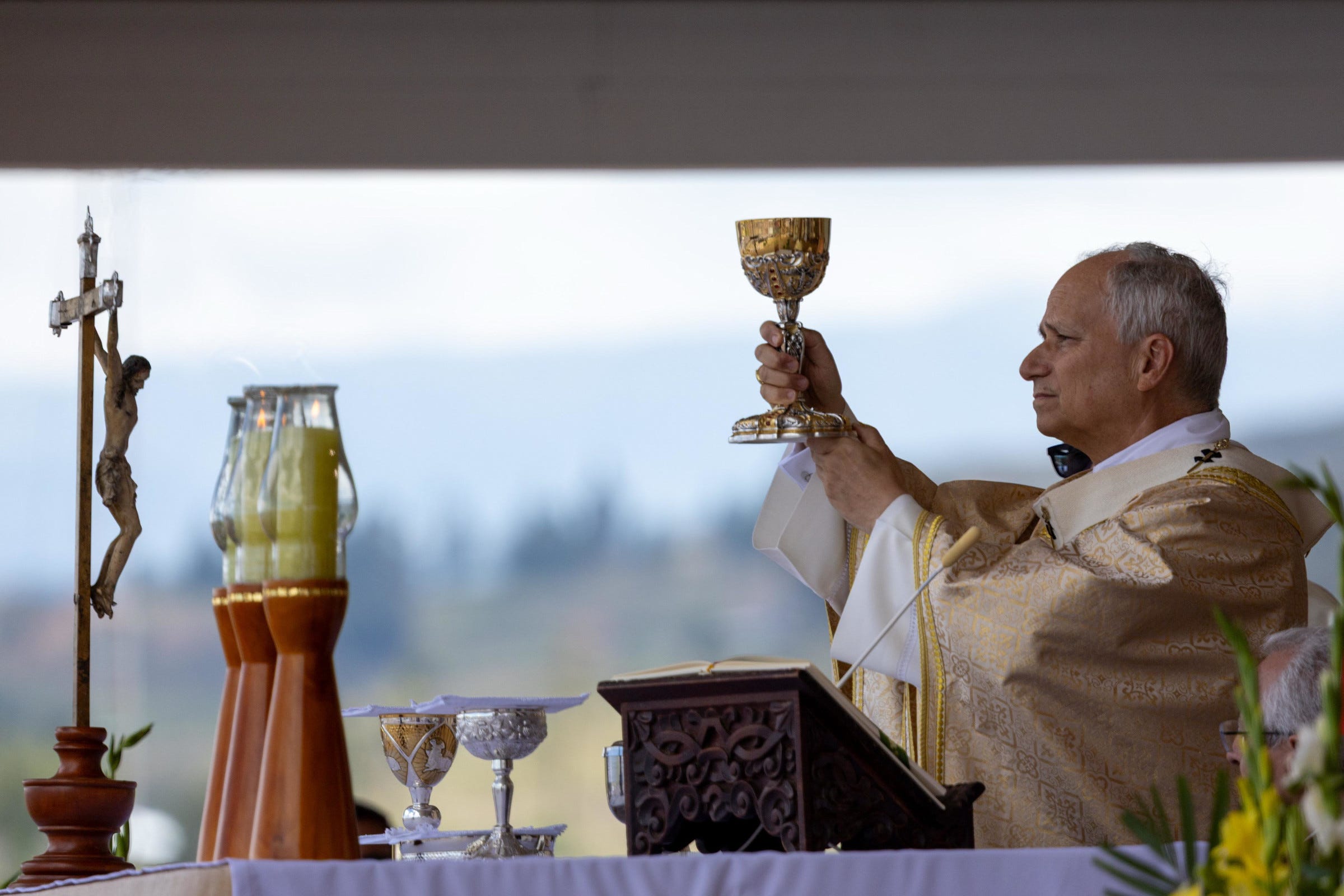
“The Lord knows the roads you travel,” he told the campesinos, “the fatigue, the worries, the challenges you face.”
The man saying it has traveled a few of those roads himself, and on one of them, in 1998, he had to get creative.
The windshield at 13,000 feet
That year, Father Robert Prevost was a 42-year-old Augustinian forming young men for the priesthood in Trujillo, on Peru’s northern coast. He was at the wheel of a combi, the boxy minibus Peruvians ride everywhere, packed with seminarians bound for a priestly ordination in Apurímac.
The route climbs past Pampa Galeras, a vicuña reserve in Ayacucho that sits more than 4,000 meters (roughly 13,000 feet) above sea level. Up there, the windshield froze solid.
Prevost looked at the glass and announced his solution: “Someone has to urinate on the windshield.”
One seminarian volunteered. The ice gave way, and the combi went on to Apurímac. (I first wrote about the episode for this community last year, and it still makes me laugh.)
There was a lesson underneath the joke. Prevost taught the seminarians he formed that a missionary has to be self-sufficient, and that he should know how to change a tire, check a spark plug and understand an engine, because that is how a priest reaches the most forgotten places.
The pickup and the river
He practiced what he taught. The Diocese of Chiclayo chose the Mahindra in December 2015, the year he became bishop, because the diocese is huge and much of it is hard to reach. Fr. Aarón Meca Puse, a priest who now helps look after the truck, says Prevost could fix it himself when it broke down.
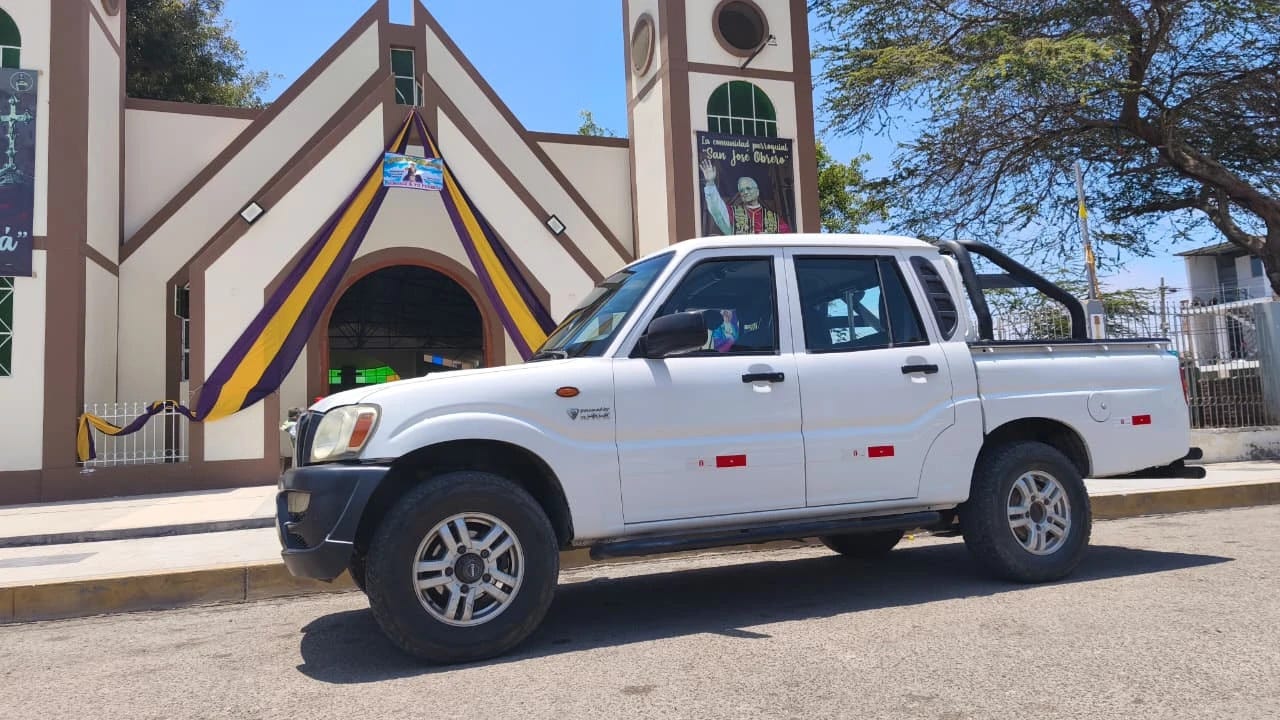
Meca described the mountain roads plainly. “Sometimes there is only one lane,” he said. “On the left is the mountain, and on the right is the abyss.”
In the rainy season, the tires slide.
In 2023, shortly before Prevost left for Rome, a newly ordained priest was waiting in Incahuasi to celebrate his first Mass, and the rains had swollen the La Leche River across the route. The bishop drove in first and crossed. The young priest’s verdict, as Meca remembers it, was simple: “My bishop can make it to the other side.”
Prevost also taught both of his secretaries, Fr. Jasson Sempertegui and Fr. Edgar Rimaycuna, how to drive. He still fixes things for the people he loves; the pope plays tech support for his brother John.
The horse
Where the Mahindra could not go, a horse could. A photograph the diocese published of Prevost riding through the mountains of Incahuasi went around the world in the days after the conclave, and it was no stunt. Fr. Bernardino Gil Hernández, who worked beside him as a vicar for eight years, says Prevost visited every one of the diocese’s 50 parishes, “starting with the most remote,” and preached in places a priest could reach only on horseback.
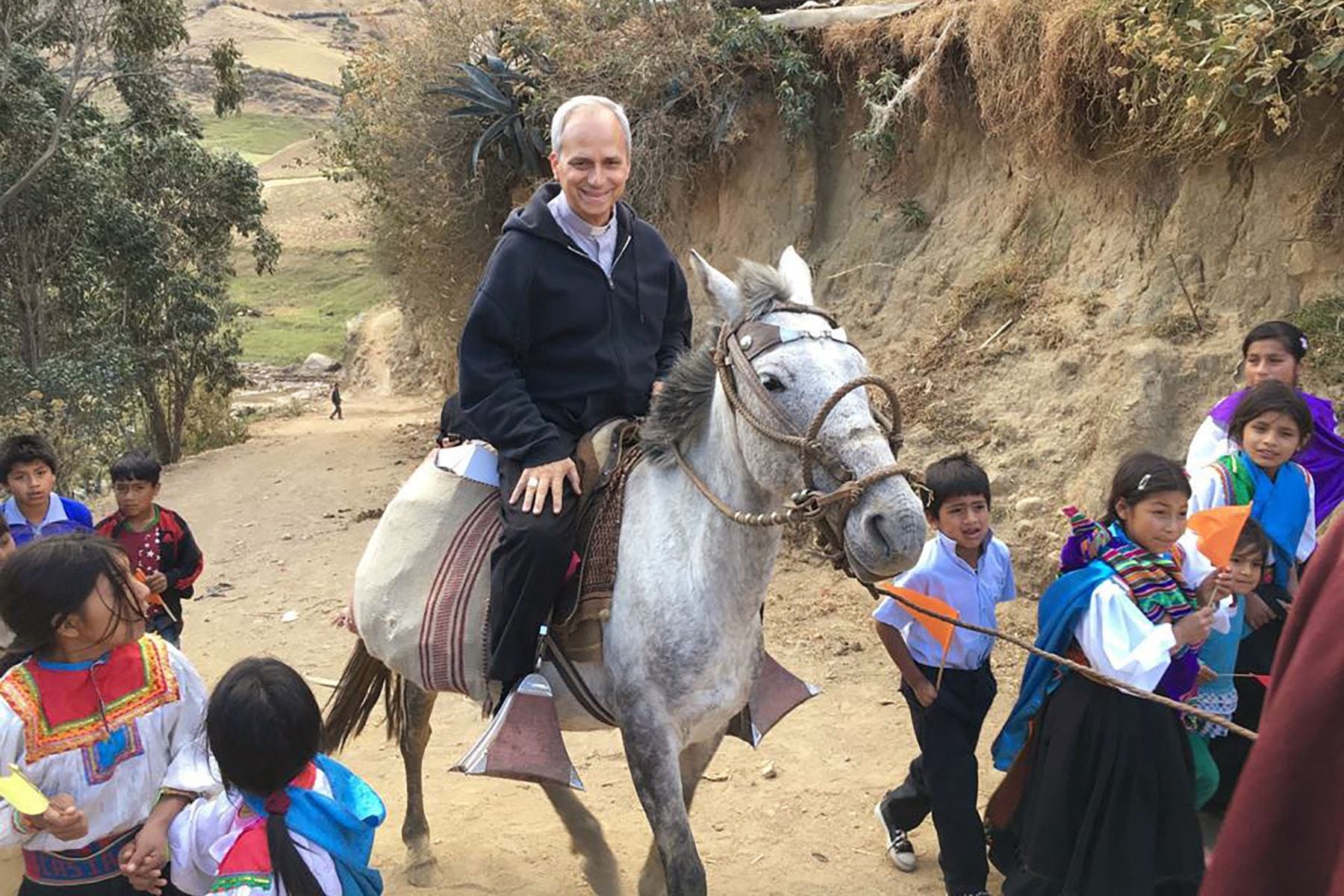
Fray Wilson Posligua, an Ecuadorian Augustinian, remembers the same habit from Cajabamba: “This was the most common and natural thing, getting on a horse to reach the most remote communities.” Prevost joked about it himself in a 2023 homily, a month after he left Peru, telling a congregation in Italy that bishops usually visit their parishes by car, “but there, they go on horseback.”
What the road teaches
None of this is folklore for its own sake. A Church that goes only where the pavement goes ends up serving only the people who live beside it, and the campesinos of Cajamarca have always lived past the end of the pavement. Prevost’s instruction about tires and spark plugs was pastoral theology in a mechanic’s vocabulary.
A priest who can’t get up the mountain can’t baptize the baby who lives at the the top of it, or say the funeral Mass for that baby’s grandmother.
The seminarians in that frozen combi learned something else, too. Their formator didn’t treat dignity as a thing to protect from the mountain. A young man in Apurímac was waiting to be ordained, so Prevost found the quickest honest fix and laughed about it.
Prevost borrowed a line from St. Augustine for the seminarians he met later as a bishop: “For you I am a bishop, but with you I am a Christian.” One of those seminarians says Leo has started repeating it again as pope. In the Andes, the “with” meant sharing the cold and the mud.
American politics runs on the opposite instinct. Its leaders reach ordinary people through a screen or a motorcade window, and they rarely spend a night anywhere the road is bad. Leo built his authority by showing up in the places nobody else would drive to, which is part of why the people of Santa Cruz chanted “The pope is from Santa Cruz!” on Saturday, claiming him as one of their own.
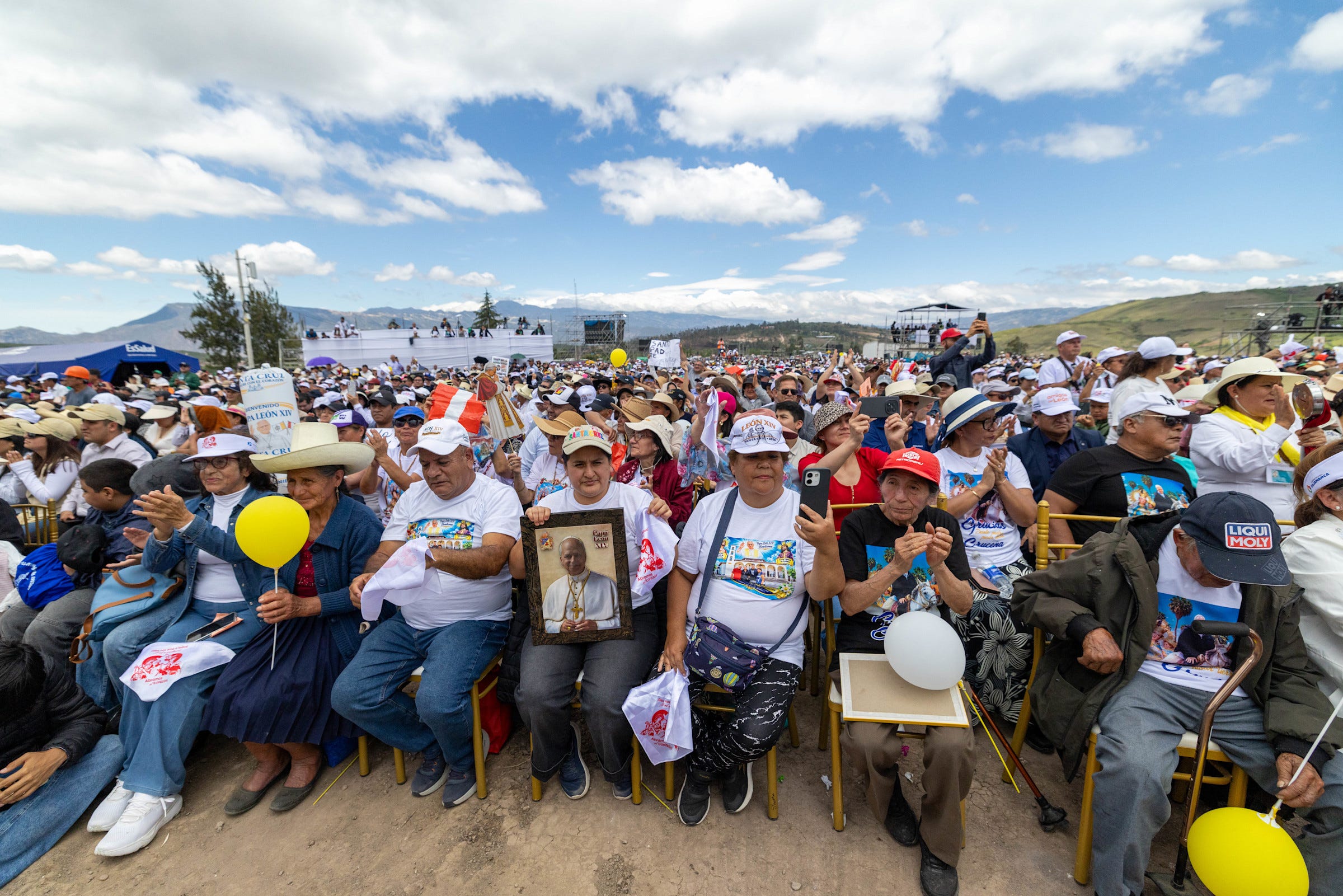
He is 71 now, and on Oct. 13 surgeons in Rome removed the lower lobe of his right lung. Before the trip, doctors said he might need supplemental oxygen during his days in the high Andes. He went anyway, back to a town he had promised not to forget, and at the end of Mass he told them, “If Jesus decides to come to Santa Cruz, he will find faith.”
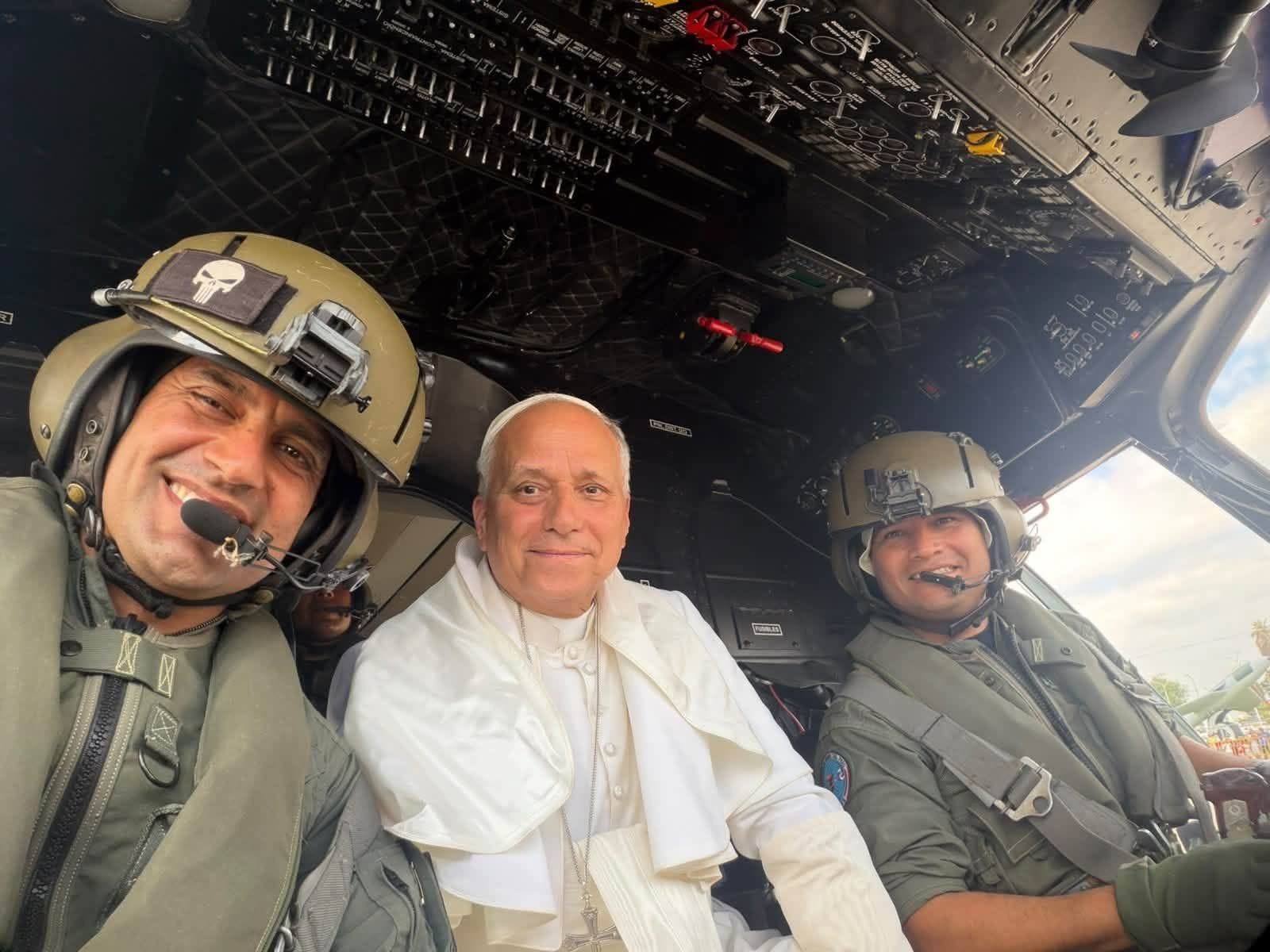
He flew back down to the coast that afternoon. Peruvian Air Force commanders Gino Burgos and Javier Rojas, classmates nearly 30 years ago, flew him from Santa Cruz back to Chiclayo, and the three posed for a selfie in the cockpit.
In Zaña, the old colonial town where St. Toribio de Mogrovejo died in 1606, Leo closed the jubilee year marking 300 years since the saint’s canonization. Toribio and Leo were both missionaries who crossed northern Peru town by town, centuries apart. Outside Toribio’s sanctuary on Saturday, a crowd of children in yellow scarves wrapped the pope in a group hug.
On Sunday he flies to Cusco, which sits more than 11,000 feet above sea level, to meet the faithful at the Inca fortress of Saqsaywaman and pray the Angelus outside the cathedral. Somewhere below his window, a combi will be grinding up a mountain road toward a village most of the world will never see. Leo knows exactly what that drive costs, and he has spent a lifetime telling his priests to make it anyway.
At Letters from Leo, we stand with a pope who learned his theology on roads with a mountain on one side and an abyss on the other, and who still measures a shepherd by whether he reaches the people at the end of them.
In a country whose leaders mostly meet the poor through a camera lens, Leo keeps choosing the swollen river and the frozen pass.
This is the fastest-growing Catholic community in the country because people are hungry for that kind of faith, one with mud on its boots and a sense of humor about the cold.
They want a Church that keeps its appointments with the forgotten, whatever it takes to get there.
If you believe this movement matters, with Catholics and people of goodwill standing for the dignity of every person from Chicago to Cajamarca, I am asking you to join us.
If you’d like to invest in our mission, here are three ways you can help:
Subscribe as a paid member to receive exclusive posts about the life and formation of Pope Leo and help sustain this newsletter.
Donate with a one-time gift to fuel this project’s mission.
Share this post (and Letters from Leo) with a friend who might enjoy it.
Paid members get our full series on Pope Leo’s Life & Formation, including how Peru made Pope Leo XIV, along with the Sunday Scripture Reflection Series and our exclusive investigations.
Whether you give $0, $5, $50, $500, $1,000, or more, your presence here matters — no matter your faith or your politics.
Thank you for reading. I’ll see you on the road.

I begin to see that this journey is the best medicine Leo could have had as he regains strength from his surgery. He is having a chance to revisit the places and people he loves from his past.
Pope Leo hasn’t got a seatbelt on in the helicopter.