


Our offer on The Private Diary of Pope Francis has been extended. Anyone who purchases a yearly subscription to Letters from Leo or donates $80 or more from this post will receive a free copy of the book.
The offer now runs through Friday, November 27, at 11:59 PM PST.
Still waiting on a book from an earlier offer? Claim your copy here.
Amid the attacks from right-wing commentators, more than 3,000 people have signed the We Stand With Pope Francis petition. Add your name and stand with the late pope.
Thank you for reading! Letters from Leo is a reader-supported publication and the fastest-growing Catholic community in the country. To receive new posts and support this movement, consider becoming a free or paid subscriber.
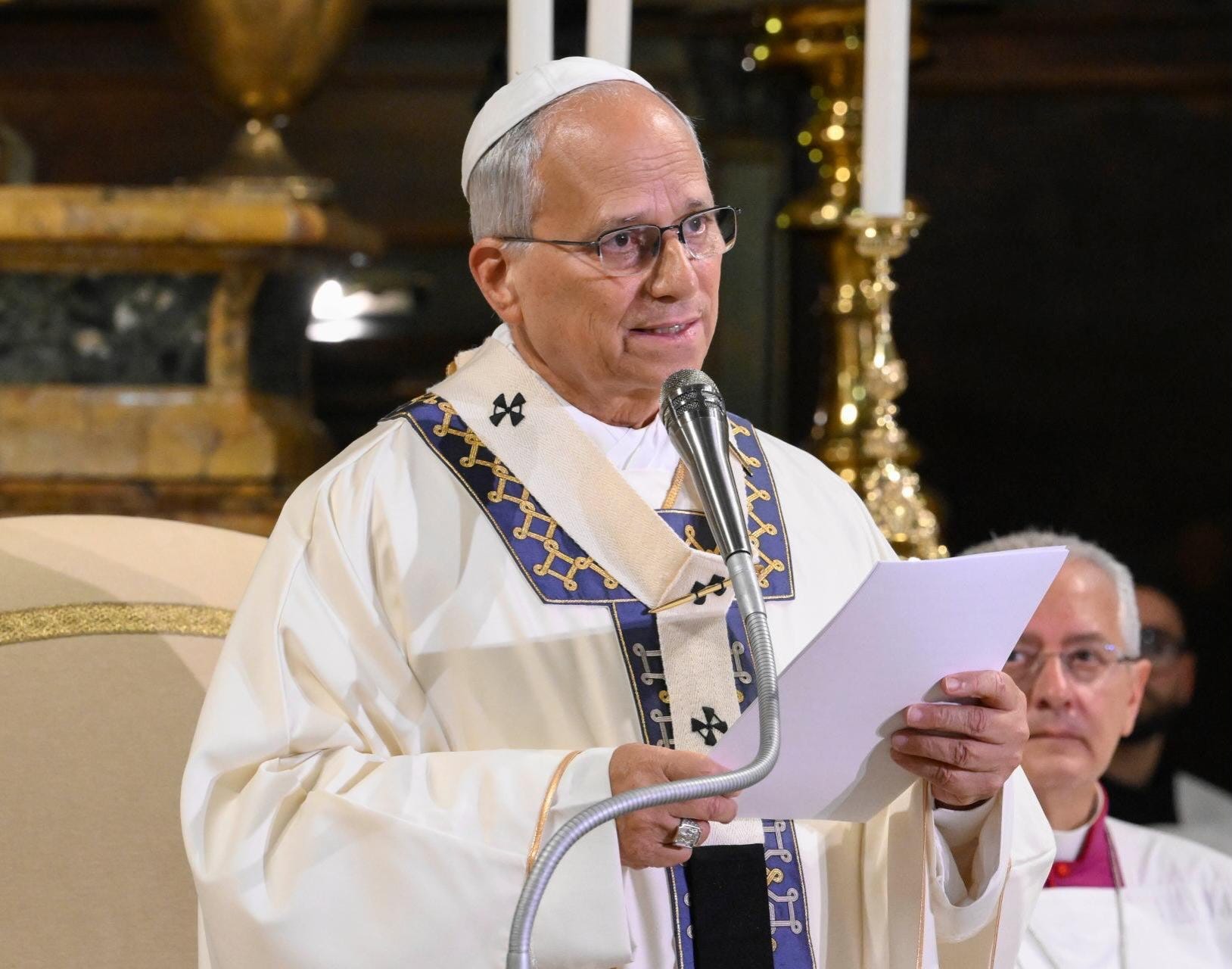
Pope Leo XIV on Friday called attention to homeless people, lonely older residents, migrants and low-paid workers in central Rome, telling a parish near the Spanish Steps that they are often overlooked.
“There are poor people sleeping on the street, elderly people left alone,” he said in his homily at Sant’Andrea delle Fratte. “There are many brothers and sisters who are foreigners, and workers with wages that wound their dignity.”
Leo spoke during a Mass at the church of Sant’Andrea delle Fratte on the feast of Our Lady of the Miraculous Medal. It was the first of five Advent visits he plans to make to parishes in the Diocese of Rome, one in each of its five pastoral sectors.
The visit came five days after Leo had lunch at the Vatican with about 1,300 poor people. On Friday, he asked the parish to use its church and neighborhood to serve people in need. He called it “a faith that becomes charity.”
Leo arrived about 4 p.m. He was greeted by children, by Cardinal Baldo Reina, the vicar general of Rome, and by Bishop Renato Tarantelli Baccari, who oversees the city’s central sector.
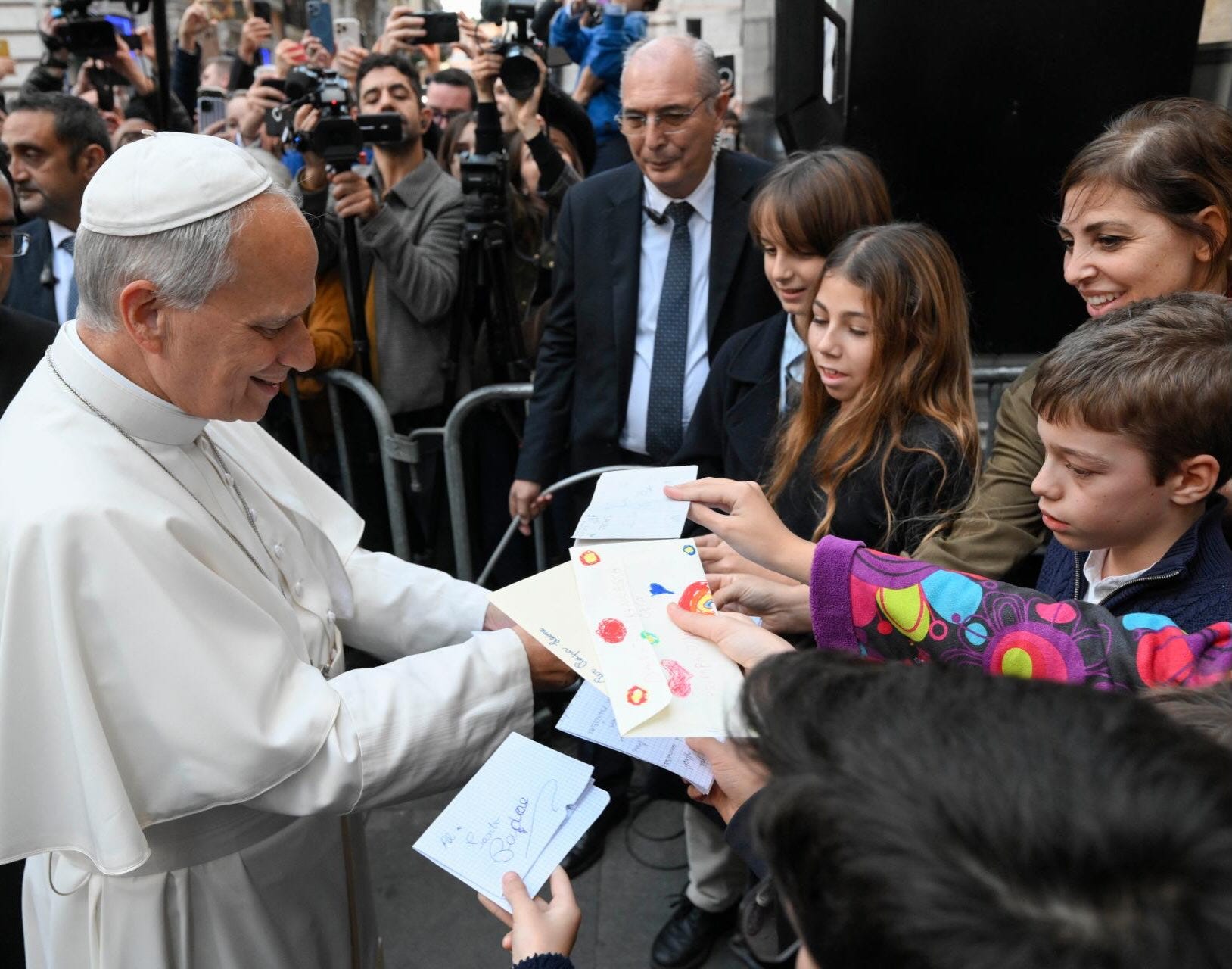
He prayed before the image of Our Lady of the Miracle, where, on Jan. 20, 1842, a young Jewish man from a Strasbourg banking family, Alphonse Ratisbonne, said the Virgin Mary appeared to him.
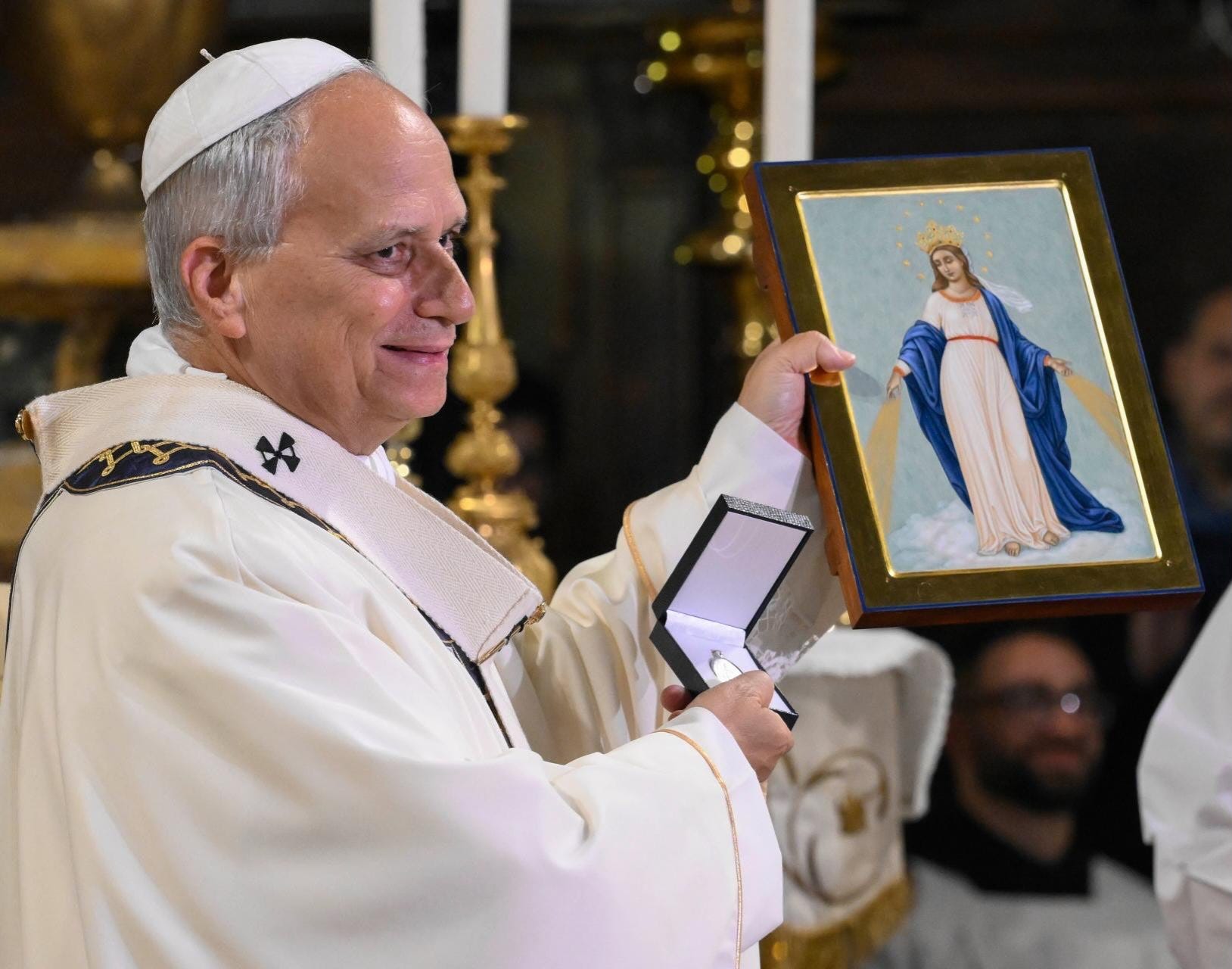
Ratisbonne was baptized 11 days later and went on to become a priest. The church is often called “the Lourdes of Rome.”
At the start of his homily, Leo said he had come as a pilgrim to ask Mary for help “at a difficult moment in human history, marked by wars and by unjust inequalities that humiliate human dignity.”
The day’s Gospel reading was the wedding at Cana, where Mary tells the servants, “Do whatever he tells you.” Leo said Christ asks people to offer him “the little we have.”
He listed the loss of peace, young people struggling to build a future, families that have stopped talking to one another and loneliness in the city.
Leo described Rome’s historic center as “a table laid before the eyes of the world.” He said many of the people who live and work there go unseen.
Besides homeless people and low-wage workers, he mentioned shopkeepers who work “exhausting hours” amid “growing economic uncertainty,” and tourists and pilgrims looking for meaning and a welcome.
“It is precisely from here,” he said, “that the Lord wants the feast of humanity to begin again.”
Catholic teaching on fair pay goes back to 1891, when Pope Leo XIII issued the encyclical Rerum Novarum. It said wages must be enough to support “a frugal and well-behaved wage-earner.”
Leo XIV has said he chose his papal name in part because Leo XIII responded to the industrial revolution. His first major document as pope, Dilexi Te, was about the poor.
In the United States, the federal minimum wage has been $7.25 an hour since July 2009. That is the longest period without an increase since the minimum wage was created in 1938. About 20 states use the federal rate.
On Sunday, Leo told crowds in St. Peter’s Square that Christ the King “stands alongside the least and the oppressed.” He then went to the Paul VI Audience Hall, where he sat at a table with 18 guests. Volunteers from the Italian Red Cross served cannelloni and beef stew with peas.
“Today,” he told the guests, “we are all one family.”
The meal marked the 10th World Day of the Poor, which Pope Francis created in 2016. The day fell on Nov. 15 this year, when Leo was in Peru, so the Vatican held the lunch after he returned.
During that trip, Leo told a crowd in Lima that the Vatican estimated at 1.5 million that “the only ones who cannot wait are the poor.” Earlier that day, he visited a home for abandoned elderly people in Callao that he had helped supply during the COVID-19 pandemic.
He also asked parishioners to let their faith change how they see the world, their relationships and history.
After Mass, Leo met with members of the Order of Minims, which runs the church, and returned to the Vatican. His other four Advent parish visits are on Sundays.
He ended his homily with a prayer that the shrine would be a place where “the poor find a hearing, foreigners a welcome, workers respect.”
At Letters from Leo, we stand with Pope Leo XIV and with the immigrants, the poor, and the workers he asked Rome to welcome, help, and respect — the migrant waiting on papers, the man sleeping on the street, the widow left alone, the housekeeper whose wages wound her dignity.
Since 1891, the Church has taught that a fair wage is a debt of justice. Leo is asking his own city to see the people who serve it, and his request reaches every American parish that sits near a shelter or a detention center like the one in Dilley, Texas.
This is the fastest-growing Catholic community in the country because people are hungry for a faith that sits down at the table with the poor and then asks why they were hungry in the first place.
If you believe in this movement of Catholics and people of goodwill standing up for the dignity of work and the people who do it, I am asking you to join us.
If you’d like to invest in our mission, here are three ways you can help:
Subscribe as a paid member to receive exclusive posts about the life and formation of Pope Leo and help sustain this newsletter.
Donate with a one-time gift to fuel this project’s mission.
Share this post (and Letters from Leo) with a friend who might enjoy it.
Paid members get our series on Pope Leo’s life and formation, from his years in Chiclayo and Callao to the Augustinian community that shaped him, along with every installment of the Sunday Scripture Reflection Series this Advent.
Whether you give $0, $5, $50, $500, $1,000, or more, your presence here matters — no matter your faith or your politics.
Thank you for reading. I’ll see you on the road.

The United States used to be a beacon of opportunity for the struggling masses. Whether they were born her or abroad, if you worked hard and played by the rules, there was opportunity for the poor to become prosperous. Today, the Trump regime is working double-time to criminalize poverty.
A couple of simple examples:
In many areas, sleeping overnight in your car is illegal. Well...if you have no place to go and your car is your only shelter, what are you supposed to do? Sleep on a park bench? Opps!!! That's illegal as well.
They are methodically creating situations where the the poor find that their very existence is ''illegal".
Yet more than half of all Americans are one pink slip, one bad diagnosis, one bad break away from being in this position. The oligarchy have turned humans and their labor into commodities that are replaceable parts with short shelf lives.
I disagree with the Roman Catholic Church on a great deal of issues. But I am with them 100% when it comes to their stand and action on human dignity.
I am so proud that Pope Leo hails from the USA-- he makes up for our disgraceful White House administration!