


Thank you for reading! Letters from Leo is a reader-supported publication. To receive new posts and support my work, consider becoming a free or paid subscriber.
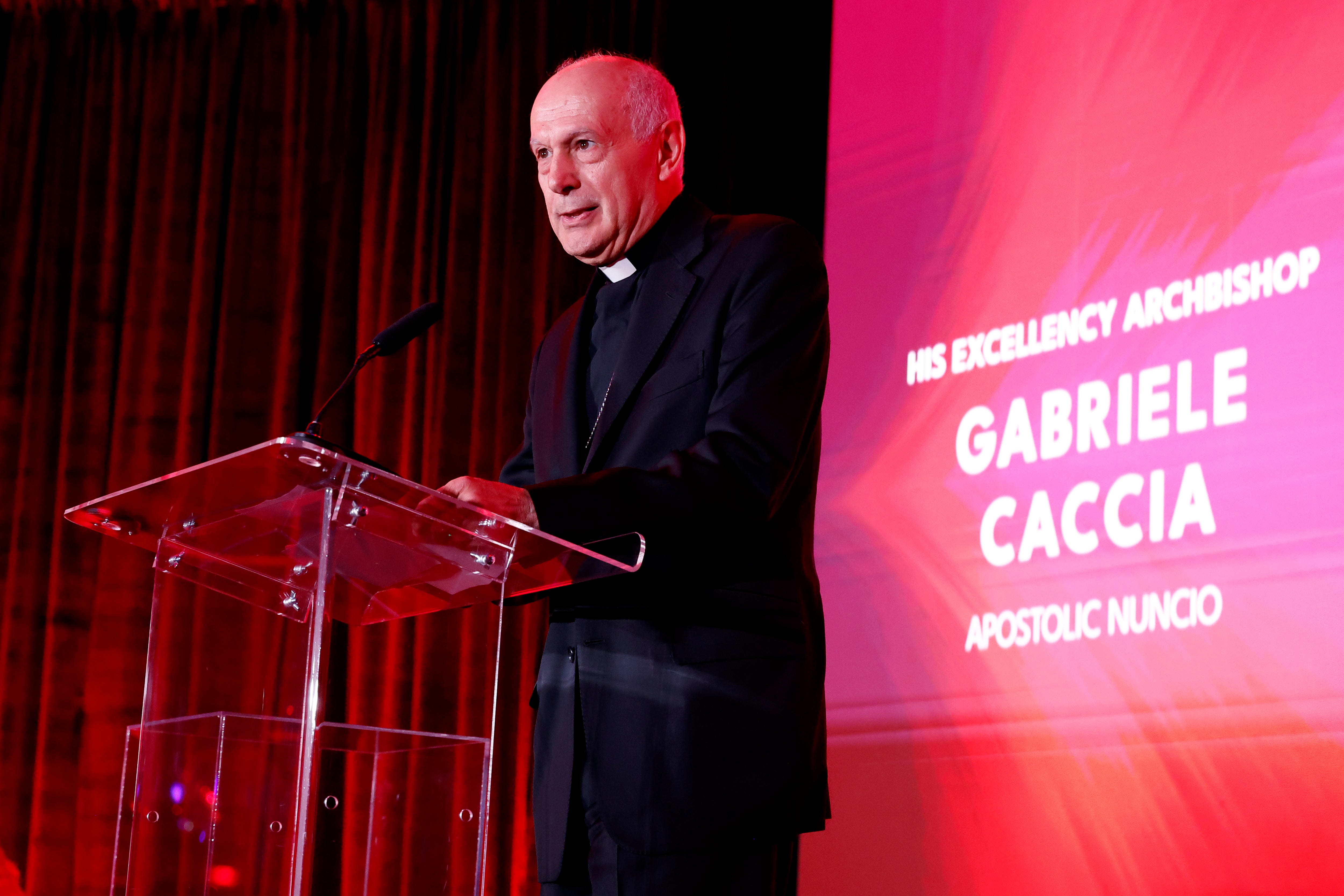
On Wednesday night in Washington, Archbishop Gabriele Caccia opened the Washington AI Network’s annual AI Honors gala with the greetings of Pope Leo XIV and a prayer drawn from the prophet Micah.
The second annual dinner honored seven American leaders in artificial intelligence, with more than 400 leaders from government, tech, and academia in their seats.
The Washington AI Network has earned its reputation as the great convener of this town’s artificial-intelligence conversation — the room where the industry’s builders, its regulators, and its chroniclers actually meet. Putting the Catholic Church at the head of the evening struck me as both cutting-edge and indicative of the years to come.
“Last year, we were proud to honor Pope Francis’ AI advisor for his work elevating this important issue,” Tammy Haddad, the network’s founder and CEO, said in a statement to Letters from Leo.
“Pope Leo’s new encyclical and the papal nuncio’s remarks tonight remind us that the center of all technology is the human person. Their leadership helps keep the policy conversation focused on what matters most — the ways AI can be used to advance and protect humanity.”
Caccia, whom Pope Leo named his new apostolic nuncio to the United States in March, spoke before anyone raised a glass. Here is how the pope’s ambassador framed the evening:
This gathering itself represents something that Pope Leo calls for in his recent encyclical entitled Magnifica Humanitas, a shared document involving many sectors of society. The future of this technology cannot be guided by one field alone. It needs science and policy, business and public service, ethics and fait
He asked the room to keep the human person at the center of every choice — from the first day of development, he said, and at every stage that follows.
Then he prayed over the dinner, invoking Micah’s call to do justice, to love goodness, and to walk humbly with God, and asked that nothing built by the hands in that room ever “diminish the grandeur of the human person.”
I found it incredibly consoling to watch the Vatican’s man in Washington begin the industry’s biggest night by framing every achievement in the room as answerable to human dignity. The titans of industry heard a moral claim before they heard a single toast.
The encyclical Caccia invoked needs little introduction for readers here.
Magnifica Humanitas, the first encyclical of Leo’s pontificate, landed on May 25 with a demand that artificial intelligence be disarmed and a warning that technology “is never neutral, because it takes on the characteristics of those who devise, finance, regulate, and use it.” Silicon Valley spent the following week in a defensive crouch.
(I have been tracking this story from the beginning in the Pope Leo Challenges Silicon Valley series.)
The encyclical is winning a hearing on Capitol Hill as well. “Pope Leo XIV is a thoughtful, serious, and inspired moral force whose voice transcends politics,” Congressman Tom Suozzi — the Catholic Democrat from New York who attended Leo’s inauguration in Rome — told Letters from Leo.
“His leadership is encouraging policymakers to think not just about what we can do, but what we must do to protect human dignity in the face of this cataclysmic economic and technological change.”
Whether that teaching reaches the people who write American AI policy matters more than any viral moment. The early evidence says it already has. Here’s what’s happened in the past ten days alone.
