


Dear friends —
Letters from Leo’s Sunday Reflection Series are essays grounded in the Mass readings — offering a clear-eyed way to follow Jesus amid today’s political realities, not by retreating from public life or baptizing any ideology, but by letting the Gospel shape our conscience, courage, and compassion.
These reflections will be available to all paid subscribers, as a small but sincere way of saying thank you for making Letters from Leo possible.
Letters from Leo is open to anyone who wants to be informed and inspired by our pope — and to turn that inspiration into action that leaves America and the world more just, less cold, and more alive with hope.
If you’d like to invest in our mission during this critical time, here are three ways you can help:
Subscribe as a paid member to receive exclusive posts about the life and formation of Pope Leo and help sustain this newsletter.
Donate with a one-time gift to fuel this project’s mission.
Share this post (and Letters from Leo) with a friend who might enjoy it.
Whether you give $0, $1, or $1,000, your presence here matters — no matter your faith or your politics.
Thank you for reading. I’ll see you on the road.

“The grace of the Lord Jesus Christ and the love of God and the fellowship of the Holy Spirit be with all of you.” — 2 Corinthians 13:13
There is a man named Nicodemus, and he comes to Jesus at night.
He is a Pharisee, a member of the Sanhedrin who has spent his life studying the law. None of his learning explains what he has come to ask.
The question, when he finally puts it to Jesus, is the one a person asks only after he has lived enough life to know he needs a new one: “How can a man be born when he is old? Can he enter a second time into his mother’s womb and be born?”
Jesus offers him the only answer that has ever sufficed for any of us: God so loved the world that he gave his only Son.
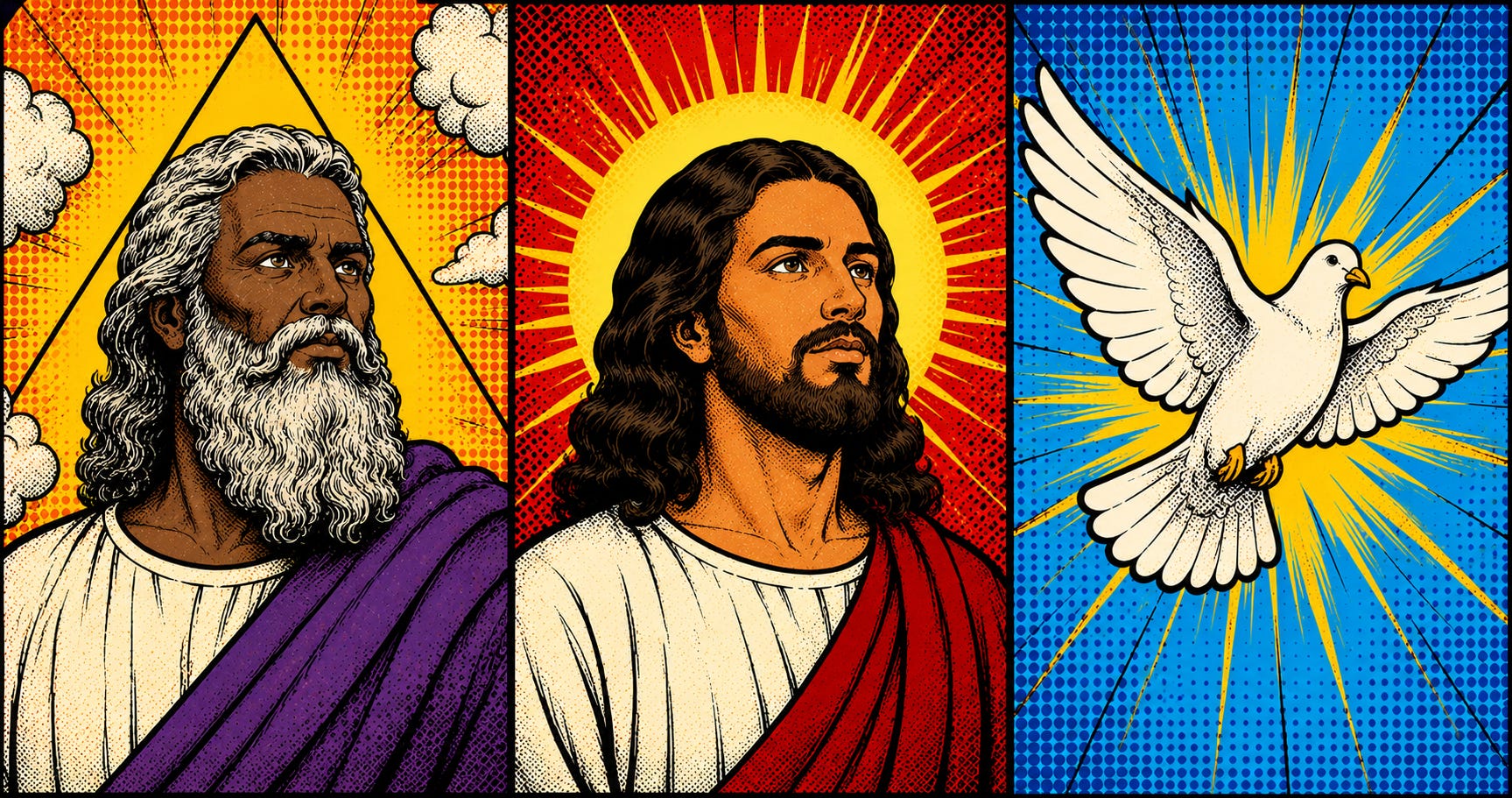
Today is the Solemnity of the Most Holy Trinity. The Church gathers and confesses, again, that the deepest reality of God — the inner life that makes God God — is communion. Father, Son, Spirit. Three Persons — one self-giving love.
Simply put, the deepest identity of God is that God is love.
That is the whole faith in one sentence. The councils, the catechism, the magisterium — and all of it is commentary.
This past week, Pope Leo XIV released his first encyclical: Magnifica Humanitas, or “Magnificent Humanity” — on safeguarding the human person in the time of artificial intelligence. If you have not read it, I encourage you to set aside some time this week. It belongs in the same family as Rerum Novarum and Laudato Si’.
Leo’s diagnosis is precise. Humanity, he writes, is facing “a pivotal choice: either to construct a new Tower of Babel or to build the city in which God and humanity dwell together.” The Babel of our moment is data centers and server farms — a global race to build something that can outthink us and, in time, perform the surface forms of friendship, advice, empathy, and even love.
Leo names what is at stake. Human dignity faces “new forms of dehumanization,” and what we are tempted to surrender is “the grandeur of humanity bestowed upon us and revealed in its fullness in Christ, the splendor of which no machine can ever replace.
True progress always stems from a heart open to others, an intelligence willing to listen and a will that seeks what unites rather than what separates.”
A few weeks ago, Fareed Zakaria gave a commencement address at Bard that, without quite knowing it, was about the same thing.
The human brain weighs about three pounds, he said. It runs on twenty watts, roughly the power of a dim refrigerator bulb. The most advanced AI systems consume hundreds of millions of watts across hundreds of acres of cooling and cable. Yet a toddler still beats the machine. A child reads a room, senses tension in silence, knows when a parent is lying about being fine.
“The danger in the AI age,” Zakaria said, “is not that machines will become too human. It is that humans will start trying to become too much like machines.”
Today’s readings illuminate that fear.
