


Our offer on The Private Diary of Pope Francis ends tonight. Anyone who purchases a yearly subscription to Letters from Leo or donates $80 or more from this post will receive a free copy of the book. The offer runs through tonight, Saturday, Nov. 28, at 11:59 PM PST.
Paid subscribers will also get our Advent Reflection Series, which begins tomorrow, the First Sunday of Advent, and continues every day until Christmas. Become a paid subscriber.
Thank you for reading! Letters from Leo is a reader-supported publication and the fastest-growing Catholic community in the country. To receive new posts and support this movement, consider becoming a free or paid subscriber.
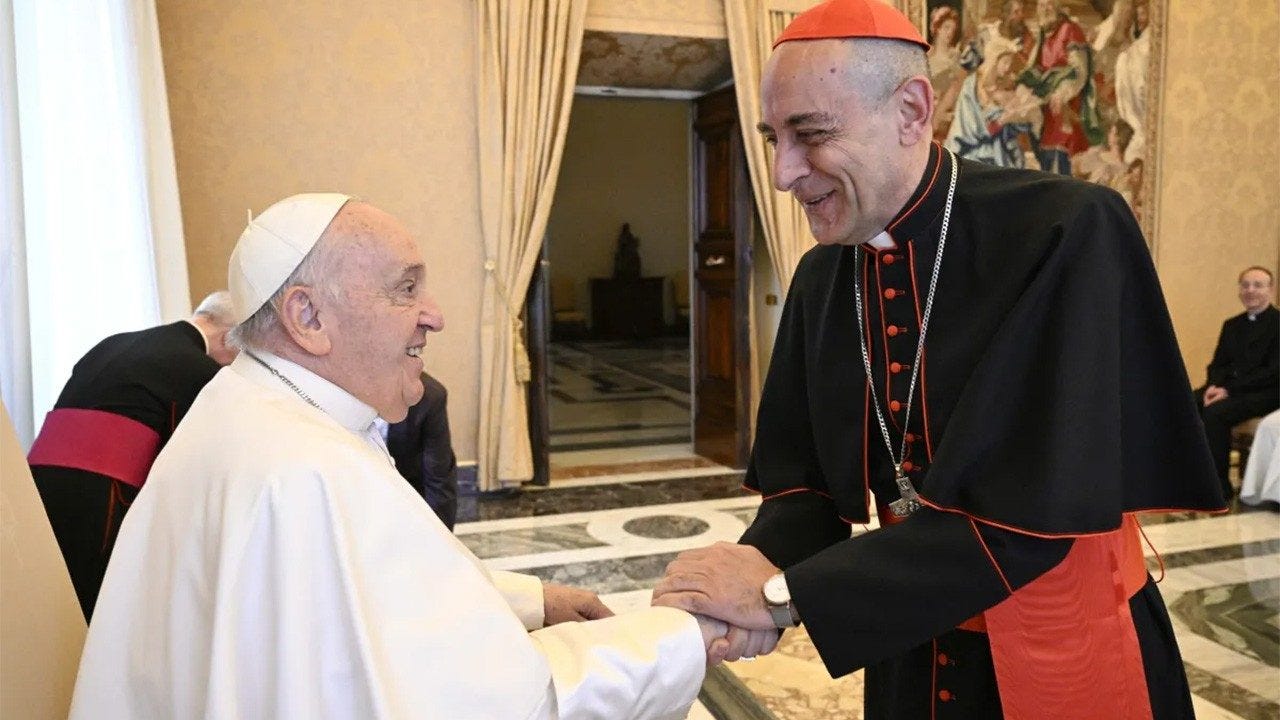
Pope Francis never went home to Argentina as pope because intelligence services warned him that his enemies would stage something against him if he came, according to Cardinal Víctor Manuel Fernández, one of his closest collaborators.
“He had intelligence information, from the services,” Fernández told the Italian journalist Aldo Cazzullo in an interview published Tuesday. “They knew that if he came, they would organize something against him.”
Asked who, the cardinal pointed to the far right. “The nationalist far right and the neoliberal far right don’t get along, but sometimes they unite against a common enemy,” he said. “Bergoglio was the common enemy. The social doctrine of the Church is unbearable for them.”
Francis was never afraid for his own safety, the cardinal added. “His fear was scandal,” he said, a scandal that would have done Argentines no good.
Fernández, 64, has run the Vatican’s doctrine office since 2023, and Argentine reporters have long called him Francis’s ghostwriter. He edited the diary itself, a black 1992 planner Francis wrote in from Dec. 20, 1992, until Aug. 18, 2024, and the Vatican published it Tuesday as The Private Diary of Pope Francis.
Why Francis stayed away
The diary is silent on why. “On that point,” Fernández told Elisabetta Piqué, an Argentine reporter in Rome, “unfortunately he doesn’t say a word.”
Francis’s own account, given to the journalist Nelson Castro in 2019, was that he didn’t miss home. “I lived there 76 years,” he said. “What troubles me are its problems.”
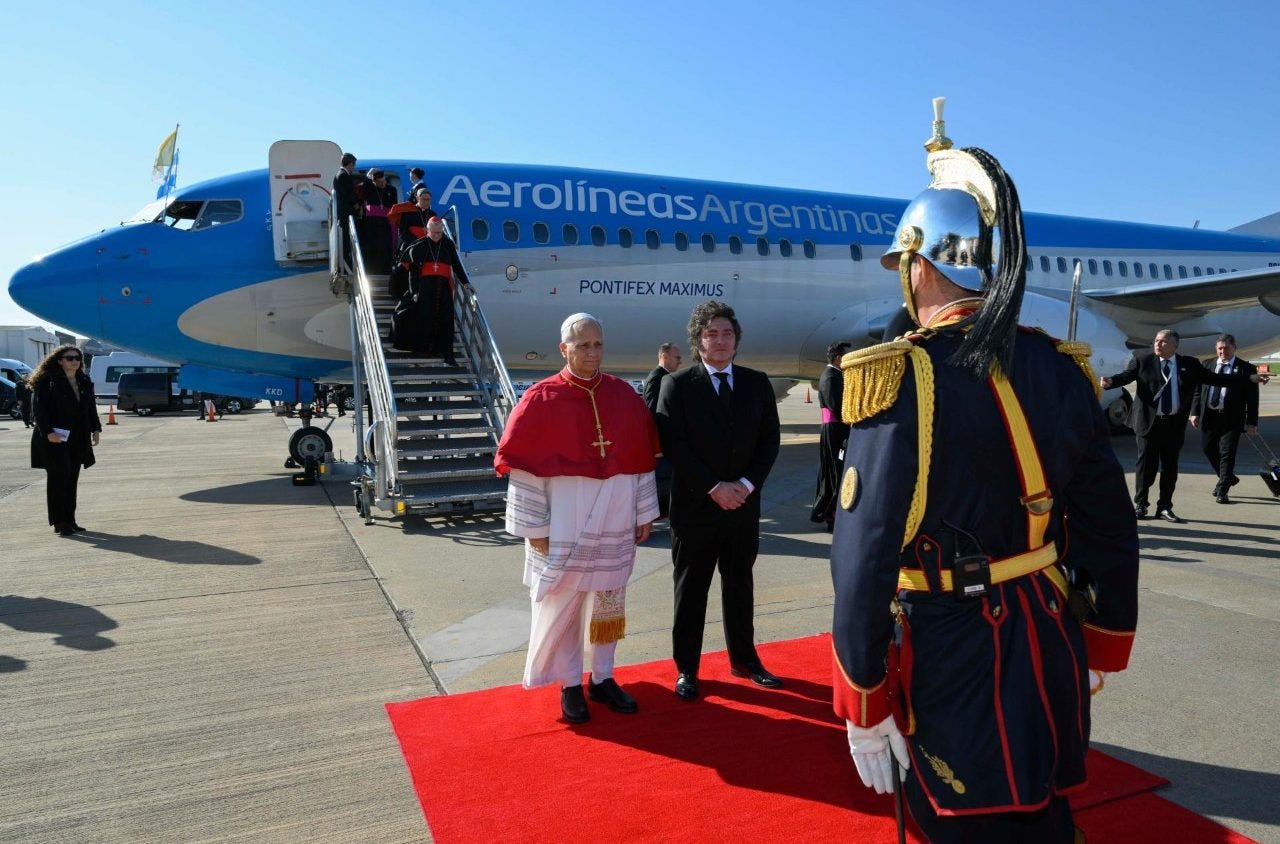
His successor spent Nov. 8 to 11 in the country, the first papal visit since 1987, and told Argentines on the way out that they had “two popes.” Piqué asked Leo about Francis on the Nov. 17 flight from Lima. “I’m not going to try to answer,” Leo said. “In eternal life, we can ask him.”
Javier Milei greeted Leo on the runway. The president has his own history with Francis: before entering politics he called him “the representative of evil on Earth,” then apologized, during a 2023 campaign debate and again in person at the Vatican in February 2024. Francis, Milei later recalled, told him that “when we’re young, we all do stupid things.”
Married priests and a pope who swore
Cazzullo also brought up married priests. Bishops at the 2019 Amazon synod in Rome asked Francis to let some married men be ordained in remote regions, and in Querida Amazonia, his 2020 response, he said nothing about it.
“He wanted to make this decision,” Fernández said. “But he wanted to avoid the internal fights, the verbal violence.”
Three years later, in a March 2023 interview, Francis described celibacy for Latin-rite priests as “a temporary prescription.”
Some of the answers were simply about the man. Francis never once spoke badly of Benedict XVI, Fernández said, even though “with me he expressed himself with great freedom, sometimes with a curse word.”
Pressed on pages of the diary that read like García Márquez (Francis waking at night thinking of a bishop who was dying at that moment, for one), Fernández agreed. “It is South American magical realism,” he said, “at a depth that isn’t understood in Europe, but perhaps in Sicily or Naples it is.”
The diary’s darkest passages, which have drawn attacks from right-wing commentators, describe three encounters in which Francis wrote that he did not doubt the devil had appeared to him physically.
In one, as a bishop in Buenos Aires, he wrote that the devil “looked at me with eyes of fire” and that he fled clutching his Rosary. “The Virgin saved me,” he wrote.
A cardboard box from Pope Leo
Andrea Tornielli, who runs editorial operations for the Vatican’s media, got the first long interview on Tuesday.
Fernández told him the book has “everything worth including, even very destabilizing things, without hiding anything.” What he cut, he said, were repetitions, private matters touching people still alive, and passages in “strange signs, like hieroglyphics,” which he takes as Francis’s wish to stay unread.
What stayed in includes a conversation with Angela Merkel and Francis’s complaints about certain Argentines, Fernández told Tornielli.
His compatriots’ demands “robbed him a lot of time,” the cardinal told Piqué, adding that “we want to keep doing it with this pope.”
As for Leo, he found the box. Fernández asked about the diary a few weeks into the new pontificate, and two days later the cardboard box of Francis’s papers was on its way to him. Leo asked that some confusing paragraphs about living people come out.
He hasn’t read the final version, the cardinal said, but he smiled when he learned what the diary contained. “He is not a man of many words.”
“One of us”
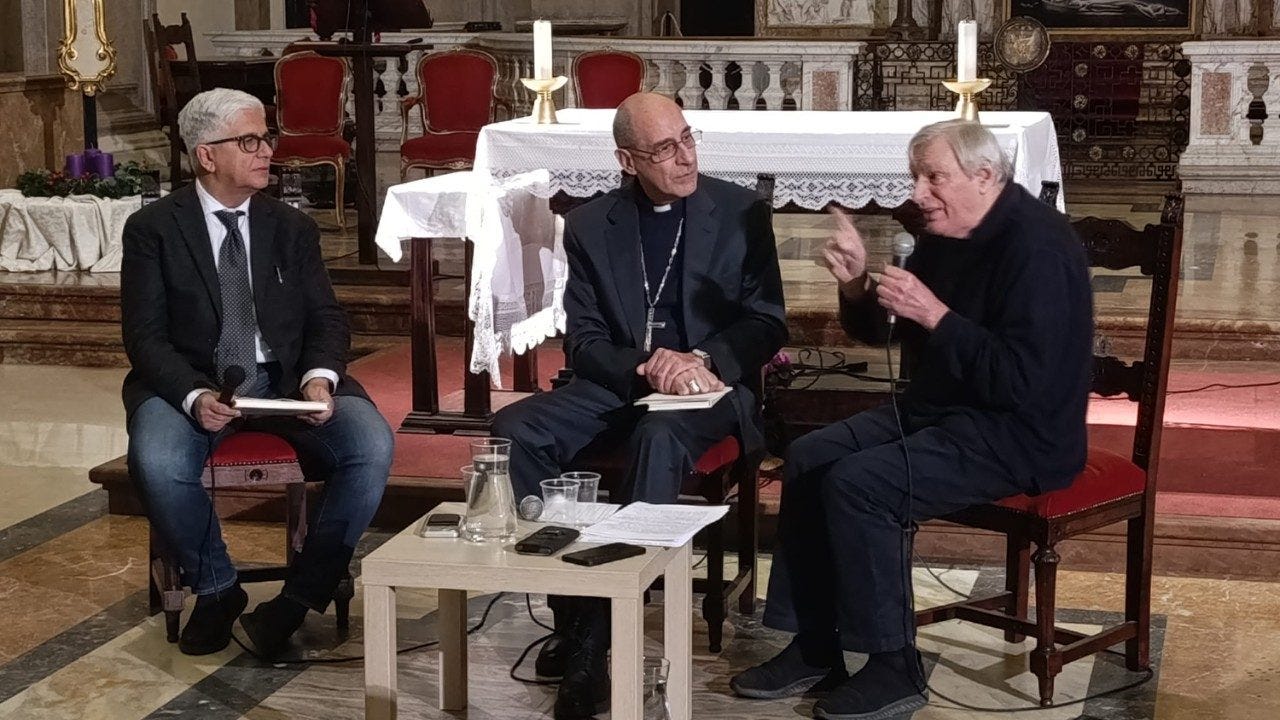
On Saturday afternoon, Fernández and Tornielli shared a stage again, this time at the Jesuit Church of San Fedele in Milan, where the cardinal presented the book alongside the Rev. Luigi Ciotti, founder of the anti-Mafia network Libera.
“When I read Francis’s diary for the first time, I couldn’t sleep,” Fernández told the crowd. It was not easy, he said, to discern whether to publish it at all. “We have looked into the heart of a pope as has never happened in history.”
Ciotti said that reading about Francis’s weaknesses “is the only way to truly know the pope,” and both men closed the evening on the same words.
“Francis was one of us,” Fernández said.
A reminder: anyone who purchases a yearly subscription to Letters from Leo or donates $80 or more from this post will receive a free copy of The Private Diary of Pope Francis. The offer ends tonight, Saturday, Nov. 28, at 11:59 PM PST.
At Letters from Leo, we stand with Pope Francis, who stayed away from the country he loved rather than hand his enemies a scandal, and with Pope Leo XIV, who went in his place and called himself Argentina’s pope by adoption.
Eight months into his papacy, Francis wrote that an economy of exclusion “kills.” The line followed him for the rest of his life. He never said Mass in his old Flores neighborhood again.
This is the fastest-growing Catholic community in the country because people are hungry for that kind of Church, one that keeps telling the truth about the poor when the powerful would rather it didn’t.
If you believe this movement matters, with Catholics and people of goodwill standing for human dignity against a politics of contempt, I am asking you to join us.
If you’d like to invest in our mission, here are three ways you can help:
Subscribe as a paid member to receive exclusive posts about the life and formation of Pope Leo and help sustain this newsletter.
Donate with a one-time gift to fuel this project’s mission.
Share this post (and Letters from Leo) with a friend who might enjoy it.
Paid members get our Advent Reflection Series, a Scripture reflection every day from the First Sunday of Advent to Christmas, along with our series on Pope Leo’s life and formation and our Sunday Scripture reflections.
Whether you give $0, $5, $50, $500, $1,000, or more, your presence here matters — no matter your faith or your politics.
Thank you for reading. I’ll see you on the road.

🙏🏼🙏🏼🙏🏼 Pope Francés & Pope Leo XIV.
It took me some time to warm to Pope Francis because of the relationship of the Church and the dictatorship. He knew what was happening. He did the best he could as pope.