

“Never Be Normalized” — U.S. Bishops Rebuke Trump’s ICE Over the Killings of Salgado and Durán
Pope Leo XIV told the American church it cannot be silent on the dignity of migrants — on Monday it answered him once again.

Thank you for reading! Letters from Leo is a reader-supported publication and the fastest-growing Catholic community in the country. To receive new posts and support this movement, consider becoming a free or paid subscriber.
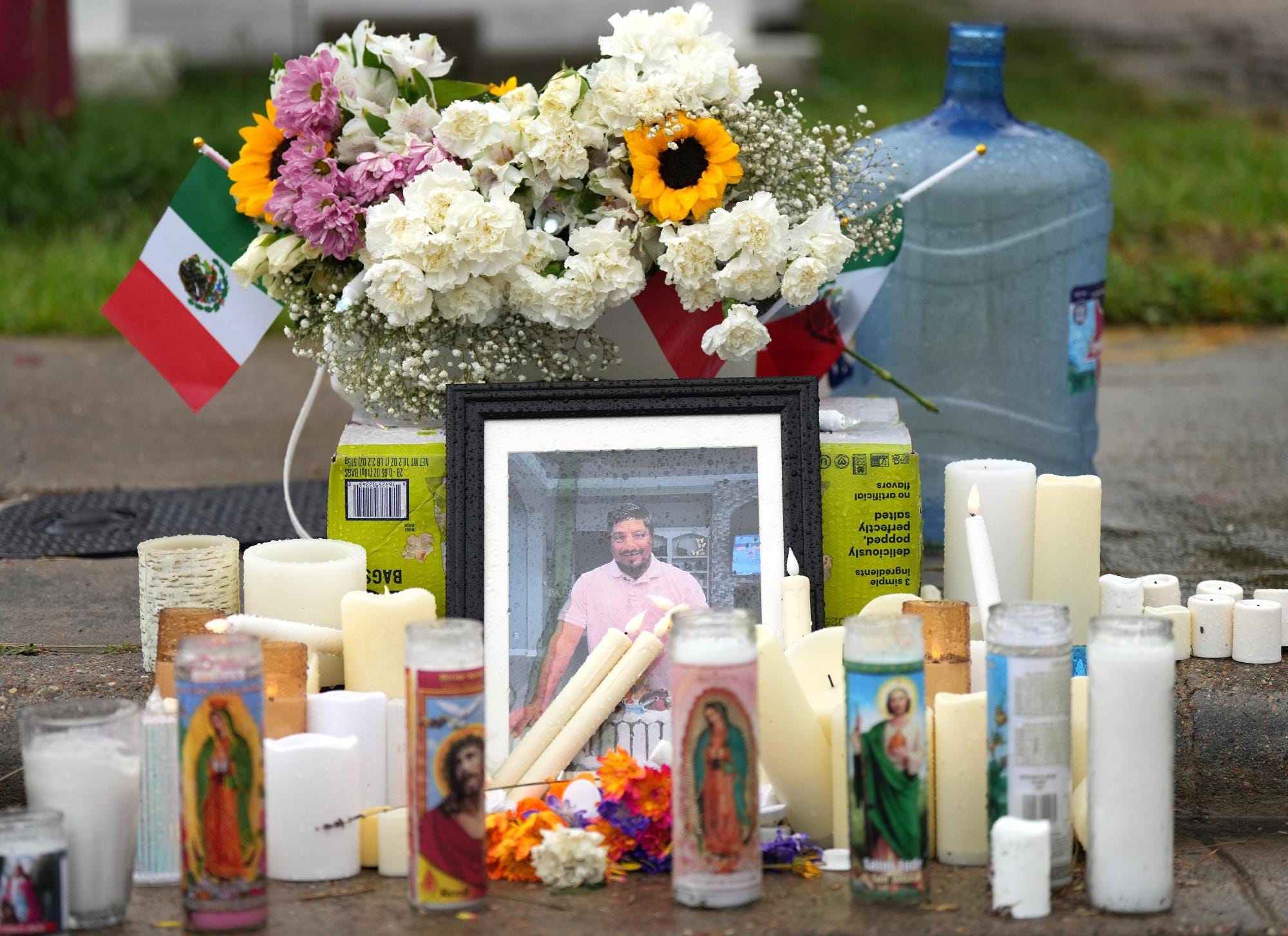
The United States Conference of Catholic Bishops confronted the Trump administration again on Monday, releasing a pastoral reflection on the immigration enforcement killings of Lorenzo Salgado Araujo in Houston and Johan Sebastián Durán Guerrero in Biddeford, Maine.
“Acts that diminish or disregard the dignity of any person or group of people should never be normalized in our society,” wrote Bishop Daniel E. Garcia of Monterey, chairman of the bishops’ Subcommittee for the Promotion of Racial Justice and Reconciliation, and Bishop Brendan J. Cahill of Victoria, Texas, who leads the Committee on Migration.
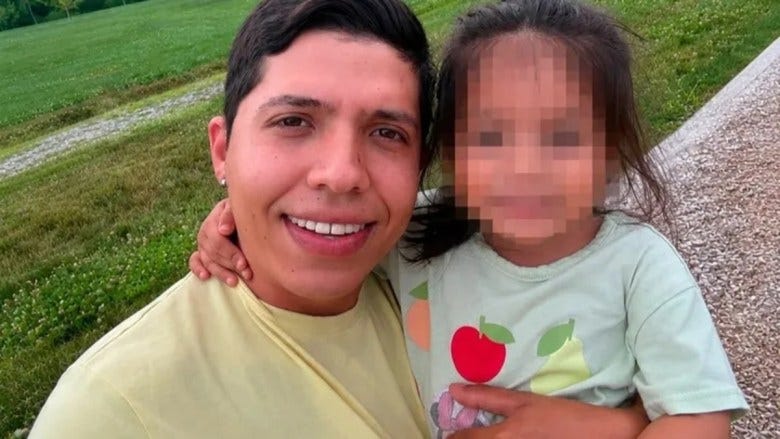
An ICE agent shot Salgado, a 52-year-old construction worker, on July 7 as he drove his crew to a Houston job site. Durán, 25, held federal work authorization and was raising a 3-year-old daughter when an officer fired into his car in Biddeford six days later. Neither man was the target of the operation that killed him.
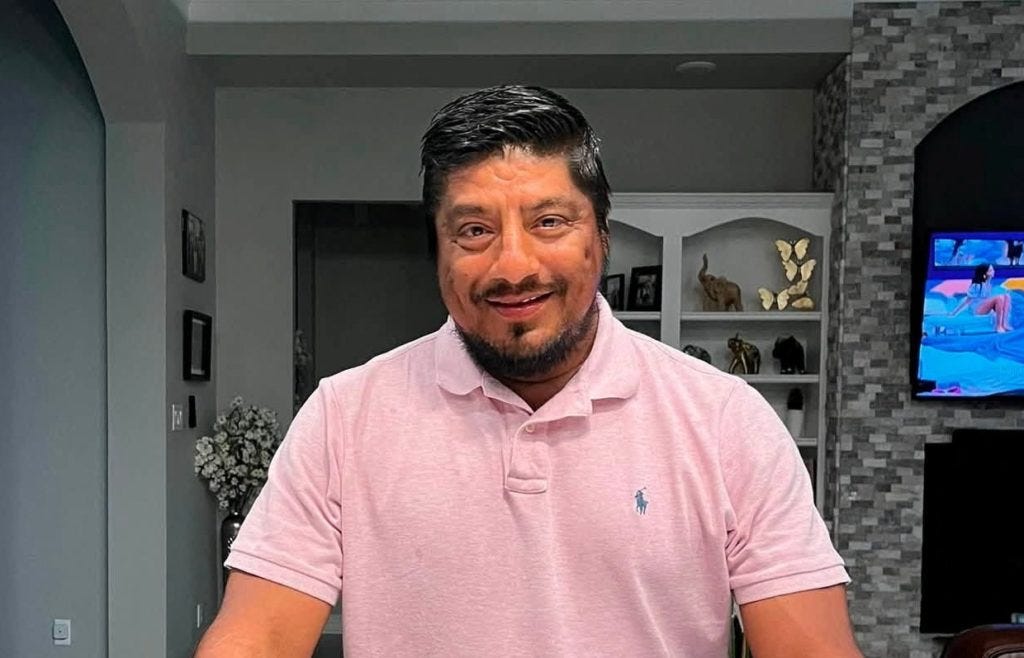
Salgado had lived in the United States for nearly 35 years and raised three children, every one of them an American citizen. Durán came from Bucaramanga, Colombia, in 2023 and received federal work authorization in March 2025. Both men were Catholic; their families now grieve inside the household of faith.
The chairmen named the machinery behind the deaths. “Racial profiling in particular not only violates God-given dignity but also inflicts profound harm on individuals, families, and communities by fostering fear, eroding trust, and increasing the risk of unjust and even tragic outcomes,” they wrote, adding that the bishops’ pastoral concerns “are distinct from what the civil law itself may permit.”
The phrase “God-given dignity” carries a footnote, and the footnote tells the deeper story.
It points to page four of Open Wide Our Hearts, the pastoral letter against racism that the full body of bishops approved in November 2018 — their first in thirty-nine years. The letter took shape after the white-supremacist violence in Charlottesville, in the same year the first Trump administration separated thousands of children from their parents at the southern border.
Its warnings read today like prophecy. “Racial profiling frequently targets Hispanics for selective immigration enforcement practices,” the bishops wrote eight years ago, condemning the “extreme nationalist ideologies” that were “feeding the American public discourse with xenophobic rhetoric that instigates fear against foreigners, immigrants, and refugees.”
“Hispanics are the major target of immigration raids and mass deportation. In the past, U.S. citizens of Hispanic descent caught up in these raids have been deported. Today, many Hispanics are often assumed to be in this country illegally. These attitudes of cultural superiority, indifference, and racism need to be confronted; they are unworthy of any follower of Christ.”
The letter reaches back to Genesis for its diagnosis. “Racism shares in the same evil that moved Cain to kill his brother,” the bishops taught — the refusal to recognize the image of God in the man standing in front of you. In Houston and in Biddeford this month, that refusal held a service weapon.
The 2018 letter turns its confession inward, onto the church itself. Too often, the bishops admitted, racism “comes in the form of the sin of omission, when individuals, communities, and even churches remain silent and fail to act against racial injustice when it is encountered.”
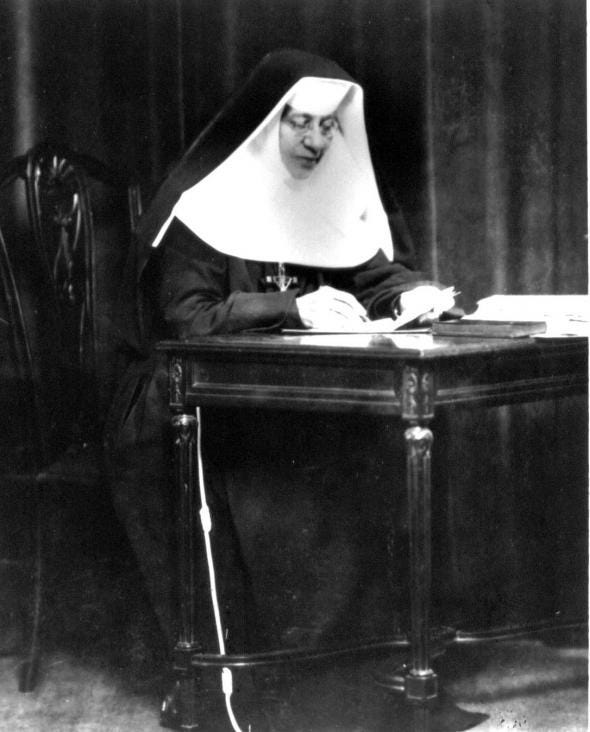
Even the title is a summons. The bishops borrowed it from St. Katharine Drexel, the Philadelphia heiress who gave her fortune to build schools for Black and Native American children after Pope Leo XIII — the pope of Rerum Novarum, whose name Leo XIV took as his own — pointed her toward mission work in 1887: “Let us open wide our hearts. It is joy which invites us. Press forward and fear nothing.”
Monday’s reflection also reaffirms the Special Message on immigration the bishops adopted at their Baltimore assembly last November — a form of collective teaching the conference had not used in twelve years. Conference rules demand a two-thirds majority before the bishops may speak this way; they cleared that bar with room to spare, 216 to 5 with three abstentions, and the vote closed to sustained applause on the assembly floor.
“We are disturbed when we see among our people a climate of fear and anxiety around questions of profiling and immigration enforcement,” the bishops declared then. “We oppose the indiscriminate mass deportation of people.”
The next morning, the conference carried that message onto social media in a video that traveled around the world.
Pope Leo XIV asked for exactly this. Last fall, the first American pope told a delegation led by El Paso’s Bishop Mark Seitz that the church “cannot be silent” about the suffering of immigrants.
The November message drew his public blessing — “a very important statement,” he called it, inviting “especially all Catholics, but people of goodwill, to listen carefully to what they said” — and he has condemned this administration’s treatment of longtime residents as “extremely disrespectful.” On America’s 250th birthday, he stood on Lampedusa and wrote to his own country that defending human life means “welcoming, protecting and assisting immigrants.”
I wrote yesterday about the two churches that answered these killings — one in Texas, one in Maine. Archbishop Joe S. Vásquez of Galveston-Houston named Lorenzo Salgado in public, prayed for his family, and placed the bishops’ standard on the record: enforcement must be “targeted, proportional, and humane.”
The Diocese of Portland issued a statement that never mentioned ICE, and though the diocese’s news page has since reposted the bishops’ November message and Monday’s reflection, Bishop James Ruggieri has still not said a public word of his own.
Monday’s reflection closes that gap from Washington. The conference demanded “accountability, transparency, and justice” where Portland’s chancery offered condolences alone, and its opening confession — that all persons “are created in the image and likeness of God” — echoes almost word for word what Vásquez told Houston on July 15. A bishop in Maine who could not find the language now has it written for him.
The chairmen refused to bless dehumanization in any direction, pairing their defense of immigrants with a condemnation of “the vilification of law enforcement officers.” The administration has offered nothing comparable in return.
Since November, the White House has rejected the bishops’ plea to pause raids over Christmas, and the conference has carried its defense of immigrant dignity to the Supreme Court.
Monday’s statement extends a confrontation between the Catholic Church and Donald Trump that has now run the length of his second term. A conference that once weighed every syllable about this White House today cites its own letter against racism to describe the government’s enforcement campaign. Pope Leo XIV asked the American bishops for vigilance, and the American bishops are beginning to supply it.
The bishops ended the argument of their 2018 letter with a plain sentence: “People are still being harmed, so action is still needed.” Eight years later, the harm carries two names — Lorenzo Salgado Araujo and Johan Sebastián Durán Guerrero — and a church that once confessed the sin of its own silence is refusing to repeat it.
At Letters from Leo, we stand with Bishop Garcia and Bishop Cahill, with the families of Lorenzo Salgado and Johan Durán, and with every immigrant family spending this summer afraid of a knock at the door.
The bishops confessed in Open Wide Our Hearts that even churches can sin by omission — by staying quiet while injustice unfolds on their doorstep. This community exists to refuse that omission, in season and out.
This has become the fastest-growing Catholic community in the country because people are hungry for a faith that names what it sees — the dignity of two Catholic workingmen, the grief of their children, and the moral law that binds even the powerful.
If you believe this movement matters — Catholics and people of goodwill standing for human dignity against an enforcement machine that profiles, terrorizes, and kills — I am asking you to join us.
If you’d like to invest in our mission, here are three ways you can help during this critical time:
Subscribe as a paid member to receive exclusive posts about the life and formation of Pope Leo and help sustain this newsletter.
Donate with a one-time gift to fuel this project’s mission.
Share this post (and Letters from Leo) with a friend who might enjoy it.
Paid members receive our exclusive investigations — including the Epstein-Bannon Investigation — and the ongoing series on Pope Leo’s life and formation, the story of how a missionary from Chicago became a pope who defends the stranger, along with Pope Leo Takes On AI and the Sunday Scripture Reflection Series.
Whether you give $0, $5, $50, $500, $1,000, or more, your presence here matters — no matter your faith or your politics.
Thank you for reading. I’ll see you on the road.

Do not ever fight with the Pope or a nun.
So what, if anything, is being done about the errant Bishop James Ruggieri? When is he being called out specifically by Pope Leo?