


Thank you for reading! Letters from Leo is a reader-supported publication and the fastest-growing Catholic community in the country. To receive new posts and support this movement, consider becoming a free or paid subscriber.
Pope Leo XIV opened his first full day back in Peru on Thursday morning with a message for the country’s bishops about abuse by clergy, which he described in Spanish as delitos — crimes.
A few hours later, standing before roughly 40,000 people in Lima’s Plaza Mayor, he condemned the machismo that he said still shows itself in absent fathers and in abuse and violence against women.
Peru waited eighteen months for this homecoming. On Wednesday, as I reported earlier today, about three million people lined the route into Lima, and Leo told the crowd outside the nunciature that night that he was home. He spent the first working day of that homecoming on the wounds of his own house.
“In the face of these crimes”
Leo met the bishops on Thursday morning in the chapel of the Archbishop’s Palace, a month after surgeons in Rome removed part of his right lung. Bishop Carlos García Camader of Lurín, the president of the bishops’ conference, welcomed him with a prayer for his recovery.
Leo answered with a joke. Some people, he said, had played doubting Thomas and insisted he would never manage the trip, “but God is great, and his grace is greater than all of us.”
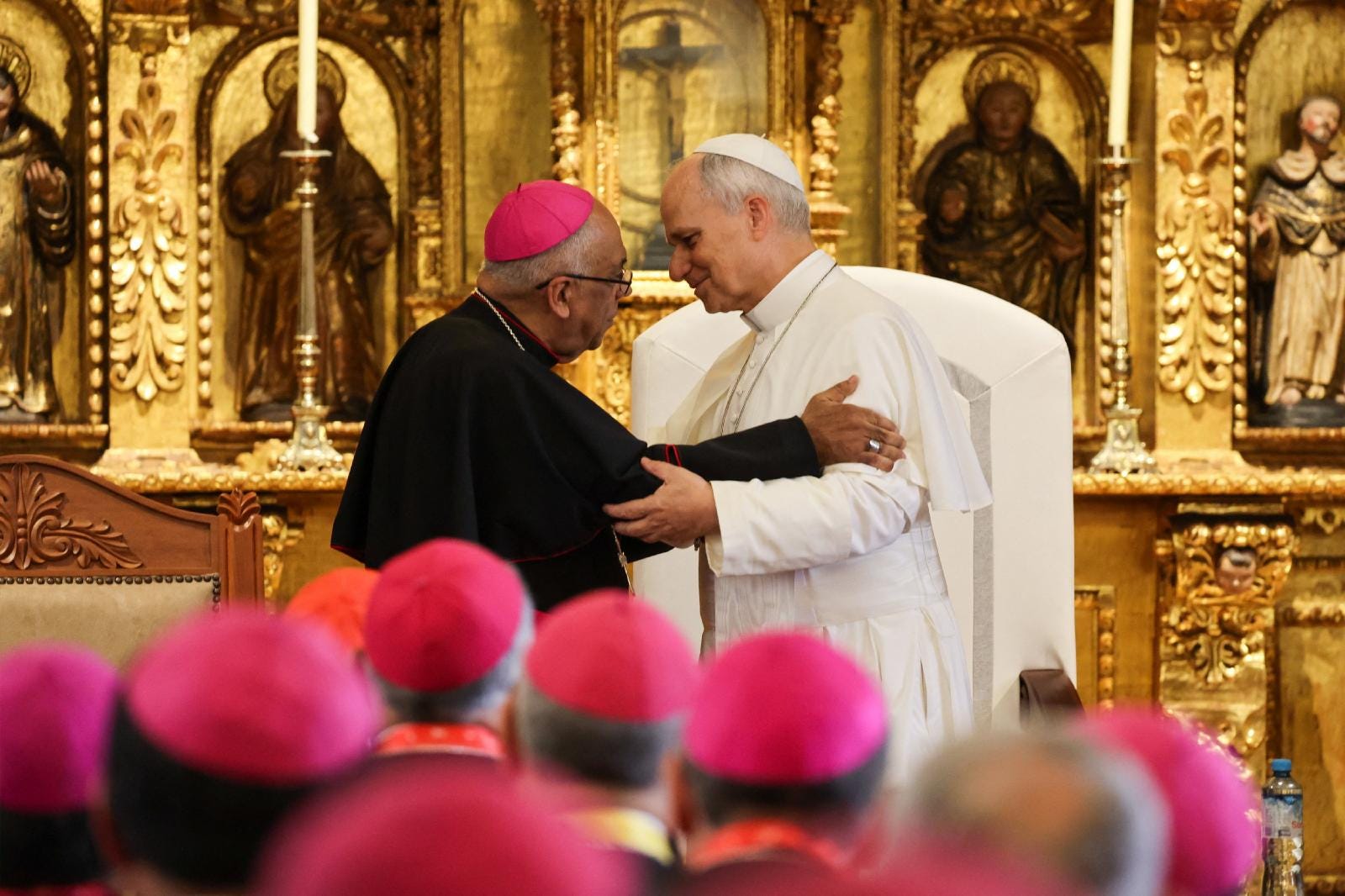
Then he turned to abuse.
“Allow me to speak of a reality that has caused us so much pain: the abuse committed by members of the clergy or in Church settings. We must respond as Jesus would, with truth, with justice, with forgiveness, with reparation and an ever more determined commitment to a culture of prevention and protection of the weakest in the face of these crimes.”
The word he chose matters in Peru, where the clergy abuse scandal has never broken open in public the way it has elsewhere in Latin America, the Associated Press noted Thursday. On the eve of Leo’s South American trip, BishopAccountability.org named 77 priests, brothers, seminarians and consecrated laypeople in Peru who have been publicly accused of abusing minors, and the group calls that list a small fraction of the real total.
Leo knows this ground firsthand. As bishop of Chiclayo, he was the Peruvian bishops’ point person for victims. Survivors of the Sodalitium Christianae Vitae, a Lima-founded lay movement whose leaders abused its members, credit him with taking their claims seriously when other bishops would not, and with helping set off the Vatican investigation that led Francis to suppress the group in January 2025.
Six weeks into his papacy, Leo wrote to the Peruvian journalist Paola Ugaz, who helped expose the Sodalitium, that “prevention and care are not a pastoral strategy.” They are, he said, the heart of the Gospel.
His record is not uncontested. Ana María Quispe Díaz, one of three women who reported two Chiclayo priests to then-Bishop Prevost in 2022, says he failed to investigate properly or to remove the accused priests from ministry. A victims’ group planned a protest in Lima later on Thursday, and the Vatican has said Leo will meet survivors before he leaves Peru. (He did the same at Lourdes in September, meeting privately with seven survivors hours after telling France’s bishops to acknowledge their failings.)
“Let us protect and respect girls”
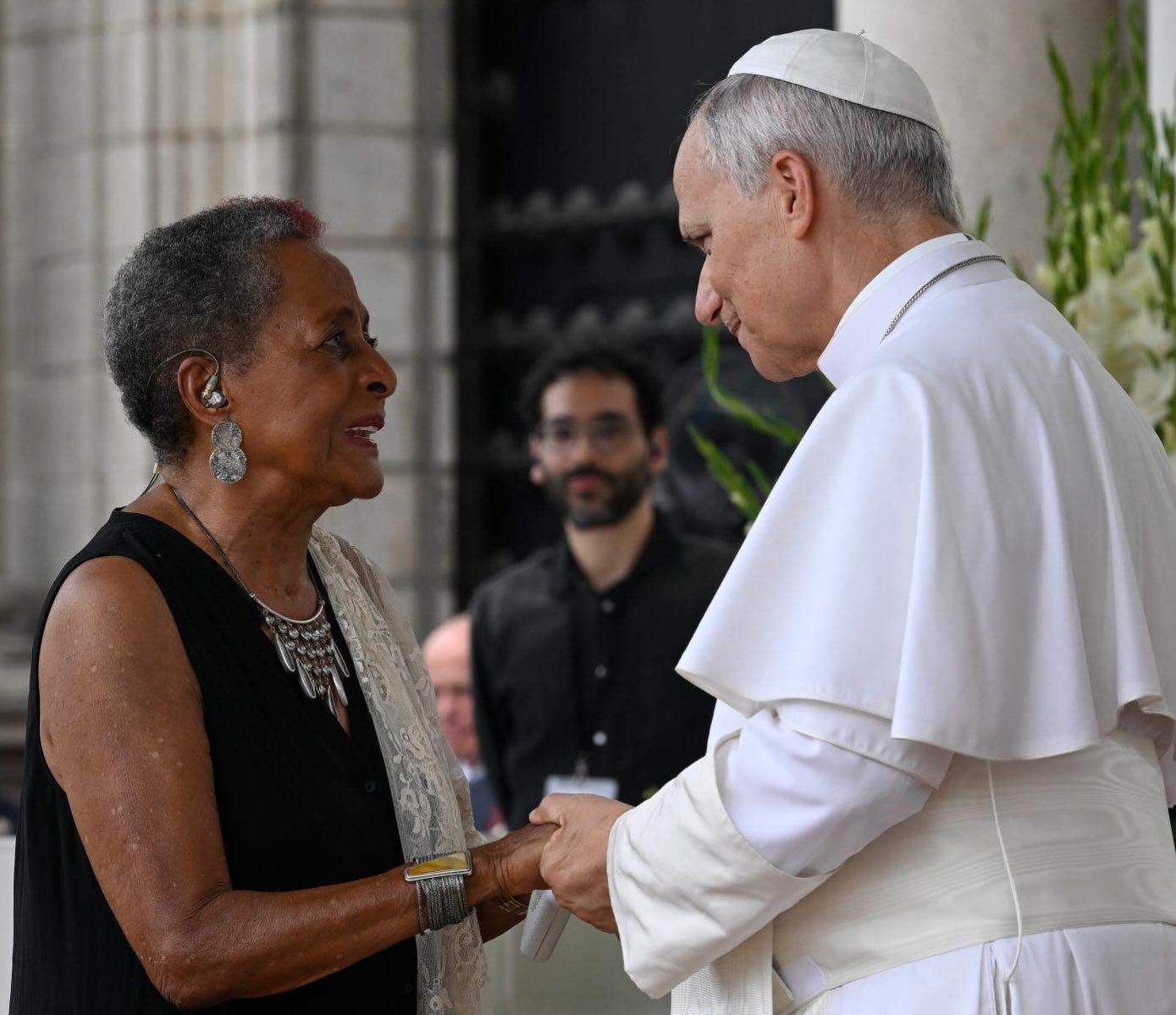
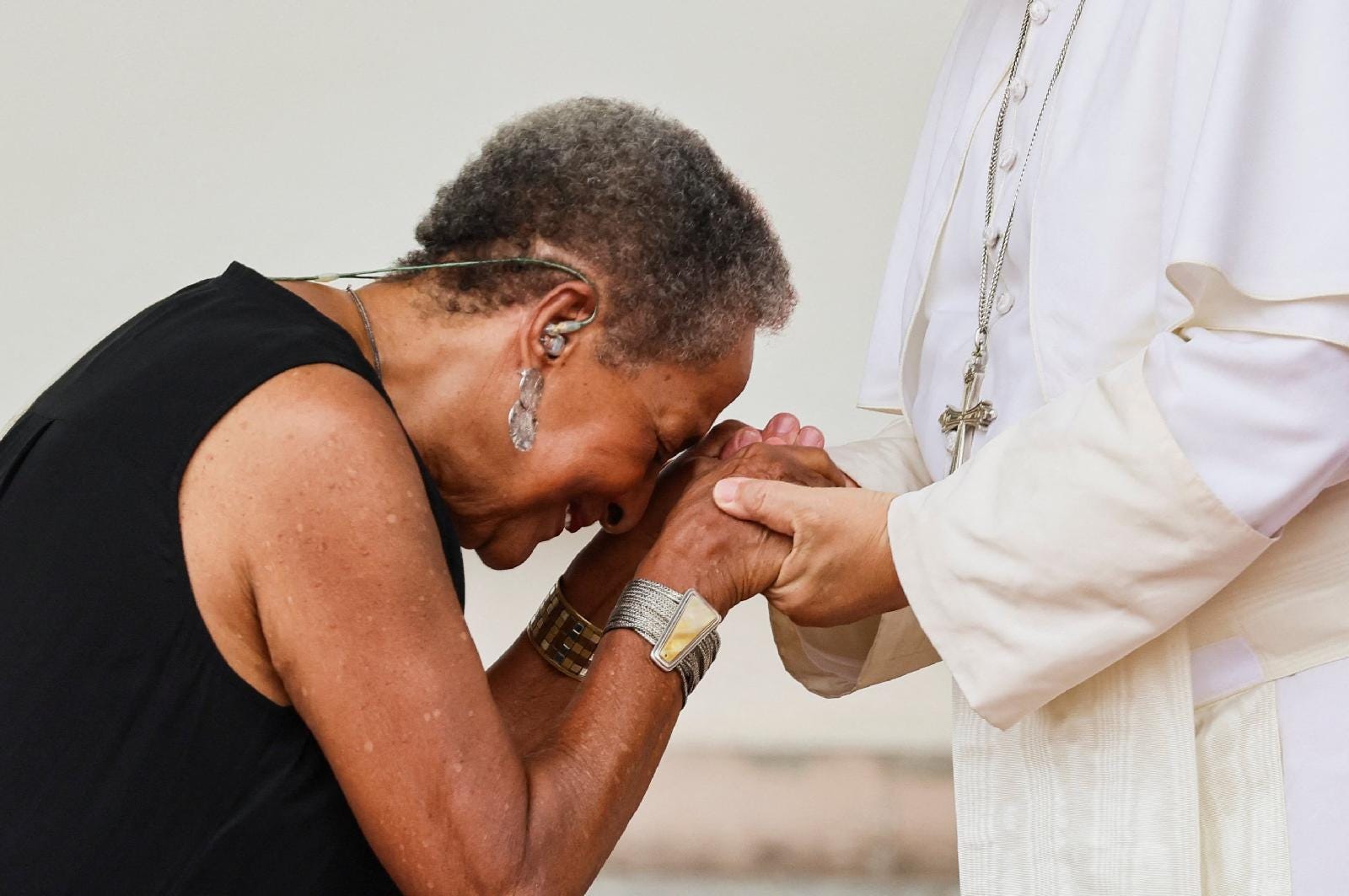
After midday prayer inside the cathedral, Leo walked out to the Plaza Mayor. The crowd serenaded him with “Contigo Perú,” and he sang along. He listened to testimonies first, including one from an Indigenous woman, before he rose to speak.
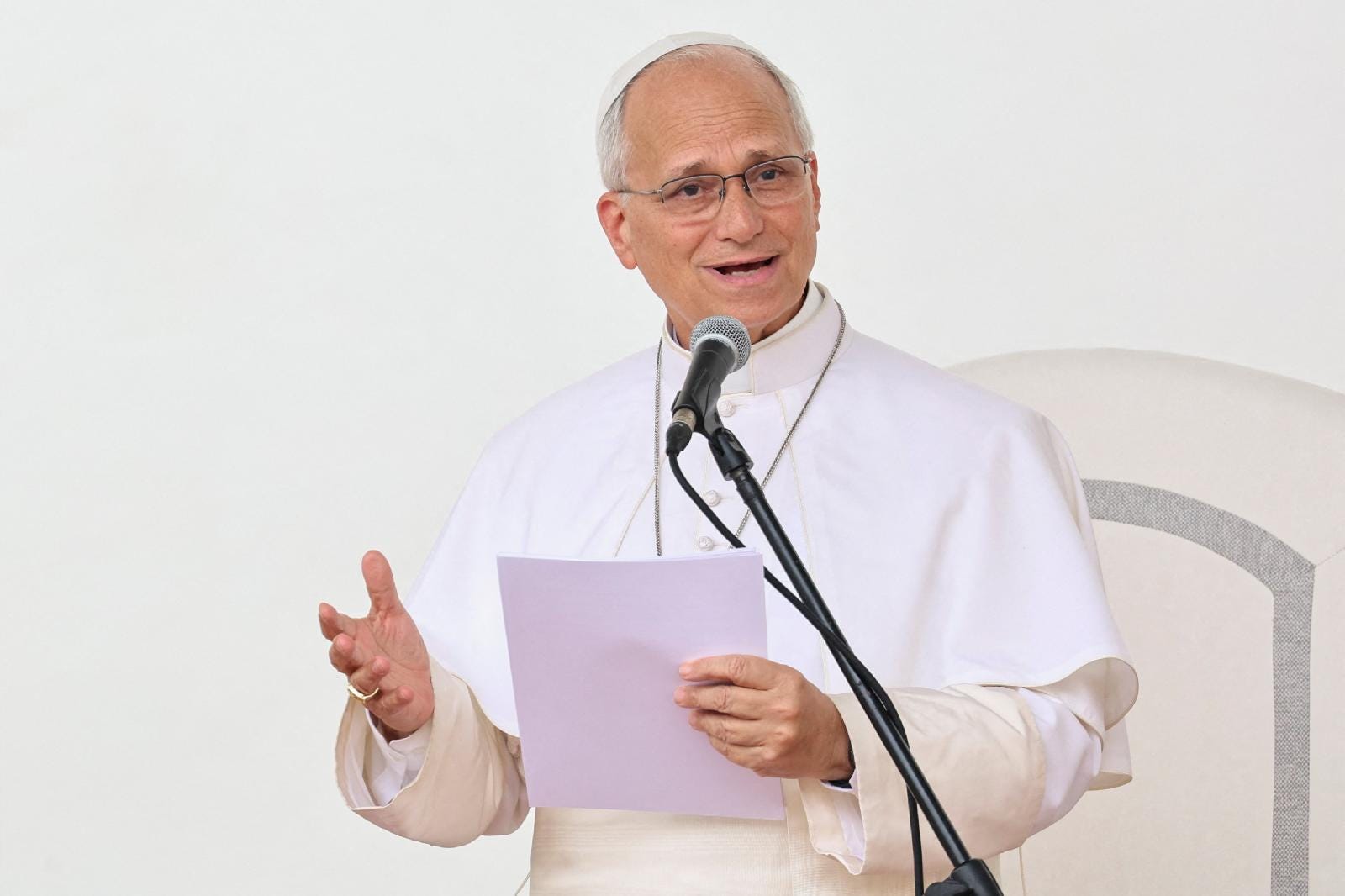
Much of his address concerned the family, and he did not flatter it. Living in the truth of being man and woman, Leo said, “does not justify inequality in the responsibility for domestic tasks, nor the subordination of one spouse to the other.” He delivered that rejection of the patriarchal household outside the cathedral that holds the tomb of Francisco Pizarro.
Then he named the sin by its Spanish name.
“It is sad to see that a machista mentality persists, which shows itself in the father’s absence from family life, in abuse, in violence against women, ignoring the newness of Christianity, which recognizes and proclaims that both share equal dignity and responsibility.”
Women who live in poverty, or who belong to Indigenous and Afro-descendant communities, can suffer twice over, he said. Violence against women, who “could be our grandmothers, mothers, sisters, daughters,” remains a reality that wounds all of humanity. He closed the passage with an appeal to every man and woman of goodwill: “Let us value women. Let us protect and respect girls.”
The numbers behind that appeal are grim. According to AP, Peru’s National Institute of Statistics and Informatics counted 1,261 victims of femicide between 2016 and 2024, and killings of women because of their gender rose 44% over that span.
Francis made a similar plea in the Amazon city of Puerto Maldonado in January 2018, warning that violence against women “cannot be treated as ‘normal.’” Leo’s version came from a man who lived in Peru for two decades, and he delivered it in the capital’s main square.
The strong and the weak
Leo’s morning and afternoon addresses belong together. The bishops heard him speak of protecting “the weakest” from crimes committed by men who held power over them, while the crowd outside the cathedral heard him condemn a mentality that makes a wife her husband’s subordinate. Whether it hides in a sacristy or a kitchen, abuse rests on the same lie, which says that power entitles the stronger to use the weaker.
Leo answered that lie with one phrase from the Gospel’s own history. Christianity, he said, brought something new into the world when it proclaimed that men and women share equal dignity. Jesus kept company with women the law pushed to its edges, and the first witness to the Resurrection was Mary Magdalene, whom the Church now honors as the apostle to the apostles.
A Church that preaches that dignity has to practice it at home first, and on Thursday Leo called for a Church “ready to acknowledge its own infidelities.” That is why the order of Thursday’s speeches mattered. Before he asked Peru’s men to change, Leo asked Peru’s bishops to.
Americans can learn something here too. Last month JD Vance defended a Vivek Ramaswamy ad that called Amy Acton, who survived rape as a child, a liar. The American pope set a different standard in Lima, where he called abuse a crime and asked men to value women.
Words in a palace chapel are only the start of that work. The meeting with survivors, which the Vatican has promised before Leo flies to Rome on Monday, will show how far he means to take them. Part two, coming next, covers Thursday night’s youth vigil at the National Stadium.
At Letters from Leo, we stand with Pope Leo XIV and with every survivor who has waited years to hear the Church say plainly what was done to them. The women of Peru, and women everywhere, have the same claim on us; Leo defended their dignity on Thursday in front of 40,000 of their neighbors.
In a season when powerful men in our own country dismiss survivors as liars, we hold to a faith that names abuse as a crime and calls the protection of girls a duty of the Gospel.
That is why this is the fastest-growing Catholic community in the country. People are hungry for a Church that tells the truth about itself, and for a pope who asks the strong to kneel before the weak.
If you believe the Church should protect the weakest, starting inside its own house, I am asking you to join us.
If you’d like to invest in our mission, here are three ways you can help:
Subscribe as a paid member to receive exclusive posts about the life and formation of Pope Leo and help sustain this newsletter.
Donate with a one-time gift to fuel this project’s mission.
Share this post (and Letters from Leo) with a friend who might enjoy it.
Paid members receive our series on Pope Leo’s Life & Formation, including his two decades as a missionary and bishop in Peru, along with our exclusive investigations and the Sunday Scripture Reflection Series.
Whether you give $0, $5, $50, $500, $1,000, or more, your presence here matters — no matter your faith or your politics.
Thank you for reading. I’ll see you on the road.

I love my Pope ❤️
The woman in these photos is Susana Baca, singer, composer and former Minister of Culture , who brought Afroperuvian music to world attention.