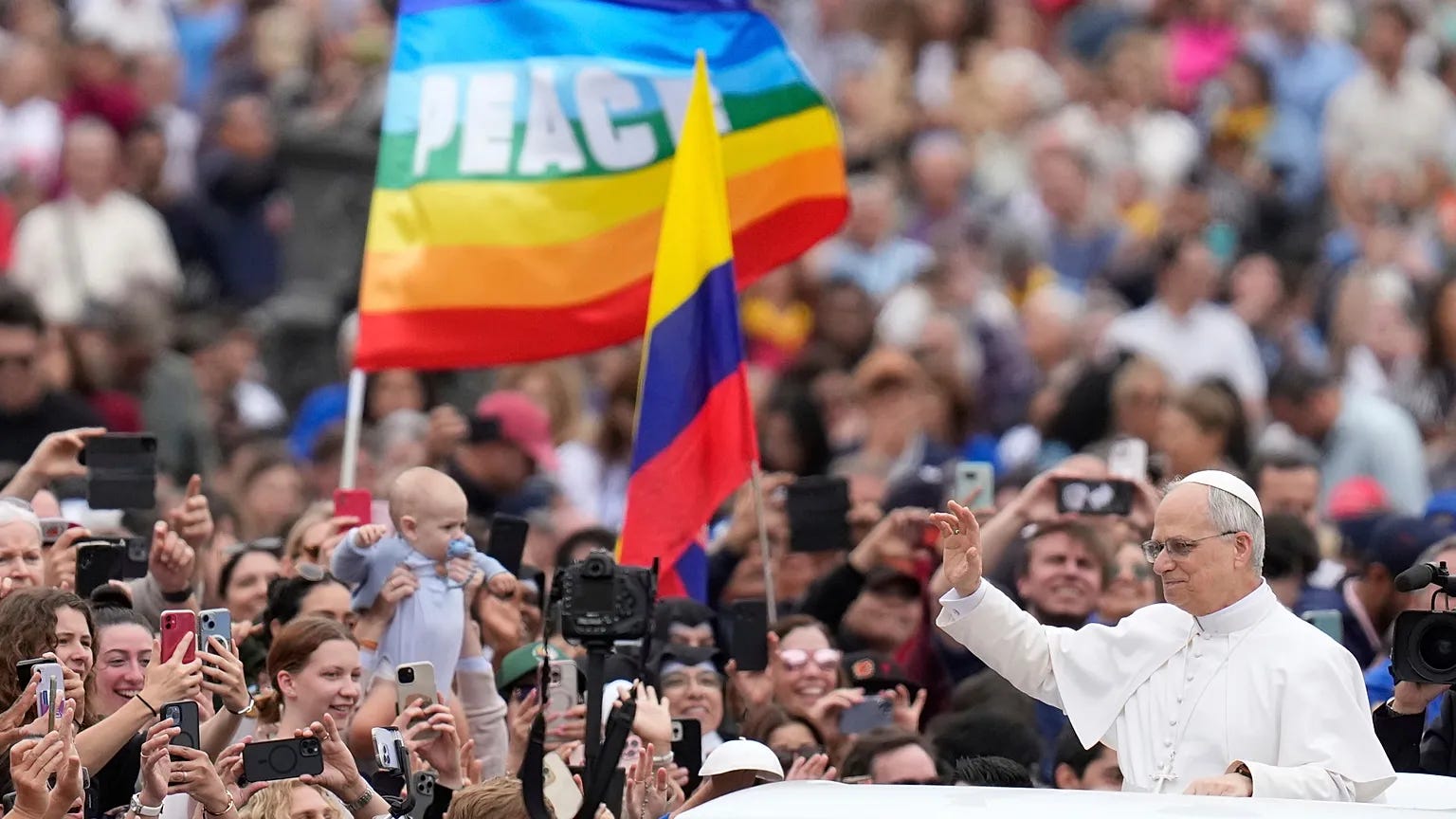
Pope Leo XIV Elevates Pro-LGBT, Pro-Women Ordination Voices to Major Church Offices
Fifteen new consultors to the Vatican’s religious-life office include sisters who want women’s ordination on the table. With the synod’s 2027 assemblies approaching, the pope’s guest list is the story

Thank you for reading! Letters from Leo is a reader-supported publication and the fastest-growing Catholic community in the country. To receive new posts and support this movement, consider becoming a free or paid subscriber.
Pope Leo XIV appointed fifteen new consultors to the Vatican’s office for religious life on August 6, including several who have criticized the Church’s approach to women in the past.
Among them is Sister Patricia Murray, the Irish religious who served for years as executive secretary of the International Union of Superiors General, the Rome-based body uniting the leaders of women’s religious orders worldwide.
At a 2021 gathering, she insisted that “we have to also allow the topics that people want to talk about to be named” — and the topics she named were the women’s diaconate and the priesthood itself.

Sister María Rosaura González Casas, a Mexican psychologist who teaches at Rome’s Pontifical Gregorian University, joins her on the list; she has said the Church has “systematically failed women.”

They will now advise the Dicastery for Institutes of Consecrated Life and Societies of Apostolic Life, the Vatican office governing the world’s religious orders, where Sister Simona Brambilla presides as the first woman ever to lead a dicastery.

LifeSiteNews noticed. The traditionalist outlet sounded its alarm this week over “pro-female ordination, pro-LGBT consultors,” and for once its reporting is accurate, even if its horror is misplaced.
In Washington they like to say that personnel is policy. Leo, the first American pope, appears to have carried the axiom with him to Rome.
Consider what fifteen months of his appointments look like when you lay them side by side. He placed Sister Alessandra Smerilli atop the dicastery behind his peace, migration, and climate agenda, with a cardinal serving as her deputy.
The Vatican’s communications machine went to Montse Alvarado, the first laywoman ever to run the Holy See’s media.
Sister Nathalie Becquart, whom I profiled in this newsletter’s first months, remains among the most powerful figures in the synod office that will steer the Church’s next three years.
The bishops tell the same story.
In February, Leo accepted Archbishop Gregory Aymond’s resignation in New Orleans, and Archbishop James Checchio, whom Leo had sent to Louisiana as coadjutor five months earlier and whose New Jersey diocese made outreach to LGBT Catholics a synodal priority (his parishioners still remember him lingering at an LGBT ministry gathering after the Pulse nightclub massacre in 2016), took the helm of one of American Catholicism’s most storied sees.

“He stayed and talked to every person — made a point to go around to get to know them,” one ministry leader recalled. New Ways Ministry greeted him as “another LGBTQ-friendly prelate.”
Then came Germany. In July, Leo named Christian Würtz, a Freiburg auxiliary who supported the German Synodal Way’s resolutions favoring blessings for same-sex couples and a fresh examination of women’s ordination, to lead the Bavarian diocese of Eichstätt; even the conservative news desk at Catholic Culture conceded that observers treat Eichstätt as a bellwether for the Church’s direction.

Those moves join Fr. Thomas Hennen, the Iowa priest with a decade of LGBT ministry whom Leo made a bishop in Oregon, and Bishop Ramón Bejarano, the LGBTQ-affirming San Diego auxiliary he sent to lead Monterey.
The pattern holds in Asia too. Cardinal Tarcisio Isao Kikuchi of Tokyo publicly welcomed Japan’s new national campaign to deepen understanding of sexual minorities, approved June 16, saying that an inclusive community “is not a purpose of our attitude as such; rather, it is the first step toward realizing the world that God calls us to build.”

None of it should surprise longtime readers. Leo invited 1,200 LGBT Catholics to cross St. Peter’s Holy Door in the first autumn of his pontificate, and his closest advisors confirmed early on that blessings for gay couples would remain in place.
Even the papal wardrobe carries the message. Filippo Sorcinelli, the master vestment-maker who has dressed three consecutive popes and who entered a civil union with his partner in 2021, is back at work preparing Leo’s liturgical wardrobe. “It was like a calling, a summons back to duty,” he told Corriere della Sera this month.

The consultor appointments landed weeks after a report out of the University of Notre Dame suggested that gay men merit special scrutiny before ordination. “Do You Know Them to be Worthy?”, published in July by Notre Dame’s McGrath Institute for Church Life, proposed that seminary files track a candidate’s “same-sex attraction” over time and that formators learn to distinguish its “transitory” form from a “deep-seated” one.
The pushback arrived within days, and it came from serious people. Writing in Outreach, Fr. James Martin observed that the Church’s own catechism calls homosexual persons to chastity and holiness, then offered his own testimony:
“In my almost 40 years as a Jesuit, I’ve known dozens of celibate gay priests who have led what Pope Francis called ‘good, holy and celibate’ lives.” Francis DeBernardo of New Ways Ministry added that the report’s authors never consulted the gay priests they wrote about.
Within weeks of the report’s release, Leo seated advisers who have spent their careers asking the very questions it wanted set aside.
Anyone wondering where the American Church’s center of gravity now sits should study the scene at Georgetown’s Gaston Hall on June 20, when Cardinal Robert McElroy celebrated the vigil Mass at the Outreach conference, the annual gathering of LGBT Catholics that Martin founded.

The Church has “frequently wounded” the LGBT community, McElroy preached, before turning to Paul’s letter to the Romans: “The gift is not like the transgression… the grace of God and the gracious gift of the one man Jesus Christ overflow for the many.”
He closed by echoing Leo’s counsel that the Church’s unity should not rise or fall on sexual matters. A cardinal of the Roman Church stood before a hall of LGBT Catholics and preached grace without an asterisk, and the moment barely registered as news — which may be the clearest evidence of how far the ground has shifted.
None of this will be settled by papal appointment alone, and Leo XIV knows it. These questions have run through the synod’s machinery for years.
Pope Francis handed the thorniest of them to ten study groups in 2024, Leo extended their deadlines when the work outgrew the calendar, and their interim reports landed last November.
Study Group 9, the panel charged with the “controversial” doctrinal questions (ministry to LGBT Catholics among them), delivered its final report in May, and I published a full explainer on it here. The group studying women’s leadership forwarded its material on the diaconate to a papal commission, where the question now sits.
Now comes the deciding phase.
Under “The Path of Implementation,” the roadmap the synod office released in May, dioceses around the world will hold evaluation assemblies in the first half of 2027.
National and regional assemblies follow in the back half of that year. The continents gather in early 2028, and the whole journey ends in Rome in October 2028 with an Ecclesial Assembly held under the pope’s own authority. The women and men Leo is appointing today will shape what those assemblies hear.
The other half of the work belongs to us. When I came home from Rome last month, I wrote that participation in these synod processes is critical work for the members of this community — the assemblies of 2027 will listen to the people who show up in their dioceses and parishes. As that information becomes available in the coming weeks, we will share exactly how you can take part where you live.
That is the deeper meaning of a consultor list. Rome decides its great questions in assemblies and documents, but it decides much earlier (sometimes years earlier) who will be in the room when the questions get asked. By seating a psychologist who says the Church has failed women alongside bishops who stood with grieving gay Catholics when it cost something to do so, Leo is choosing the witnesses whose testimony the Church will weigh.
The Gospel has a long memory on this point. Jesus built his movement from people the religious establishment of his day had written off, and he caught endless grief for the company he kept; the Pharisees grumbled that “this man welcomes sinners and eats with them,” and two thousand years later the Church still lives off the scandal of that welcome. A pope who fills the Church’s highest councils with the people its gatekeepers tried to screen out is working squarely inside that tradition.
The Church that will gather in Rome in October 2028 is being assembled right now, one appointment at a time. Watch the guest list.
At Letters from Leo, we stand with the women religious who have carried this Church for centuries without title or recognition, and with the LGBT Catholics who stayed at the altar through years when staying took real courage.
This week’s appointments honor that perseverance, and honoring it is holy work.
People are hungry for a faith that refuses to flinch before injustice, and that hunger built the fastest-growing Catholic community in the country. Whatever Rome decides in 2028, the witnesses are finally in the room — and this community will be reporting from beside them the whole way there.
If you believe this movement matters — Catholics and people of goodwill standing for the dignity of every person against the politics of exclusion — I am asking you to join us.
If you’d like to invest in our mission, here are three ways you can help:
Subscribe as a paid member to receive exclusive posts about the life and formation of Pope Leo and help sustain this newsletter.
Donate with a one-time gift to fuel this project’s mission.
Share this post (and Letters from Leo) with a friend who might enjoy it.
Paid members receive the full biographical series on Pope Leo’s life and formation, every investigation we publish, and the complete Sunday Scripture Reflection Series.
Whether you give $0, $5, $50, $500, $1,000, or more, your presence here matters — no matter your faith or your politics.
Thank you for reading. I’ll see you on the road.


Walk the walk. Skip the talk. Love this guy!
This is a leader who not only has read the Gospels but (unlike certain other high placed Catholics in the USA) lives and teaches the Gospels and supports and empowers those who do so with him.
